Red Tangerine Oil
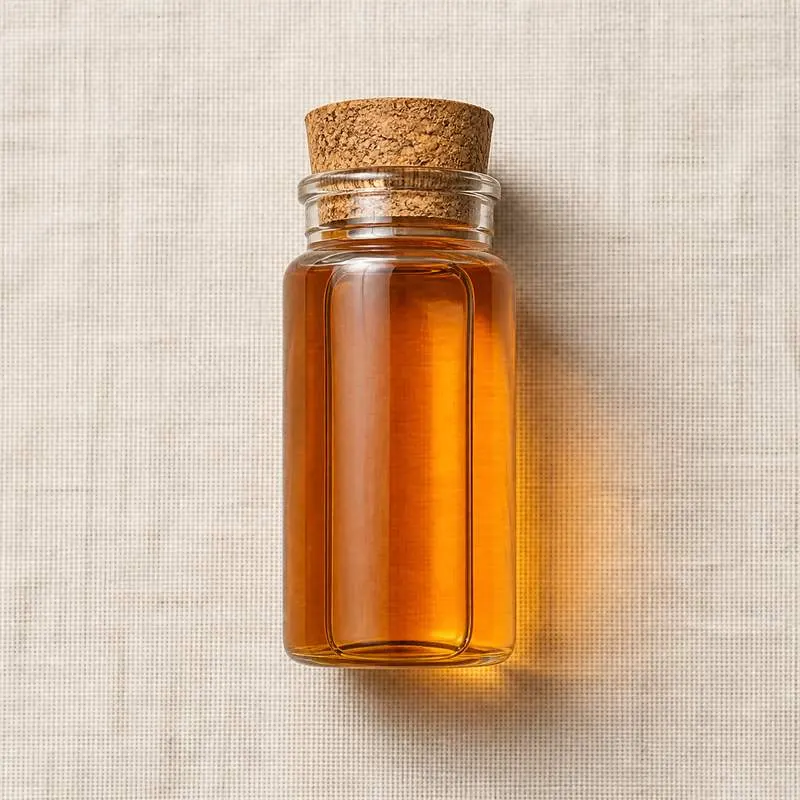
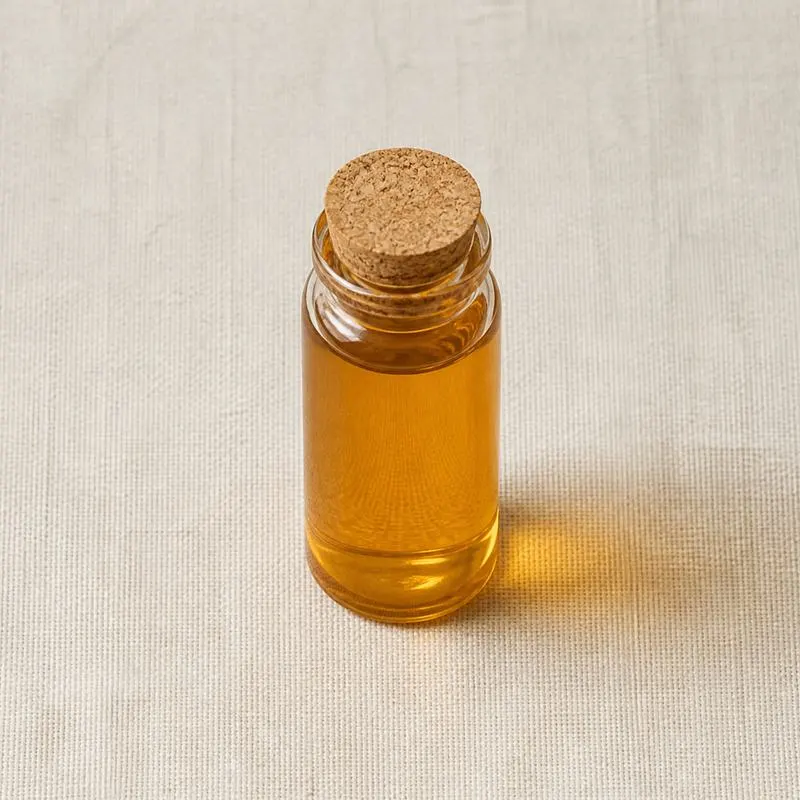
Red tangerine oil is the essential oil recovered from the peel of the red skinned mandarin, Citrus reticulata, by cold pressing. It is a mobile liquid, orange to reddish orange, with a sweet, fresh and slightly floral citrus odour that is rounder and less sharp than sweet orange oil.
Composition is dominated by limonene, typically around 85 to 95 percent, with gamma terpinene, myrcene and the pinenes making up most of the remainder. The character, however, comes from minor constituents present at a fraction of a percent, chief among them methyl N-methylanthranilate, which gives the mandarin and tangerine group its distinctive sweet, slightly grape like nuance, together with thymol and a set of aldehydes. This is why the oil cannot be reproduced by limonene alone.
The oil is soluble in ethanol and in fixed oils and insoluble in water, so beverage use depends on an emulsion or a solubilised premix. Its high terpene hydrocarbon content makes it readily oxidised, and oxidation produces the stale, turpentine like off notes familiar from aged citrus oils. Material is filled under nitrogen into full containers and held cold, often with an added antioxidant, and cold pressed oils also carry non volatile residue that can settle on standing.
We source bulk Red Tangerine Oil from top China manufacturers for our partners. The manufacturer is in Guangdong. A smaller requirement can ship in a combined container with other ingredients.
Please send the grade you need, the volume and your destination port, and we will come back with a solution and a price.
or call +86-21-6858 0751
- Function
- Flavours and Aromas
Specifications
| Item | Specification |
|---|---|
| Appearance | Clear mobile liquid, slight sediment on standing permitted |
| Colour | Orange to reddish orange |
| Odour | Characteristic sweet fresh tangerine, true to reference sample |
| Limonene by gas chromatography | 85.0 to 95.0 percent |
| Gamma terpinene | 2.0 to 10.0 percent |
| Methyl N-methylanthranilate | 0.2 to 0.8 percent |
| Relative density at 20 degrees Celsius | 0.845 to 0.855 |
| Refractive index at 20 degrees Celsius | 1.4730 to 1.4780 |
| Optical rotation at 20 degrees Celsius | plus 65 to plus 78 degrees |
| Aldehyde content as decanal | 0.5 to 1.5 percent |
| Solubility in 90 percent ethanol | Clear solution in 5 volumes |
| Non volatile residue | 4.0 percent maximum |
| Lead | 1.0 mg/kg maximum |
| Arsenic | 1.0 mg/kg maximum |
Common Markets Grades
The reference position is the cold pressed oil, which retains the full natural profile and is the grade used where a true citrus character matters. Distilled and recovered oils, obtained from the aqueous streams and residues of juice production, are cheaper and thinner in character and are traded separately.
Beyond that, the important grades are the folded and terpeneless oils. Folding removes part of the limonene by vacuum distillation, concentrating the oxygenated compounds so that a fivefold or tenfold oil delivers more flavour per unit weight, dissolves more readily in dilute alcohol and resists oxidation better. Fully terpeneless grades go furthest in that direction. Winterised oils, chilled and filtered to drop out waxes, are specified for clear beverages, and antioxidant protected grades are separated from unprotected ones. Organic certified lots are run as a segregated line, and the terpene fraction stripped during folding is itself sold as a by-product solvent and flavour material.
Applications
- Soft drinks and juice beverages, dosed from an emulsion or a solubilised premix
- Confectionery and chewing gum in citrus profiles, usually as a folded or encapsulated oil
- Bakery and dairy flavours including ice cream, yoghurt and citrus desserts
- Alcoholic drinks, liqueurs and bitters
- Tea and instant beverage powders, delivered as a spray dried encapsulate
- Fine fragrance, as a sweet citrus top note in cologne and floral accords
- Personal care and household fragrance in fresh citrus directions
- Aromatherapy and massage preparations
- Feedstock for the recovery of limonene and of the oxygenated flavour fraction
- Cleaning products, where the terpene fraction serves as a natural solvent
China Manufacturers of Red Tangerine Oil
Top Red Tangerine Oil manufacturers in China.
Company names and logos are the property of the manufacturers themselves. They are listed here because our own directory records them as producing this ingredient. A listing is not an endorsement by them, and we do not represent them or speak on their behalf.
Regulatory Status
In the United States 21 CFR 182.20 lists tangerine and mandarin oils among the essential oils, oleoresins and natural extractives generally recognised as safe for their intended use in food, and the oil holds FEMA GRAS status as a flavouring substance. Cold pressed citrus peel oils used in cosmetics carry a phototoxicity consideration because of their furocoumarin content, which is addressed through use level rather than through a food regulation.
In the European Union the oil is a flavouring preparation of plant origin under Regulation (EC) No 1334/2008 and takes no E number. For cosmetic use, limonene is a declarable fragrance allergen under the cosmetic products regulation, so its presence above the threshold must be shown in the ingredient list, and the industry self regulatory standards of the International Fragrance Association set limits relating to the phototoxic constituents of expressed citrus oils. The Joint FAO and WHO Expert Committee on Food Additives has evaluated the citrus terpene flavouring groups, and international trade specifications commonly reference the relevant ISO standard for mandarin oil, which sets the physical constants and chromatographic profile the market expects.
Manufacturing Process
The oil is a by-product of juice production and is recovered mechanically rather than by distillation, because heat would destroy the delicate aldehydes and esters that give it character. Fruit is washed, graded and passed to extractors that either abrade the peel surface or squeeze the whole fruit while spraying it with water, releasing the oil from the glands in the flavedo into an aqueous emulsion. That emulsion is screened to remove peel fragments and pulp, then separated in a desludging centrifuge to give a crude oil, and a second polishing centrifuge removes the remaining water and fine solids.
The crude oil is chilled and held for winterisation, during which waxes and non volatile residue settle out and are filtered away. Oil intended for sale as cold pressed is then polish filtered, dosed with antioxidant where the grade allows, and filled under nitrogen into lined drums held in cold storage. Folded and terpeneless grades go on to vacuum distillation, where limonene and the other monoterpene hydrocarbons are taken overhead at low temperature and short residence time, leaving a concentrated oxygenated fraction that is blended back with a controlled proportion of terpene to hit the declared fold.