White Pepper
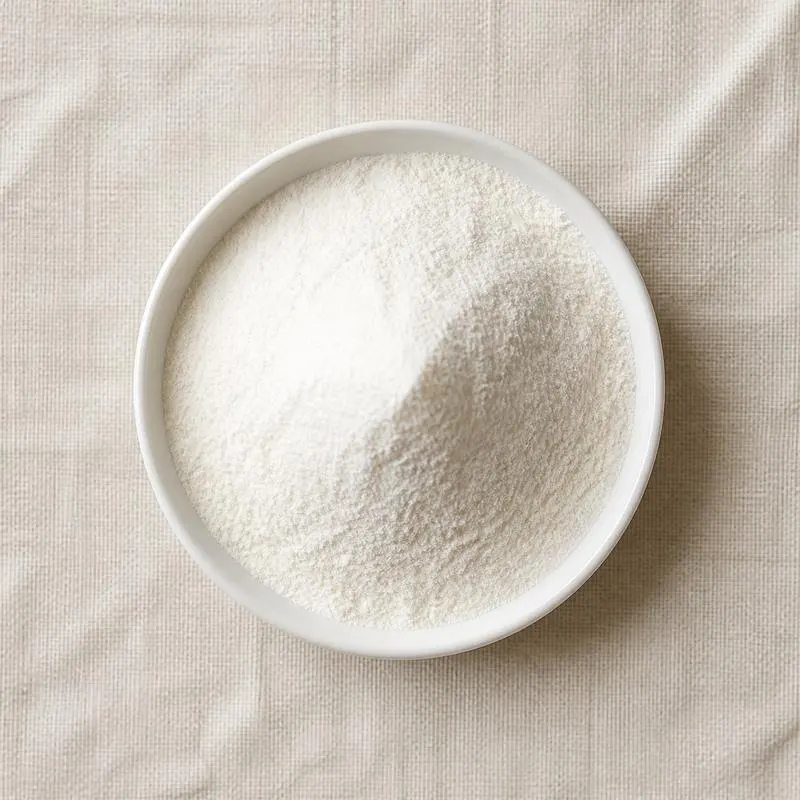
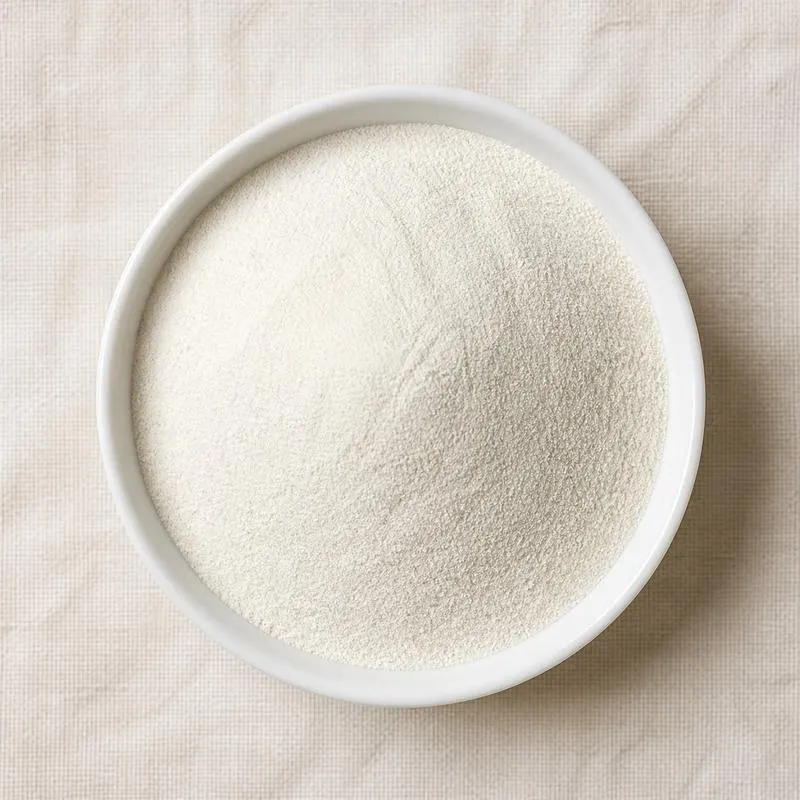
White pepper is the dried mature berry of Piper nigrum from which the outer pericarp has been removed, leaving the pale inner seed. It comes from the same vine and often the same field as black pepper, and the difference between the two lies entirely in harvest maturity and post-harvest processing rather than in variety.
Pungency comes from piperine, an amide that makes up roughly four to eight percent of the seed and is heat stable, non-volatile and largely unaffected by cooking. Aroma comes from a separate volatile fraction of one to two percent, dominated by monoterpenes and sesquiterpenes such as beta-caryophyllene, limonene, sabinene and the pinenes. Because the aromatic pericarp is stripped away, white pepper is less fragrant than black but proportionally hotter, and it carries a distinct fermented, faintly barnyard note picked up during retting.
It sells as whole berries or as ground powder in defined mesh cuts. Ground material loses volatiles quickly, so users who need full aroma buy whole berries and mill in-house or take a milled grade packed under nitrogen.
We source bulk White Pepper from top China manufacturers for our partners, working with several of them. The manufacturers are mostly in Jiangsu, Hainan and Guangdong. A smaller requirement can ship in a combined container with other ingredients.
Please send the grade you need, the volume and your destination port, and we will come back with a solution and a price.
or call +86-21-6858 0751
- Function
- Flavours and Aromas
Specifications
| Item | Specification |
|---|---|
| Appearance | Creamy white to pale grey berries or free-flowing powder |
| Odour and Taste | Pungent, characteristic, free from must |
| Piperine | Not less than 4.0 percent |
| Volatile Oil | Not less than 0.7 ml per 100 g |
| Moisture | Not more than 13.0 percent |
| Total Ash | Not more than 3.5 percent on dry basis |
| Acid Insoluble Ash | Not more than 0.3 percent on dry basis |
| Particle Size, ground grade | 98 percent through 40 mesh |
| Lead | Not more than 2 mg/kg |
| Arsenic | Not more than 1 mg/kg |
| Total Plate Count | Not more than 100,000 cfu/g after steam sterilisation |
| Yeast and Mould | Not more than 1,000 cfu/g |
| E. coli | Absent in 1 g |
| Salmonella | Absent in 25 g |
Common Markets Grades
Trade grades follow origin and cleanliness. Muntok white pepper from Indonesia and Sarawak white pepper from Malaysia are the two reference names, joined by Vietnamese, Chinese and Brazilian material, and each origin has its own accepted colour and aroma character. Within an origin, grades are set by bulk density in grams per litre, by the proportion of light berries and black or discoloured seed, and by foreign matter, with the ASTA cleanliness specifications the usual commercial reference.
Whole berries, cracked pepper and ground powder are traded separately; ground material is specified by mesh, commonly 30, 40, 60 or 80 mesh. Steam-sterilised grades, processed with saturated steam to reduce microbial load without solvent or irradiation, are priced above fumigated material in markets that will not accept ethylene oxide treatment. Oleoresin and steam-distilled pepper oil are made from the same berry for users who want a standardised piperine or aroma dosage instead of the whole spice, and decorticated grades made mechanically rather than by water retting are sold where the fermented note is unwanted.
Applications
- Pale sauces, cream soups and veloutes, where black specks would be visible against a light background
- White pepper and salt table blends and shaker packs
- Chinese soups and hot and sour preparations, where the fermented note is part of the expected profile
- Sausage, ham and emulsified meat products, dosed at a fraction of a percent of the batch
- Instant noodle and convenience meal seasoning powders
- Snack seasoning blends applied dry or as an oil slurry
- Mayonnaise, dressings and light-coloured condiments
- Pickles and brines, added whole so that the pungency releases slowly
- Marinades for poultry and fish, where the pungency comes through without darkening the surface
- Feedstock for pepper oleoresin and distilled pepper oil
Brands Using White Pepper
Widely-distributed consumer products that list White Pepper on the ingredient label.
- McCormickMcCormick Gourmet Organic Ground White Pepper, 1.75 oz ↗Single-ingredient jar whose ingredient statement reads Ground White Pepper, milled from dried pepper berries for use in light-coloured sauces and dishes.Label verified 2026-08-31
- Simply OrganicSimply Organic White Pepper, 2.86 oz ↗Ground spice jar listing Organic White Pepper as its only ingredient.Label verified 2026-08-31
Brand names, product names and logos are the property of their owners. They appear here as published evidence that the ingredient is used, taken from the brand's own label or website. Their appearance is not an endorsement, and it does not mean the brand buys from us or from any manufacturer listed on this site.
China Manufacturers of White Pepper
Top White Pepper manufacturers in China.
- Bin Cun Shan (Hai Nan) Food Limited Company1 ingredient in the directory
 Guangdong Tiansheng Food Technology Co., Ltd.8 ingredients in the directory
- Jiahe Xingrui Food Industry (Suqian) Co., Ltd.1 ingredient in the directory
- Shanghai Dinglixin Food Co., Ltd.9 ingredients in the directory
- Taizhou Aohua Food Co., Ltd.4 ingredients in the directory
- Xinghua Weitejia Food Co., Ltd.1 ingredient in the directory
Company names and logos are the property of the manufacturers themselves. They are listed here because our own directory records them as producing this ingredient. A listing is not an endorsement by them, and we do not represent them or speak on their behalf.
Regulatory Status
White pepper is a spice rather than a food additive. In the United States it is included among the spices generally recognised as safe for their intended use in food under 21 CFR 182.10, and pepper oleoresin and distilled pepper oil appear on the corresponding list for essential oils and natural extractives. Cleanliness is judged against the FDA defect action levels for insect fragments and rodent hair and against the ASTA cleanliness specifications, and the United States permits ethylene oxide treatment within the residue limits set for the fumigant.
In the European Union pepper is a food in its own right, so no E number or additive authorisation applies. Contaminant limits for lead and for mycotoxins in spices are set under the contaminants regulation, pesticide residues under the maximum residue level framework, and ethylene oxide is not permitted, which makes steam sterilisation the standard decontamination route for material entering the EU. Codex maintains a commodity standard for black, white and green pepper covering moisture, ash, piperine and volatile oil, along with a code of hygienic practice for spices and dried aromatic herbs.
Manufacturing Process
Berries are left on the vine until they are fully mature and starting to turn red, several weeks later than the harvest for black pepper. The picked spikes are stripped and the berries are packed into sacks and submerged in slow-moving or still water for seven to ten days. Microbial and enzymatic action softens the outer pericarp during this retting step, which also introduces the characteristic fermented note.
The softened berries are then trodden, rubbed or passed through a mechanical decorticator to strip the skin, washed repeatedly to carry away the pulp, and sometimes given a short bleaching or lime wash to lift the colour. The washed seed is sun dried or hot air dried down to about twelve percent moisture, then cleaned over destoners, gravity separators and magnets, graded by size and density, and either packed whole or milled. Milling is done in hammer or pin mills, in many plants under chilled conditions so that the volatile oil is not lost as heat builds. Steam sterilisation, where specified, is applied to whole or ground pepper before final packing.