Hydrolyzed Vegetable Protein
Hydrolysed Vegetable Protein (HVP) is a savory flavour base produced by breaking down plant proteins into their constituent free amino acids and short peptides.
The hydrolysis can be carried out with strong acid, with food-grade enzymes, or with a combination of the two. The product is rich in glutamic acid and other amino acids that activate the umami taste pathway, which is why HVP has been used for over a century to add savory depth, body, and roundness to soups, sauces, snacks, and bouillons.
We source bulk Hydrolyzed Vegetable Protein from top China manufacturers for our partners, working with several of them. The manufacturers are in Hebei and Shandong. For this ingredient the minimum order is 1,000 kg and a 20-foot container takes 12.8 MT, and a smaller requirement can ship in a combined container with other ingredients.
Please send the grade you need, the volume and your destination port, and we will come back with a solution and a price.
or call +86-21-6858 0751
- Minimum order
- 1,000 kg
- Qty in 20' FCL
- 12.8 MT
- Packaging
- 25 kg kraft paper bag with PE inner liner
- ISO 9001
- HACCP
- Halal
- Kosher
Specifications
| Item | Specification |
|---|---|
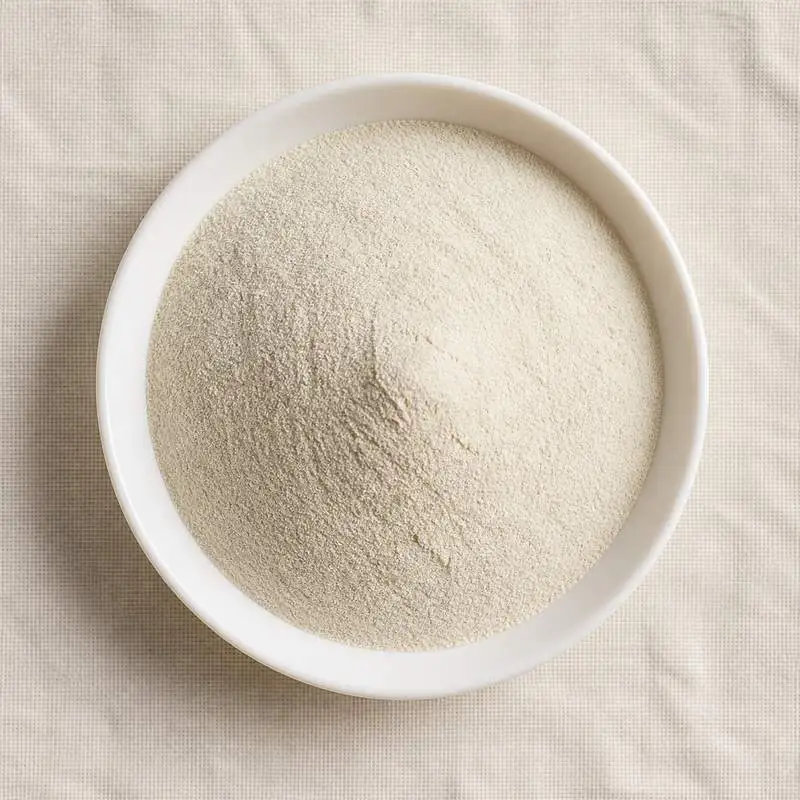
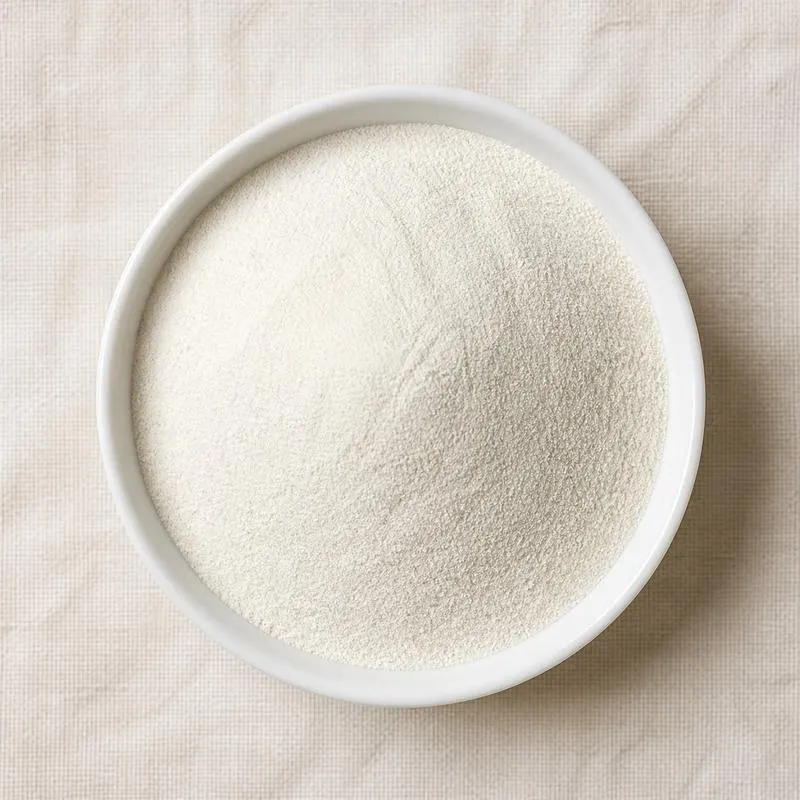
| Appearance | Light brown to brown free-flowing powder |
| Moisture | ≤6.0% |
| Protein (N×6.25) | ≥40% |
| Total Nitrogen | ≥6.4% |
| Amino Nitrogen | ≥3.0% |
| Salt (NaCl) | 30–50% |
| pH (10% sol.) | 5.0–6.5 |
| 3-MCPD | ≤0.02 mg/kg |
| Heavy Metals (as Pb) | ≤1 mg/kg |
| Total Plate Count | ≤10,000 cfu/g |
| Salmonella | Absent in 25g |
Common Markets Grades
Hydrolysed Vegetable Protein is graded by botanical source, by hydrolysis route, and by total nitrogen or free amino-nitrogen content.
The two dominant feedstocks are defatted soy flour and wheat gluten. Maize protein, pea protein, and rice protein HVPs are also commercial. Wheat-based grades carry the dominant glutamic-acid load and the deepest roast character; soy-based grades taste cleaner and more balanced.
Acid-hydrolysed HVP (aHVP) is a dark brown liquid (40 to 60 percent solids) or a free-flowing powder spray-dried with maltodextrin. It delivers strong meaty, roasted, brothy notes.
Enzyme-hydrolysed HVP (eHVP) is lighter in colour, milder in flavour, and free of the chloropropanol concerns that limit the acid route. It is the standard choice for clean-label and infant-grade applications.
Applications
- Bouillon cubes, stock pots, and dehydrated soup mixes
- Gravy granules, sauce mixes, and instant-noodle seasoning sachets
- Snack seasonings on potato chips, extruded snacks, and crackers
- Savory biscuits, cheese-flavour coatings, and savory bakery
- Plant-based meat analogues and vegan cheese for meaty, brothy, umami backbone
- Ready meals, retort pouches, and frozen entrees
- Sausage and processed-meat seasonings for body and roundness
- Marinades, brines, and basting sauces
- Vegetable burgers, falafel mixes, and meat-extender blends
- Pet food palatants and wet-pet-food gravies
Brands Using Hydrolyzed Vegetable Protein
Widely-distributed consumer products that list Hydrolyzed Vegetable Protein on the ingredient label.
- KnorrSpring Vegetable Recipe Mix ↗Ingredients include: '...Hydrolyzed Vegetable Protein (Corn, Soy, Wheat)...'Label verified 2026-05-24
- KnorrBeef au Jus Gravy Mix ↗A gravy mix whose ingredients include hydrolysed vegetable protein from soy, corn and wheat.Label verified 2026-05-24
- LiptonRecipe Secrets Vegetable Soup & Dip Mix ↗Ingredients include 'Hydrolyzed Vegetable Protein (Corn, Soy, Wheat)' per official Lipton product information.Label verified 2026-05-24
Brand names, product names and logos are the property of their owners. They appear here as published evidence that the ingredient is used, taken from the brand's own label or website. Their appearance is not an endorsement, and it does not mean the brand buys from us or from any manufacturer listed on this site.
China Manufacturers of Hydrolyzed Vegetable Protein
Top Hydrolyzed Vegetable Protein manufacturers in China.
- Baoding New Weikang Food Ingredients Co., Ltd.5 ingredients in the directory
 Baoding Way Chein Food Industrial Co., Ltd.2 ingredients in the directory
 Baoding Weijia Food Ingredients Co., Ltd.4 ingredients in the directory
 Hebei Zhongkai Food Industry Co., Ltd.4 ingredients in the directory
 Shandong Zhonghui Biotechnology Co., Ltd.6 ingredients in the directory
Company names and logos are the property of the manufacturers themselves. They are listed here because our own directory records them as producing this ingredient. A listing is not an endorsement by them, and we do not represent them or speak on their behalf.
How We Help Source Hydrolyzed Vegetable Protein
Direct Factory Sourcing
We run the whole process: selecting the manufacturer from the top Chinese food ingredient producers, negotiating the price, verifying quality, and coordinating the logistics. You deal with us instead of with several factories at once.
Original Packaging and Documents from the Manufacturer
The manufacturer sends your Hydrolyzed Vegetable Protein out of its own factory in the original packing, through to your destination port. The COA, COO, MSDS, TDS and any certifications reach you from the manufacturer as well.
Free Samples and Lead Time
We send 100 to 500 g free for your own laboratory to test and you cover only the courier, usually within 2 to 3 working days. ETD is usually within 7 to 15 days once the order is confirmed, and we check that date against the factory's own manufacturing schedule before we give it to you.
Combined Shipment
We can load Hydrolyzed Vegetable Protein together with other ingredients such as Capsicum Oleoresin, Ethyl Maltol and White Pepper into one 20' FCL. If your quantity is small, we can also ship LCL.
Regulatory Status
Hydrolysed Vegetable Protein is an established food ingredient in essentially every regulated market, but acid-hydrolysed grades attract regulatory attention on two process contaminants: 3-monochloropropane-1,2-diol (3-MCPD) and 1,3-dichloropropan-2-ol (1,3-DCP).
Both are formed when acid hydrolysis acts on residual lipids carried on the starting protein. They are classed as probable human carcinogens (1,3-DCP) or as substances for which intake should be minimised (3-MCPD).
In the European Union, Commission Regulation (EU) 2023/915 sets a maximum level of 20 micrograms per kilogram of 3-MCPD in HVP and soy sauce (expressed on a 40 percent dry matter basis), and a corresponding limit on 1,3-DCP. The UK has carried these limits into retained legislation. Industry codes of practice push acid-hydrolysis processors toward alkaline-stripping, vacuum-treatment, or hybrid acid-enzyme routes to comply.
The U.S. Food and Drug Administration treats HVP as GRAS when produced under good manufacturing practice. There is no numerical 3-MCPD limit in U.S. federal food regulation, although industry guidance follows the international Codex Alimentarius level of 0.4 mg/kg in liquid acid-hydrolysed vegetable protein.
For labelling, HVP must declare the source protein in the European Union and the United Kingdom because wheat and soy are listed allergens. Halal and Kosher certifications are routinely available.
Manufacturing Process
Acid hydrolysis is the classical route. Defatted soy flour or vital wheat gluten is suspended in dilute hydrochloric acid and held at 100 to 120 degrees Celsius for several hours. The acid cleaves the peptide bonds and releases a mixture of free amino acids. The liquor is then neutralised with sodium or potassium hydroxide, which generates the sodium chloride that gives aHVP its characteristic salty backbone.
The neutralised liquor is filtered to remove humins (dark insoluble breakdown products), decolorised on activated carbon, and concentrated under vacuum. The finished hydrolysate leaves the plant either as a paste or as a spray-dried powder.
Enzyme hydrolysis is the modern alternative. The same protein source is treated with food-grade proteases, often a mixture of endo- and exo-peptidases, at moderate temperature and near-neutral pH. The reaction is gentler, generates no chloropropanols, and produces a milder, cleaner-tasting hydrolysate.
Enzymatic processes are slower and more expensive but match the requirements of clean-label, infant, clinical, and EU/UK markets where chloropropanol limits in finished food categories are tight.