Ceramide
Ceramides are a family of sphingolipids built from a long-chain sphingoid base joined through an amide bond to a fatty acid. In human skin they make up roughly half the lipid mass of the stratum corneum by weight and, together with cholesterol and free fatty acids, form the lamellar sheets that hold the barrier together and limit water loss. Cosmetic grades are used to rebuild that lipid matrix in formulations aimed at dry, compromised or ageing skin.
Commercial material falls into three groups. Synthetic and biotechnological ceramides matching human structures are designated by the sphingoid base and the fatty acid, giving names such as ceramide NP, ceramide AP, ceramide NS and ceramide EOP. Plant-derived glucosylceramides, extracted from rice bran, wheat germ, konjac or maize, carry a sugar residue and are traded as phytoceramides. Ceramide analogues, of which cetyl-PG hydroxyethyl palmitamide is the most widely used, mimic the geometry of the natural molecule at lower cost.
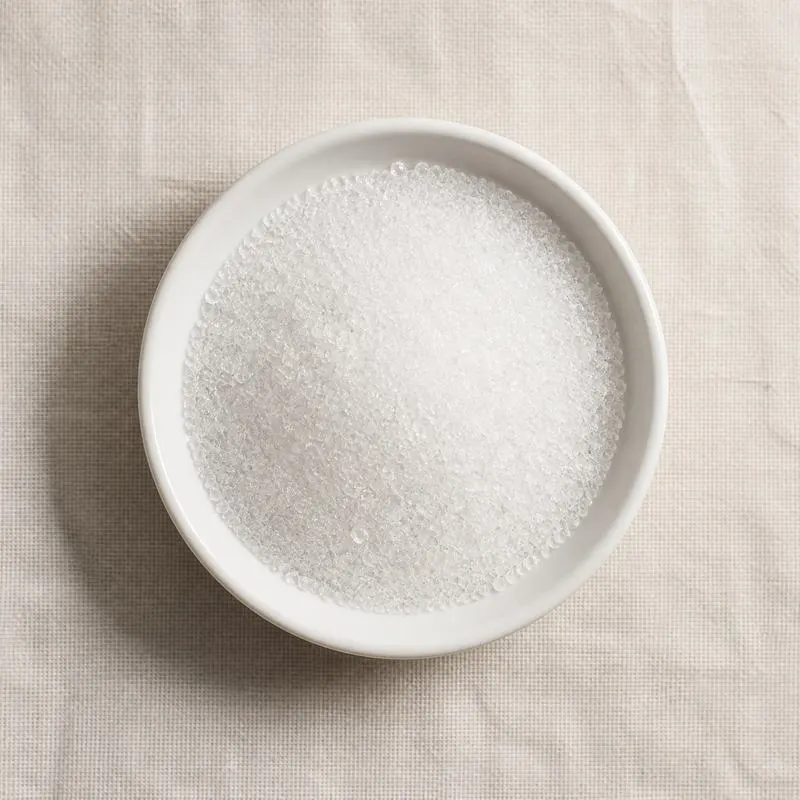
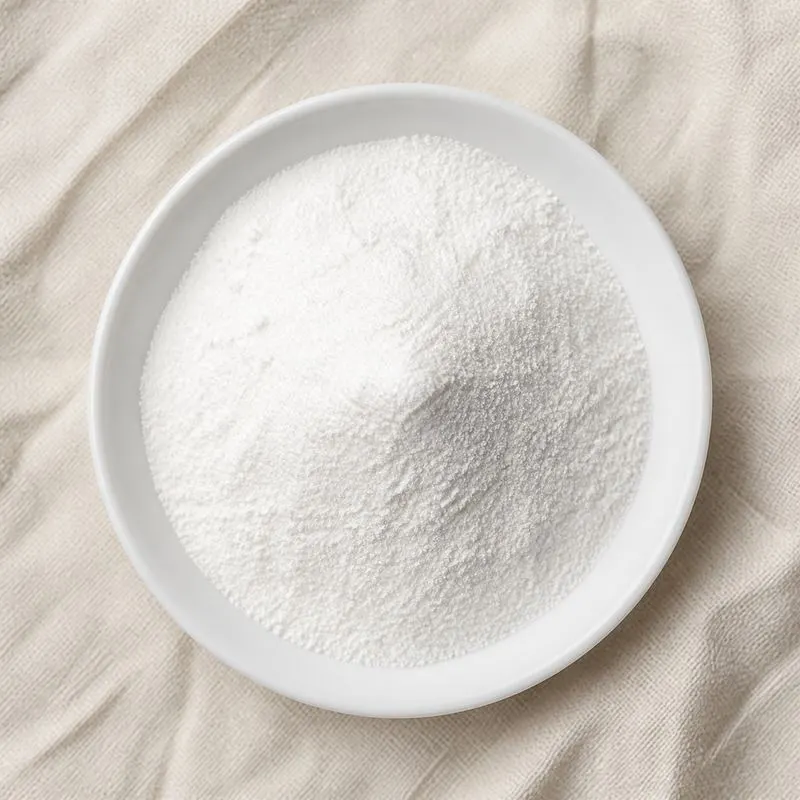
The pure materials are white to off-white waxy powders with high melting points and very low solubility in water and in most cosmetic oils. They are handled either as pre-dispersed liquid concentrates in solvents such as pentylene glycol or caprylic capric triglyceride, or as lamellar dispersions, since undissolved ceramide crystallises out and has no effect.
We source bulk Ceramide from top China manufacturers for our partners. The manufacturers are in Shaanxi. A smaller requirement can ship in a combined container with other ingredients.
Please send the grade you need, the volume and your destination port, and we will come back with a solution and a price.
or call +86-21-6858 0751
- Function
- Cosmetic active
Specifications
| Item | Specification |
|---|---|
| Appearance | White to off-white waxy powder |
| Assay | Not less than 95.0 per cent by HPLC (synthetic ceramide NP) |
| Identification | Infrared spectrum and HPLC retention conform to reference standard |
| Melting Range | 100 to 110 degrees Celsius |
| Free Sphingoid Base | Not more than 1.0 per cent |
| Free Fatty Acid | Not more than 1.0 per cent |
| Loss on Drying | Not more than 2.0 per cent |
| Residue on Ignition | Not more than 0.5 per cent |
| Residual Solvent | Not more than 0.5 per cent total |
| Lead | Not more than 2 mg/kg |
| Arsenic | Not more than 1 mg/kg |
| Total Plate Count | Not more than 100 cfu/g |
| Yeast and Mould | Not more than 50 cfu/g |
| Pathogens | Escherichia coli, Staphylococcus aureus and Pseudomonas aeruginosa absent in 1 g |
Common Markets Grades
Cosmetic grade is the main product, typically at 90 to 99 per cent purity for the synthetic and fermentation-derived structures, with the counterpart phytoceramide extracts standardised instead on glucosylceramide content, commonly 1 to 40 per cent depending on the degree of purification. Oral supplement grades of rice and wheat phytoceramide are traded separately, standardised on glucosylceramide and produced under food conditions.
Because the pure powders are difficult to incorporate, most trade volume moves as prepared dispersions rather than as neat solids. Common forms are 1 to 5 per cent solutions in glycol or ester solvents, lamellar liquid crystal concentrates in which the ceramide is pre-assembled with cholesterol and fatty acid, and multi-ceramide complexes blending NP, AP and EOP at a fixed ratio. Powder grades are specified additionally on particle size and on melting range, and vegan and non-animal-origin certification is a routine requirement given that early commercial ceramide came from bovine sources.
Applications
- Facial moisturisers and barrier repair creams, restoring the lipid matrix of the stratum corneum
- Body lotions for dry and very dry skin, where transepidermal water loss is the target measurement
- Cleansers and micellar products, limiting the barrier damage caused by surfactants
- Post-procedure and sensitive skin ranges, used alongside cholesterol and fatty acids in a physiological ratio
- Anti-ageing serums and night creams, where the fall in ceramide content in mature skin is the reason for use
- Sun care and after-sun products, supporting recovery after ultraviolet exposure
- Hair conditioners and treatments, where ceramide targets the cell membrane complex of the fibre
- Lip balms and hand creams for occupational dryness
- Oral beauty supplements based on rice or wheat glucosylceramide
Brands Using Ceramide
Widely-distributed consumer products that list Ceramide on the ingredient label.
- CeraVeMoisturizing Cream ↗The ingredient list for CeraVe Moisturizing Cream names Ceramide NP, Ceramide AP and Ceramide EOP alongside cholesterol and phytosphingosine.Label verified 2026-08-31
- Elizabeth ArdenAdvanced Gold Ceramide Capsules Daily Youth Restoring Serum ↗Each single-dose capsule of this Elizabeth Arden serum carries a ceramide complex, and Ceramide NP appears in the product's ingredient list.Label verified 2026-08-31
Brand names, product names and logos are the property of their owners. They appear here as published evidence that the ingredient is used, taken from the brand's own label or website. Their appearance is not an endorsement, and it does not mean the brand buys from us or from any manufacturer listed on this site.
China Manufacturers of Ceramide
Top Ceramide manufacturers in China.
- Focusherb Corp.6 ingredients in the directory
 Sanyuanlihua Bio-tech Co., Ltd.13 ingredients in the directory
Company names and logos are the property of the manufacturers themselves. They are listed here because our own directory records them as producing this ingredient. A listing is not an endorsement by them, and we do not represent them or speak on their behalf.
Regulatory Status
Ceramides used on the skin are regulated as cosmetic ingredients rather than as drugs, since their claimed function is moisturising and barrier support rather than a physiological change to the structure of the skin. In the European Union they fall under Regulation (EC) No 1223/2009 on cosmetic products, its annexes neither restrict nor prohibit them, and the safety assessment in the product information file covers them, with the standard INCI names such as ceramide NP and ceramide AP used for labelling. In the United States they are cosmetic ingredients under the Federal Food, Drug, and Cosmetic Act as amended by the Modernization of Cosmetics Regulation Act, subject to facility registration and product listing requirements, with claims determining whether a product would instead be treated as a drug.
Plant-derived glucosylceramide taken orally is regulated as a food or supplement ingredient rather than as a cosmetic. In the European Union such preparations are assessed against the novel food framework where there is no established history of consumption in the Union, and in the United States they are marketed as dietary ingredients, with rice and wheat glucosylceramide preparations having been the subject of new dietary ingredient and self-affirmed safety determinations. Allergen labelling applies where the source is wheat.
Manufacturing Process
Skin-identical ceramides are made either by chemical synthesis or by fermentation. The synthetic route builds the sphingoid base, usually phytosphingosine or sphingosine, then couples it with the required fatty acid by amidation, using an activated acid or an enzymatic acylation to control regioselectivity. The crude product is crystallised from solvent, filtered, washed and recrystallised to remove unreacted base and free fatty acid, then vacuum dried and milled. The fermentation route produces the sphingoid base biologically: a yeast such as Wickerhamomyces ciferrii is cultured on a sugar substrate and secretes acetylated sphingoid bases, which are recovered from the broth, deacetylated by hydrolysis, purified, and then acylated in the same way as the synthetic base.
Phytoceramides follow an extraction route instead. Rice bran, wheat germ or konjac flour is defatted and extracted with ethanol or with a chloroform-free polar solvent system, the extract is concentrated, and the glucosylceramide fraction is enriched by chromatography or by solvent partition and crystallisation before drying and standardisation. Finished ceramide of either origin is usually converted downstream into a solvent solution or a lamellar dispersion, prepared by high-shear or high-pressure homogenisation with cholesterol, fatty acid and an emulsifier.