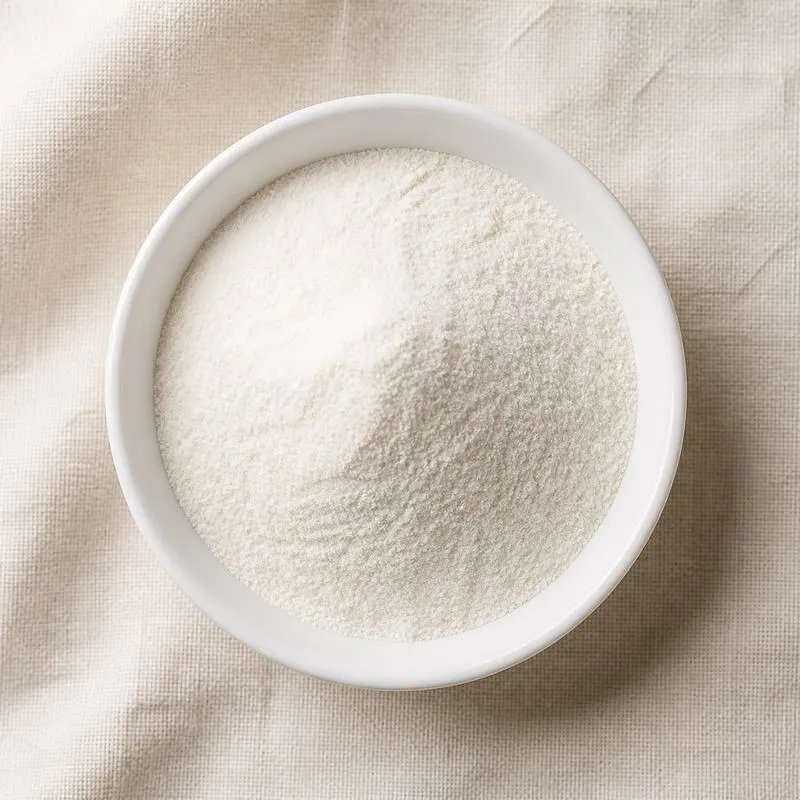
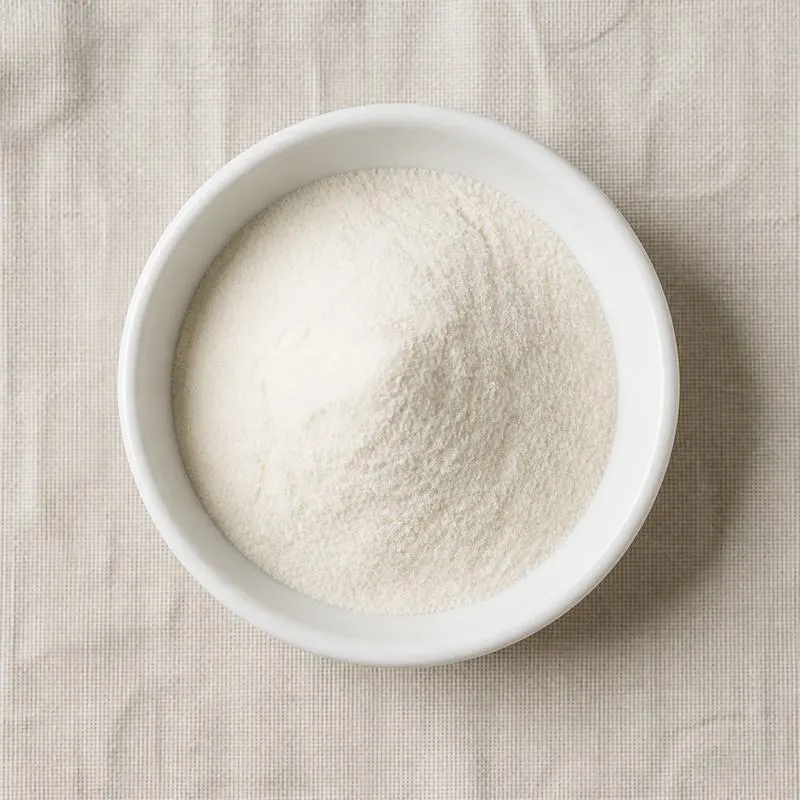
Konjac Flour
Konjac Flour is the milled tuber flour of Amorphophallus konjac, a perennial aroid grown in the mountain provinces of southern China, and its functional component is the water-soluble polysaccharide glucomannan.
Glucomannan is a linear chain of β-1,4-linked D-mannose and D-glucose units carrying acetyl groups along the backbone. Those acetyl groups keep the chain soluble; removing them under alkaline conditions lets the chains associate into a thermo-irreversible gel that no longer melts on reheating. In its native state the flour simply hydrates, swelling to many times its dry volume and building one of the highest viscosities of any commercial hydrocolloid at equal concentration.
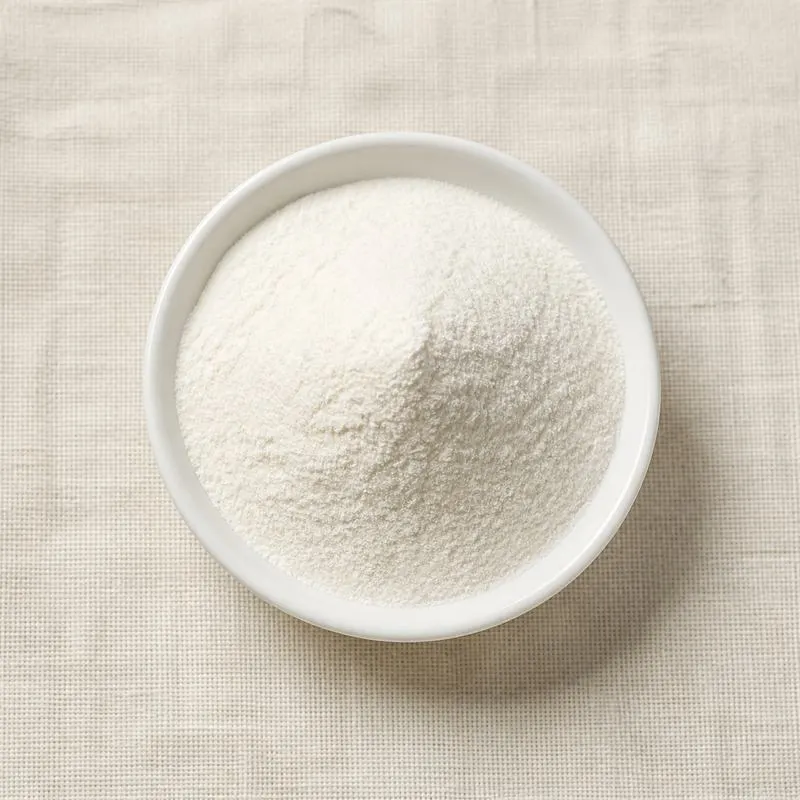
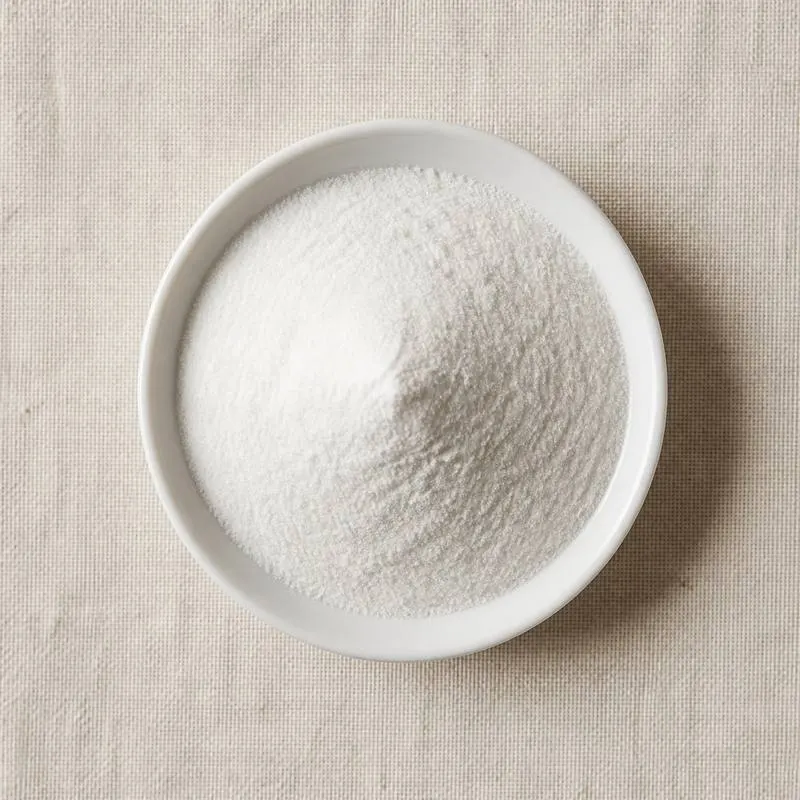
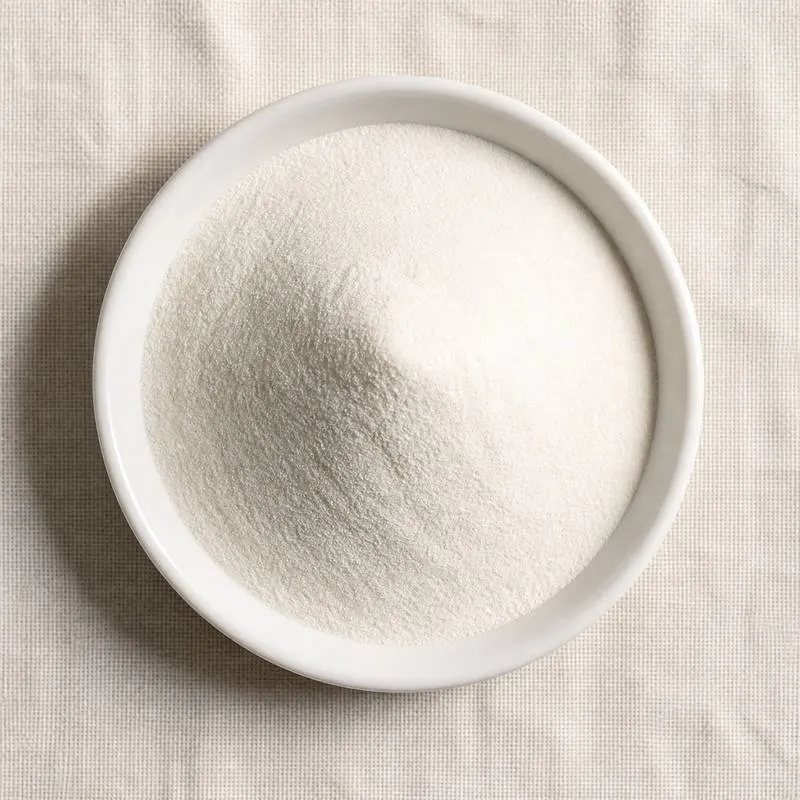
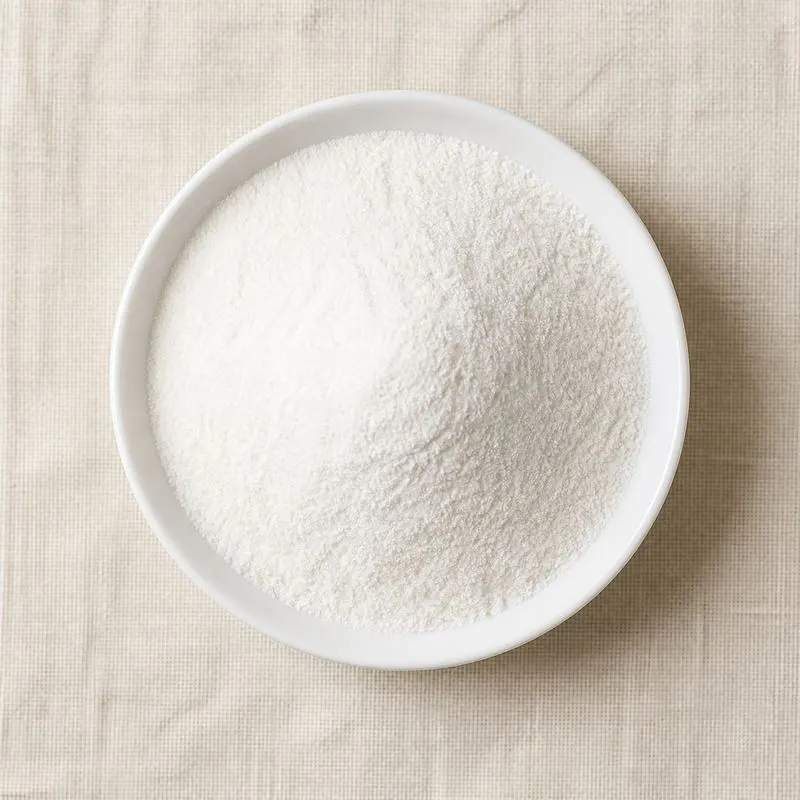
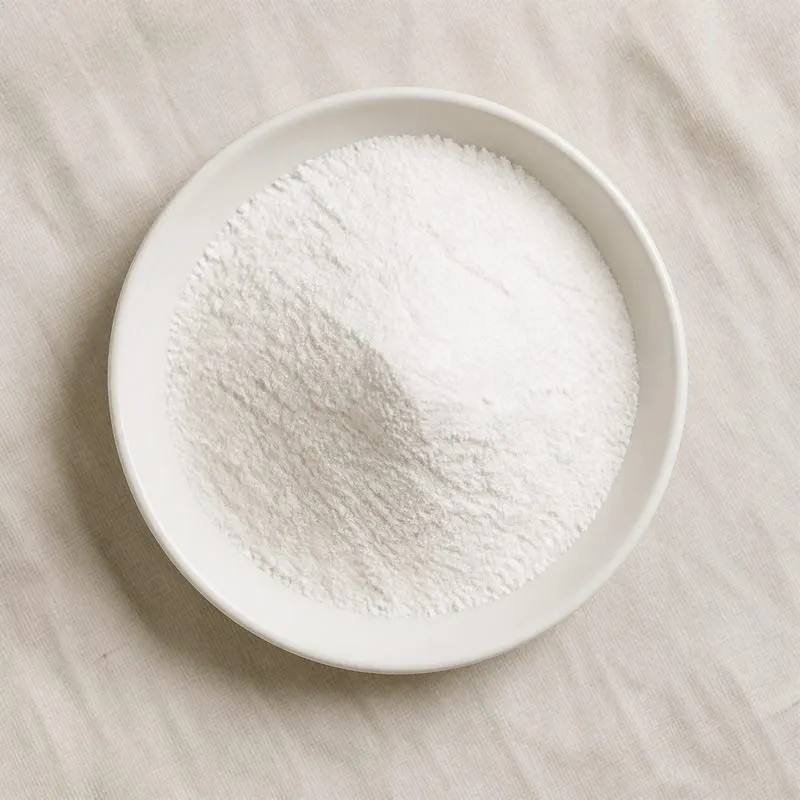
The material is a free-flowing, faintly beige powder with a mild earthy odour, ground to a specified mesh and carrying residual starch, protein and cell-wall fragments from the tuber. Hydration is slow in cold water and accelerates with heat and agitation. Solutions tolerate a broad pH band but lose viscosity under prolonged acid heating, and konjac shows marked synergy with xanthan gum and with kappa carrageenan, forming elastic gels at combined levels far below what either gum needs alone.
We source bulk Konjac Flour from top China manufacturers for our partners. The manufacturer is in Shaanxi. A smaller requirement can ship in a combined container with other ingredients.
Please send the grade you need, the volume and your destination port, and we will come back with a solution and a price.
or call +86-21-6858 0751
- Function
- Thickener / Hydrocolloid
Specifications
| Item | Specification |
|---|---|
| Appearance | Off-white to light beige free-flowing powder |
| Odour | Slight characteristic odour, free from foreign smell |
| Glucomannan Content | ≥ 75% on dry basis |
| Viscosity, 1% solution | ≥ 18,000 mPa.s |
| Identification | Positive for glucomannan by Congo red and infrared |
| Particle Size | ≥ 90% through 80 mesh |
| Loss on Drying | ≤ 12% |
| Ash | ≤ 4.0% |
| pH, 1% solution | 5.0 to 7.0 |
| Sulphur Dioxide | ≤ 0.9 g/kg |
| Lead | ≤ 1.0 mg/kg |
| Arsenic | ≤ 1.0 mg/kg |
| Total Plate Count | ≤ 10,000 cfu/g |
| Yeast and Mould | ≤ 500 cfu/g |
Common Markets Grades
Trade grades are separated first by glucomannan content and then by particle size. Ordinary konjac flour runs in the region of 70 to 80 percent glucomannan and still carries visible tuber specks; refined and purified grades reach 85 to 95 percent after alcohol washing and are used where colour and clarity matter. Viscosity is the commercial yardstick, quoted on a one percent solution and ranging from around 18,000 mPa.s for standard material to above 36,000 mPa.s for high-viscosity refined lots.
Mesh options usually cover 60, 80, 120 and 200 mesh. Coarser grades disperse without lumping and suit slow-hydration systems; 120 and 200 mesh grades hydrate quickly and are chosen for instant powders. Sulphite-free grades are produced for markets that restrict residual sulphur dioxide from the drying step, and deacetylated or partially hydrolysed konjac is sold separately for gel and dietary fibre applications.
Applications
- Konjac noodles and shirataki-style products, where the alkali-set gel gives a firm bite at very low calorie density
- Vegetarian and low-fat meat analogues, where konjac and starch gels replace fat particles and hold moisture through retorting
- Surimi, fish balls and emulsified sausage, where it raises gel strength and reduces cook loss
- Jelly cups and konjac candies, in combination with carrageenan, for a chewy gel that resists melting
- Ice cream and frozen desserts, where it controls ice crystal growth and slows meltdown
- Bakery fillings and sauces, as a thickener that holds viscosity through freeze and thaw cycles
- Gluten-free doughs, where it provides the water-binding and extensibility that gluten would otherwise supply
- Dietary fibre supplements and satiety products, where its swelling capacity is the functional claim
- Reduced-sugar jams and fruit preparations, as a bulking and body-building agent
- Film and coating systems for fresh produce, where konjac forms a coherent edible barrier
Brands Using Konjac Flour
Widely-distributed consumer products that list Konjac Flour on the ingredient label.
- Miracle NoodleReady To Eat Spaghetti ↗The ingredient list for these shirataki-style noodles is water, konjac flour and citric acid.Label verified 2026-08-31
- Miracle NoodleReady To Eat Rice ↗Described as 97 percent water and 3 percent konjac plant flour, with water, konjac flour and citric acid as the stated ingredients.Label verified 2026-08-31
- Skinny PastaThe Original Skinny Pasta ↗Sold as a 100 percent konjac noodle, with konjac fibre as the base of every shape in the range.Label verified 2026-08-31
Brand names, product names and logos are the property of their owners. They appear here as published evidence that the ingredient is used, taken from the brand's own label or website. Their appearance is not an endorsement, and it does not mean the brand buys from us or from any manufacturer listed on this site.
China Manufacturers of Konjac Flour
Top Konjac Flour manufacturers in China.
Company names and logos are the property of the manufacturers themselves. They are listed here because our own directory records them as producing this ingredient. A listing is not an endorsement by them, and we do not represent them or speak on their behalf.
Regulatory Status
In the European Union Regulation (EC) No 1333/2008 authorises konjac as E425, covering konjac gum as E425(i) and konjac glucomannan as E425(ii). The listing carries a specific restriction: konjac is not permitted in jelly mini-cup confectionery, a measure adopted after choking incidents, and that prohibition is the single most important regulatory point for anyone formulating with it.
In the United States konjac flour is used in food on a GRAS basis and konjac products have been the subject of GRAS notifications to the FDA without objection; the same jelly cup choking concern has prompted import alerts and recalls of konjac mini-cup candies. JECFA has evaluated konjac flour and published identity and purity specifications for it, and the additive appears in the Codex General Standard for Food Additives as a thickener, stabiliser and gelling agent.
Manufacturing Process
Fresh konjac tubers are washed, trimmed and sliced, then dried in hot air or under sulphur treatment to prevent enzymatic browning. The dried chips are milled and the glucomannan-rich cells, which are larger and denser than the surrounding starch and protein, are separated mechanically by repeated impact milling with air classification. This dry-route separation is what produces ordinary konjac flour, sometimes called konjac gum, at 70 to 80 percent glucomannan.
Purified grades take that flour through an ethanol wash, in which glucomannan is insoluble while starch fines, soluble sugars, free amino acids, pigments and residual sulphite are carried into the solvent. The washed cake is pressed, dried under vacuum or in a low-temperature flash dryer to protect viscosity, then milled and screened to the target mesh. Ethanol is recovered by distillation and returned to the wash stage.