Patchouli Oil
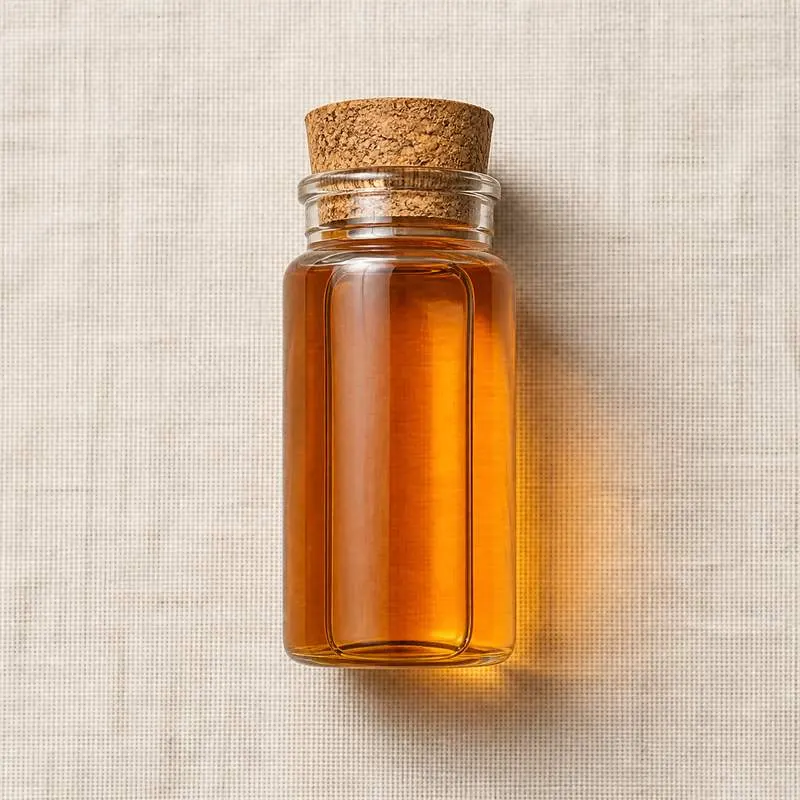
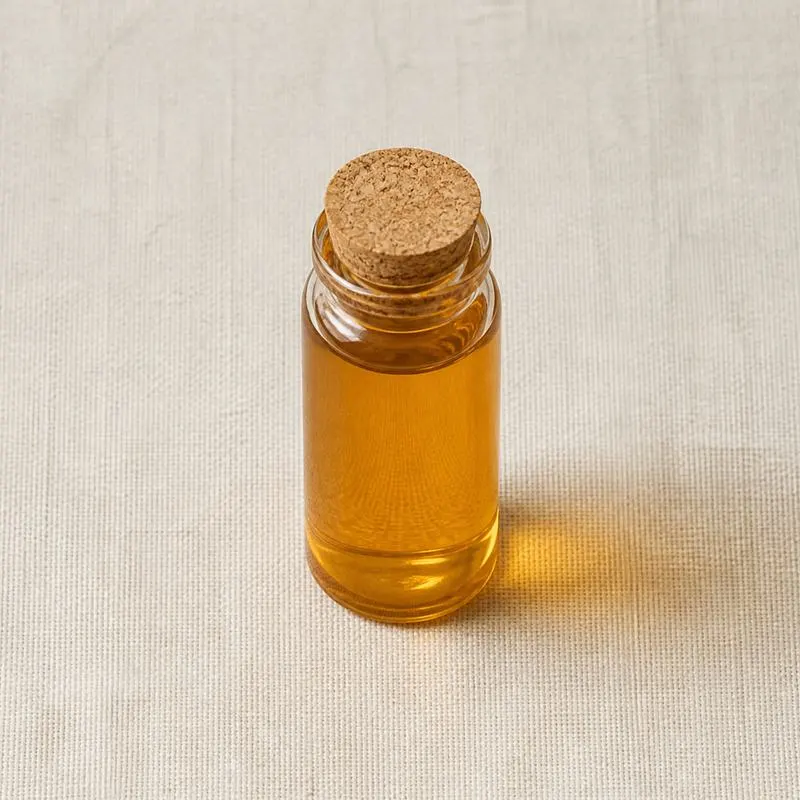
Patchouli oil is the essential oil distilled from the dried leaves of Pogostemon cablin, a herbaceous member of the mint family grown mainly in Indonesia, India and southern China. It is a dark amber to reddish brown viscous liquid with a heavy, earthy, woody and slightly sweet odour that is instantly recognisable and extremely tenacious on a smelling strip.
The oil is dominated by sesquiterpenes and sesquiterpene alcohols. Patchoulol, also called patchouli alcohol, is the principal constituent and the compound most closely associated with the odour, supported by alpha bulnesene, alpha guaiene, seychellene and norpatchoulenol, the last of which is present in small amount but contributes far more to the character than its level suggests. Because the molecules are large and of low volatility, the oil functions as a base note and a fixative that slows the evaporation of lighter materials around it.
Patchouli is soluble in ethanol and in fixed oils and insoluble in water. Unusually among essential oils it improves with age, losing harshness and gaining smoothness over months of storage, and iron contact darkens it, so it is held in glass, aluminium or lined steel rather than plain steel drums.
We source bulk Patchouli Oil from top China manufacturers for our partners. The manufacturer is in Jiangxi. A smaller requirement can ship in a combined container with other ingredients.
Please send the grade you need, the volume and your destination port, and we will come back with a solution and a price.
or call +86-21-6858 0751
- Function
- Flavours and Aromas
Specifications
| Item | Specification |
|---|---|
| Appearance | Viscous liquid, free from suspended matter |
| Colour | Amber to dark reddish brown |
| Odour | Characteristic earthy woody, true to reference sample |
| Patchoulol content by gas chromatography | 30.0 percent minimum |
| Alpha bulnesene | 13.0 to 22.0 percent |
| Relative density at 20 degrees Celsius | 0.950 to 0.975 |
| Refractive index at 20 degrees Celsius | 1.5050 to 1.5130 |
| Optical rotation at 20 degrees Celsius | minus 40 to minus 60 degrees |
| Acid value | 4.0 mg KOH/g maximum |
| Solubility in 90 percent ethanol | Clear solution in 10 volumes |
| Iron content | 25 mg/kg maximum, iron free grade |
| Moisture | 0.3 percent maximum |
| Lead | 1.0 mg/kg maximum |
| Arsenic | 1.0 mg/kg maximum |
Common Markets Grades
The primary trade positions are the crude distilled oil and the iron free or light coloured oil. Crude oil, distilled in producing regions in simple stills, is darkest and carries the fullest odour, and much of it is bought for redistillation. Iron free grades are produced in stainless steel equipment and are specified where colour matters in a pale finished product.
Redistilled or rectified oil is vacuum fractionated to lift the colour and remove heavy resinous material, giving a lighter, cleaner but somewhat less complex odour. Molecular distilled and decolourised grades go further for use in fine fragrance and cosmetic bases. Patchoulol content is the figure most contracts are written against, typically declared as a range in the region of thirty percent or above, and buyers also distinguish oil by origin and by whether the leaf was fermented before distillation, since the fermentation step deepens the odour. Aged stock trades above freshly distilled oil.
Applications
- Fine fragrance, where it is a classic base note in chypre, oriental and fougere accords
- Fixative for perfume compounds, slowing the loss of lighter top and heart notes
- Soap and detergent perfumery, since the sesquiterpene body survives alkaline and oxidative conditions
- Personal care products including lotions, shampoos and deodorants
- Home fragrance, candles, incense and air care
- Aromatherapy and massage blends, one of the larger direct consumer outlets
- Flavour use at trace level in bitters, chai type spice blends and some confectionery
- Textile and leather scenting, a historical use that gave the oil its early trade importance
- Feedstock for the isolation of patchoulol and for the synthesis of related woody aroma chemicals
Brands Using Patchouli Oil
Widely-distributed consumer products that list Patchouli Oil on the ingredient label.
Brand names, product names and logos are the property of their owners. They appear here as published evidence that the ingredient is used, taken from the brand's own label or website. Their appearance is not an endorsement, and it does not mean the brand buys from us or from any manufacturer listed on this site.
China Manufacturers of Patchouli Oil
Top Patchouli Oil manufacturers in China.
Company names and logos are the property of the manufacturers themselves. They are listed here because our own directory records them as producing this ingredient. A listing is not an endorsement by them, and we do not represent them or speak on their behalf.
Regulatory Status
In the United States 21 CFR 182.20 lists patchouli oil among the essential oils, oleoresins and natural extractives generally recognised as safe for their intended use in food, where it appears as patchouly, and it holds FEMA GRAS status as a flavouring substance. The great majority of the material goes into fragrance rather than food, and that use is governed by the industry self regulatory standards of the International Fragrance Association rather than by food law.
In the European Union the oil is a flavouring preparation of plant origin under Regulation (EC) No 1334/2008 and therefore carries no E number. In cosmetic use it falls under the cosmetic products regulation, and safety assessment of the finished product must account for its sesquiterpene composition and for the low level of allergens it may carry. The Joint FAO and WHO Expert Committee on Food Additives has evaluated the sesquiterpene flavouring group to which its main constituents belong. International trade specifications commonly reference the ISO standard for oil of patchouli, which sets the physical and chromatographic profile the market expects.
Manufacturing Process
Leaves are harvested from mature plants, shade dried to reduce moisture, and in most producing regions allowed to ferment or cure in stacks for several days, a step that partly breaks down the leaf tissue and improves both yield and odour quality. The cured leaf is then baled and charged to the still. Distillation is by steam or by direct fired water and steam, and it is slow, because the sesquiterpene constituents are of low volatility and need a long run, often eight hours or more, to be recovered completely.
The condensed distillate is separated in a Florentine receiver and the oil is dried and settled. Crude oil intended for the general market may be sold at this stage, but a large proportion is redistilled under vacuum in a packed column or a wiped film unit, which removes water, light off notes and the heaviest resinous tail and lifts the colour. Some producers pass the oil through activated carbon or a chelating treatment to remove iron picked up from field equipment. Fractions are recombined against a retained reference by a trained assessor to hit the declared patchoulol range, then polish filtered and filled into lined or aluminium containers for storage, where the oil continues to mature.