Pepper Oil
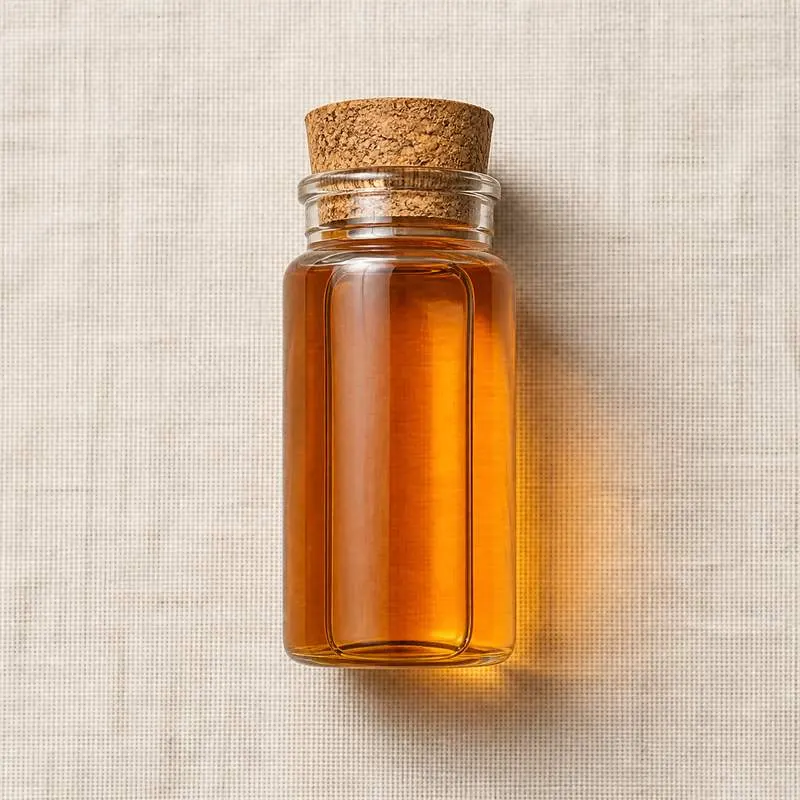
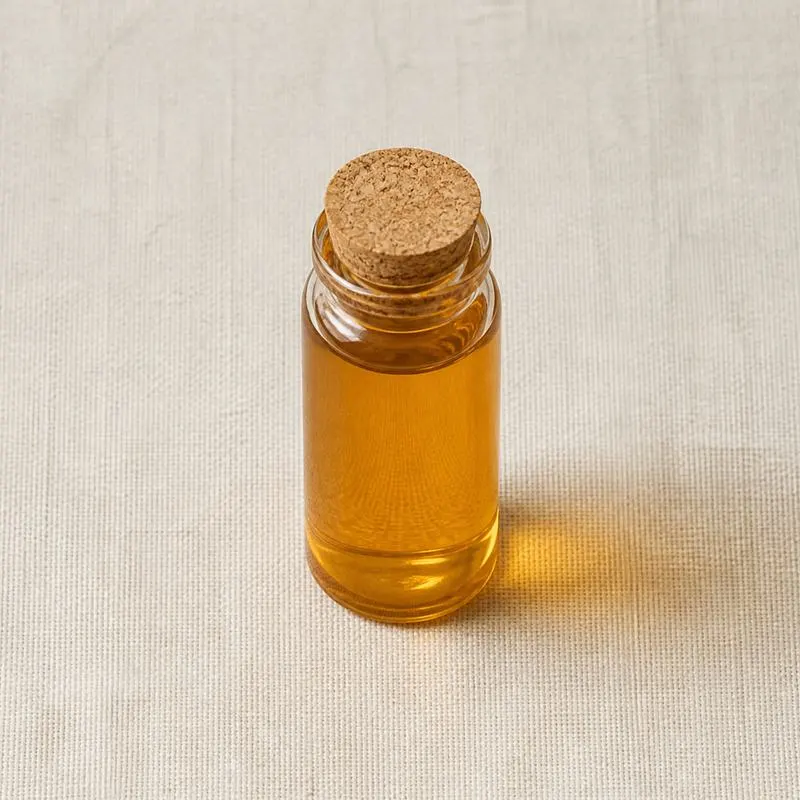
Pepper oil is the essential oil steam distilled from the dried unripe berries of Piper nigrum, the black pepper vine. It is a pale yellow to greenish mobile liquid with a fresh, dry, woody and warm spicy odour that reads immediately as pepper on the nose.
An important property of the oil is what it does not contain. Piperine, the alkaloid responsible for the pungency of the spice, is non volatile and does not distil, so pepper oil carries the aroma of pepper without any of its bite. Anyone needing the heat as well as the smell must use the oleoresin instead. The oil is built on terpene hydrocarbons, chiefly beta caryophyllene together with limonene, sabinene, alpha and beta pinene and delta 3 carene, with small amounts of oxygenated compounds contributing the character.
The oil is soluble in ethanol and in fixed oils and practically insoluble in water, so aqueous applications use a solubilised or emulsified form. Its high hydrocarbon content makes it prone to oxidation and to resinification once opened, which flattens the fresh top note and turns the odour turpentine like, and material is therefore filled under nitrogen into full containers and held cool and dark.
We source bulk Pepper Oil from top China manufacturers for our partners. The manufacturer is in Jiangxi. A smaller requirement can ship in a combined container with other ingredients.
Please send the grade you need, the volume and your destination port, and we will come back with a solution and a price.
or call +86-21-6858 0751
- Function
- Flavours and Aromas
Specifications
| Item | Specification |
|---|---|
| Appearance | Clear mobile liquid, free from suspended matter |
| Colour | Colourless to pale yellow green |
| Odour | Characteristic fresh spicy pepper, true to reference sample |
| Beta caryophyllene by gas chromatography | 18.0 to 35.0 percent |
| Limonene | 10.0 to 22.0 percent |
| Relative density at 20 degrees Celsius | 0.864 to 0.884 |
| Refractive index at 20 degrees Celsius | 1.4790 to 1.4900 |
| Optical rotation at 20 degrees Celsius | minus 25 to plus 4 degrees |
| Solubility in 90 percent ethanol | Clear solution in 3 volumes |
| Moisture | 0.2 percent maximum |
| Non volatile residue | 1.0 percent maximum |
| Piperine | Not detected |
| Lead | 1.0 mg/kg maximum |
| Arsenic | 1.0 mg/kg maximum |
Common Markets Grades
The standard commercial position is the whole steam distilled oil, specified on optical rotation, refractive index and gas chromatographic profile, with beta caryophyllene the usual marker constituent. Origin is stated because the balance of monoterpenes shifts with growing region, and Indian, Indonesian, Vietnamese and Sri Lankan oils have recognisably different profiles.
Beyond the whole oil, redistilled and rectified grades are produced by vacuum fractionation to lift colour and remove heavy resinous material, and terpeneless or terpene reduced grades concentrate the oxygenated fraction, giving better solubility in dilute alcohol and a rounder, less turpentine like odour at the cost of some freshness. Carbon dioxide extracted pepper oils are a separate item with a fuller, more true to spice profile than the distilled oil, and black pepper oleoresin, which carries the piperine, is a different product entirely. Food grade and fragrance grade material differ mainly in the residue and heavy metal testing applied.
Applications
- Meat products including sausage, ham and pate, where the oil gives pepper aroma without visible specks
- Seasoning and snack flavours, dosed as a solution or plated onto a dry carrier
- Soups, sauces and gravies in industrial manufacture
- Instant noodle seasoning oils and wet sachets
- Marinades and brines, delivered from an emulsified premix so it carries in water
- Alcoholic drinks including gin and spiced bitters, where the terpene lift is wanted
- Fine fragrance, as a spicy top note in masculine and fougere accords
- Personal care and household fragrance in spice and woody directions
- Aromatherapy and massage blends
- Chewing gum and confectionery in spice flavoured lines, at low dose
Brands Using Pepper Oil
Widely-distributed consumer products that list Pepper Oil on the ingredient label.
Brand names, product names and logos are the property of their owners. They appear here as published evidence that the ingredient is used, taken from the brand's own label or website. Their appearance is not an endorsement, and it does not mean the brand buys from us or from any manufacturer listed on this site.
China Manufacturers of Pepper Oil
Top Pepper Oil manufacturers in China.
Company names and logos are the property of the manufacturers themselves. They are listed here because our own directory records them as producing this ingredient. A listing is not an endorsement by them, and we do not represent them or speak on their behalf.
Regulatory Status
In the United States 21 CFR 182.20 lists black pepper oil among the essential oils, oleoresins and natural extractives generally recognised as safe for their intended use in food, and it holds FEMA GRAS status as a flavouring substance. It is used at the level required to achieve the intended flavour effect, in line with good manufacturing practice. Fragrance use falls outside food law and is governed by the industry self regulatory standards of the International Fragrance Association.
In the European Union pepper oil is a flavouring preparation of plant origin under Regulation (EC) No 1334/2008 and therefore carries no E number, since flavourings are not assigned one. Pesticide residue and contaminant controls applying to the pepper raw material carry through to the oil. The Joint FAO and WHO Expert Committee on Food Additives has evaluated the terpene hydrocarbon flavouring groups that make up the bulk of the oil, and Codex flavouring guidance applies where national law adopts it. International trade specifications commonly reference the ISO standard for oil of pepper, which sets the physical constants and chromatographic profile the market expects.
Manufacturing Process
Dried black pepper berries, often the light berries and broken material that would not meet whole spice grade, are cleaned and coarsely crushed immediately before distillation, since grinding ahead of time loses the volatile oil the process is trying to recover. The crushed material is charged to a batch still and distilled with saturated steam. Yield runs at roughly 2 to 4 percent on the dried spice and the run takes several hours, with the heavier sesquiterpenes coming over late in the distillation.
The condensed vapours are separated in a Florentine receiver, where the oil floats on the aqueous distillate, and the water layer is normally cohobated, that is returned to the still, to recover the small quantity of dissolved oxygenated compounds it carries. The separated oil is dried over a desiccant or by settling, then filtered. Where a rectified grade is required the oil goes to a vacuum packed column, and light and heavy fractions are cut away from a heart cut that is recombined against a retained reference by a trained assessor. The finished oil is polish filtered and filled under nitrogen into lacquer lined steel drums or aluminium containers held in cool storage.