Aldehyde C-18
Aldehyde C-18 is the perfumery trade name for gamma-nonalactone, and like the other lactones in the old aldehyde series the name is inaccurate. The compound is neither an aldehyde nor an eighteen carbon chain: it is a five membered cyclic ester with nine carbons, given a number in the aldehyde series by nineteenth century convention. Its other trade name, coconut aldehyde, describes the odour accurately even if the chemistry is still wrong.
The smell is creamy coconut with a peach and apricot facet and a sweet, slightly waxy base. It is shorter and sharper than the eleven carbon lactone used for peach, and the two are commonly used together, one to give the fruity body and the other the coconut and dairy edge. The compound occurs naturally in coconut, peach, apricot, and in butter and cream, where gamma lactones are formed from hydroxy fatty acids during ripening and fermentation.
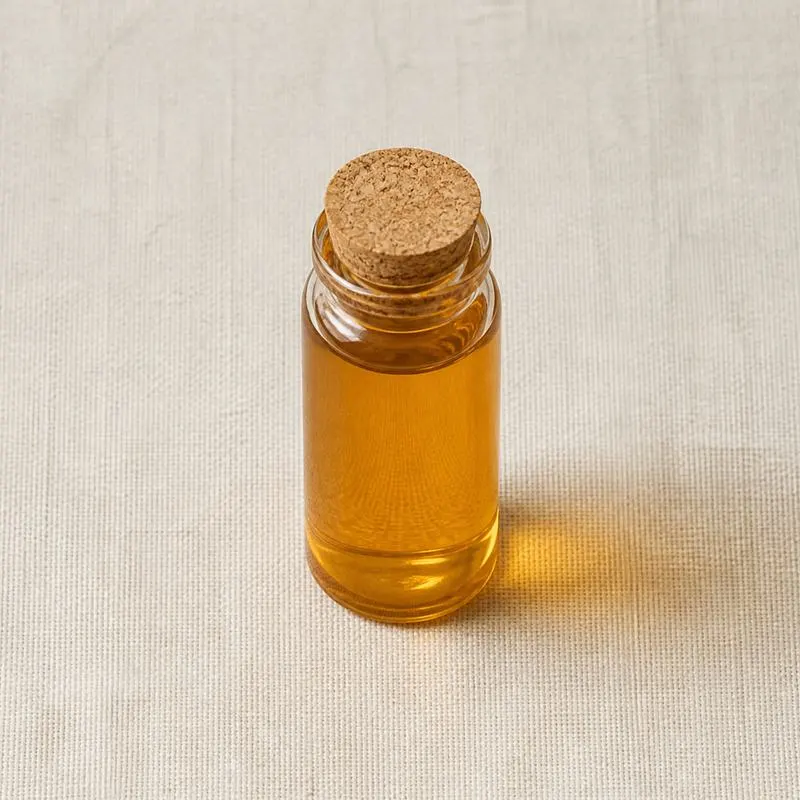
The material is a colourless to pale yellow oily liquid boiling near two hundred and forty three degrees, practically insoluble in water and freely soluble in ethanol and in fixed oils. It is a persistent middle note rather than a top note, stable in neutral and acid systems, and hydrolysed by alkali to the odourless hydroxy acid, which limits its use in strongly alkaline products.
We source bulk Aldehyde C-18 from top China manufacturers for our partners. The manufacturer is in Beijing. A smaller requirement can ship in a combined container with other ingredients.
Please send the grade you need, the volume and your destination port, and we will come back with a solution and a price.
or call +86-21-6858 0751
- Function
- Flavours and Aromas
Specifications
| Item | Specification |
|---|---|
| Appearance | Colourless to pale yellow clear oily liquid |
| Odour | Creamy coconut with peach and apricot facets |
| Assay by Gas Chromatography | Not less than 98.0% |
| Isomeric Lactones | Not more than 1.5% total |
| Relative Density at 20 C | 0.960 to 0.968 |
| Refractive Index at 20 C | 1.446 to 1.452 |
| Acid Value | Not more than 1.0 mg KOH per g |
| Water Content | Not more than 0.3% |
| Solubility | Clear solution in one volume of 60% ethanol |
| Colour | Not more than 50 Hazen units |
| Heavy Metals as Lead | Not more than 10 mg/kg |
| Lead | Not more than 1.0 mg/kg |
| Arsenic | Not more than 0.5 mg/kg |
Common Markets Grades
Synthetic material at ninety eight percent or better by gas chromatography is the volume article, sold as the neat liquid and specified on assay, on acid value and on isomeric lactone content, since the delta lactone impurity dulls the coconut character. Flavour grade and fragrance grade are the same molecule sold with different colour limits and documentation.
Natural grade is produced by biotransformation, in which a yeast converts a hydroxy fatty acid precursor and the resulting lactone is recovered and distilled. It trades at a substantial premium and is bought with isotope ratio evidence of natural origin. Both grades ship neat in lined drums and lacquered tins, with dilutions at one and ten percent in ethanol, triacetin or propylene glycol used by compounders dosing small quantities.
Applications
- Coconut flavours, where it is the character impact compound and defines the profile
- Peach and apricot flavours, used with the longer chain lactones to build the stone fruit body
- Dairy flavours for cream, butter and condensed milk, reproducing the natural lactone fraction of milk fat
- Ice cream and frozen dessert flavours, where its low volatility survives the cold serving temperature
- Confectionery and chewing gum, giving a persistent creamy middle note
- Bakery fillings, custards and biscuit flavours, since the lactone is stable through the oven
- Tropical and pina colada beverage flavours, dosed through an emulsion
- Nut and praline flavours, where the creamy facet rounds a roasted profile
- Fragrance compounding, as a warm creamy note in suncare, personal care and fine perfumery
China Manufacturers of Aldehyde C-18
Top Aldehyde C-18 manufacturers in China.

Company names and logos are the property of the manufacturers themselves. They are listed here because our own directory records them as producing this ingredient. A listing is not an endorsement by them, and we do not represent them or speak on their behalf.
Regulatory Status
Gamma-nonalactone is a long established flavouring substance in the major markets. In the United States it holds FEMA GRAS status, and the Food and Drug Administration lists it among the synthetic flavouring substances and adjuvants permitted for use in food. In the European Union it appears on the Union list of authorised flavouring substances with its own FLAVIS number, which is the clearance needed for food use, and no E number applies because flavourings sit outside the food additive framework.
JECFA has assessed the substance within its group evaluation of aliphatic lactones and concluded that there is no safety concern at the levels at which it is used as a flavouring. Material sold into perfumery is additionally governed by the fragrance industry standards for cosmetic ingredients, which apply alongside rather than within food law.
Manufacturing Process
The established route builds the nine carbon chain from a seven carbon aldehyde. Heptanal, itself obtained from castor oil derived feedstocks or by hydroformylation, is condensed with malonic acid in the presence of an amine base, and the intermediate loses carbon dioxide to give 2-nonenoic acid with a double bond next to the carboxyl group. This adds two carbons and installs the unsaturation that the ring closure will later use.
The unsaturated acid is then treated with a strong acid catalyst, which protonates the double bond and allows it to migrate along the chain through carbocation intermediates. When it reaches the position four carbons from the carboxyl group the carboxylic acid oxygen attacks and the five membered lactone ring closes, which is the thermodynamically favoured product and drives the isomerisation to completion. The reaction mass is quenched into water, the organic layer separated and washed with dilute alkali to remove residual acid and unreacted material, then dried. Vacuum fractional distillation removes isomeric lactones and heavy residues, and the heart cut is polished through a filter and filled under nitrogen.