Angelica Root Oil
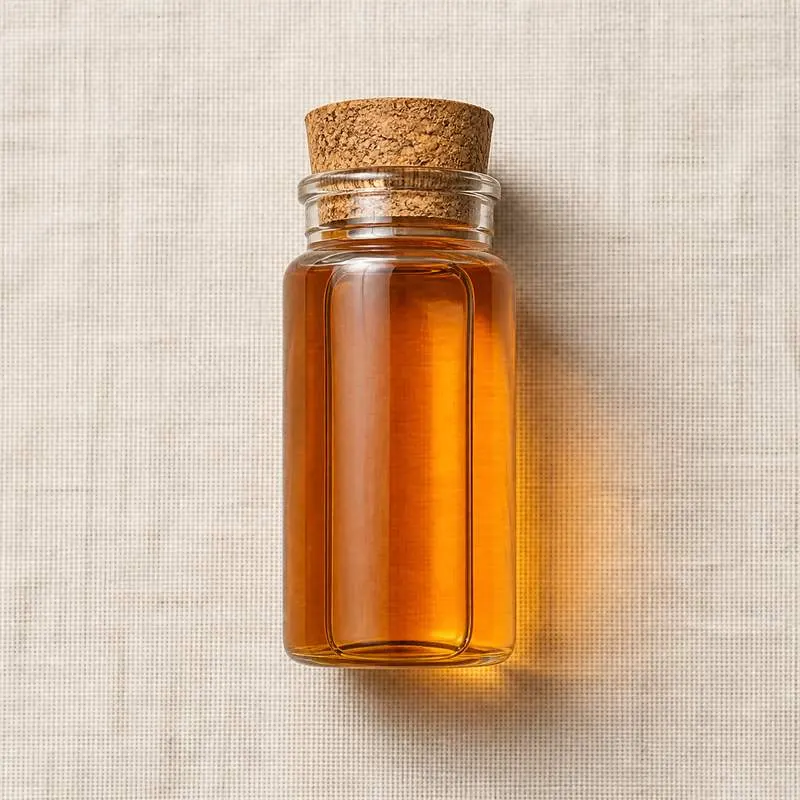
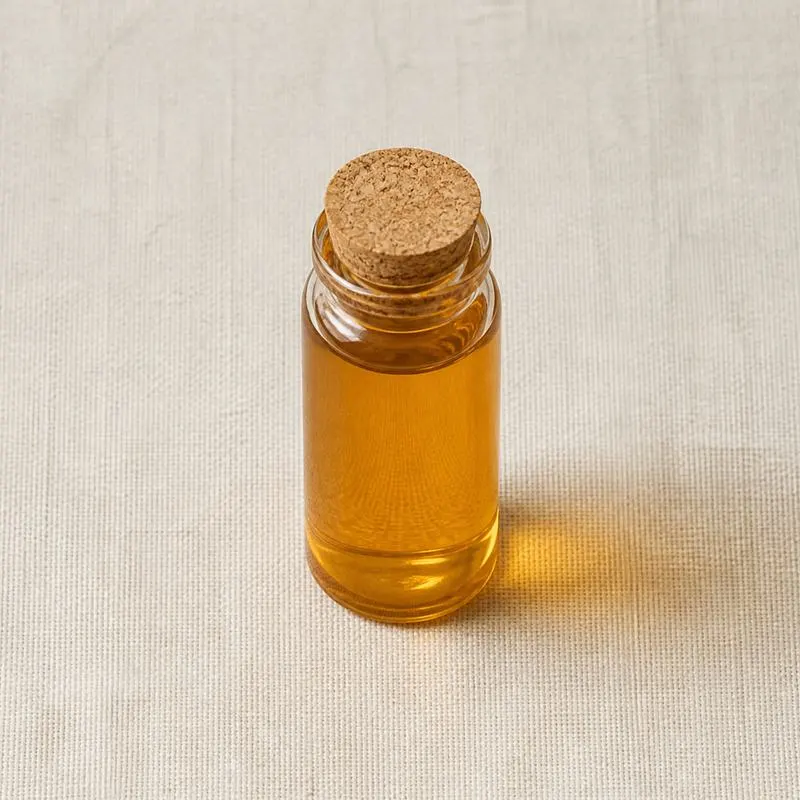
Angelica root oil is the essential oil obtained by steam distillation of the dried roots and rhizomes of Angelica archangelica, a tall umbelliferous plant grown mainly in northern and central Europe. The oil is a pale yellow to amber mobile liquid that darkens and thickens with age, and it carries a complex profile that is peppery and green at the top, warm and musky in the drydown.
Composition is dominated by monoterpene hydrocarbons, chiefly alpha pinene, beta phellandrene, delta 3 carene and limonene, which account for most of the volume. The character however comes from trace constituents present at fractions of a percent, particularly the macrocyclic lactone pentadecanolide, which supplies the musky body that distinguishes root oil from the lighter seed oil.
The oil is insoluble in water and soluble in ethanol and fixed oils, so it is dosed through alcoholic or oil based carriers. It also contains furocoumarins including bergapten, which makes the material phototoxic on skin and limits its use in leave on cosmetics, although this is not a limitation in beverage work.
We source bulk Angelica Root Oil from top China manufacturers for our partners. The manufacturer is in Shaanxi. A smaller requirement can ship in a combined container with other ingredients.
Please send the grade you need, the volume and your destination port, and we will come back with a solution and a price.
or call +86-21-6858 0751
- Function
- Flavours and Aromas
Specifications
| Item | Specification |
|---|---|
| Appearance | Clear mobile liquid, pale yellow to amber |
| Odour | Peppery, green, earthy with musky drydown |
| Identification | Gas chromatographic profile conforms to reference |
| Alpha pinene | 18.0 to 30.0 percent |
| Beta phellandrene | 10.0 to 22.0 percent |
| Delta 3 carene | 5.0 to 15.0 percent |
| Pentadecanolide | 0.3 percent minimum |
| Relative density at 20 degrees Celsius | 0.850 to 0.880 |
| Refractive index at 20 degrees Celsius | 1.4700 to 1.4880 |
| Optical rotation at 20 degrees Celsius | Plus 10 to plus 40 degrees |
| Solubility in ethanol 90 percent | Soluble, may show slight opalescence |
| Acid value | Not more than 3.0 |
| Heavy metals, as lead | Not more than 10 mg per kg |
| Arsenic | Not more than 3 mg per kg |
Common Markets Grades
The primary distinction is between angelica root oil and angelica seed oil, which are separate products of commerce from the same plant. Seed oil is lighter, more citrus and pepper toned, higher in beta phellandrene and free of the musky lactone character; it is not a substitute for root oil. Within root oil, distillates from fresh root and from dried root differ, with dried root giving a heavier and more tenacious oil.
Root oil is traded as a whole natural distillate and as a furocoumarin reduced fraction produced by molecular distillation or supercritical processing, and the reduced fraction is bought where phototoxicity has to be controlled. Supercritical carbon dioxide extracts and solvent based resinoids are also offered and differ markedly from the steam distilled oil in weight and colour. Specification is normally on optical rotation, refractive index and a gas chromatographic profile rather than on a single assay figure.
Applications
- Gin, where angelica root is one of the classical botanicals and anchors the juniper with earthy, dry weight
- Vermouth, bitters and herbal liqueurs such as chartreuse and benedictine, where it contributes the root and musk layer of the botanical accord
- Aromatised wines and aperitifs, where a few parts per million adjust the finish
- Compounded spice and herbal flavours for savoury applications, used at trace level to add naturalness
- Non alcoholic botanical drinks and tonic waters seeking a gin adjacent profile
- Fine fragrance, as a natural musk and green top note in chypre and fougere structures
- Confectionery and baked goods carrying a herbal or liquorice adjacent profile
- Reconstitution of other root oils and expensive naturals, where its lactone content lends body
China Manufacturers of Angelica Root Oil
Top Angelica Root Oil manufacturers in China.
Company names and logos are the property of the manufacturers themselves. They are listed here because our own directory records them as producing this ingredient. A listing is not an endorsement by them, and we do not represent them or speak on their behalf.
Regulatory Status
In the United States angelica root oil is generally recognised as safe for its intended use as a flavouring. Angelica is named in the FDA list of essential oils, oleoresins and natural extractives at 21 CFR 182.20, and the oil carries a FEMA GRAS listing for flavour use. Because the whole oil is phototoxic, cosmetic and topical applications are limited by industry safety guidance rather than by the food rules.
In the European Union the oil is used as a flavouring under Regulation (EC) No 1334/2008; that framework covers natural flavouring preparations obtained from a named botanical source, rather than an E number. The same regulation sets limits on certain biologically active principles present in botanical flavourings, which is the relevant control point for herbal liqueur formulation. Codex Alimentarius does not maintain a commodity standard for the oil, and international trade specifications generally follow the ISO and pharmacopoeial monographs for Angelica archangelica root oil.
Manufacturing Process
Roots and rhizomes are lifted in the autumn of the first or second year, washed free of soil, cut and either distilled fresh or dried to a stable moisture and stored. Dried root is milled immediately before distillation, since the volatile fraction is lost rapidly from broken material. The charge is loaded into a stainless steel still and distilled with saturated steam at low pressure for eight to twenty hours; the long cycle is needed because the heavy lactones come over late in the run.
Vapour passes to a condenser and then to a Florentine separator, where the oil is decanted from the aqueous distillate. The crude oil is dried over anhydrous sodium sulphate or by vacuum stripping, filtered and standardised by blending distillation cuts to a target gas chromatographic profile. Where a furocoumarin reduced quality is required, the dried oil is passed through short path molecular distillation, which leaves the heavy coumarins in the residue while carrying the aroma fraction overhead. Finished oil is filled under nitrogen into lined drums and held cool and dark.