Costus Root Oil
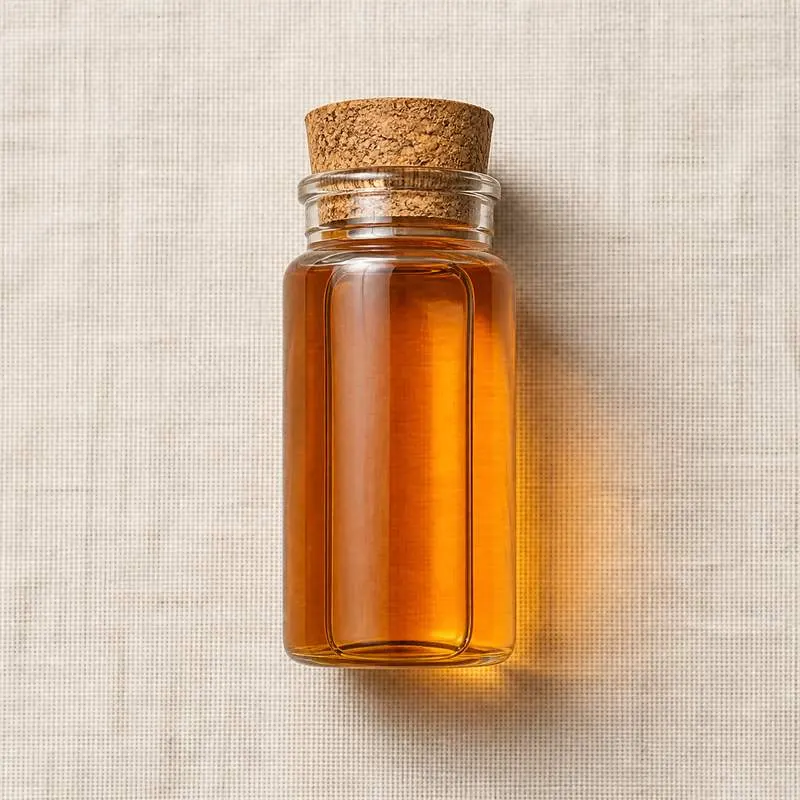
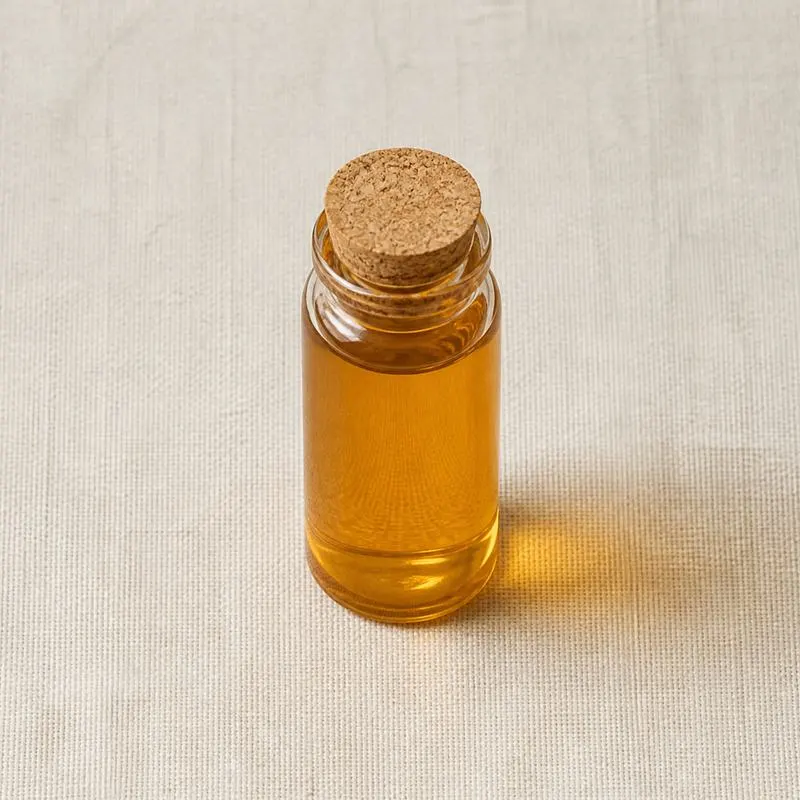
Costus root oil is the essential oil obtained by steam distillation of the dried roots of Saussurea costus, a tall composite herb of the high Himalaya also encountered in older literature as Saussurea lappa and Aucklandia lappa. It is a viscous pale yellow to dark brown liquid with an odour that is at once woody, earthy, animalic and musky, often described as reminiscent of unwashed hair or old wood, and it is extraordinarily persistent.
The composition is dominated by sesquiterpenes and, in particular, by the sesquiterpene lactones costunolide and dehydrocostus lactone, which together can make up a large part of the oil. These lactones carry an alpha methylene gamma lactone group, which reacts readily with skin proteins, and they are among the most potent contact sensitisers found in any natural aromatic material. That single fact decides the commercial position of the oil more than its odour does.
Alongside the lactones the oil contains costol, costic acid, dihydrocostunolide, aplotaxene and other sesquiterpene hydrocarbons. It is soluble in alcohol and in fixed oils, insoluble in water, and darkens and thickens on exposure to air. In use it is handled as a trace fixative at very low dilution rather than as a body note.
We source bulk Costus Root Oil from top China manufacturers for our partners. The manufacturer is in Henan. A smaller requirement can ship in a combined container with other ingredients.
Please send the grade you need, the volume and your destination port, and we will come back with a solution and a price.
or call +86-21-6858 0751

- Function
- Flavours and Aromas
Specifications
| Item | Specification |
|---|---|
| Appearance | Viscous pale yellow to dark brown liquid |
| Odour | Woody, earthy, animalic and musky, extremely persistent |
| Botanical Identity | Confirmed as Saussurea costus by macroscopic and chromatographic comparison |
| Relative Density (20°C) | 0.985 to 1.030 |
| Refractive Index (20°C) | 1.510 to 1.535 |
| Optical Rotation (20°C) | +15° to +40° |
| Costunolide plus Dehydrocostus Lactone | Reported by GC, or not more than the declared limit for treated grades |
| Gas Chromatography Profile | Conforms to retained reference chromatogram |
| Acid Value | Not more than 15 mg KOH/g |
| Solubility | Soluble in 1 volume of 90 percent ethanol, insoluble in water |
| Peroxide Value | Not more than 10 meq/kg |
| Heavy Metals (as Pb) | Not more than 10 mg/kg |
| Lead | Not more than 2 mg/kg |
| Arsenic | Not more than 1 mg/kg |
Common Markets Grades
Two commercial forms exist. Untreated costus root oil, distilled from the root and sometimes aged, is the traditional material and is the form that fragrance industry standards prohibit for use in consumer products because of its sensitising lactone content. Treated grades, variously sold as costus oil substitutes or as lactone reduced or purified costus preparations, are made by removing or destroying the reactive lactones through alkaline treatment, adsorption or fractional distillation, and are sold against a maximum specification for costunolide and dehydrocostus lactone rather than against a total assay.
Alongside the distilled oil the plant yields a solvent extracted concrete and absolute, which carry the same sensitiser problem in more concentrated form, and an oleoresin used in traditional medicine. Standardised dilutions at one or ten percent in dipropylene glycol or a triglyceride are the normal trading form, since the neat oil is too strong to weigh conveniently. Botanical identity is a specification point in itself, because unrelated plants sold as costus, including Costus speciosus and species of Cheilocostus, are chemically different materials and appear in the same supply channels under the same common name.
Applications
- Fine fragrance, historically as a trace fixative in chypre, oriental and animalic accords, now largely replaced by synthetic substitutes
- Fragrance bases reproducing violet, orris and animalic notes, where a fraction of a part supplies depth
- Reconstitutions of natural materials, as a reference for the woody animalic character
- Incense and traditional aromatic preparations, where the whole root or its powder is burned
- Traditional Ayurvedic, Unani and Tibetan medicine, where the root is used as kuth or kushta
- Flavour compounding at extremely low dosage, in earthy and woody savoury profiles
- Aroma research and analytical reference work on sesquiterpene lactones
Brands Using Costus Root Oil
Widely-distributed consumer products that list Costus Root Oil on the ingredient label.
Brand names, product names and logos are the property of their owners. They appear here as published evidence that the ingredient is used, taken from the brand's own label or website. Their appearance is not an endorsement, and it does not mean the brand buys from us or from any manufacturer listed on this site.
China Manufacturers of Costus Root Oil
Top Costus Root Oil manufacturers in China.

Company names and logos are the property of the manufacturers themselves. They are listed here because our own directory records them as producing this ingredient. A listing is not an endorsement by them, and we do not represent them or speak on their behalf.
Regulatory Status
Saussurea costus is listed on Appendix I of the Convention on International Trade in Endangered Species, the most restrictive category, so international movement of the root and its derivatives requires both export and import permits and, in practice, evidence of artificially propagated origin. This control, rather than any food or cosmetic rule, is the first obstacle to trading the material and applies to the oil, the extract and the raw root alike.
In fragrance use the International Fragrance Association prohibits costus root oil, absolute and concrete in consumer products on contact sensitisation grounds, and the prohibition is long standing. The industry position is that only preparations demonstrably free of the reactive sesquiterpene lactones may be used, and the European Union cosmetics regulation likewise restricts the material. In the United States costus root oil has a long standing entry in the FEMA flavour library, and its use in food is as a natural flavouring rather than as a food additive, at dosages measured in fractions of a part per million. In the European Union any food use would fall under Regulation (EC) No 1334/2008 as a flavouring preparation, and that regulation sets maximum levels for certain biologically active substances present in aromatic plants, which is directly relevant to a lactone rich material. Codex addresses flavourings only through its general guidelines for their use.
Manufacturing Process
Roots are lifted from plants of several years growth, washed free of soil, cut into pieces and dried, then coarsely comminuted immediately before distillation so that the resin cells are opened without prolonged exposure to air. The comminuted root is charged to a stainless steel still and distilled with steam, usually at low pressure and over a long cycle of many hours, because the oil is heavy and its sesquiterpenes come over slowly. Yields are low, typically well under two percent on dried root. The condensate is separated in a Florentine flask, and because the oil is viscous and close in density to water the separation is slow and the distillation water is often re-distilled or extracted to recover the entrained fraction.
Crude oil is dried over anhydrous sodium sulphate, settled and filtered. Where a treated grade is required, a further step removes the sensitising lactones, either by treatment with alkali, which opens the lactone ring, by adsorption on an alumina or silica bed, or by short path vacuum fractionation that separates the lactone rich heavy fraction. The purified fraction is checked by gas chromatography against a maximum lactone specification before release. Concrete and absolute are made instead by hydrocarbon solvent extraction of the dried root followed by ethanol washing and chilling to remove waxes. Because the species is subject to strict international trade controls, cultivated origin documentation is handled alongside the technical release paperwork.