Dorinone Beta Fab
Dorinone Beta is a trade designation for beta-damascone, a rose ketone with the formula C13H20O, registered under CAS number 23726-91-2 for the E isomer. It belongs to the same norisoprenoid family as the damascenones and the ionones, all of which derive structurally from carotenoid breakdown, and it is one of the most heavily used materials in modern fruity floral perfumery.
Its odour is powerful and diffusive, fruity and floral at once, perceived as rose and apple with plum, blackcurrant, honey and dried tobacco facets and a warm woody base. It is markedly more tenacious than damascenone and smells sweeter and less green, which is why the two are used for different purposes rather than interchangeably. Detection thresholds are very low, and the material is normally handled as a one or ten percent dilution rather than neat.
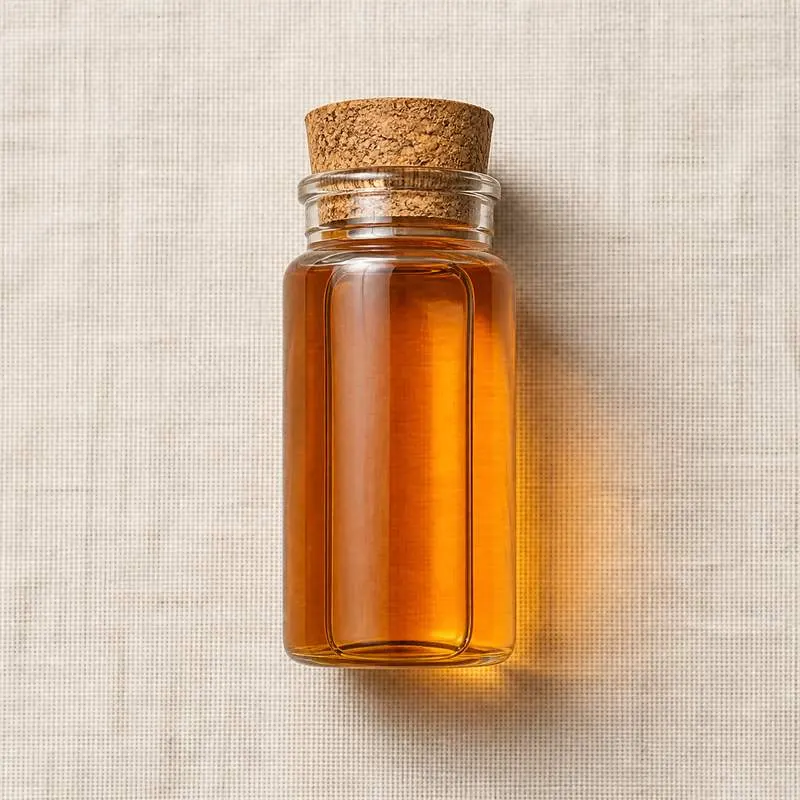
The substance occurs naturally at trace level in rose oil, tea, tobacco, wine and a range of fruits, where it is formed by oxidative degradation of carotenoids followed by acid catalysed rearrangement of glycosidically bound precursors during ripening, drying or fermentation. Commercially it is a pale yellow oily liquid, soluble in ethanol and in fixed oils and practically insoluble in water, sensitive to strong acid and to prolonged heat, and stored cool and dark under nitrogen because it darkens and loses lift on exposure to air.
We source bulk Dorinone Beta Fab from top China manufacturers for our partners. The manufacturer is in Beijing. A smaller requirement can ship in a combined container with other ingredients.
Please send the grade you need, the volume and your destination port, and we will come back with a solution and a price.
or call +86-21-6858 0751
- Function
- Flavours and Aromas
Specifications
| Item | Specification |
|---|---|
| Appearance | Clear pale yellow oily liquid |
| Odour | Powerful fruity, floral, rose and apple with a woody base |
| Assay by GC | Not less than 95.0 percent total damascone isomers |
| E Isomer Content | Not less than 85.0 percent of total |
| Identification | Infrared and mass spectra conform to reference |
| Relative Density (25°C) | 0.920 to 0.940 |
| Refractive Index (20°C) | 1.500 to 1.515 |
| Acid Value | Not more than 2.0 mg KOH/g |
| Solubility | Soluble in ethanol and fixed oils, practically insoluble in water |
| Residual Solvent | Within the applicable limits for the solvents used |
| Colour, Gardner | Not more than 3 |
| Heavy Metals (as Pb) | Not more than 10 mg/kg |
| Lead | Not more than 2 mg/kg |
| Arsenic | Not more than 1 mg/kg |
Common Markets Grades
The material is a single chemical substance, so the axes are isomeric composition, assay and dilution. Commercial beta-damascone is sold predominantly as the E isomer with a defined proportion of the Z isomer, and the alpha, gamma and delta damascones are separate articles with distinctly different odours, so the specific isomer name and CAS number matter more than usual when buying in this family. Assay is normally stated at not less than ninety or ninety five percent, with the balance made up of related isomers rather than unrelated impurities.
Almost all of the material is traded as a standardised solution rather than neat, most often at one or ten percent in ethanol, dipropylene glycol, triethyl citrate or a neutral triglyceride, because the neat substance is too potent for convenient weighing and because dilution slows oxidative degradation. Flavour grade material is bought to a food specification with residual solvent and heavy metal limits, while fragrance grade is bought to an odour and assay specification and is declared under its INCI name in cosmetic use. Suppliers also offer it inside pre-made rose, fruity and tobacco bases rather than as a single material.
Applications
- Fine fragrance, in fruity floral, rose, chypre and oriental accords where it supplies lift and warmth
- Rose and violet reconstitutions, as one of the trace materials that gives a natural impression
- Fabric care, shampoo and personal care fragrance, where its tenacity survives the base
- Apple, plum, blackcurrant and berry flavours, adding ripe fruit depth
- Tea flavours, particularly black and oolong, where the compound occurs naturally
- Tobacco flavouring and vapour liquids, contributing a dried leaf and honey facet
- Honey, caramel and gourmand flavours at very low dosage
- Alcoholic beverage flavourings, reproducing a note formed naturally in ageing
- Analytical and sensory reference work on carotenoid derived aroma compounds
China Manufacturers of Dorinone Beta Fab
Top Dorinone Beta Fab manufacturers in China.

Company names and logos are the property of the manufacturers themselves. They are listed here because our own directory records them as producing this ingredient. A listing is not an endorsement by them, and we do not represent them or speak on their behalf.
Regulatory Status
In the United States beta-damascone is used as a flavouring substance and holds FEMA GRAS status, which is the basis for its use in food and beverage rather than any food additive petition. The declaration on a finished food follows 21 CFR 101.22, which determines whether the label may read natural flavour or must read artificial flavour, and synthetic material cannot support a natural declaration however identical it is to the naturally occurring compound. Fragrance and cosmetic use falls outside the food framework.
In the European Union damascone isomers are flavouring substances handled under Regulation (EC) No 1334/2008, and a formulator must confirm that the specific isomer is present on the Union list of authorised flavouring substances for the intended use before adding it to food. Flavouring substances carry no E number. In fragrance use the International Fragrance Association standards apply and set usage limits for the damascone group on skin sensitisation grounds, with the limits differing by product category, and Regulation (EC) No 1223/2009 additionally governs cosmetic use, with declaration under the INCI name. Codex addresses flavourings through its general guidelines for their use, which rest on the international expert evaluations of individual flavouring substances, and the rose ketones have been evaluated as a structural group.
Manufacturing Process
Beta-damascone is made by total synthesis, and the industrial routes are related to those used for the ionones. A trisubstituted cyclohexene bearing the gem dimethyl group, derived from terpene or petrochemical feedstock, is acylated with a four carbon unsaturated acid derivative, typically crotonic anhydride or crotonoyl chloride, in the presence of a Lewis acid catalyst such as an aluminium or tin halide. The acylation gives a mixture of positional isomers, and the crude product is then treated under acid or base catalysis to isomerise the ring double bond into the position that carries the characteristic odour, since the isomer distribution rather than the gross yield determines whether the batch smells correct.
The reaction mass is quenched, washed free of catalyst residues and salts, dried, and the solvent recovered by distillation. Purification is by fractional distillation under deep vacuum in a packed or short path column, taking the wanted isomer as a narrow cut, and the fractions are assessed by gas chromatography and by odour before being blended to the specification. Because the compound is thermally sensitive, the still temperature is kept low and the residence time short. The finished material is polish filtered, standardised into the chosen diluent where a solution is being made, and filled under nitrogen into lined drums or coated containers for cool, dark storage.