High Fat Cocoa
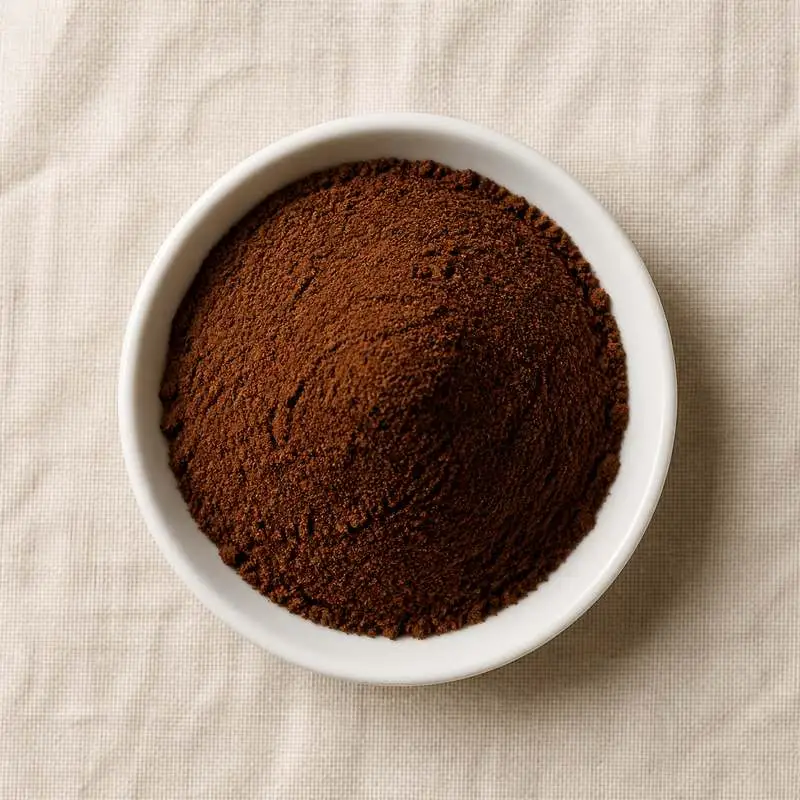
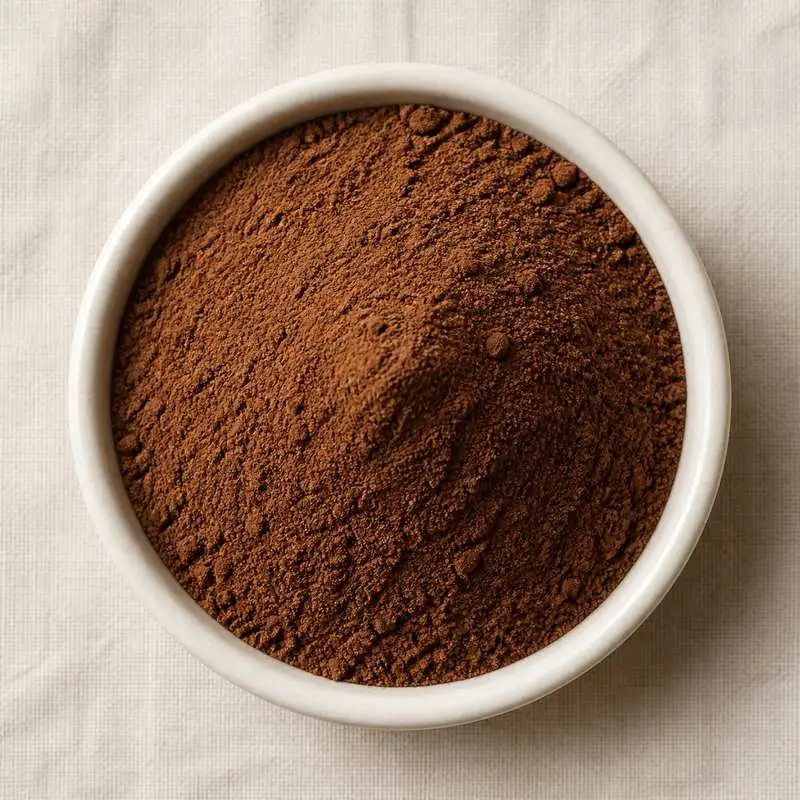
High fat cocoa is cocoa powder that retains a cocoa butter content of 20 to 24 percent, the level obtained when the press cake from Theobroma cacao liquor is only partially defatted, as against the 10 to 12 percent of standard low fat powder.
The additional cocoa butter changes how the powder behaves rather than only how it tastes. Fat carries the lipophilic aroma compounds released during roasting, so a high fat powder delivers a rounder and less dusty chocolate character, and it melts on the palate instead of leaving the drying sensation associated with heavily defatted cocoa. In liquid systems the fat contributes body and gloss, and in compound coatings and fillings it reduces the amount of added cocoa butter or vegetable fat needed.
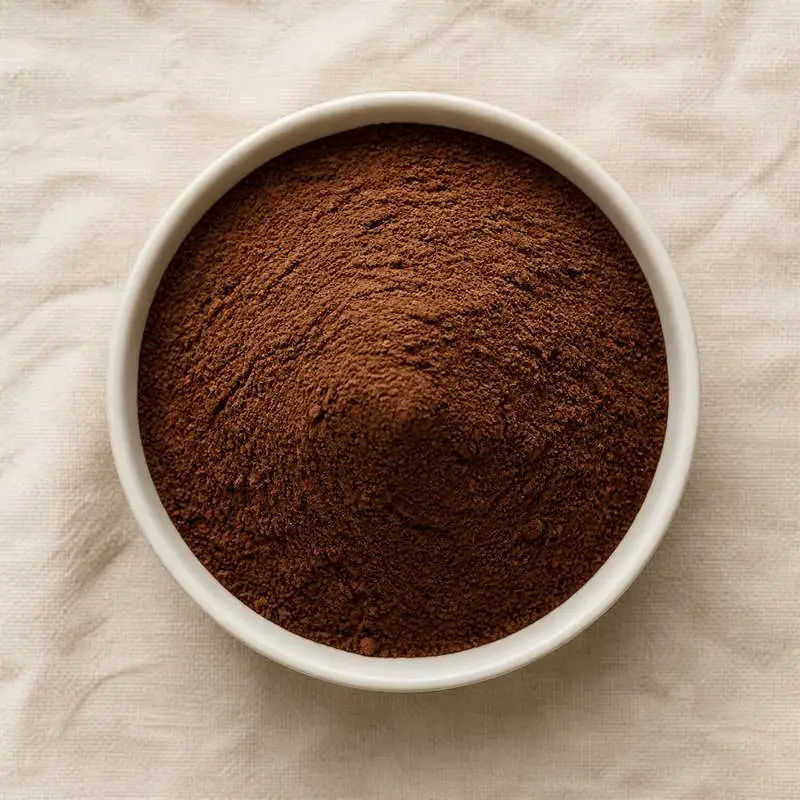
The powder is a fine free flowing solid, tempered and cooled under controlled conditions so the fat crystallises in a stable form. It is not water soluble; it disperses as a suspension, and in drinks it requires either lecithination, agglomeration or a hydrocolloid to remain dispersed rather than sedimenting. Both natural and alkalised versions are produced.
We source bulk High Fat Cocoa from top China manufacturers for our partners. The manufacturer is in Jiangsu. A smaller requirement can ship in a combined container with other ingredients.
Please send the grade you need, the volume and your destination port, and we will come back with a solution and a price.
or call +86-21-6858 0751
- Function
- Beverage ingredient
Specifications
| Item | Specification |
|---|---|
| Appearance | Fine free flowing powder, free from lumps |
| Colour | Light brown to dark red brown per reference standard |
| Flavour and Odour | Characteristic cocoa, free from smoky or mouldy notes |
| Cocoa Butter | 20.0 to 24.0 percent |
| Moisture | Not more than 5.0 percent |
| pH (10 percent suspension) | 5.3 to 5.8 natural, 6.8 to 8.0 alkalised |
| Total Ash | Not more than 8.0 percent natural, 14.0 percent alkalised |
| Fineness | Not less than 99.0 percent through 75 micron sieve |
| Shell Content | Not more than 1.75 percent on fat free basis |
| Lead | Not more than 0.5 mg per kg |
| Cadmium | Not more than 0.6 mg per kg |
| Total Plate Count | Not more than 5,000 cfu per g |
| Yeast and Mould | Not more than 50 cfu per g |
| Salmonella | Absent in 25 g |
Common Markets Grades
The primary distinction is between natural high fat cocoa, which retains the acidity of the fermented bean at a pH near 5.3 to 5.8, and alkalised high fat cocoa, produced by treating nib, liquor or cake with potassium or sodium carbonate to raise pH to between 6.8 and 8.0. Alkalisation darkens the colour from light brown through red brown to almost black and softens the astringency, at the cost of some of the fruit character and part of the flavanol content.
Fat is specified in bands, most commonly 20 to 22 percent and 22 to 24 percent, and colour is specified against a reference standard rather than by name alone. Additional grade options include lecithinated and agglomerated instant powders for beverage dosing, fine milled grades for confectionery, organic and certified sustainable lots, and low cadmium lots selected by origin for markets with tighter limits.
Applications
- Instant drinking chocolate and cocoa beverage powders, where the fat gives body and a fuller chocolate note
- Ready to drink chocolate milk and chocolate flavoured dairy drinks
- Chocolate ice cream, gelato and frozen dessert bases
- Compound coatings and chocolate flavoured glazes, reducing the added fat required
- Biscuit, cake and brownie formulations that need dark colour with a smooth crumb
- Ganache, truffle centres and confectionery fillings
- Bakery creams, mousses and dessert preparations
- Cereal, granola and snack bar coatings
- Nutritional and meal replacement powders where chocolate is the flavour system
China Manufacturers of High Fat Cocoa
Top High Fat Cocoa manufacturers in China.

Company names and logos are the property of the manufacturers themselves. They are listed here because our own directory records them as producing this ingredient. A listing is not an endorsement by them, and we do not represent them or speak on their behalf.
Regulatory Status
In the United States cocoa products have standards of identity in 21 CFR Part 163. Breakfast cocoa, cocoa and low fat cocoa are defined there by their residual cacao fat content, and a powder retaining 22 percent or more fat corresponds to the breakfast cocoa definition. Alkali treatment is permitted under those standards using the specified alkalis, and product so treated must be labelled as processed with alkali.
In the European Union Directive 2000/36/EC regulates cocoa and chocolate products; it defines cocoa powder and fat reduced cocoa powder by minimum cocoa butter content and sets the labelling rules for the category. Alkalising agents are permitted food additives under Regulation 1333/2008. Codex standard CXS 105-1981 covers cocoa powders and dry cocoa sugar mixtures internationally. Cadmium in cocoa powder is subject to maximum levels in the EU under Regulation 2023/915, and origin blending is the normal means of compliance.
Manufacturing Process
Fermented and dried cocoa beans are cleaned, then either roasted whole or broken and winnowed to nib before roasting, with the shell separated by aspiration. Roasting at around 120 to 150 degrees Celsius develops the pyrazine and aldehyde aroma compounds and reduces microbial load. Where alkalised powder is required, the nib or the liquor is treated with a carbonate solution and heat at this stage, then dried back.
The nib is ground in a series of mills to a liquor, in which the cocoa butter is released and forms the continuous phase. That liquor is fed to hydraulic pot presses which express cocoa butter through screens under pressure; the extent of pressing decides the residual fat, and for high fat powder the press cycle is stopped early so that a fifth or more of the fat remains. The cake is broken, milled and passed through a classifier and a cooling tunnel where the residual butter is crystallised in a stable polymorph, then sieved, metal detected and packed in multiwall bags or bulk bins.