Vegetable Fat
Vegetable fat is the collective trade term for edible fats of plant origin that are solid or semi solid at ambient temperature, as distinct from the liquid vegetable oils. The category covers naturally hard fats such as palm, palm kernel and coconut, the stearin fractions separated from softer oils, and fats hardened by hydrogenation or restructured by interesterification.
What defines a vegetable fat commercially is not a single chemical identity but its solid fat content curve, the percentage of fat crystalline at a series of temperatures, together with its melting profile and crystal habit. These properties decide whether a fat gives a shortening that creams, a coating fat that snaps, a filling fat that stays plastic, or a bakery fat that survives proving. Fatty acid composition ranges from the lauric fats, rich in short chain saturated acids from palm kernel and coconut, to the palmitic and stearic dominated non lauric fats.
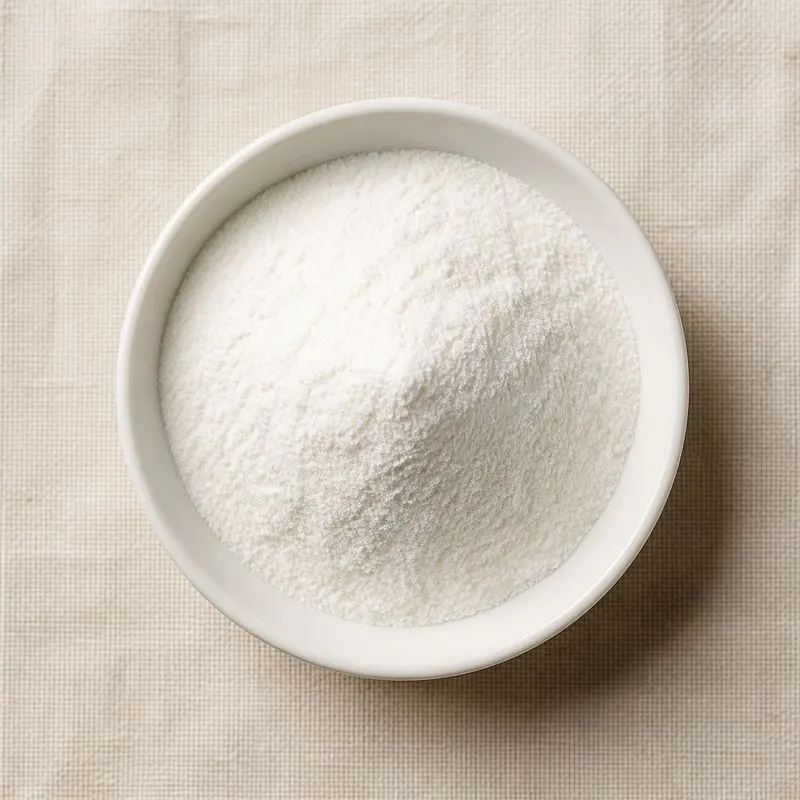
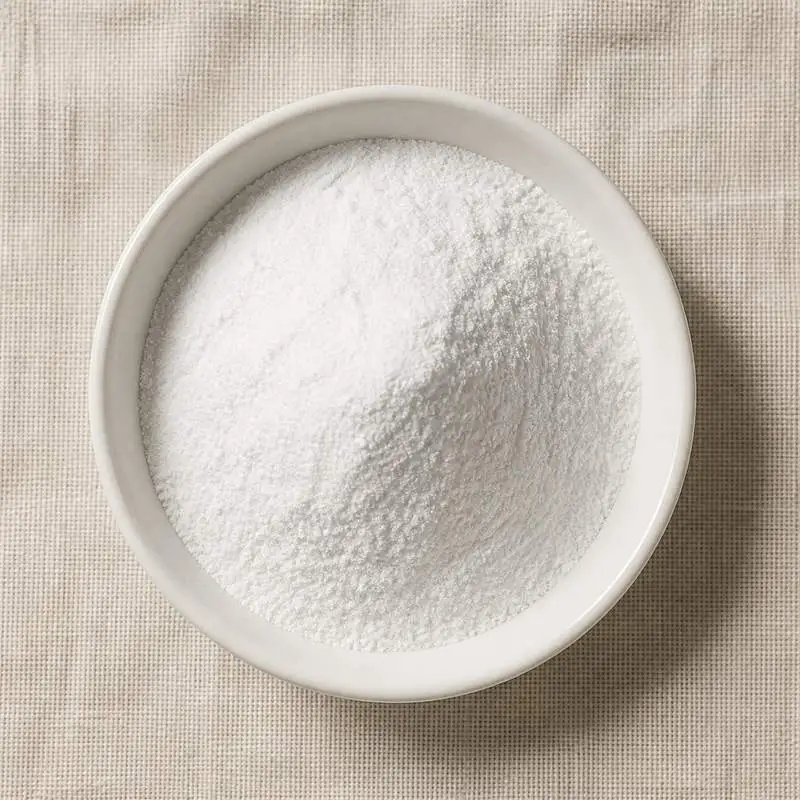
Buyers take the product as a white to pale cream solid in blocks or cartons, as flakes or pastilles for easy metering, or as a pumpable liquid held above its melting point in heated tanks. It is insoluble in water and is incorporated into aqueous systems only as an emulsion or as a dispersed crystalline phase.
We source bulk Vegetable Fat from top China manufacturers for our partners, working with several of them. The manufacturers are in Shandong and Hebei. A smaller requirement can ship in a combined container with other ingredients.
Please send the grade you need, the volume and your destination port, and we will come back with a solution and a price.
or call +86-21-6858 0751
- Function
- Nutraceutical
Specifications
| Item | Specification |
|---|---|
| Appearance | White to pale cream solid fat, uniform texture |
| Odour and Taste | Bland, free of rancid or foreign notes |
| Slip Melting Point | To grade, typically 32 to 45 degrees Celsius |
| Solid Fat Content at 20 C | To grade, declared on the specification sheet |
| Free Fatty Acid (as oleic) | Not more than 0.1 percent |
| Peroxide Value | Not more than 1.0 meq/kg |
| Moisture and Volatile Matter | Not more than 0.1 percent |
| Colour (Lovibond 5.25 inch) | Not more than 2.0 red |
| Iodine Value | To grade, declared per product |
| Unsaponifiable Matter | Not more than 1.0 percent |
| Nickel (hydrogenated grades) | Not more than 0.2 mg/kg |
| Lead | Not more than 0.1 mg/kg |
| Arsenic | Not more than 0.1 mg/kg |
| Total Plate Count | Not more than 1000 cfu/g |
Common Markets Grades
Trade grades are defined by function rather than by assay. Shortenings for bakery are specified on solid fat content at 10, 20, 30 and 40 degrees Celsius, on slip melting point and on crystal form, since a beta prime crystal gives the fine aerated structure that creaming requires. Coating and confectionery fats are split into cocoa butter substitutes based on lauric fats, cocoa butter replacers based on non lauric fractions, and cocoa butter equivalents made from palm mid fraction and exotic fats, each with a different tempering behaviour. Filling fats, frying fats, non dairy creamer fats and infant formula fat blends each carry their own specification set.
Beyond function, lots are differentiated by hardening route. Fully hydrogenated stocks are traded on iodine value and melting point and carry negligible trans fat, while interesterified blends are specified on the solid fat content achieved without hydrogenation. Fractionated grades are quoted as stearin, mid fraction or olein. Sustainability certified palm derived fats and organic certified lots are traded with segregation or mass balance documentation.
Applications
- Bakery shortening for biscuits, cookies and pastry, where the crystal network shortens gluten strands and controls spread
- Laminated doughs for puff pastry and croissant, where a plastic fat with a wide plastic range holds discrete layers through rolling
- Chocolate coatings and compound couverture, where lauric or non lauric coating fats replace cocoa butter and set without tempering
- Confectionery fillings and wafer creams, where the fat carries sugar and flavour and controls the melt in mouth sensation
- Margarine and fat spread manufacture, where the hard stock sets the solid fat content and the spread's firmness at fridge temperature
- Non dairy creamers and whipped toppings, where hardened fat gives foam stability and mouthfeel in the spray dried powder
- Ice cream and frozen dessert coatings, where a fast setting fat forms a thin brittle shell on a cold surface
- Instant noodle frying, where a fat of low unsaturation resists oxidation through the shelf life of the fried block
- Infant formula fat blends, where structured vegetable fats reproduce the fatty acid distribution of human milk fat
- Powdered soup, sauce and beverage bases, where encapsulated vegetable fat supplies body and delivers fat soluble flavour
Brands Using Vegetable Fat
Widely-distributed consumer products that list Vegetable Fat on the ingredient label.
- CadburyCadbury Dairy Milk Chocolate Bar 180g ↗Milk chocolate bar whose ingredient list reads milk, sugar, cocoa butter, cocoa mass, vegetable fats (palm, shea).Label verified 2026-08-31
- CadburyCadbury Heroes Chocolate Box 290g ↗Assortment of miniature chocolates listing vegetable fats (palm, shea) after cocoa butter and cocoa mass.Label verified 2026-08-31
- Mr KiplingLemon Fancies ↗Iced sponge fancies whose ingredient list names Vegetable Fat (Palm) alongside vegetable oils and vegetable margarine.Label verified 2026-08-31
- Mr KiplingLemon Layered Slices ↗Layered lemon sponge slices that list Vegetable Fat (Palm) in the ingredient declaration.Label verified 2026-08-31
- BritanniaGood Day Chocochip Cookies ↗Chocolate chip cookies whose ingredient list gives the chocochips as sugar, hydrogenated vegetable fat, cocoa solids and dextrose.Label verified 2026-08-31
Brand names, product names and logos are the property of their owners. They appear here as published evidence that the ingredient is used, taken from the brand's own label or website. Their appearance is not an endorsement, and it does not mean the brand buys from us or from any manufacturer listed on this site.
China Manufacturers of Vegetable Fat
Top Vegetable Fat manufacturers in China.
 Meitek (Qingdao) Co., Ltd.13 ingredients in the directory
 Shandong Tianjiao Biotech Co., Ltd.9 ingredients in the directory
 Shandong Tianmei Biotech Co., Ltd.9 ingredients in the directory
 Shijiazhuang Huiyuan Starch Co., Ltd.7 ingredients in the directory
Company names and logos are the property of the manufacturers themselves. They are listed here because our own directory records them as producing this ingredient. A listing is not an endorsement by them, and we do not represent them or speak on their behalf.
Regulatory Status
Vegetable fats are foods rather than additives and carry no E numbers. In the United States they are used under generally recognised as safe status and are declared by the specific source name. Partially hydrogenated oils are no longer generally recognised as safe following the Food and Drug Administration determination on trans fat, so commercial hardening now relies on full hydrogenation, interesterification and fractionation. Nutrition labelling requires declaration of saturated and trans fat content.
In the European Union the food information regulation requires the ingredient list to name the specific vegetable source, so a generic vegetable fat declaration is no longer permitted, and hardened fats must be identified as such. Contaminant limits apply to glycidyl fatty acid esters and to 3 monochloropropanediol esters, both of which form during high temperature deodorisation of vegetable oils, and refiners control deodoriser temperature and chloride content to stay within them. Codex maintains standards for named vegetable oils and for fat spreads, setting fatty acid composition ranges and quality criteria, and JECFA has evaluated the processing contaminants associated with refined vegetable fats.
Manufacturing Process
Manufacture starts from refined vegetable oils, most commonly palm, palm kernel, coconut, soybean, rapeseed, sunflower or cottonseed, each already degummed, neutralised, bleached and deodorised. Three modification routes are then used, alone or in combination. Fractionation cools the melted oil under controlled agitation so that the higher melting triglycerides crystallise, and the crystals are separated from the liquid olein by membrane press or vacuum filter, giving stearin and mid fraction streams. Hydrogenation passes hydrogen through the oil over a nickel catalyst at elevated temperature and pressure, saturating double bonds and raising the melting point, with full hydrogenation now favoured over partial hydrogenation because it forms no trans isomers. Interesterification rearranges fatty acids between glycerol backbones, either chemically with a sodium methoxide catalyst or enzymatically with an immobilised lipase, raising solid fat content without altering the fatty acid profile.
Modified stocks are blended to hit the target solid fat content curve, then post refined by bleaching and deodorisation to remove catalyst residues, soaps and off flavours. The molten blend is crystallised on a scraped surface heat exchanger, worked in a pin rotor to develop the required crystal form, and then either filled into blocks and cartons or formed into flakes and pastilles on a chilled belt. Finished fat is tempered in a conditioning room for several days so the crystal structure stabilises before dispatch.