Instant Tea
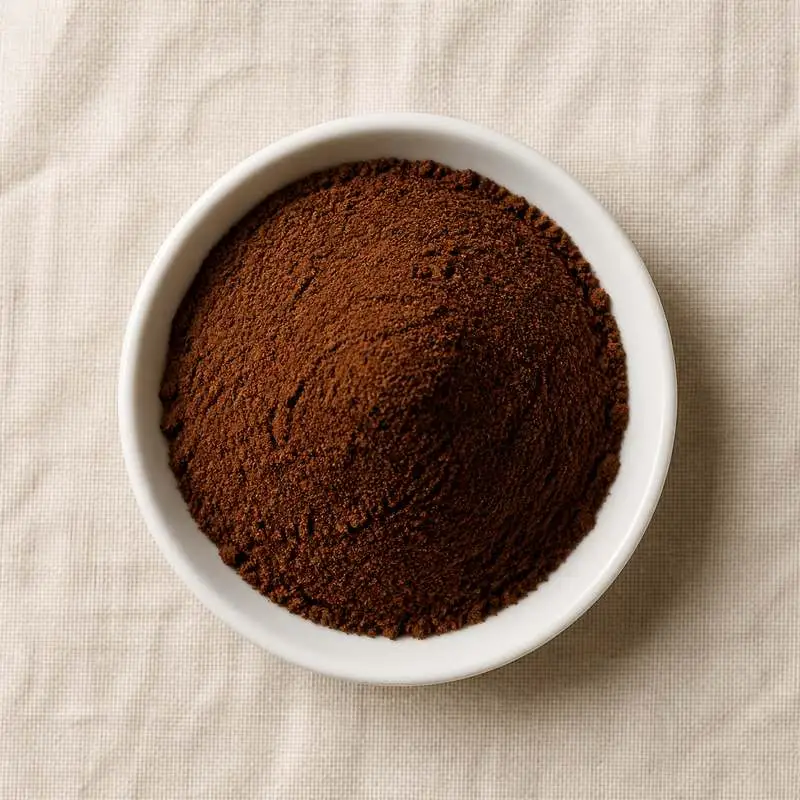
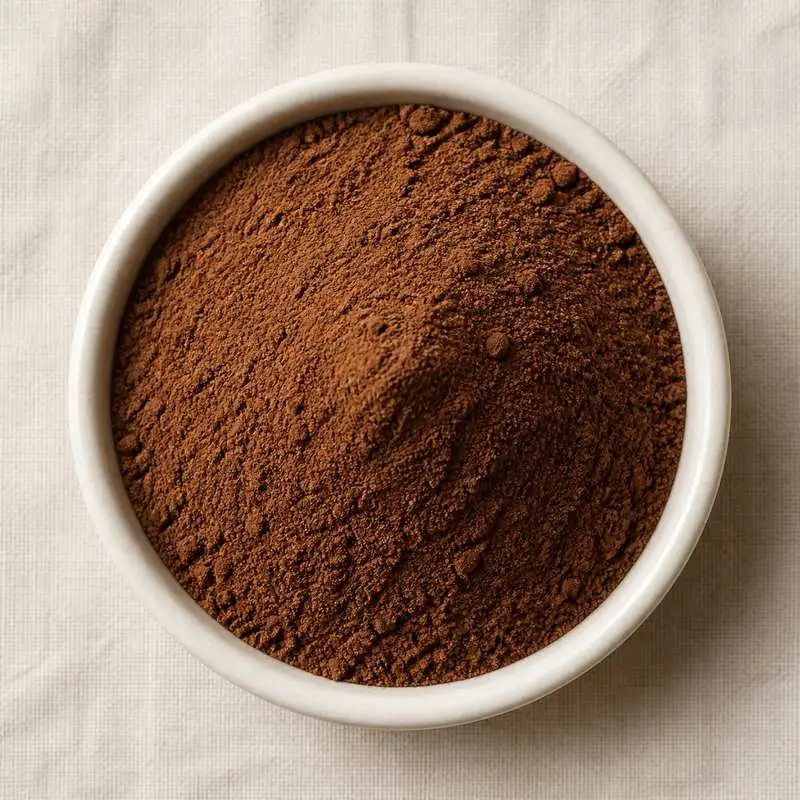
Instant Tea is a soluble tea powder produced by extracting brewed tea with hot water, concentrating the extract, and drying it to a free-flowing powder or granule.
It dissolves rapidly in hot or cold water and carries the soluble polyphenols, caffeine, amino acids, and colour compounds of the source leaf in a stable dry format suited to industrial beverage manufacture.
We source bulk Instant Tea from top China manufacturers for our partners, working with several of them. The manufacturers are mostly in Fujian, Guangdong and Hubei. A smaller requirement can ship in a combined container with other ingredients.
Please send the grade you need, the volume and your destination port, and we will come back with a solution and a price.
or call +86-21-6858 0751
- Packaging
- 25 kg kraft paper bag with PE inner liner
- ISO 9001
- HACCP
- Halal
- Kosher
Specifications
Grades / Types Available: Food Grade
| Item | Specification |
|---|---|
| Appearance | Fine powder, colour varies by tea type |
| Odour & Taste | Typical of source tea variety |
| Solubility | Instant in hot or cold water |
| Moisture | ≤6.0% |
| Ash | ≤18.0% |
| Caffeine | 5.0–15.0% |
| Tea Polyphenols | 18.0–45.0% |
| Particle Size | 80 mesh pass ≥95% |
| Heavy Metals (as Pb) | ≤2.0 mg/kg |
| Arsenic | ≤0.5 mg/kg |
| Total Plate Count | ≤1,000 cfu/g |
| E. coli / Salmonella | Negative |
| Purity (Food Grade) | Over 50% theaflavin |
| Moisture/Loss on Drying | <5% |
| pH | 4.5-6.0 |
| Yeast & Mold | <100 cfu/g |
Common Markets Grades
Instant tea is graded by source leaf type, drying method, and extract style.
Source leaf categories include black, green, oolong, white, and pu-erh, each yielding a different soluble-solid profile. Black tea extracts dominate by volume due to their compatibility with sweetened ready-to-drink products and lemon-tea formats.
Drying methods split into spray-drying, the most common and the cheapest route, and freeze-drying, which holds more aroma at a higher price. Some manufacturers offer agglomerated grades for retail cold-water solubility.
Extract style is described by polyphenol percentage and theaflavin content for black tea, by EGCG and total catechin percentage for green tea. Decaffeinated extracts are produced by CO2 or water decaffeination of the source leaf or by adsorbent treatment of the extract.
Colour values for black tea extracts are measured at 460 nanometers and reported as colour units per gram. The better black tea extracts run 60 to 100 colour units per gram with a bright reddish-amber tone.
Applications
- Ready-to-drink iced tea bottles, cans, and tetra-pack beverages
- Lemon tea and flavoured tea instant powders for hot or cold preparation
- 3-in-1 milk tea, bubble tea, and Asian-style sweetened tea mixes
- Vending machine hot tea and powdered cold-drink systems
- Bakery and confectionery applications including matcha cake and tea-flavoured chocolates
- Ice cream, gelato, and frozen-dessert flavouring
- Yogurt and dairy drink formulation with tea polyphenol claims
- Dietary supplement and beverage fortification with catechin or theaflavin claims
- Cosmetic and personal care extracts using tea polyphenols for antioxidant positioning
- Foodservice and catering instant tea for hotels, airlines, and conference services
Brands Using Instant Tea
Widely-distributed consumer products that list Instant Tea on the ingredient label.
Brand names, product names and logos are the property of their owners. They appear here as published evidence that the ingredient is used, taken from the brand's own label or website. Their appearance is not an endorsement, and it does not mean the brand buys from us or from any manufacturer listed on this site.
China Manufacturers of Instant Tea
Top Instant Tea manufacturers in China.
 Damin Foodstuff (Zhangzhou) Co., Ltd.4 ingredients in the directory
- Shenzhen Shenbao Huacheng Tech.Co., Ltd.2 ingredients in the directory
 Yichang Tea Group Co., Ltd.2 ingredients in the directory
 Yuzhi Forest Matcha (Chizhou) Co., Ltd.3 ingredients in the directory
 Zhejiang Minghuang Natural Food Development Co., Ltd.2 ingredients in the directory
Company names and logos are the property of the manufacturers themselves. They are listed here because our own directory records them as producing this ingredient. A listing is not an endorsement by them, and we do not represent them or speak on their behalf.
How We Help Source Instant Tea
Direct Factory Sourcing
We run the whole process: selecting the manufacturer from the top Chinese food ingredient producers, negotiating the price, verifying quality, and coordinating the logistics. You deal with us instead of with several factories at once.
Original Packaging and Documents from the Manufacturer
The manufacturer sends your Instant Tea out of its own factory in the original packing, through to your destination port. The COA, COO, MSDS, TDS and any certifications reach you from the manufacturer as well.
Free Samples and Lead Time
We send 100 to 500 g free for your own laboratory to test and you cover only the courier, usually within 2 to 3 working days. ETD is usually within 7 to 15 days once the order is confirmed, and we check that date against the factory's own manufacturing schedule before we give it to you.
Combined Shipment
We can load Instant Tea together with other ingredients such as Instant Coffee, Tea Concentrate and Alkalized Cocoa into one 20' FCL. If your quantity is small, we can also ship LCL.
Regulatory Status
Instant tea is recognised in all major food jurisdictions as a tea-derived ingredient.
Codex standard CXS 282R-2014 (regional standard for Asia) covers instant tea preparations. The U.S. Food and Drug Administration treats it under general food regulations and 21 CFR Part 165 for beverages.
The European Union does not have a tea-specific directive but applies general food law (Regulation 178/2002), labelling rules (Regulation 1169/2011), and contaminant limits (Regulation 2023/915) for heavy metals and mycotoxins.
Pesticide MRLs in the source leaf follow EU Regulation 396/2005 and equivalent national rules. Caffeine content can be declared as a quality indicator and must be declared for caffeine-fortified or decaffeinated claims.
Organic, Halal, Kosher, Fairtrade, and Rainforest Alliance certifications are routinely offered at the instant tea level when the source leaf carries the matching certification.
Manufacturing Process
Production starts with the selection of source tea, typically broken-grade or fannings rather than whole leaf, since the smaller particle gives faster and more complete extraction.
Leaf is loaded into a column or basket extractor and contacted with hot water at 80 to 95 degrees Celsius in counter current flow. Extraction takes 20 to 60 minutes depending on leaf type and target solids.
The raw extract leaves the column at 4 to 8 percent solids. It passes through centrifugal clarification and a chilled cream separation step, where the temperature is dropped to 5 to 10 degrees Celsius to precipitate the tea cream complex.
The cream fraction is treated with food-grade alkali or enzyme to redissolve it, then recombined with the clear extract. The combined liquor is concentrated by falling-film evaporation or membrane filtration to 35 to 45 percent solids.
Concentrate is spray-dried in a tower with inlet air at 200 to 230 degrees Celsius and outlet at 95 to 105 degrees Celsius, yielding a powder at 3 to 5 percent moisture. Freeze-drying follows the same concentrate path with the freeze-sublimation sequence used for instant coffee.