Instant Coffee
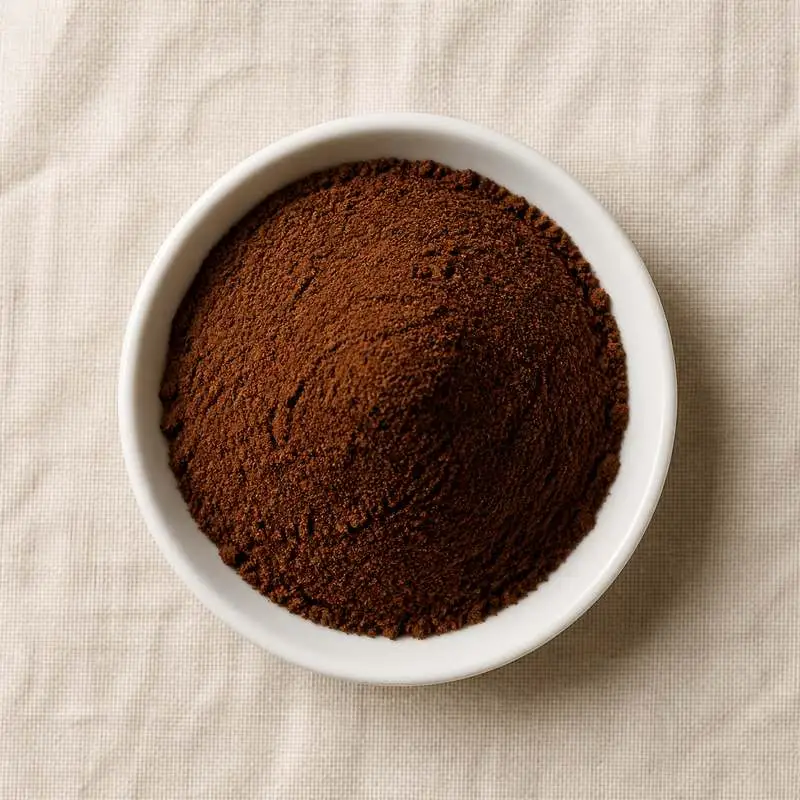
Instant Coffee is a soluble coffee powder or granule produced by brewing roasted coffee at industrial scale, concentrating the extract, and removing the water by spray or freeze drying.
The finished product reconstitutes in hot or cold water in seconds and carries the bulk of the soluble solids, caffeine, and aromatic compounds of the original roast in a shelf-stable dry form.
We source bulk Instant Coffee from top China manufacturers for our partners, working with several of them. The manufacturers are mostly in Fujian, Guangdong and Jiangsu. A smaller requirement can ship in a combined container with other ingredients.
Please send the grade you need, the volume and your destination port, and we will come back with a solution and a price.
or call +86-21-6858 0751
- Packaging
- 25 kg kraft paper bag with PE inner liner
- ISO 9001
- HACCP
- Halal
- Kosher
Specifications
| Item | Specification |
|---|---|
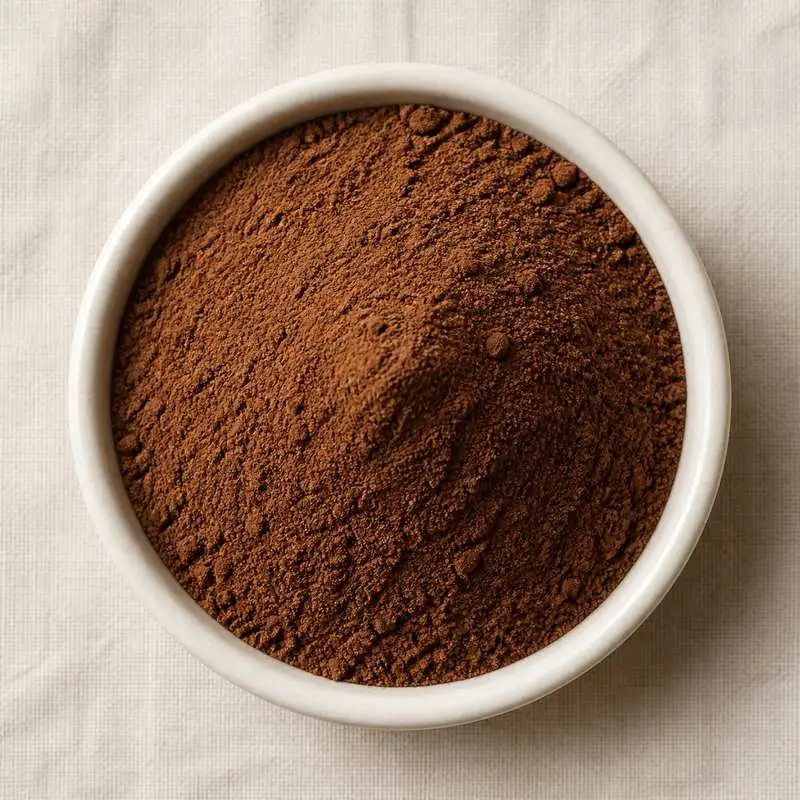
| Appearance | Brown free-flowing powder or granules |
| Odour and Taste | Characteristic roasted coffee, free from foreign odour |
| Moisture | ≤ 5.0% |
| Caffeine (dry basis) | 2.5 – 4.5% |
| pH (1% solution, 25 °C) | 4.5 – 5.5 |
| Solubility | ≥ 99% in water at 80 °C within 30 seconds |
| Total Ash | ≤ 10.0% |
| Particle Size | 40 – 80 mesh for spray-dried powder |
| Bulk Density | 0.20 – 0.35 g/mL, according to format |
| Heavy Metals (as Pb) | ≤ 1 mg/kg |
| Ochratoxin A | ≤ 10 ppb |
| Total Plate Count | ≤ 10,000 cfu/g |
| Yeast and Mould | ≤ 100 cfu/g |
| Escherichia coli | Negative/25g |
| Salmonella | Negative/25g |
Common Markets Grades
Instant coffee is graded by drying method, particle format, and origin blend.
Spray-dried powder is produced by atomising the concentrated extract into a hot-air tower. The resulting fine powder is the lowest-cost format and is the standard choice for mass-market 3-in-1 mixes, vending, and food-ingredient use.
Agglomerated grades are spray-dried powder that has been rewetted with steam and re-dried to form porous granules. The larger particles dissolve more cleanly and look better at retail.
Freeze-dried grades are produced by freezing the extract into slabs at minus 40 degrees Celsius, fracturing into granules, and sublimating the ice under vacuum. The cold process preserves more volatile aromatics and is the top format for cup-quality retail jars.
Origin grades range from 100 percent arabica (higher priced, lower caffeine, brighter cup) through arabica-robusta blends (balanced) to 100 percent robusta (high caffeine, full body, lower cost). Decaffeinated grades exist across all formats.
Applications
- Direct-to-cup instant coffee for hot and cold beverage preparation
- 3-in-1 and 2-in-1 sachets blending instant coffee with creamer and sugar
- Vending machine coffee and hot-beverage tower systems
- Ready-to-drink coffee beverage and bottled coffee manufacture
- Coffee-flavoured confectionery: chocolates, candies, and chewing gum
- Coffee ice cream, gelato, and frozen-dessert applications
- Bakery and pastry use in tiramisu, cake, biscuit, and brownie formulations
- Dairy product flavouring including coffee yogurt and flavoured milk drinks
- Cereal and breakfast-bar formulations with coffee notes
- Foodservice catering, airline catering, and emergency-ration packs
Brands Using Instant Coffee
Widely-distributed consumer products that list Instant Coffee on the ingredient label.
- NescaféHouse Blend Instant Coffee 7 oz Jar ↗100% pure instant coffee per Nescafé's product information.Label verified 2026-05-24
- NescaféTaster's Choice House Blend Instant Coffee ↗Nescafé Taster's Choice instant coffee product page on official Nescafé US site.Label verified 2026-05-24
- StarbucksPremium Instant Medium Roast Coffee ↗Listed: 'Instant and microground coffee.'Label verified 2026-05-24
- FolgersClassic Roast Instant Coffee ↗Folgers Classic Roast Instant Coffee product page on Folgers' official site.Label verified 2026-05-24
Brand names, product names and logos are the property of their owners. They appear here as published evidence that the ingredient is used, taken from the brand's own label or website. Their appearance is not an endorsement, and it does not mean the brand buys from us or from any manufacturer listed on this site.
China Manufacturers of Instant Coffee
Top Instant Coffee manufacturers in China.
 Damin Foodstuff (Zhangzhou) Co., Ltd.4 ingredients in the directory
 Guangzhou Taste Craftsman Bio Tech Co.2 ingredients in the directory
 Jiangsu Leiva Biotech Co., Ltd.10 ingredients in the directory
- Shandong Mingze Biotechnology Co., Ltd.8 ingredients in the directory
 Xi'an Tianxingjian Natural Bio-products Co., Ltd.2 ingredients in the directory
- Yunnan Taixian Biotechnology Co., Ltd.2 ingredients in the directory
Company names and logos are the property of the manufacturers themselves. They are listed here because our own directory records them as producing this ingredient. A listing is not an endorsement by them, and we do not represent them or speak on their behalf.
How We Help Source Instant Coffee
Direct Factory Sourcing
We run the whole process: selecting the manufacturer from the top Chinese food ingredient producers, negotiating the price, verifying quality, and coordinating the logistics. You deal with us instead of with several factories at once.
Original Packaging and Documents from the Manufacturer
The manufacturer sends your Instant Coffee out of its own factory in the original packing, through to your destination port. The COA, COO, MSDS, TDS and any certifications reach you from the manufacturer as well.
Free Samples and Lead Time
We send 100 to 500 g free for your own laboratory to test and you cover only the courier, usually within 2 to 3 working days. ETD is usually within 7 to 15 days once the order is confirmed, and we check that date against the factory's own manufacturing schedule before we give it to you.
Combined Shipment
We can load Instant Coffee together with other ingredients such as Instant Tea, Tea Concentrate and Alkalized Cocoa into one 20' FCL. If your quantity is small, we can also ship LCL.
Regulatory Status
Instant coffee is a recognised food product worldwide.
The European Union defines coffee extract, soluble coffee, instant coffee, and coffee extract powder under Directive 1999/4/EC. The dry matter from coffee must be at least 95 percent in the finished soluble coffee.
The U.S. Food and Drug Administration covers instant coffee under general food regulations and 21 CFR Part 165 for beverages. 21 CFR 173 regulates the decaffeination solvents methylene chloride, ethyl acetate and supercritical CO2.
Codex Alimentarius standard CXS 248-2005 defines instant coffee and CXS 197-1995 covers coffee extracts. Caffeine and chlorogenic acid content can be declared as quality indicators.
EU Regulation 2023/915 sets the ochratoxin A limit for soluble coffee at 5 micrograms per kilogram. Acrylamide is monitored under Regulation 2017/2158 with a benchmark of 850 micrograms per kilogram for soluble coffee.
Manufacturing Process
Production begins with cleaning and roasting green coffee on the standard profile for the target cup, typically at 200 to 230 degrees Celsius for 8 to 15 minutes.
Roasted beans are ground coarse and loaded into a percolator battery of five to seven columns. Hot water at 160 to 180 degrees Celsius under pressure extracts the soluble solids in a counter-current flow.
The extract leaves the percolator at 25 to 35 percent solids. It passes through aroma-recovery and centrifugal clarification, then is concentrated further by falling-film evaporation or freeze concentration to 40 to 55 percent solids.
Concentrated extract is atomised into the top of a spray-drier and contacts air at 220 to 250 degrees Celsius. Water flashes off in seconds and the powder is collected at the cone bottom at about 3 to 4 percent moisture.
Freeze-drying takes the same concentrated extract, freezes it on a belt at minus 40 degrees Celsius, fractures it into granules, and sublimates the ice in a vacuum chamber at minus 30 degrees Celsius and 0.5 to 1 millibar over 4 to 6 hours. The dry granules are sorted by size and packed.