Letinous Flavour
Letinous Flavour is a savoury flavouring that reproduces the aroma and taste of shiitake, the mushroom Lentinula edodes, formerly classified as Lentinus edodes, from which the trade name derives. Two separate systems carry its character. The aroma comes chiefly from lenthionine, a cyclic polysulphide that is not present in the intact mushroom but is generated enzymatically from the precursor lentinic acid when the tissue is cut, dried or rehydrated, along with other cyclic sulphides and eight carbon alcohols such as 1-octen-3-ol that give the general mushroom note. The taste comes from 5-guanosine monophosphate, which shiitake contains at unusually high levels and which multiplies the effect of glutamate to give strong umami.
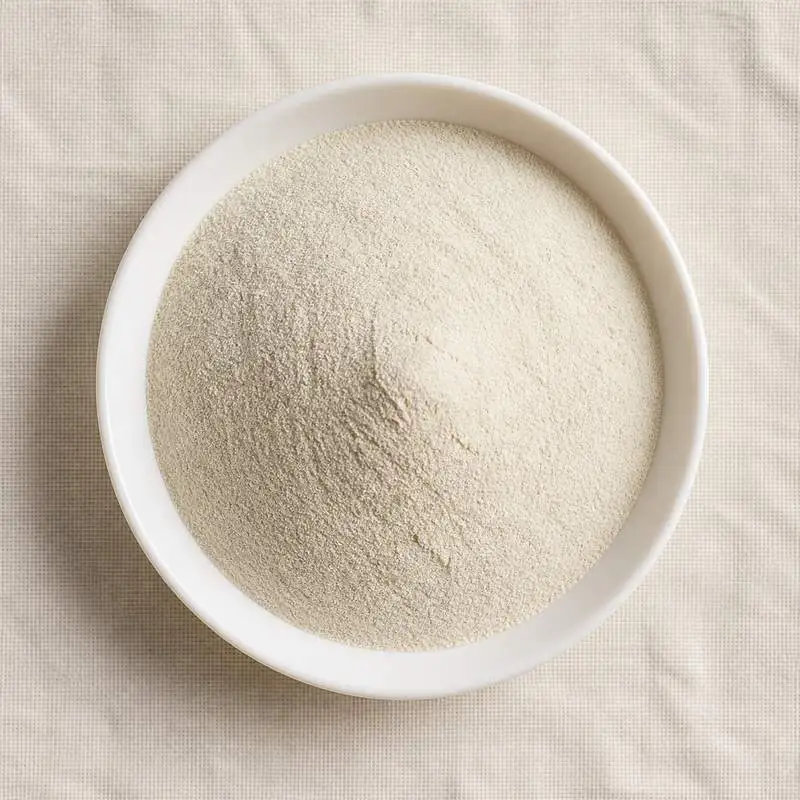
Three formats are traded: a light to dark brown powder on a maltodextrin or salt carrier, a paste, and a water dispersible liquid. Powder is the dominant form because the largest applications are dry seasonings and soup bases. The sulphide fraction is volatile and reactive, degrading on prolonged heating and oxidising on exposure to air, while the nucleotide fraction is heat stable and survives retort, which is why grades intended for cooked systems are weighted towards taste rather than aroma.
We source bulk Letinous Flavour from top China manufacturers for our partners. The manufacturer is in Hebei. A smaller requirement can ship in a combined container with other ingredients.
Please send the grade you need, the volume and your destination port, and we will come back with a solution and a price.
or call +86-21-6858 0751
- Function
- Flavours and Aromas
Specifications
| Item | Specification |
|---|---|
| Appearance | Light to dark brown free flowing powder or viscous paste |
| Odour and Taste | Characteristic dried shiitake, savoury, no musty note |
| Moisture | Not more than 6.0 percent for powder grades |
| Total Solids | Not less than 55.0 percent for paste grades |
| Disodium Guanylate | As declared, plus or minus 0.5 percent |
| Total Nitrogen | Not less than 2.0 percent |
| Sodium Chloride | As declared, plus or minus 2.0 percent |
| pH at 1 percent solution | 5.0 to 6.5 |
| Sieve Analysis | Not less than 95 percent through 40 mesh |
| Lead | Not more than 1.0 mg per kg |
| Arsenic | Not more than 0.5 mg per kg |
| Cadmium | Not more than 0.5 mg per kg |
| Total Plate Count | Not more than 10000 cfu per gram |
| Salmonella | Absent in 25 g |
Common Markets Grades
The first grade split is between extract grades, in which dried shiitake is extracted and concentrated so that both the nucleotide and the sulphide fraction come from the mushroom itself, and compounded grades, in which a smaller extract load is reinforced with added disodium guanylate and nature identical sulphur compounds to reach the same intensity at lower cost. Extract grades support a natural declaration; compounded grades generally do not.
Beyond that, buyers specify the guanylate content, which is the measure of umami strength and the figure most often quoted, the physical form as powder, paste or liquid, the salt or carrier load, and whether the profile leans towards fresh mushroom, which is greener and more alcoholic, or towards dried mushroom, which is heavier in lenthionine and closer to the traditional Chinese and Japanese use of rehydrated shiitake. Organic, non GMO, vegan, halal and kosher certification is routinely available, and vegan status is a common reason for choosing this flavour over an animal derived savoury base.
Applications
- Vegetarian and vegan bouillon and stock powders, as the primary umami source
- Instant noodle seasoning sachets in mushroom and vegetable variants
- Soups, sauces and gravy mixes, both dry and wet
- Hot pot bases in mushroom and clear broth variants
- Plant based meat analogues, where it builds savoury depth and covers legume protein off notes
- Snack seasoning dusts for crisps and extruded snacks in mushroom flavour
- Frozen dumpling and bun fillings with a mushroom claim
- Retort ready meals, where the nucleotide fraction survives sterilisation
- Reduced salt formulations, where the guanylate load compensates for lost saltiness perception
- Seasoning blends and finishing salts sold to catering and retail
China Manufacturers of Letinous Flavour
Top Letinous Flavour manufacturers in China.
Company names and logos are the property of the manufacturers themselves. They are listed here because our own directory records them as producing this ingredient. A listing is not an endorsement by them, and we do not represent them or speak on their behalf.
Regulatory Status
In the United States mushroom extract is an established food ingredient rather than an additive, and where the preparation contributes flavour it is handled under 21 CFR 101.22. Disodium guanylate added to reinforce a compounded grade is a recognised flavour enhancer, and the FEMA GRAS programme or 21 CFR 172.515 for synthetic flavouring substances clears any nature identical sulphur compounds used.
In the European Union mushroom extract is a food and is declared by name, while added disodium guanylate is an additive under Regulation (EC) No 1333/2008 numbered E 627, with defined conditions of use by food category. Flavouring substances added to a compounded grade must appear in the Union list maintained under Regulation (EC) No 1334/2008. Codex has adopted a general standard covering the same enhancers, and JECFA has evaluated the ribonucleotides and the aliphatic and cyclic sulphides as flavouring agents. Shiitake is not a declarable allergen in either jurisdiction, but a carrier or blend component derived from wheat, soy or milk would be.
Manufacturing Process
Dried shiitake, or the stems and trimmings left from grading fresh mushrooms for sale, are cleaned and milled. The milled material is extracted with hot water in a countercurrent battery, and the extraction is run through a temperature window that allows the mushroom's own enzymes to convert lentinic acid to lenthionine before they are denatured, since taking the material straight to boiling destroys the precursor pathway and gives an extract with taste but little aroma. Some plants add a separate enzymatic step using a ribonuclease to raise the free 5-guanosine monophosphate content by degrading mushroom ribonucleic acid.
The extract is separated from the spent solids by filtration or decanter centrifuge, clarified, and concentrated in a falling film evaporator under vacuum at a temperature low enough to retain the volatile sulphides. The concentrate is standardised on guanylate content against a reference sample and then either filled as paste, emulsified with a carbohydrate carrier and spray dried into powder, or blended with salt and other seasoning components. Powder is sieved, metal detected and packed with a moisture barrier, since the product is hygroscopic.