Liffarome
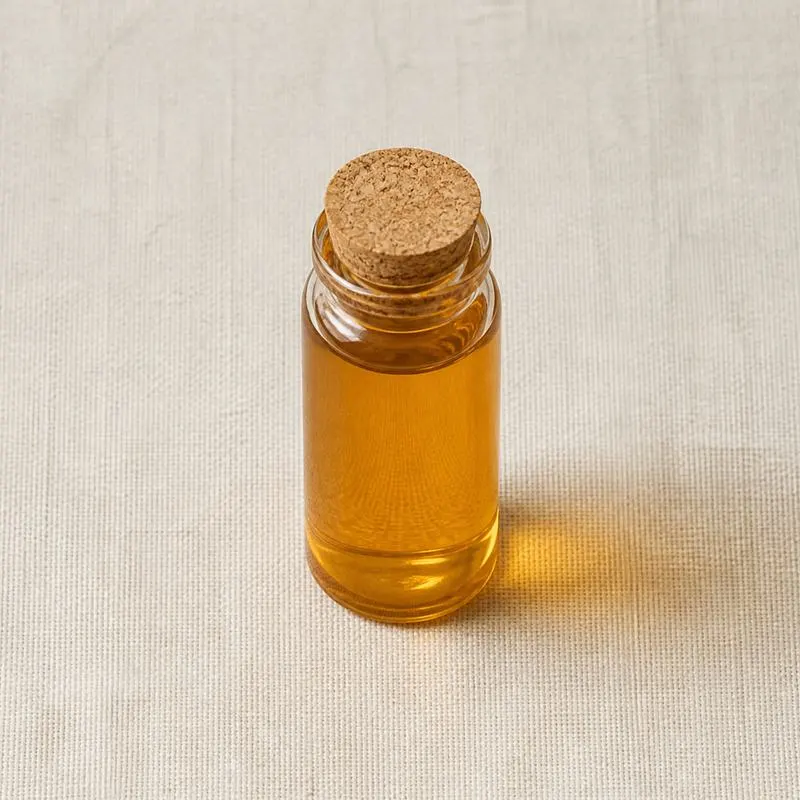
Liffarome is the established trade name for cis 3 hexenyl methyl carbonate, an organic carbonate ester of formula C8H14O3 and CAS number 67633-96-9, formed between cis 3 hexenol and methyl carbonate. Its odour is intensely green and natural, recalling crushed leaf, violet leaf and the stem of a freshly picked fruit, with a fruity and faintly floral undertone. It is not reported to occur in foods, and no natural source is worked commercially, so all supply is synthetic.
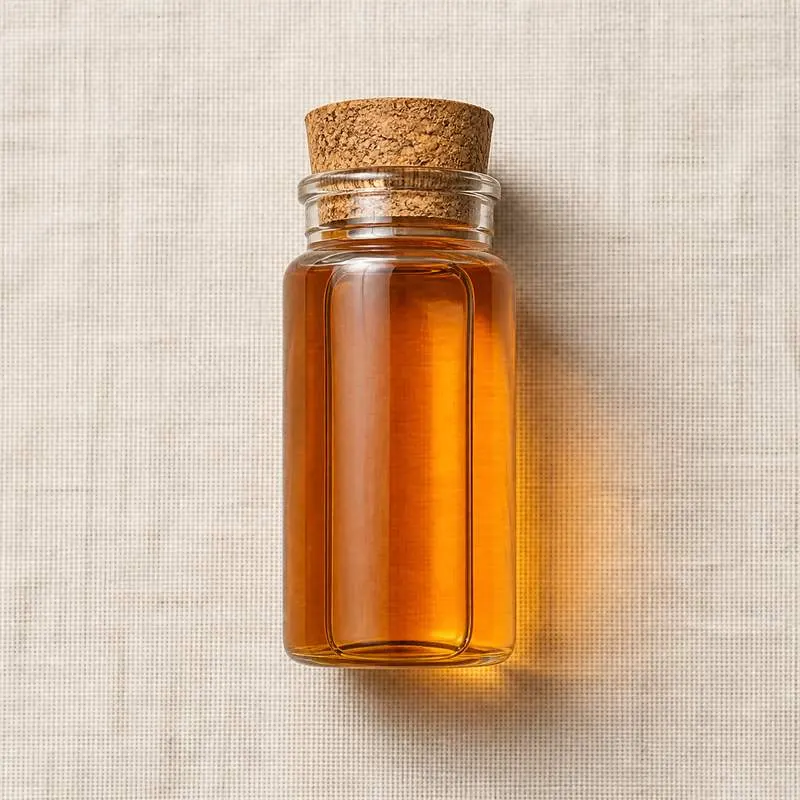
It is a colourless to pale yellow mobile liquid, practically insoluble in water and freely soluble in ethanol, propylene glycol, triacetin and edible oils. Its distinguishing property against cis 3 hexenol itself, the material it is most often used in place of, is substantivity: the carbonate is less volatile and less reactive, so the green note lasts longer in a finished product and does not oxidise as readily to the corresponding aldehyde with its harsh, grassy edge. It is used at very low levels, typically a fraction of a part per million in a finished food, and is stocked as a dilution for compounding.
We source bulk Liffarome from top China manufacturers for our partners. The manufacturer is in Jiangxi. A smaller requirement can ship in a combined container with other ingredients.
Please send the grade you need, the volume and your destination port, and we will come back with a solution and a price.
or call +86-21-6858 0751
- Function
- Flavours and Aromas
Specifications
| Item | Specification |
|---|---|
| Appearance | Colourless to pale yellow clear mobile liquid |
| Odour | Characteristic intense green leafy with a fruity facet |
| Assay by Gas Chromatography | Not less than 97.0 percent |
| Identification | Infrared spectrum conforms to reference |
| Trans Isomer Content | Not more than 2.0 percent |
| Relative Density at 25 degrees Celsius | 0.960 to 0.980 |
| Refractive Index at 20 degrees Celsius | 1.435 to 1.445 |
| Solubility | Soluble in ethanol and edible oils, practically insoluble in water |
| Acid Value | Not more than 1.0 mg KOH per gram |
| Water Content | Not more than 0.2 percent |
| Residue on Ignition | Not more than 0.05 percent |
| Heavy Metals as Pb | Not more than 10 mg per kg |
| Lead | Not more than 1.0 mg per kg |
| Arsenic | Not more than 1.0 mg per kg |
Common Markets Grades
The material is traded essentially as a single specification, neat liquid at 97 to 99 percent minimum assay, with the cis isomer content of the hexenol residue as the critical figure, since the trans isomer contributes a different and less desirable green note. There is no natural grade, since the compound does not occur in nature and cannot be obtained from a botanical source.
The practical grade choice is therefore concentration and documentation rather than purity. Neat material is packed under nitrogen in lined containers. Dilutions at 1 or 10 percent in propylene glycol or triacetin are stocked so that a formula calling for a few milligrams can be dispensed accurately. Flavour grade material carries the FEMA GRAS documentation and is specified against a monograph covering assay, refractive index and relative density; fragrance grade of the same assay is documented for perfumery use instead. Kosher and halal certification is available on request.
Applications
- Strawberry and raspberry flavours, where it supplies the fresh stem and leaf note of the just picked fruit
- Melon and cucumber flavours, contributing the green rind character
- Apple and pear flavours, giving the crisp green top over the ester body
- Tomato and vegetable flavours, reproducing the leaf note of the growing plant
- Green tea and herbal beverage flavours
- Mint and menthol compositions, where it lifts the herbal facet
- Beverage flavours generally, where its lower volatility extends the green top through shelf life
- Dairy and yoghurt fruit preparations, reinforcing freshness after pasteurisation
- Fine fragrance in green, floral and violet leaf accords
- Functional perfumery for detergent and personal care, where its stability suits harsh bases
China Manufacturers of Liffarome
Top Liffarome manufacturers in China.

Company names and logos are the property of the manufacturers themselves. They are listed here because our own directory records them as producing this ingredient. A listing is not an endorsement by them, and we do not represent them or speak on their behalf.
Regulatory Status
In the United States cis 3 hexenyl methyl carbonate carries FEMA GRAS number 3681 and is recognised as a synthetic flavouring substance permitted for use in food under 21 CFR 172.515. Material offered for food use is specified against a monograph covering assay, refractive index, relative density and heavy metals.
In the European Union it appears in the Union list of authorised flavouring substances maintained under Regulation (EC) No 1334/2008, which permits it for general flavouring use subject to good manufacturing practice and identifies it by an FL number within the ester group. The Council of Europe has listed it in its flavouring inventory. JECFA has evaluated it within the group of aliphatic acyclic and alicyclic terpenoid and related esters and published a specification. For fragrance use the Research Institute for Fragrance Materials has assessed the material, and the standards of the International Fragrance Association cover it. Where a buyer takes the material as a dilution, the carrier solvent must itself be authorised in the jurisdiction of use.
Manufacturing Process
Production is a two stage synthesis. The alcohol component, cis 3 hexenol, is made industrially from a C6 feedstock by routes that set the cis geometry of the double bond, most commonly by partial hydrogenation of a hexynol intermediate over a poisoned palladium catalyst, which delivers the cis alkene selectively. The alcohol is purified by fractional distillation under vacuum and checked for isomeric purity, since any trans material carried forward will appear in the finished ester.
The carbonate is then formed by reacting cis 3 hexenol with methyl chloroformate in the presence of a base such as pyridine or a tertiary amine to scavenge the hydrogen chloride released, or alternatively by transesterification with dimethyl carbonate over a basic catalyst, which avoids handling a chloroformate and produces methanol rather than a salt as the by product. The crude ester is washed with dilute acid and water to remove base and salts, dried, and purified by fractional distillation under reduced pressure, since the carbonate is thermally sensitive. The distilled cut is polish filtered, assayed by gas chromatography for both purity and cis isomer content, and filled under nitrogen into lined containers.