Peanut Oil
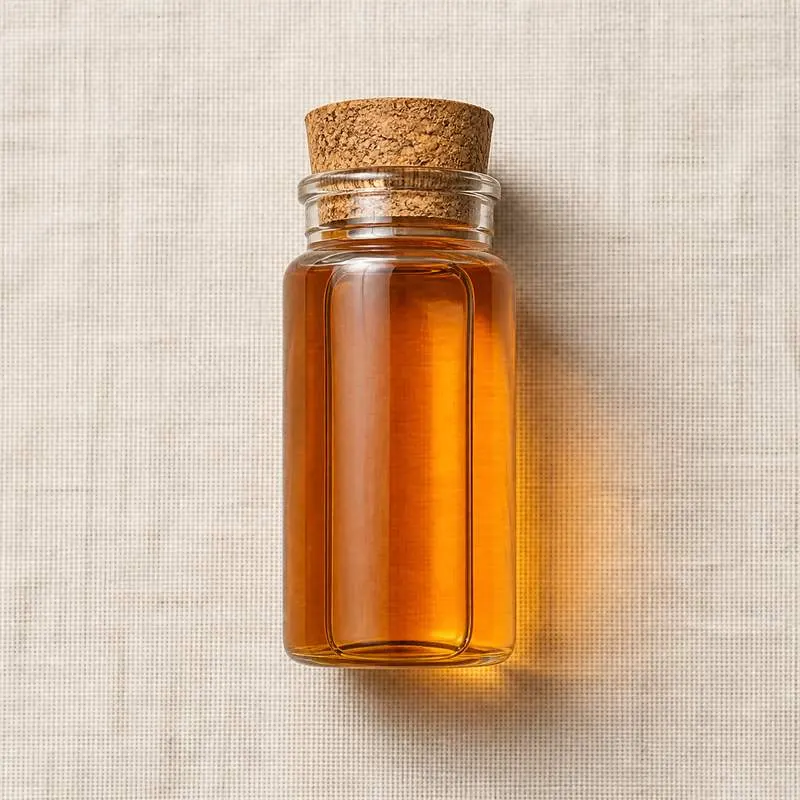
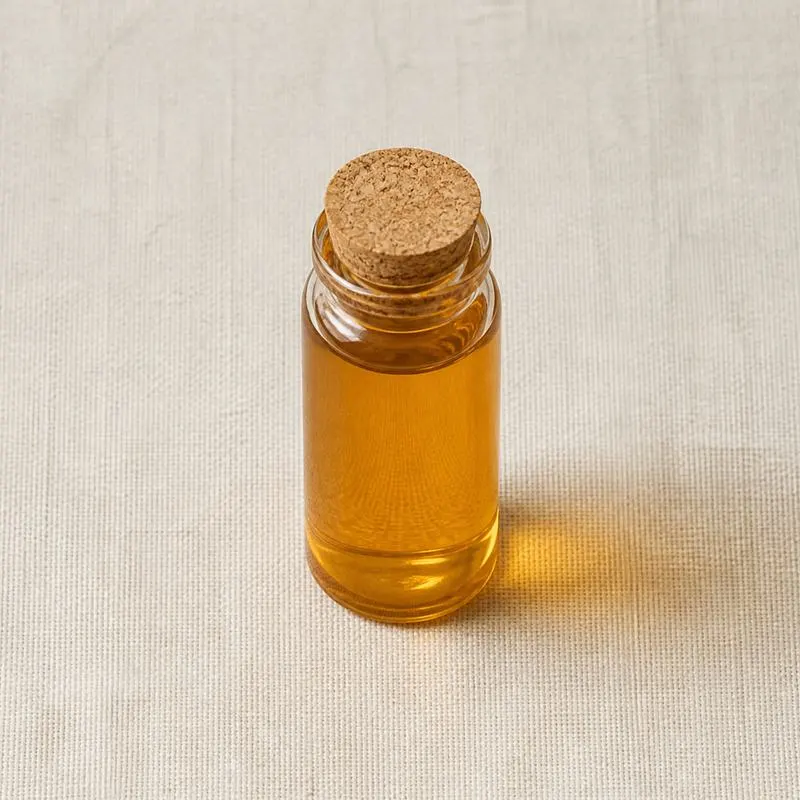
Peanut oil, also called groundnut oil, is the fixed oil obtained from the seeds of Arachis hypogaea. It is a pale yellow liquid at room temperature with a bland taste in the refined form and a pronounced roasted nut aroma in the pressed aromatic form that dominates the Chinese domestic market.
In composition it is a triglyceride oil of moderate unsaturation, with oleic acid typically between 36 and 67 percent, linoleic acid between 15 and 43 percent, and palmitic acid around 8 to 14 percent. What distinguishes it analytically is the presence of the very long chain saturated fatty acids arachidic, behenic and lignoceric, which together make up a few percent and are the reason the oil clouds and deposits solids when chilled. Their fingerprint is also the standard means of detecting peanut oil in a blend.
The oil is insoluble in water and miscible with other fats and with non polar solvents. Its high content of monounsaturated fat and its relatively high smoke point make it stable in frying, and refined grades hold up well through repeated heating cycles. Oxidation, tracked by peroxide and anisidine value, is the main quality limit, and aflatoxin contamination of the incoming kernel is the dominant safety concern in the category.
We source bulk Peanut Oil from top China manufacturers for our partners. The manufacturer is in Guangdong. A smaller requirement can ship in a combined container with other ingredients.
Please send the grade you need, the volume and your destination port, and we will come back with a solution and a price.
or call +86-21-6858 0751
- Function
- Flavours and Aromas
Specifications
| Item | Specification |
|---|---|
| Appearance | Clear liquid at 20 degrees Celsius, free from sediment |
| Colour, Lovibond 5.25 inch cell | Yellow 20 maximum, red 2.0 maximum, refined grade |
| Odour and taste | Bland for refined grade, characteristic roasted for aromatic grade |
| Free fatty acid as oleic acid | 0.10 percent maximum, refined grade |
| Peroxide value | 5.0 meq/kg maximum |
| Moisture and volatile matter | 0.10 percent maximum |
| Insoluble impurities | 0.05 percent maximum |
| Iodine value | 86 to 107 |
| Saponification value | 187 to 196 mg KOH/g |
| Unsaponifiable matter | 1.0 percent maximum |
| Refractive index at 40 degrees Celsius | 1.4600 to 1.4650 |
| Total aflatoxins | 4 microgram/kg maximum |
| Lead | 0.1 mg/kg maximum |
| Arsenic | 0.1 mg/kg maximum |
Common Markets Grades
The main division is between refined, bleached and deodorised oil and pressed aromatic oil. Refined grades are neutral in taste and colour, have a high smoke point and a long shelf life, and are used where the oil is a cooking medium rather than a flavour. Pressed aromatic oil, made by roasting the kernels before pressing and giving the crude oil only a light physical clarification, retains the roasted peanut aroma and is sold as a flavour ingredient and a cooking oil in its own right, at the cost of a lower smoke point and a shorter shelf life.
Within refined material, buyers distinguish first press or cold pressed oil from solvent extracted oil, and winterised grades from unwinterised ones, since the long chain saturates must be removed by chilling and filtration if the oil is to stay clear under refrigeration. Fully hydrogenated and interesterified peanut fats exist for specific bakery uses. Food grade is separated from technical grade destined for oleochemical use, and organic and non genetically modified positions are run as segregated lines.
Applications
- Deep frying and stir frying, where its stability at high temperature is the reason for selection
- Chinese cooking generally, in which the pressed aromatic grade is treated as a flavour ingredient
- Salad dressings and mayonnaise, using the refined neutral grade
- Snack food frying, particularly for products where a nut note is acceptable or wanted
- Bakery and confectionery fats, where fractionated or hardened peanut fats are used
- Margarine and shortening blends
- Carrier oil for oil soluble flavours and oleoresins
- Cosmetic and massage oils, where its emollient properties and slow absorption are used
- Pharmaceutical excipient in oily injections and oral preparations, in a refined grade meeting a pharmacopoeial monograph
- Oleochemical feedstock for soaps, fatty acids and biodiesel from off specification material
Brands Using Peanut Oil
Widely-distributed consumer products that list Peanut Oil on the ingredient label.
Brand names, product names and logos are the property of their owners. They appear here as published evidence that the ingredient is used, taken from the brand's own label or website. Their appearance is not an endorsement, and it does not mean the brand buys from us or from any manufacturer listed on this site.
China Manufacturers of Peanut Oil
Top Peanut Oil manufacturers in China.

Company names and logos are the property of the manufacturers themselves. They are listed here because our own directory records them as producing this ingredient. A listing is not an endorsement by them, and we do not represent them or speak on their behalf.
Regulatory Status
In the United States peanut oil is a food, and refined grades are used without additive approval, and any antioxidant or antifoam added must be a permitted food additive and declared on the label. Peanut is one of the major food allergens under the food allergen labelling requirements, and although highly refined peanut oil is exempt from allergen labelling in that framework, cold pressed, expelled and extruded peanut oils are not, so the distinction between refined and aromatic grades has direct labelling consequences. Aflatoxin action levels apply to the incoming kernel and to the finished oil.
In the European Union peanut oil is covered by general food law, and peanut is a listed allergen under the food information regulation that must be emphasised in the ingredient list, without the refining exemption applied in the United States. Maximum levels for aflatoxins in groundnuts and products derived from them are set in the contaminants regulation, and the process contaminant limits for glycidyl fatty acid esters and chloropropanediol esters in refined vegetable oils apply to the deodorised grade. Codex has a standard for named vegetable oils that covers peanut oil, setting fatty acid composition ranges and quality factors, and it is the reference most export specifications adopt.
Manufacturing Process
Shelled kernels are cleaned, sorted to remove damaged and mouldy nuts, which is the critical control point for aflatoxin, and then either roasted for aromatic oil or conditioned and flaked for the refined route. Mechanical expelling in a screw press recovers the bulk of the oil, and the residual cake, which still holds several percent oil, is normally solvent extracted with hexane in a counter current extractor. Miscella from the extractor is desolventised under vacuum, and the meal is toasted and sold as protein feed.
Crude oil for the refined grade goes through the standard chemical or physical refining train. Degumming with water or acid removes phospholipids, neutralisation with caustic soda removes free fatty acids as soapstock, bleaching earth adsorbs colour bodies, trace metals and oxidation products, and deodorisation by steam stripping under high vacuum removes the volatile compounds that carry odour and taste. Winterisation, a controlled chill and filtration, removes the long chain saturates where a clear cold stable oil is required. The aromatic pressed grade skips most of this: roasted kernels are pressed, and the oil is settled, filtered and sometimes lightly water washed, so that the roasted volatiles survive into the finished product.