Oleic Acid
Oleic acid is a monounsaturated fatty acid of eighteen carbons with a single cis double bond at the ninth position, formula C18H34O2. It is the most abundant fatty acid in olive, high oleic sunflower, rapeseed and tea seed oils, and a major component of animal fats, and it is traded in isolated form as a food, feed and industrial raw material.
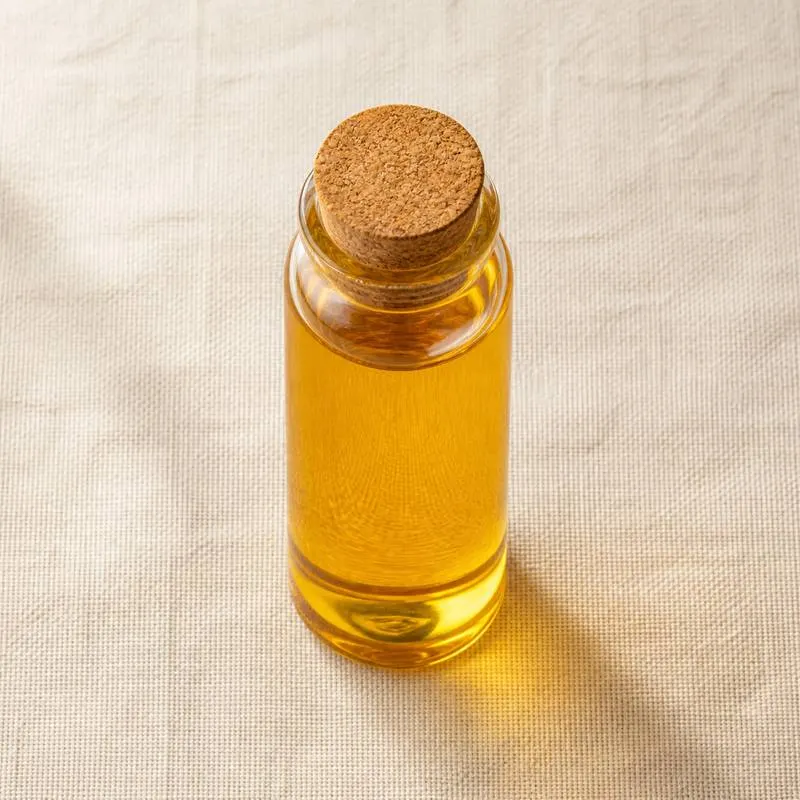
The pure acid is a pale yellow oily liquid at room temperature that solidifies to a white mass on chilling, with a melting point close to sixteen degrees Celsius. It is practically insoluble in water and freely miscible with ethanol, ether and vegetable oils. Commercial material is rarely a single compound: it is a fatty acid cut in which oleic acid is the largest component, with linoleic, palmitic and stearic acids making up the balance, and the specification is written as a fatty acid distribution rather than a single assay.
In food manufacturing the acid functions as a lubricant, defoamer, binder and component of emulsifiers rather than as a nutrient, and it is the starting material for oleates, monoglycerides and other derivatives. The double bond makes it prone to oxidation and to isomerisation at high temperature, so it is stored under nitrogen away from heat, light and copper.
We source bulk Oleic Acid from top China manufacturers for our partners. The manufacturer is in Shanghai. A smaller requirement can ship in a combined container with other ingredients.
Please send the grade you need, the volume and your destination port, and we will come back with a solution and a price.
or call +86-21-6858 0751
- Function
- Nutraceutical
Specifications
| Item | Specification |
|---|---|
| Appearance | Clear pale yellow oily liquid at 25 degrees C |
| Odour | Characteristic faint fatty, free from rancid notes |
| Oleic Acid Content | Not less than 80.0 percent for distilled food grade |
| Identification | Fatty acid profile conforms to reference by gas chromatography |
| Acid Value | 195 to 204 mg KOH/g |
| Iodine Value | 85 to 95 |
| Saponification Value | 196 to 206 mg KOH/g |
| Titre | Not more than 10 degrees C |
| Colour, Gardner | Not more than 3 |
| Moisture | Not more than 0.2 percent |
| Unsaponifiable Matter | Not more than 2.0 percent |
| Residue on Ignition | Not more than 0.1 percent |
| Lead (Pb) | Not more than 0.1 mg/kg |
| Arsenic (As) | Not more than 0.1 mg/kg |
Common Markets Grades
Grades are defined by oleic content and by colour. Commercial grade oleic acid, historically called red oil, runs at roughly seventy to seventy five percent oleic acid with linoleic and saturated acids making up the rest, and is used industrially. Distilled and double distilled grades reach eighty to ninety percent with a much paler colour and lower peroxide value, and are the grades specified for food and pharmaceutical use. High purity grades above ninety and up to ninety nine percent are produced by repeated distillation and by low temperature solvent crystallisation, and are sold for pharmaceutical excipient and analytical use.
Source is a second axis. Vegetable derived grades from palm, sunflower, rapeseed or olive are specified where a vegetarian, kosher or halal declaration is needed; tallow derived grades are cheaper but carry animal origin documentation requirements; and tall oil fatty acid derived oleic acid is a separate regulated category. Saponified forms, principally sodium and potassium oleate, are traded as related grades.
Applications
- Food processing aid as a lubricant, binder and defoaming agent in manufacture
- Raw material for emulsifiers such as mono and diglycerides and polysorbates
- Coating and release agent for confectionery, dried fruit and bakery equipment
- Component of chewing gum base
- Pharmaceutical excipient, used as a solubiliser and penetration enhancer in topical and softgel formulations
- Nutritional and supplement oils, where high oleic material is used for oxidative stability
- Feed additive and energy source in animal nutrition
- Feedstock for oleate esters used as plasticisers, lubricants and solvents
- Personal care emulsions and soap manufacture, in saponified form
Brands Using Oleic Acid
Widely-distributed consumer products that list Oleic Acid on the ingredient label.
Brand names, product names and logos are the property of their owners. They appear here as published evidence that the ingredient is used, taken from the brand's own label or website. Their appearance is not an endorsement, and it does not mean the brand buys from us or from any manufacturer listed on this site.
China Manufacturers of Oleic Acid
Top Oleic Acid manufacturers in China.
Company names and logos are the property of the manufacturers themselves. They are listed here because our own directory records them as producing this ingredient. A listing is not an endorsement by them, and we do not represent them or speak on their behalf.
Regulatory Status
In the United States the fatty acids listing at 21 CFR 172.860 permits oleic acid as a food additive, and it covers fatty acids derived from edible fats and oils and their use as lubricants, binders and defoaming agents, and as components of other food additives. 21 CFR 172.862 separately authorises oleic acid derived from tall oil fatty acids, with its own specification. Oleic acid is also a recognised pharmaceutical excipient and appears in the United States Pharmacopeia National Formulary.
In the European Union oleic acid is authorised as a food additive within the group fatty acids, carrying the E number E 570, and its use conditions and purity criteria are set by the food additives regulation and the associated specifications regulation. It also appears in the European Pharmacopoeia as an excipient monograph. Codex has adopted an advisory specification for fatty acids as food additives through the JECFA compendium of food additive specifications, and JECFA has evaluated fatty acids and their salts as a group.
Manufacturing Process
Production begins with a triglyceride feedstock chosen for its oleic content, typically tallow, palm oil, high oleic sunflower oil or olive pomace oil. The fat is split into free fatty acids and glycerol by continuous high pressure hydrolysis, in which the fat and water are contacted in counter current flow in a splitting column at high temperature and pressure; the glycerol water phase is drawn off and refined as a separate product. Enzymatic splitting with lipase is used where a milder route is required.
The mixed fatty acids are then separated. Fractional distillation under high vacuum removes the shorter and longer chain acids and gives a cut centred on the eighteen carbon acids, and this stream is further separated from the saturated stearic and palmitic acids either by solvent crystallisation, in which the saturated acids crystallise from acetone or methanol at low temperature and are filtered off, or by hydrophilisation and pressing in a dry fractionation plant. The oleic rich liquid fraction is redistilled to the required purity and colour, bleached where necessary, stabilised, and filled hot under nitrogen into drums, IBCs or heated road tankers.