Sclareolide
Sclareolide is a bicyclic sesquiterpene lactone, formally a norlabdane oxide, with the molecular formula C16H26O2 and a molecular weight of about 250. It occurs naturally in clary sage, Salvia sclarea, and in a few other labdane bearing plants, and is the principal industrial intermediate in the manufacture of the amber odorant Ambrox.
In its own right sclareolide is a fixative and modifier rather than a top note. It has a very weak, warm, slightly woody and ambery odour with a faint musky and tobacco character, and it is used at low concentration to lend body, persistence and a dry warmth that lifts other materials without asserting itself. Its role in flavour work is narrow and sits mainly in tobacco and in some spice and herbal reconstructions.
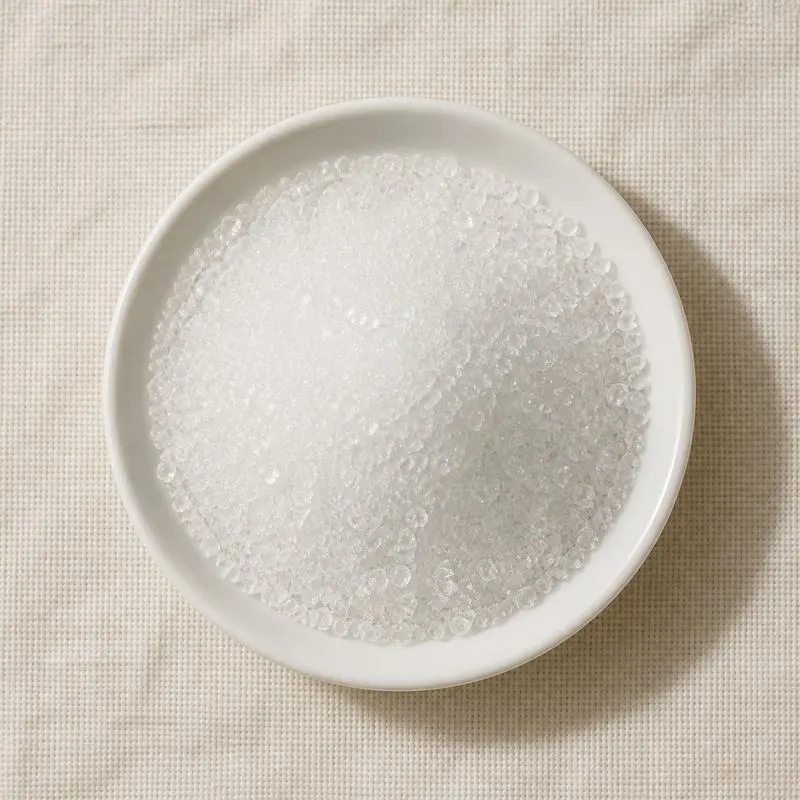
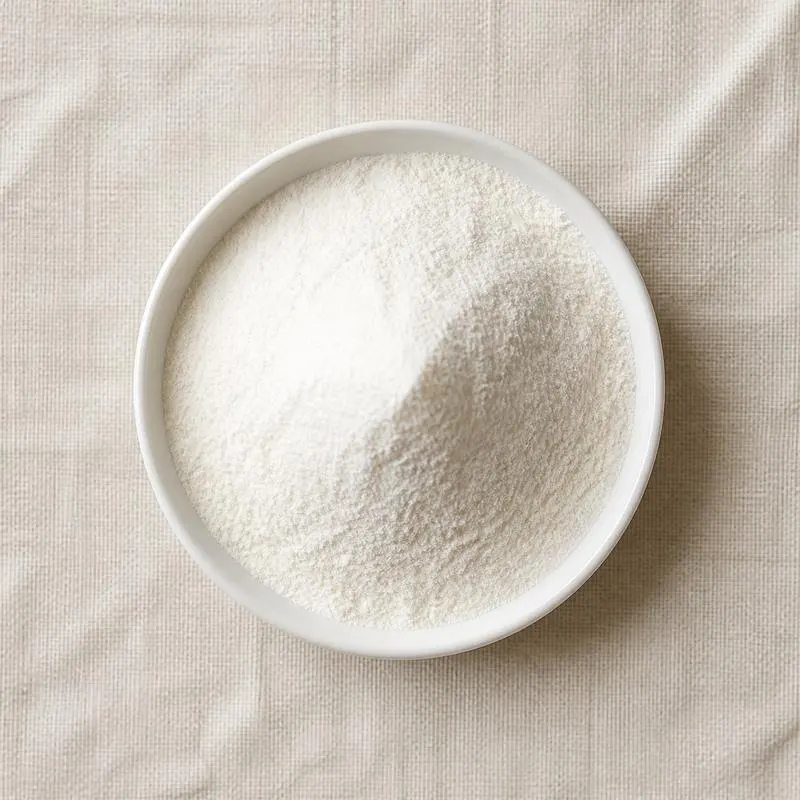
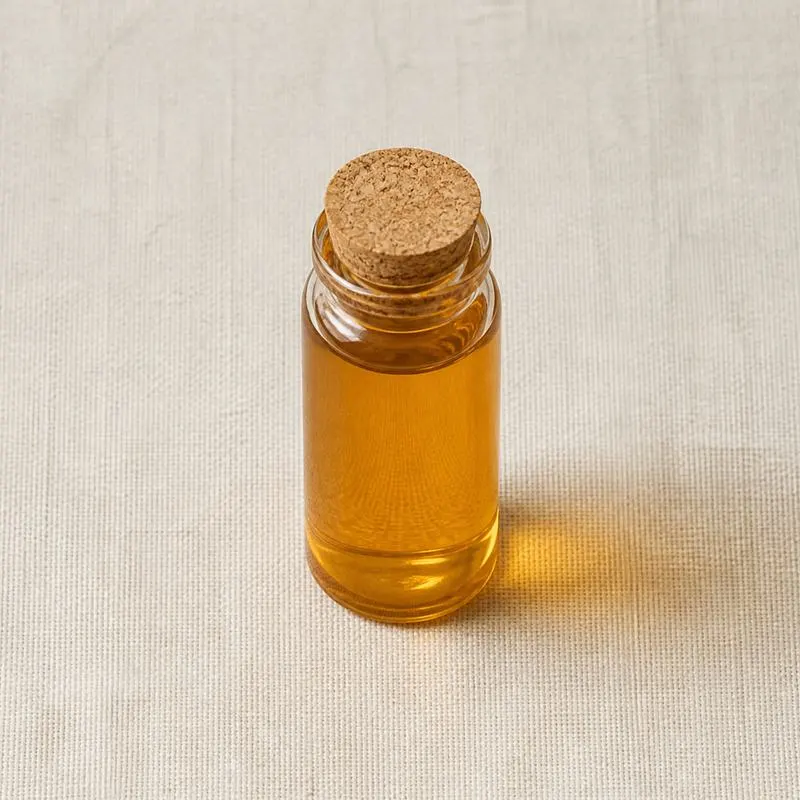
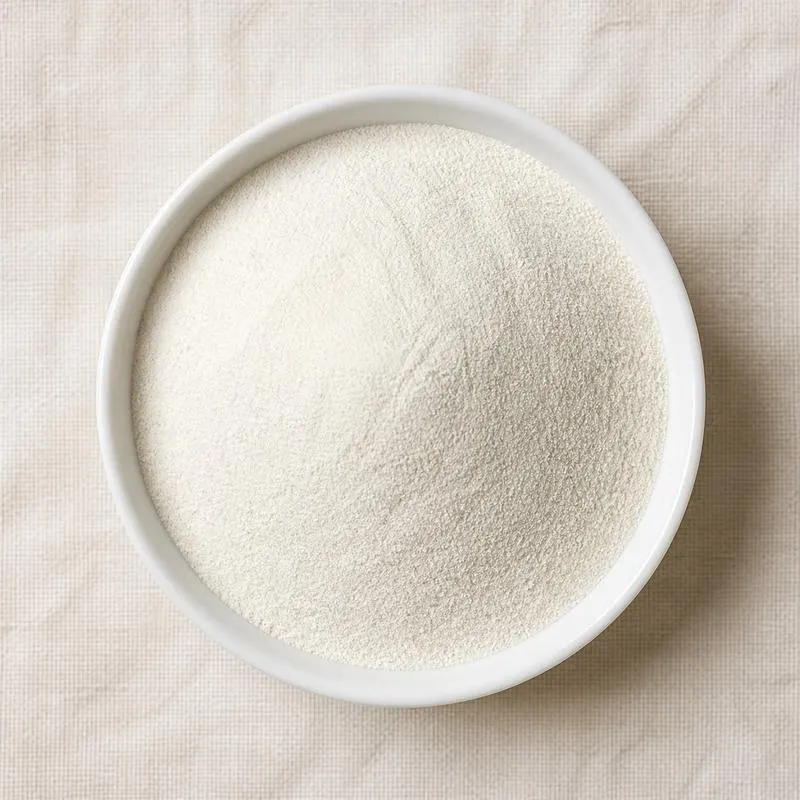
The material is a white to off white crystalline powder or flake with a melting point in the region of 122 to 125 degrees Celsius. It is practically insoluble in water and dissolves readily in ethanol, propylene glycol and vegetable oils. The lactone ring is stable to air and to moderate heat, so the solid stores well, but it is sensitive to strongly alkaline conditions, which open the ring to the corresponding hydroxy acid.
We source bulk Sclareolide from top China manufacturers for our partners. The manufacturer is in Beijing. A smaller requirement can ship in a combined container with other ingredients.
Please send the grade you need, the volume and your destination port, and we will come back with a solution and a price.
or call +86-21-6858 0751
- Function
- Flavours and Aromas
Specifications
| Item | Specification |
|---|---|
| Appearance | White to off white crystalline powder or flake |
| Odour | Faint warm ambery woody, no solvent or musty note |
| Assay by Gas Chromatography | Not less than 98.0% |
| Identification | Infrared and mass spectrum conform to reference standard |
| Melting Point | 122 to 125 C |
| Specific Rotation | Conforms to reference, single enantiomer |
| Loss on Drying | Not more than 0.5% |
| Residue on Ignition | Not more than 0.1% |
| Residual Solvent | Not more than 0.1% total |
| Solubility | Insoluble in water, soluble in ethanol and vegetable oil |
| Heavy Metals | Not more than 10 mg/kg |
| Lead | Not more than 2.0 mg/kg |
| Arsenic | Not more than 1.0 mg/kg |
| Particle Size | Passes 60 mesh, as declared per grade |
Common Markets Grades
Sclareolide is traded as a single chemical rather than as a family of compositions, and the assay is normally quoted as not less than 95 percent or not less than 98 percent by gas chromatography, with the higher figure standard for flavour and fragrance use and the lower one acceptable where the material is going forward as a synthesis intermediate. Optical purity matters because only the natural configuration carries the useful odour, and material derived from clary sage sclareol is the single enantiomer, with a specific rotation quoted on the certificate.
Physical grades differ mainly in particle form, with crystalline powder, milled fine powder and flake all offered depending on whether the buyer needs fast dissolution in a compounding solvent or low dust in handling. Solutions in propylene glycol, ethanol or triacetin at 1 to 10 percent are sold for flavour and fragrance compounding, since weighing the solid at use level is impractical. Material offered for dietary supplement use is a separate trade with its own documentation but the same chemical specification.
Applications
- Ambrox manufacture, where sclareolide is reduced to the diol and cyclised, by far the largest single outlet
- Fine fragrance compounding, as a fixative that extends the dry down of woody and oriental accords
- Functional perfumery for soap, detergent and fabric softener, where its stability survives an alkaline base better than many amber materials
- Tobacco flavourings, contributing a warm sweet note that persists through combustion
- Amber and ambergris reconstructions, used alongside Ambrox and ambrinol to build depth
- Herbal and spice flavour bases such as clary sage and sage, restoring the body lost when the essential oil alone is used
- Alcoholic beverage flavourings for vermouth and bitters, in trace amounts within a botanical blend
- Encapsulated and slow release aroma systems, where its low volatility makes it a useful anchor
China Manufacturers of Sclareolide
Top Sclareolide manufacturers in China.

Company names and logos are the property of the manufacturers themselves. They are listed here because our own directory records them as producing this ingredient. A listing is not an endorsement by them, and we do not represent them or speak on their behalf.
Regulatory Status
In the United States sclareolide is used as a flavouring substance under the FEMA GRAS programme, which is the clearance that applies to its addition to food, and it is separately an established fragrance material assessed through the industry safety programme for that use. It is not the subject of a specific food additive regulation, since flavouring use rests on the GRAS determination rather than on a listing.
In the European Union sclareolide is regulated as a flavouring substance and must appear on the Union list of flavouring substances authorised for use in and on foods to be added to food, with use governed by the general flavourings framework rather than by an E number, which it does not have. Cosmetic and detergent uses fall under separate regimes. Where the material is produced by microbial biotransformation of a plant derived precursor, the natural flavouring definitions in the same framework determine whether it may be declared as natural. JECFA has evaluated lactones of this structural group within its programme of work on flavouring agents.
Manufacturing Process
The commercial route starts from clary sage. Sclareol, a labdane diterpene diol, is recovered from the flowering tops and stems, either by solvent extraction of the plant material followed by crystallisation from the concrete, or from the residue left after steam distillation of clary sage oil. The crude sclareol is purified by recrystallisation to a defined assay before it is converted.
Conversion is an oxidative degradation that removes four carbons from the side chain and closes the lactone ring. Two routes are practised. Chemical oxidation treats sclareol in an organic solvent with an oxidant under controlled temperature and pH, and the crude lactone is then worked up by washing, solvent stripping and recrystallisation. Microbial biotransformation instead ferments sclareol with a selected yeast or fungal strain that carries out the same degradation enzymatically at mild temperature, after which the broth is extracted with solvent, the solvent is recovered by distillation, and the product is crystallised, centrifuged, washed and vacuum dried. The biotransformation route gives a cleaner impurity profile and supports a natural declaration, and both routes finish with milling and sieving to the specified particle size.