Spray Dried Coffee
Spray dried coffee is soluble, or instant, coffee produced by atomising a concentrated aqueous coffee extract into a stream of hot air so that the water evaporates in flight and the dissolved coffee solids fall out as a dry powder. It is the higher volume of the two industrial routes to soluble coffee; the other is freeze drying.
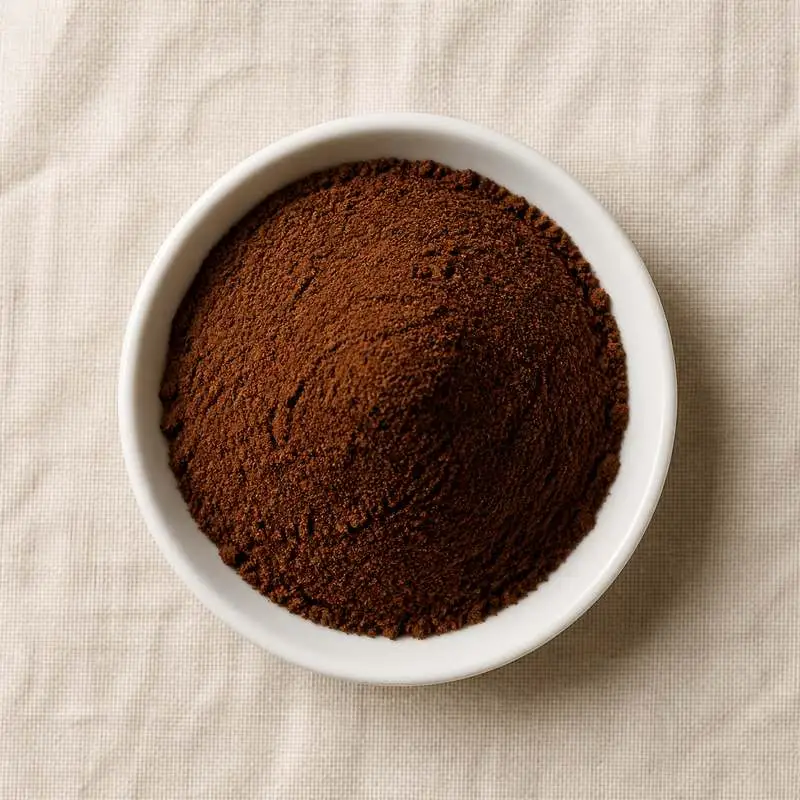
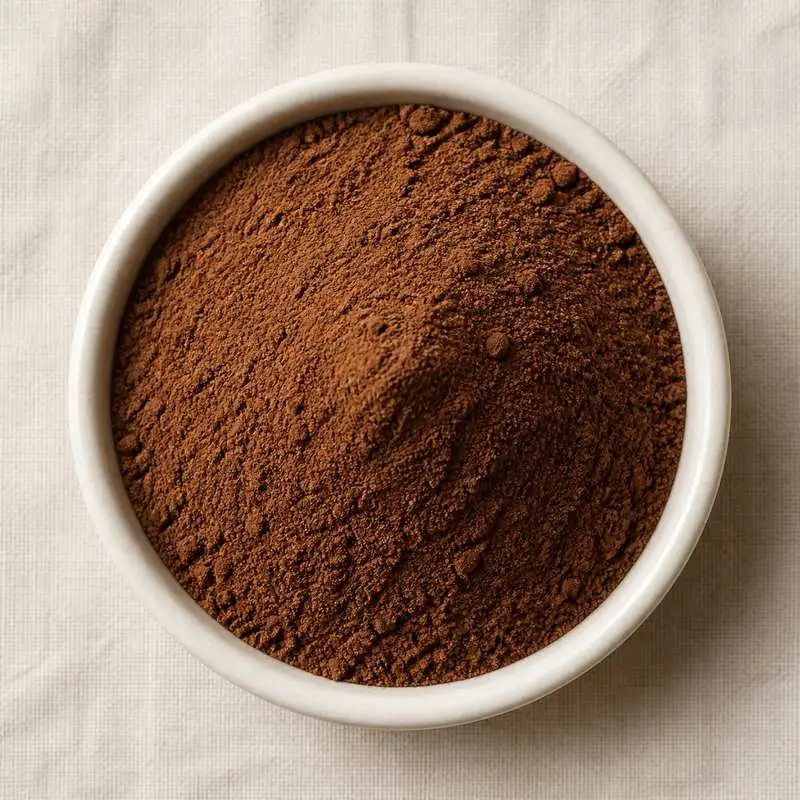
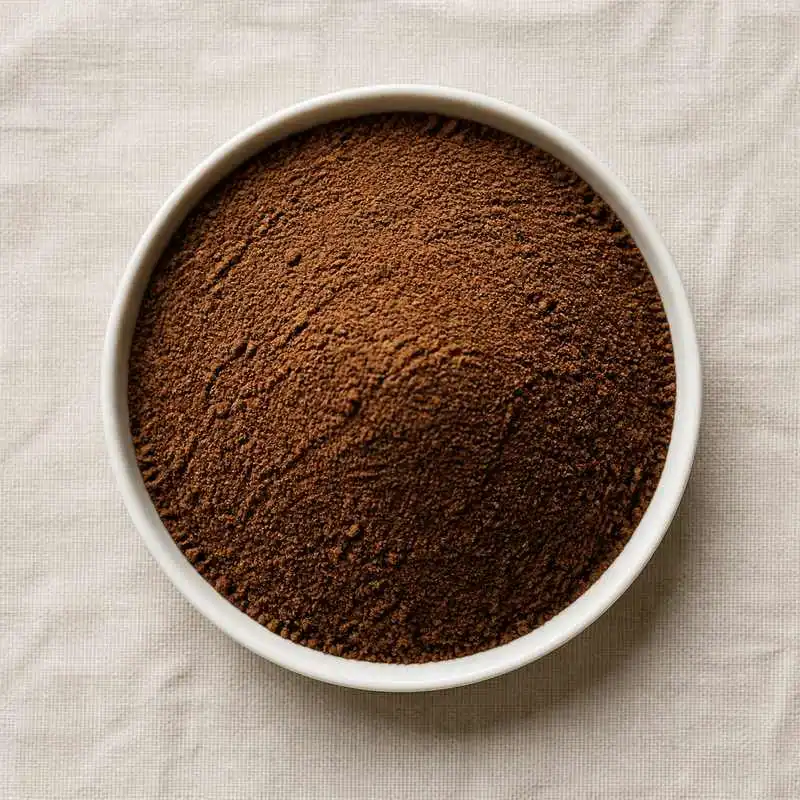
The product is a fine, free-flowing brown powder, or an agglomerated granule where the fines have been rewetted and fused into porous clusters that take up water more readily and look closer to freeze dried coffee. It is fully soluble in hot water and, with sufficient extraction control, in cold water as well, which is what makes it usable in ready to drink and dry mix formats.
Because atomisation exposes the extract to a large surface area at high temperature, some of the volatile aroma is lost, and modern plants strip aroma from the extract before drying and dose it back onto the powder or into the packaging headspace. Moisture is held below about 4 percent, since the powder is strongly hygroscopic and cakes if it takes up water, and packing is done under nitrogen or in moisture-barrier laminate.
We source bulk Spray Dried Coffee from top China manufacturers for our partners. The manufacturer is in Guangdong. A smaller requirement can ship in a combined container with other ingredients.
Please send the grade you need, the volume and your destination port, and we will come back with a solution and a price.
or call +86-21-6858 0751
- Function
- Beverage ingredient
Specifications
| Item | Specification |
|---|---|
| Appearance | Fine free-flowing brown powder, free of foreign matter |
| Moisture | ≤ 4.5% |
| Caffeine | ≥ 2.5% on dry basis |
| Total Ash | 6.0-12.0% |
| pH (1% solution, 25°C) | 4.6-5.4 |
| Bulk Density | 0.20-0.35 g/mL |
| Solubility | Complete in 30 s in water at 90°C |
| Insoluble Matter | ≤ 0.2% |
| Ochratoxin A | ≤ 5.0 µg/kg |
| Lead | ≤ 0.5 mg/kg |
| Arsenic | ≤ 0.5 mg/kg |
| Total Plate Count | ≤ 1,000 cfu/g |
| Yeast and Mould | ≤ 50 cfu/g |
| Salmonella | Absent in 25 g |
Common Markets Grades
Grades are separated by botanical source, pure arabica, pure robusta or blends, by roast level, and by extraction yield, since high yield extraction recovers more solids from the same beans but shifts the cup towards a heavier, more bitter profile. Powder grades are described by bulk density and particle size, with light fluffy powders used for dry mixes and denser powders for vending, while agglomerated grades are specified by granule size distribution and dissolution time.
Cold water soluble grades are produced for ready to drink and bottled applications. Decaffeinated grades made from decaffeinated green beans, acid-adjusted grades for milk-based systems, and coffee extract powders standardised on caffeine content for energy formulations form the rest of the range.
Applications
- Retail instant coffee in jars and sachets, either as free-flowing powder or agglomerated granules
- Three in one and two in one coffee mixes with creamer and sugar
- Vending and foodservice dispensing systems, where dense powder flows accurately through auger dosing
- Ready to drink coffee beverages, reconstituted before formulation with milk or plant base
- Coffee flavoured dairy products, ice cream and desserts, dosed as a dry solid
- Bakery and confectionery, in biscuits, coffee creams, ganaches and chocolate fillings
- Coffee flavoured energy and sports nutrition powders, contributing both flavour and caffeine
- Savoury and sauce applications where a roasted bitter note is wanted, such as barbecue and meat glazes
- Cereal, snack and coating systems needing a dry coffee solid rather than a liquid extract
China Manufacturers of Spray Dried Coffee
Top Spray Dried Coffee manufacturers in China.

Company names and logos are the property of the manufacturers themselves. They are listed here because our own directory records them as producing this ingredient. A listing is not an endorsement by them, and we do not represent them or speak on their behalf.
Regulatory Status
Soluble coffee is a defined product in the European Union under Directive 1999/4/EC relating to coffee extracts and chicory extracts, which sets reserved names and the minimum coffee-based dry matter content required for dried, paste and liquid coffee extract. General food law, hygiene rules and the contaminants framework apply in addition, including maximum levels for ochratoxin A in soluble coffee and the acrylamide benchmark and mitigation obligations.
In the United States soluble coffee is a conventional food with no standard of identity, regulated under the Federal Food, Drug, and Cosmetic Act and subject to preventive controls for human food. Decaffeinated soluble coffee must meet the caffeine level implied by the claim, and residues of any solvent used in decaffeination are controlled under the provisions covering that solvent. Codex addresses the raw material side through its code of practice on ochratoxin A in coffee.
Manufacturing Process
Green beans are roasted and coarsely ground, then extracted in a battery of percolation columns run in counter current flow with hot water. The columns operate at a rising temperature series, with the last cells reaching well above 150 degrees Celsius under pressure so that the hydrolysable carbohydrate fraction of the cell wall is converted and the yield increases. The extract leaves the battery at roughly 15 to 25 percent solids.
Volatile aroma is stripped from the extract or captured from the grounds and set aside. The extract is clarified by centrifugation to remove fines and insoluble tars, then concentrated to around 40 to 50 percent solids on a vacuum evaporator or by freeze concentration where aroma retention matters. The concentrate is pumped to a spray drying tower and atomised through a pressure nozzle or a rotary disc into hot air, with the outlet temperature controlled to protect the flavour. Powder is collected from the tower base and from cyclones, aroma is dosed back, fines may be agglomerated in a rewet and fluid bed stage, and the product is cooled and packed under nitrogen.