Coffee Extract
Coffee extract is the concentrated water soluble fraction of the coffee bean, the seed of Coffea arabica and Coffea canephora, and the trade covers two distinct products separated by whether the bean was roasted first. Roasted coffee extract is made for flavour, colour and caffeine, and is the material behind instant coffee, liquid coffee concentrates and coffee flavoured foods. Green coffee bean extract is made from unroasted beans for its chlorogenic acid content and is a supplement ingredient rather than a flavour.
In roasted extract the soluble solids are chlorogenic acid lactones and their degradation products, melanoidins formed during roasting, caffeine, trigonelline, organic acids and carbohydrates, alongside several hundred volatile compounds that make up the aroma. Melanoidins carry both the brown colour and much of the body. In green coffee extract the chlorogenic acids survive intact, principally 5 caffeoylquinic acid and its isomers, and there are no melanoidins and very little aroma.
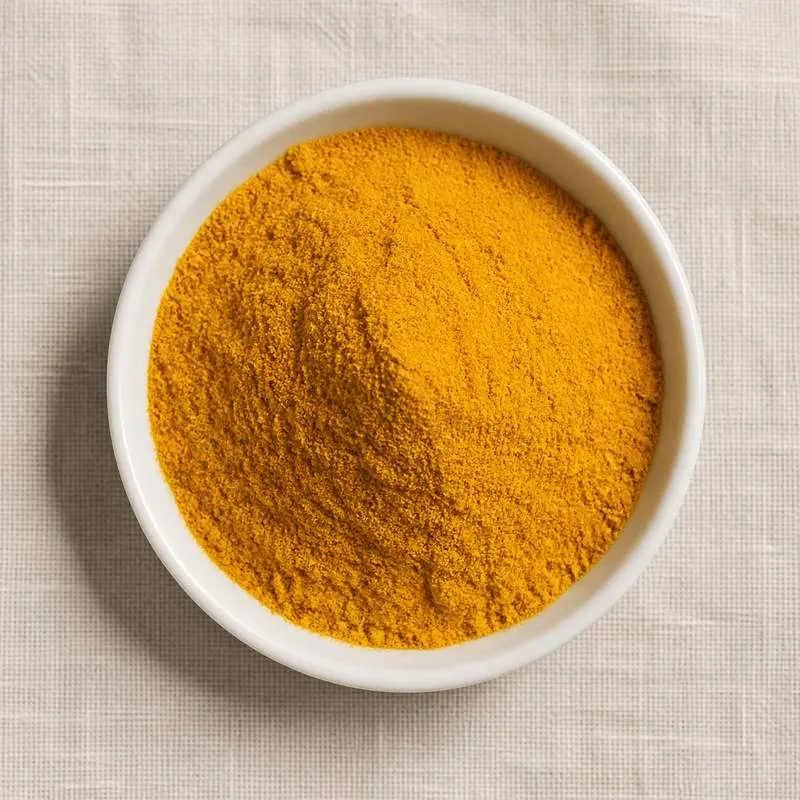
Roasted extract is a dark brown liquid concentrate, a paste, or a freeze dried or spray dried powder, all freely soluble in water. Green coffee extract is a light brown to tan powder, water soluble and markedly astringent. Both are hygroscopic, and the aroma of a roasted extract is lost readily on heating and on exposure to air, so aroma is often recovered separately and added back after concentration.
We source bulk Coffee Extract from top China manufacturers for our partners. The manufacturer is in Zhejiang. A smaller requirement can ship in a combined container with other ingredients.
Please send the grade you need, the volume and your destination port, and we will come back with a solution and a price.
or call +86-21-6858 0751
- Function
- Plant extract
Specifications
| Item | Specification |
|---|---|
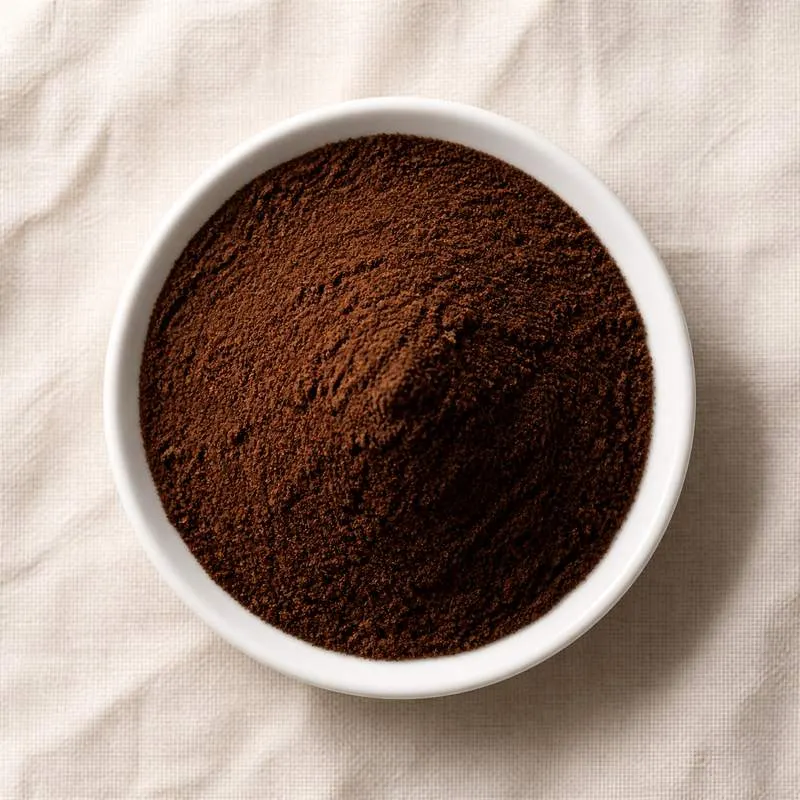
| Appearance | Dark brown free flowing powder or granule |
| Source | Roasted Coffea arabica and Coffea canephora beans |
| Odour and Taste | Characteristic roasted coffee, free of burnt or musty notes |
| Solubility | Completely soluble in hot water, solution clear |
| Total Soluble Solids | ≥ 95.0% |
| Caffeine | 2.5% to 5.0% |
| Loss on Drying | ≤ 4.0% |
| Total Ash | 6.0% to 12.0% |
| pH (2% solution) | 4.6 to 5.6 |
| Bulk Density | 0.20 to 0.35 g/mL |
| Ochratoxin A | ≤ 5 μg/kg |
| Acrylamide | Controlled to applicable benchmark level |
| Lead | ≤ 1.0 mg/kg |
| Arsenic | ≤ 0.5 mg/kg |
| Total Plate Count | ≤ 1,000 cfu/g |
| Yeast and Mould | ≤ 100 cfu/g |
| Escherichia coli | Negative in 1 g |
| Salmonella | Negative in 25 g |
Common Markets Grades
Roasted coffee extract is specified on soluble solids, typically 20 to 60 percent for liquid concentrates and above 95 percent for dried powders, together with caffeine content and, where the material is bought as a flavour, the coffee to water ratio it was brewed at. Decaffeinated grades are traded separately with a residual caffeine limit, and the decaffeination method is stated because carbon dioxide, water and solvent routes give different residual profiles.
Freeze dried powder commands a premium over spray dried because it retains more aroma and gives a granule that dissolves cleanly, while agglomerated spray dried powder sits between the two. Aroma added grades, in which volatiles recovered from the roasting or extraction step are dosed back into the finished product, are distinct items. Green coffee bean extract is quoted instead on chlorogenic acids by HPLC at 45, 50 and 70 percent, with a caffeine limit stated, since decaffeinated green coffee extract is a separate specification. Organic certified material is available in both families.
Applications
- Instant coffee manufacture, where the dried extract is the product itself
- Liquid coffee concentrates for ready to drink and dispensing systems, chilled or aseptically packed
- Ready to drink coffee beverages, both milk based and black, where the extract standardises strength between batches
- Coffee flavoured dairy products including ice cream, yoghurt and flavoured milk
- Bakery and confectionery, in tiramisu creams, coffee ganaches, fillings and biscuit doughs
- Coffee flavoured spirits and liqueurs, where the concentrate supplies both colour and flavour
- Energy drinks and functional beverages, using the extract as a natural caffeine source
- Weight management supplements, built on green coffee extract standardised for chlorogenic acids
- Skin care and cosmetic formulations, where caffeine rich extracts are used in eye and body products
Brands Using Coffee Extract
Widely-distributed consumer products that list Coffee Extract on the ingredient label.
Brand names, product names and logos are the property of their owners. They appear here as published evidence that the ingredient is used, taken from the brand's own label or website. Their appearance is not an endorsement, and it does not mean the brand buys from us or from any manufacturer listed on this site.
China Manufacturers of Coffee Extract
Top Coffee Extract manufacturers in China.

Company names and logos are the property of the manufacturers themselves. They are listed here because our own directory records them as producing this ingredient. A listing is not an endorsement by them, and we do not represent them or speak on their behalf.
Regulatory Status
In the United States, coffee and coffee extract are foods under the general provisions of the Federal Food, Drug and Cosmetic Act, and coffee extract is also a recognised flavouring material of the Flavour and Extract Manufacturers Association. Caffeine is generally recognised as safe for use in cola type beverages under 21 CFR 182.1180, and the Food and Drug Administration has issued guidance on highly concentrated caffeine in dietary supplements. Green coffee bean extract is used as a dietary ingredient under the Dietary Supplement Health and Education Act, with manufacture under 21 CFR Part 111, and the Federal Trade Commission has taken action against unsupported weight loss claims made for it.
In the European Union coffee extract is a food and is the subject of a specific Union directive on coffee extracts and chicory extracts, which defines the product categories, sets minimum dry matter contents for liquid, paste and dried extracts and governs their naming and labelling. It is not a food additive, so no E number applies. Acrylamide, which forms during roasting, is subject to Union benchmark levels and mitigation obligations for coffee and coffee products. Green coffee extract used in supplements is a food supplement ingredient, and preparations of atypical composition may fall within the novel food regulation. Codex has adopted maximum levels for ochratoxin A relevant to coffee, and JECFA has evaluated ochratoxin A and caffeine rather than issuing an additive specification for the extract.
Manufacturing Process
For roasted extract, green beans are cleaned, roasted to the target colour in a drum or fluid bed roaster, cooled and ground to a coarse grind that will not compact in the extraction battery. Ground coffee is charged into a series of percolation columns and hot water is passed through them in counter current flow at rising temperature, the last columns operating above the atmospheric boiling point under pressure so that the more resistant carbohydrates are hydrolysed and the yield is raised. Aroma volatiles are stripped from the first column effluent or from the grounds by steam and held separately for adding back later.
The extract liquor is cooled, clarified by centrifugation, and concentrated either by vacuum evaporation or by freeze concentration, the latter retaining more aroma at higher cost. The concentrate is either filled as a liquid, frozen and granulated and freeze dried, or spray dried and optionally agglomerated with steam. Recovered aroma is dosed back before or after drying. Green coffee extract follows a different route: unroasted beans are milled and extracted with hot water or aqueous ethanol, the liquor is clarified and passed over a macroporous adsorption resin to concentrate the chlorogenic acids and remove sugars, eluted with aqueous ethanol, concentrated under vacuum and spray dried.