Water-Soluble Starch
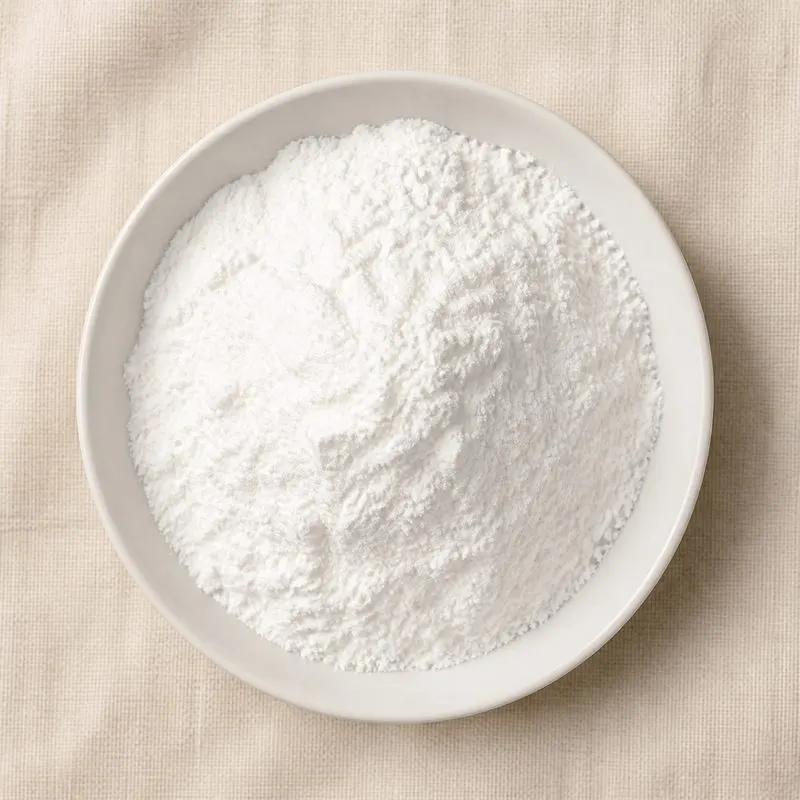
Water-soluble starch, traded in most catalogues simply as soluble starch, is a starch that has been partially degraded so that it dissolves rather than merely swelling. Native starch is not soluble in water at all: the granule absorbs water and gelatinises on heating but does not enter true solution. Shortening the chains removes that limitation, and the resulting product disperses to a clear, low viscosity, non gelling solution.
Two distinct articles are sold under the name. The classical soluble starch, the Zulkowsky or amylodextrin type, is made by treating granular starch with dilute acid until the amorphous regions are hydrolysed away, and it dissolves in hot water to give a nearly clear solution that sets only weakly on cooling. Cold-water-soluble starch is made instead by physically cooking the granule and drying the paste, on a heated drum or through an extruder, so that the dried powder rehydrates in cold water without a heat step. Both are still starch and both give the blue iodine complex that distinguishes starch from its shorter dextrin degradation products.
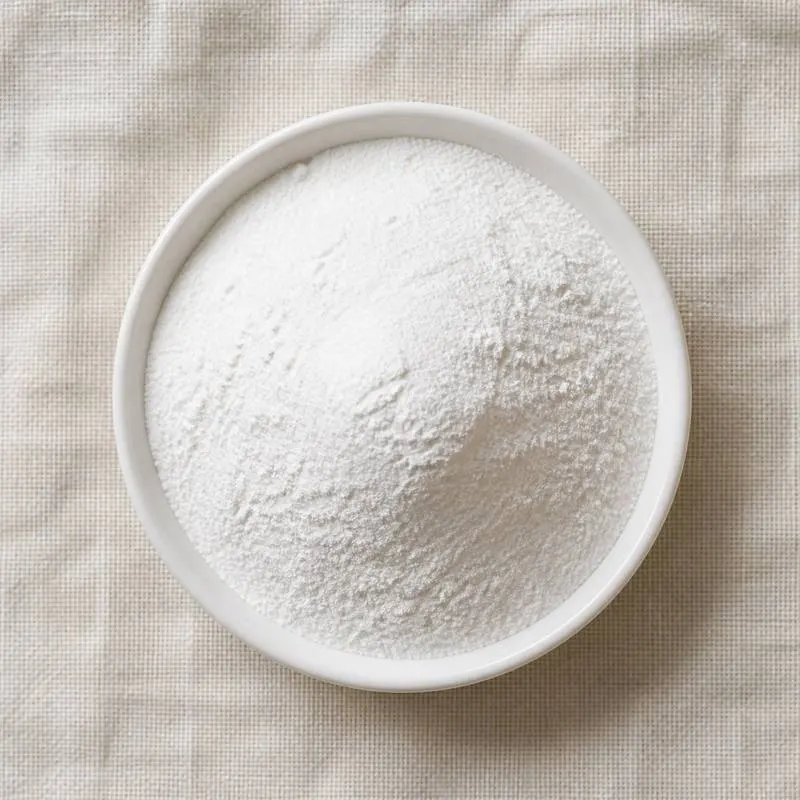
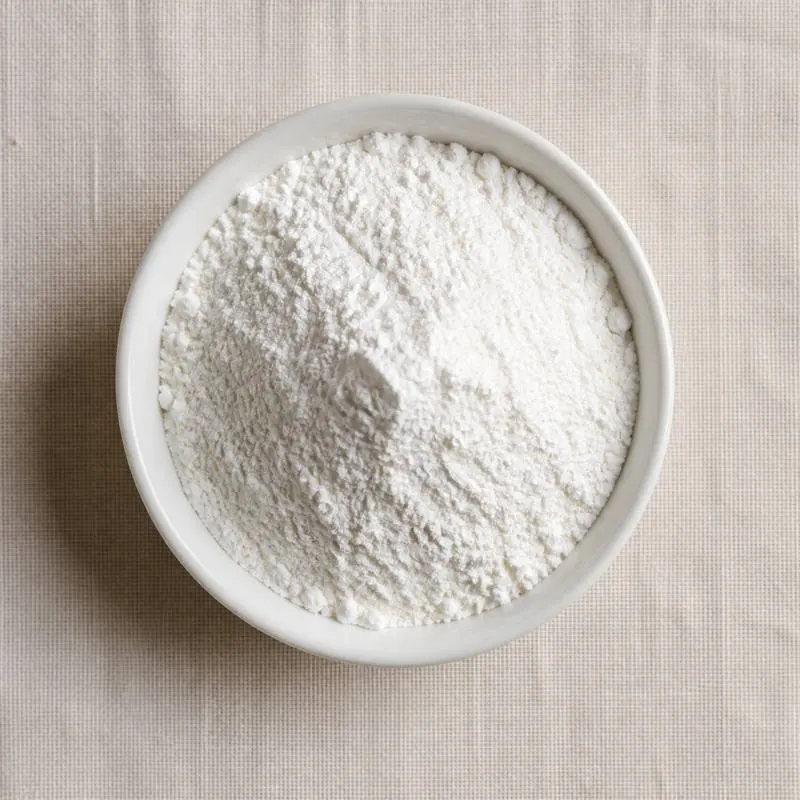
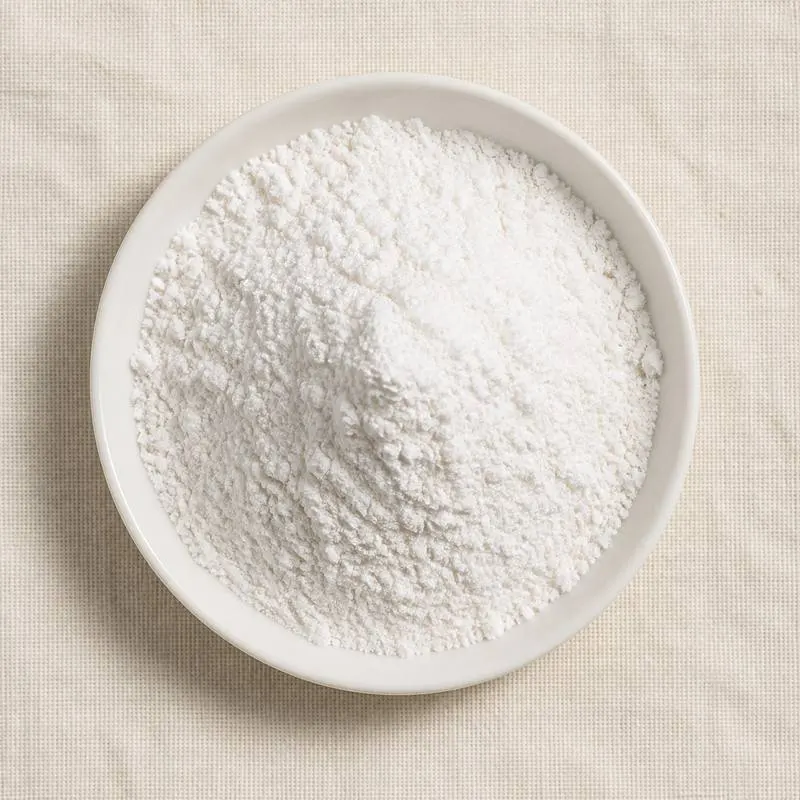
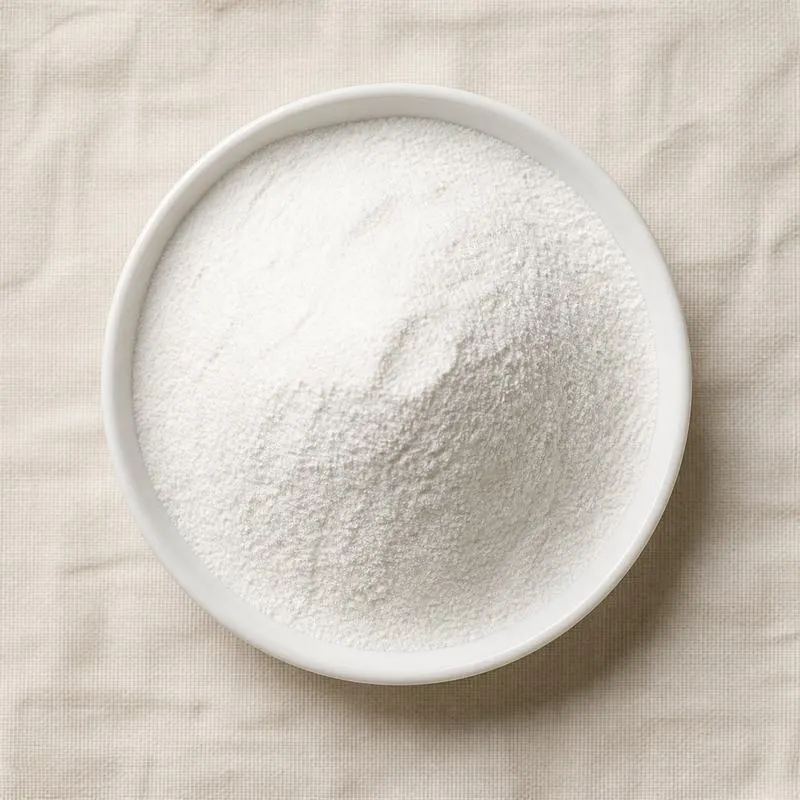
The characteristic property is a very low solution viscosity compared with native starch at the same concentration, combined with retained film forming ability and a clean neutral flavour. The material is a white to off white free flowing powder. Solutions are stable in the short term but shorter chains still retrograde slowly, and a strong solution left standing will haze.
We source bulk Water-Soluble Starch from top China manufacturers for our partners. The manufacturers are in Shaanxi and Hebei. A smaller requirement can ship in a combined container with other ingredients.
Please send the grade you need, the volume and your destination port, and we will come back with a solution and a price.
or call +86-21-6858 0751
- Function
- Texturisers
Specifications
| Item | Specification |
|---|---|
| Appearance | White to off white free flowing powder, free of foreign matter |
| Odour and taste | Bland, no off odour |
| Identification | Blue colour on addition of iodine solution |
| Solubility in hot water | 95 percent minimum, clear to slightly opalescent solution |
| Total starch, dry basis | 97.0 percent minimum |
| Solution viscosity, 2 percent | Conforms to agreed grade profile |
| Moisture | 14.0 percent maximum |
| Ash, dry basis | 0.5 percent maximum |
| Reducing sugars, as glucose | 1.0 percent maximum |
| pH, 5 percent solution | 5.0 to 7.5 |
| Sulphur dioxide | 50 mg/kg maximum |
| Lead | 0.5 mg/kg maximum |
| Arsenic | 0.5 mg/kg maximum |
| Total plate count | 10000 cfu/g maximum |
| Yeast and mould | 500 cfu/g maximum |
| E. coli | Absent in 1 g |
| Salmonella | Absent in 25 g |
Common Markets Grades
The two principal grades are the hot water soluble acid modified type and the cold water soluble pregelatinised type, and they are not interchangeable, since the first requires boiling to dissolve and the second lumps if added to hot water without dispersion. Within each, viscosity and solubility are set by the extent of conversion, quoted as a percentage solubility in water at a stated temperature and as a solution viscosity.
Analytical reagent grade is a separate and tighter specification, made for use as the indicator in iodometric titration, and is controlled on iodine sensitivity, clarity of the boiled solution and the absence of reducing sugars rather than on rheology. Pharmaceutical grade meets the soluble starch monographs used for tablet binding and for diagnostic reagents. Food and technical grades are distinguished largely on microbiology, residual sulphur dioxide and heavy metals. Maize is the usual base, with potato used where higher solution clarity is wanted.
Applications
- Iodometric titration in analytical laboratories, as the indicator whose deep blue complex with iodine marks the end point
- Microbiological culture media, as a fermentable carbon source and as the substrate in starch hydrolysis identification tests
- Pharmaceutical tablet binding and granulation, where a low viscosity solution wets the powder bed evenly
- Instant soups, sauces and dessert powders, in the cold water soluble form which builds body without cooking
- Encapsulation and spray drying carriers, where high solids and low viscosity in the feed are required
- Batters and coating slurries, contributing adhesion at a solids loading a native starch could not reach
- Confectionery and glazing solutions, forming a clear film on drying
- Textile and paper sizing outside food, applied hot at high solids
- Adhesive and binder formulations, where a starch that truly dissolves is required rather than one that merely swells
China Manufacturers of Water-Soluble Starch
Top Water-Soluble Starch manufacturers in China.
- Shanxi Zhiqi Biotechnology Co., Ltd.6 ingredients in the directory
 Shijiazhuang Huiyuan Starch Co., Ltd.7 ingredients in the directory
Company names and logos are the property of the manufacturers themselves. They are listed here because our own directory records them as producing this ingredient. A listing is not an endorsement by them, and we do not represent them or speak on their behalf.
Regulatory Status
Regulatory status depends on which article is meant. The cold water soluble pregelatinised grade is made by a purely physical treatment, so it is a physically modified starch, which in the European Union is not a food additive and carries no E number, and in the United States is treated as a food ingredient labelled as pregelatinised starch or simply starch rather than as modified food starch.
The acid modified hot water soluble grade is a chemically modified starch. In the United States it falls under 21 CFR 172.892, the food starch modified regulation, which lists hydrochloric and sulphuric acid among the permitted treatment agents, and it is labelled as modified food starch. In the European Union it is authorised as E 1401, acid treated starch, under the food additives framework and must be declared as an additive. JECFA maintains specification monographs for the modified starches including acid treated starch, and Codex lists them in the General Standard for Food Additives. Analytical reagent grade material is sold to laboratory rather than food specifications and is not covered by these food frameworks.
Manufacturing Process
The classical hot water soluble grade is made by acid modification in the granular state. Native starch, usually maize or potato, is slurried in water at around 35 to 40 percent solids and dilute hydrochloric or sulphuric acid is added. The batch is held at a temperature below the gelatinisation point, typically 40 to 55 degrees Celsius, so the granule does not swell, while the acid diffuses in and hydrolyses glycosidic bonds preferentially in the amorphous growth rings. The conversion is followed by drawing samples and measuring solubility and solution viscosity, and when the target is reached the batch is neutralised with sodium carbonate to about pH 6, washed on a rotary vacuum filter or hydrocyclone train to remove salts and soluble fragments, dewatered and flash dried, then milled and sieved.
The cold water soluble grade is made physically rather than chemically. A refined starch slurry, which may itself have been lightly thinned first, is cooked to full gelatinisation and applied as a thin film to a steam heated drum drier, where it dries in a single revolution and is scraped off as a brittle sheet. The sheet is milled and screened to the required particle size, with coarser grinds giving better dispersion and finer grinds faster hydration. Extrusion cooking followed by grinding is used as an alternative route to the same cold water solubility.