Potato Starch
Potato starch is the starch recovered from the tuber of Solanum tuberosum, isolated by wet extraction from potatoes or from the juice stream of potato processing. It differs from cereal starches in several respects that together make it the most functionally distinctive of the common native starches.
Its granules are the largest in commercial use, running up to about 100 micrometres, and they carry covalently bound phosphate ester groups on the amylopectin, unique among food starches at that level. The phosphate groups repel one another when the granule hydrates, so the granule swells further and faster than any other native starch. The result is a very low gelatinisation temperature, around 58 to 65 degrees Celsius, an exceptionally high peak viscosity reached quickly, and a cooked paste that is clear, long textured and almost neutral in flavour. Amylose content is low, around 20 percent, and protein and lipid contents are lower than in any cereal starch, which is why the paste stays clear and does not develop cereal notes.
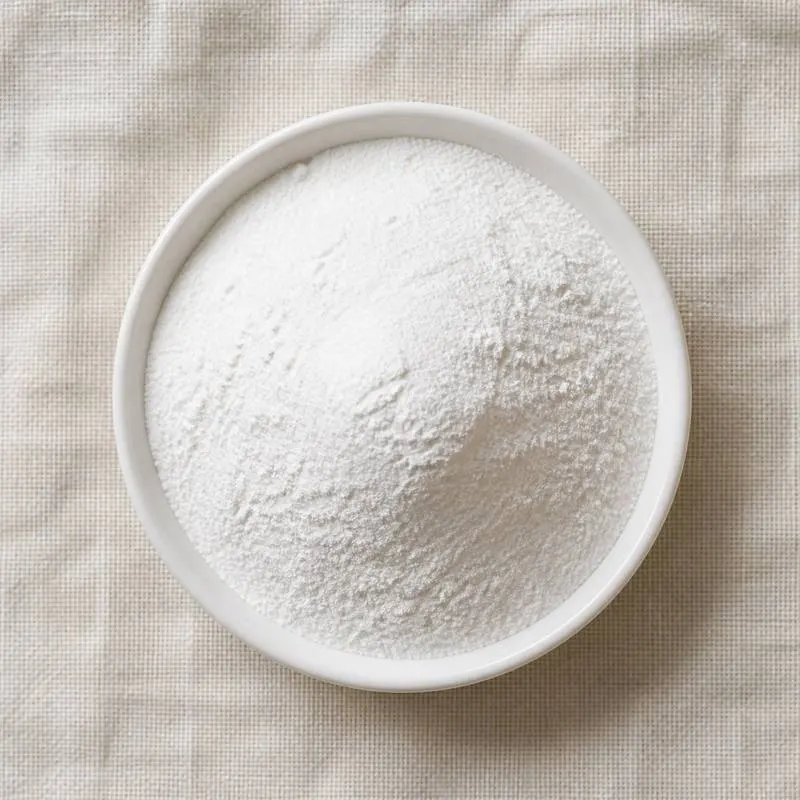
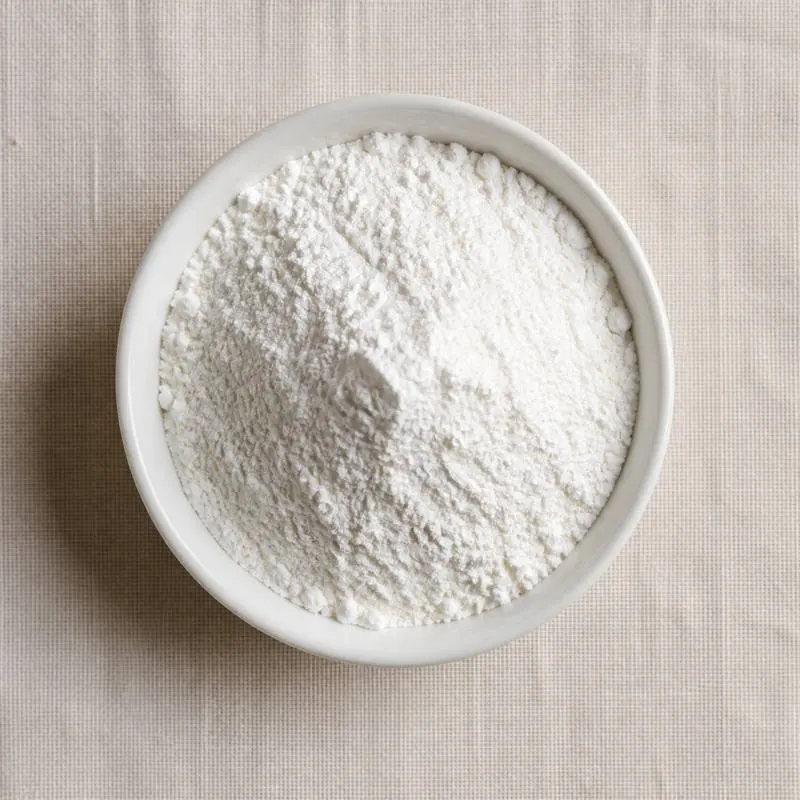
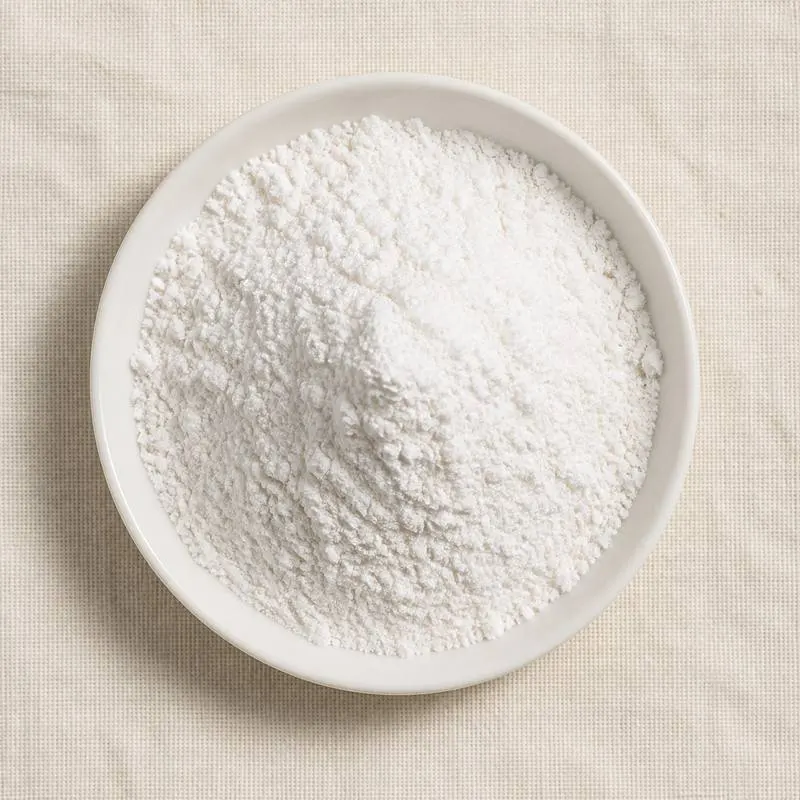
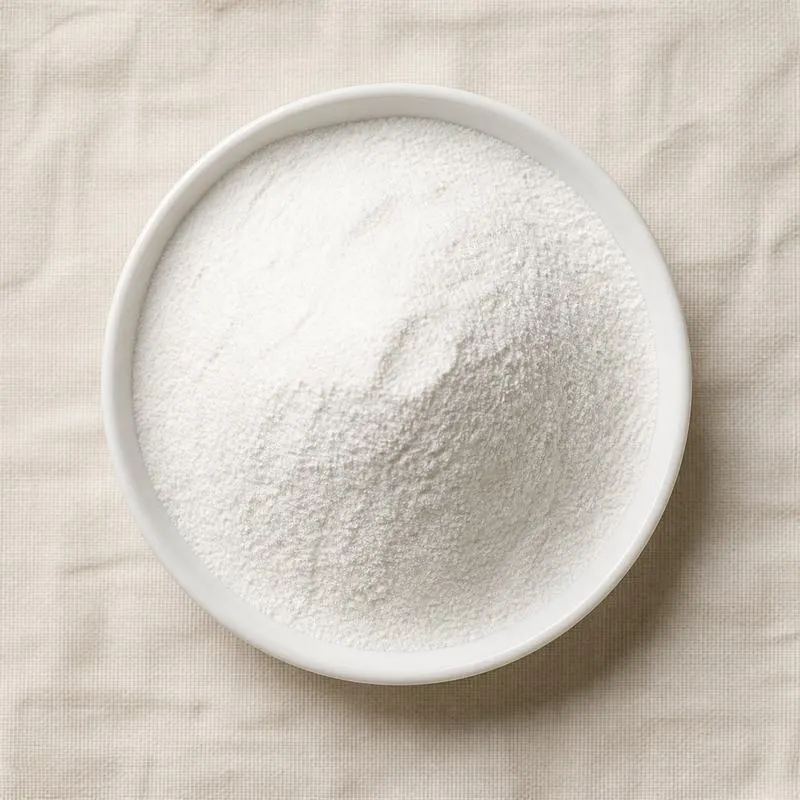
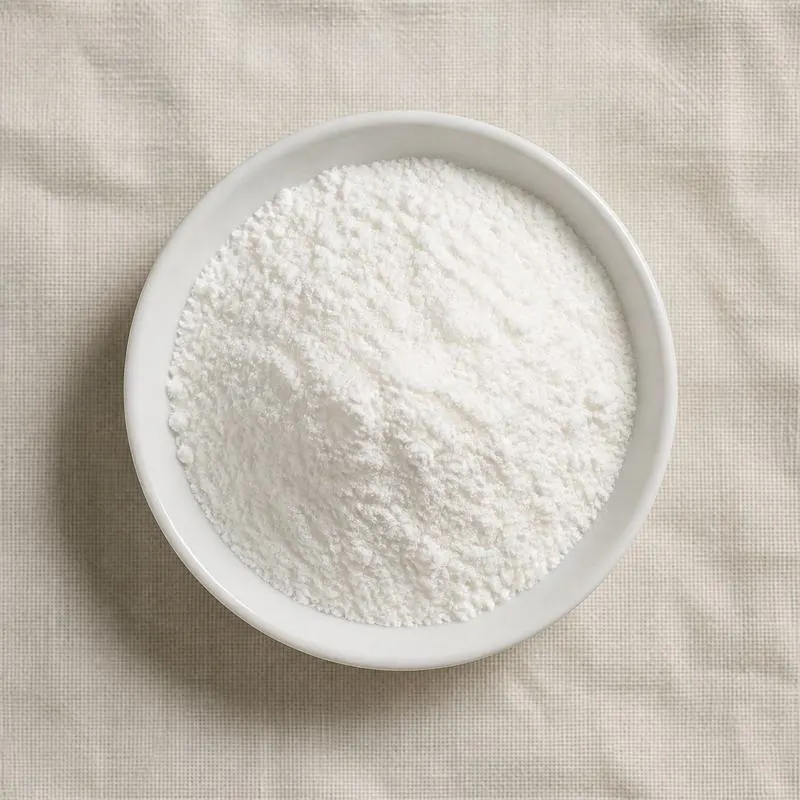
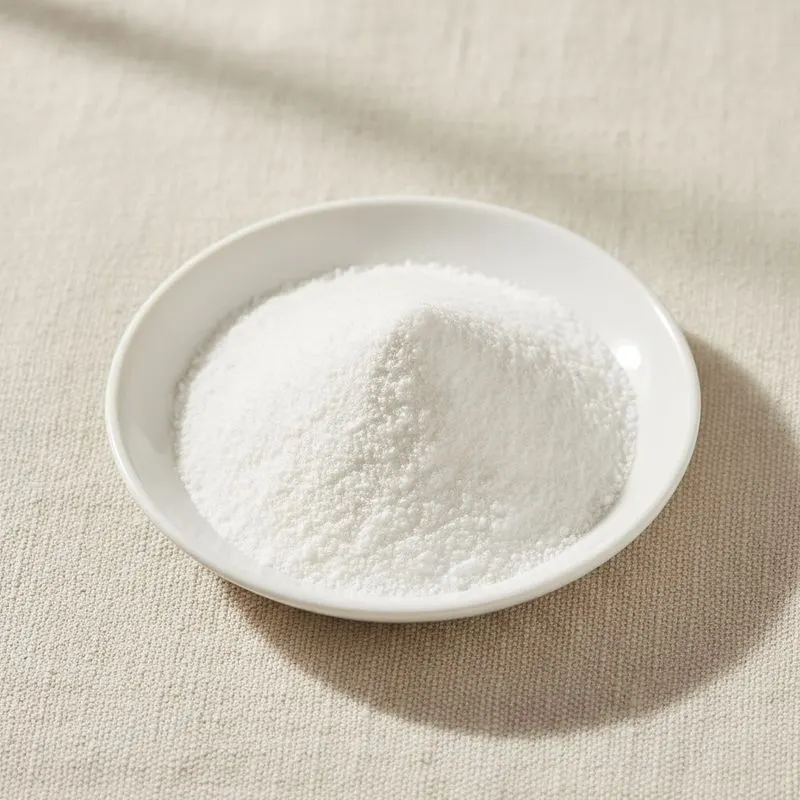
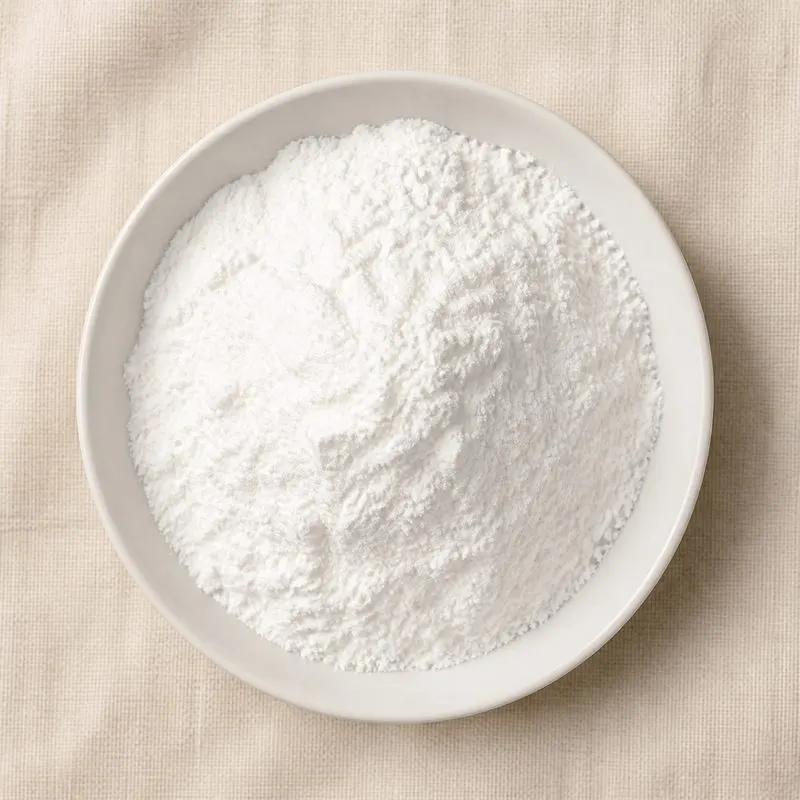
The same phosphate driven swelling makes the granule fragile. Peak viscosity collapses under continued heating, shear or acid, so native potato starch is used where a fast, high, clean viscosity is wanted in a short process, and modified potato starches are used where the system is held hot, pumped hard or acidic. It arrives as a bright white, free flowing powder with a characteristic squeak when compressed.
We source bulk Potato Starch from top China manufacturers for our partners, working with several of them. The manufacturers are in Gansu, Inner Mongolia and Hebei. A smaller requirement can ship in a combined container with other ingredients.
Please send the grade you need, the volume and your destination port, and we will come back with a solution and a price.
or call +86-21-6858 0751
Specifications
| Item | Specification |
|---|---|
| Appearance | Bright white free flowing powder, free of foreign matter |
| Odour and taste | Neutral, characteristic, no off odour |
| Starch content, dry basis | 96.0 percent minimum |
| Moisture | 20.0 percent maximum |
| Protein, nitrogen times 6.25, dry basis | 0.1 percent maximum |
| Ash, dry basis | 0.4 percent maximum |
| Fat | 0.1 percent maximum |
| Whiteness | 92 minimum |
| pH, 10 percent slurry | 5.5 to 7.5 |
| Peak viscosity, 6 percent slurry | 2500 Brabender units minimum |
| Specks per square decimetre | 5 maximum |
| Sulphur dioxide | 30 mg/kg maximum |
| Lead | 0.5 mg/kg maximum |
| Arsenic | 0.5 mg/kg maximum |
| Total plate count | 10000 cfu/g maximum |
| Yeast and mould | 500 cfu/g maximum |
| E. coli | Absent in 1 g |
| Salmonella | Absent in 25 g |
Common Markets Grades
Native potato starch is traded on whiteness, moisture, ash and viscosity, with viscosity measured on a Brabender or rapid visco analyser curve and quoted as a peak value in Brabender units. Food grade, pharmaceutical grade and technical grade are distinguished largely by microbiological limits, sulphur dioxide and heavy metals rather than by starch content. Pharmaceutical grade meets the potato starch monographs of the European Pharmacopoeia and USP-NF and is used as a tablet disintegrant.
A large family of modified potato starches is built from the same base: acetylated distarch phosphate and acetylated distarch adipate for freeze thaw and process tolerance, hydroxypropylated grades for cold storage stability, oxidised grades for coatings, octenyl succinate grades for emulsions, and pregelatinised drum dried or extruded grades for cold swelling use. Potato starch derived maltodextrins and glucose syrups are further downstream articles. Organic certified native starch is produced where organic potatoes are available.
Applications
- Soups, sauces and gravies, giving fast high viscosity and a clear, glossy, neutral tasting body
- Instant noodles and Asian noodle types, contributing chew and surface smoothness
- Batters and coatings for fried foods, where the large granule builds a light, crisp, blistered crust
- Sausage, ham and injected meat products, binding brine and holding water through cooking
- Surimi and fish paste products, contributing gel strength and elasticity
- Gluten free bread and cake, supplying structure and a soft crumb without cereal flavour
- Pharmaceutical tablets, as a disintegrant and filler in the compressed tablet
- Fruit fillings and glazes, where paste clarity matters to the appearance of the fruit
- Confectionery moulding beds, where the fine dry powder forms the impression into which sweets are deposited
- Paper and textile sizing outside food, using the high viscosity and film strength
Brands Using Potato Starch
Widely-distributed consumer products that list Potato Starch on the ingredient label.
- Bob's Red MillPotato Starch ↗Single-ingredient unmodified potato starch sold as a thickener for sauces, soups and stews and as a gluten free baking ingredient.Label verified 2026-08-31
- Anthony's GoodsOrganic Potato Starch ↗Two pound bag of unmodified organic potato starch sold for baking and thickening.Label verified 2026-08-31
Brand names, product names and logos are the property of their owners. They appear here as published evidence that the ingredient is used, taken from the brand's own label or website. Their appearance is not an endorsement, and it does not mean the brand buys from us or from any manufacturer listed on this site.
China Manufacturers of Potato Starch
Top Potato Starch manufacturers in China.
- Gansu Lantian Potato Industry Development Co., Ltd.3 ingredients in the directory
- Gansu Yasheng Potato Industry Group Co., Ltd.2 ingredients in the directory
 Inner Mongolia Huaou Starch Industry Co., Ltd.2 ingredients in the directory
 Qinhuangdao Sanli Food Co., Ltd.2 ingredients in the directory
Company names and logos are the property of the manufacturers themselves. They are listed here because our own directory records them as producing this ingredient. A listing is not an endorsement by them, and we do not represent them or speak on their behalf.
Regulatory Status
Native potato starch is a food rather than a food additive. In the United States it is a common food ingredient labelled as potato starch, with identity and purity criteria set by the Food Chemicals Codex starch monograph, and it is not the subject of a food additive regulation. The USP-NF and European Pharmacopoeia potato starch monographs govern pharmaceutical use. In the European Union native starches carry no E number and are regulated as foods; only chemically modified starches such as E 1414 and E 1422 fall within the food additive framework.
Codex maintains a general standard for edible starches covering composition and quality, and the Codex General Standard for Food Additives applies to the modified derivatives rather than to the native starch. Where sulphur dioxide has been used as a processing aid, its residue is subject to the relevant additive limits and to allergen style declaration thresholds in the European Union. Potato is not a declarable allergen in the United States or the European Union.
Manufacturing Process
Potatoes are washed, destoned and rasped in a high speed grater that ruptures the cell walls and releases the starch granules into a mash. The mash is passed over rotating screens and centrifugal sieves that separate the fibre and cell wall material, while the potato fruit juice, which carries the soluble protein and the reducing sugars responsible for discolouration, is drawn off as early as possible on a decanter or hydrocyclone. Speed matters at this stage, because the tyrosine and polyphenol oxidase in the juice will darken the starch if the two are left in contact, and sulphur dioxide is often dosed in to hold colour.
The crude starch milk is refined through a multistage countercurrent hydrocyclone battery, in which each stage displaces more soluble matter with fresh water and brings protein and ash down to specification. The refined milk is dewatered on a vacuum drum filter or a peeler centrifuge to a cake around 60 percent solids, then dried in a flash or ring drier in a stream of hot air, with residence time kept short so that no granule gelatinises. The dried starch is cooled, sieved, passed over a magnet and metal detector and packed. For a pregelatinised grade the refined starch milk is cooked and dried on a heated drum instead, and the resulting film is milled to powder.