White Mineral Oil
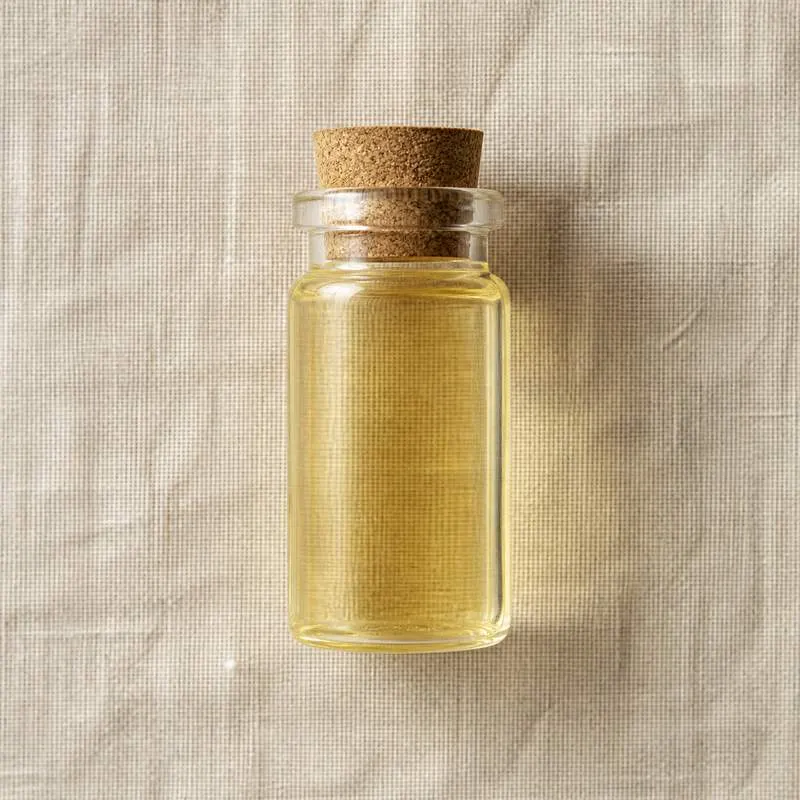
White mineral oil is a highly refined mixture of liquid saturated hydrocarbons derived from petroleum, consisting of paraffinic and naphthenic chains from which the aromatic and unsaturated compounds have been removed by severe hydrogenation. It is clear, colourless, tasteless and practically odourless, and it is chemically inert, which is the property the food industry buys it for.
In use it functions as a lubricant, a release agent and a barrier rather than as a nutrient or a reactive ingredient. It is not absorbed to any significant extent in the digestive tract, does not oxidise or go rancid in the way a vegetable oil does, and does not polymerise into a carbonised residue on hot equipment surfaces, so it holds its release properties on bakery tins and conveyors far longer than an edible oil would. On a food surface it forms a thin hydrophobic film that reduces moisture loss, dust adhesion and sticking.
The oil is a clear liquid graded by viscosity, from light grades of around 7 to 15 centistokes at 40 degrees Celsius through to heavy grades above 65 centistokes, with pour points well below zero. It is insoluble in water and in ethanol, miscible with most fats, oils and hydrocarbon solvents, and is stable indefinitely under ordinary storage, though it must be protected from contamination since it carries no antioxidant and no odour of its own to mask a fault.
We source bulk White Mineral Oil from top China manufacturers for our partners. The manufacturer is in Shandong. A smaller requirement can ship in a combined container with other ingredients.
Please send the grade you need, the volume and your destination port, and we will come back with a solution and a price.
or call +86-21-6858 0751
- Function
- Emulsifier
Specifications
| Item | Specification |
|---|---|
| Appearance | Clear, colourless, bright liquid free from suspended matter |
| Odour and taste | Practically odourless and tasteless |
| Colour | ≥ 30 Saybolt |
| Kinematic viscosity at 40 °C | 7 to 70 mm²/s by grade |
| Density at 20 °C | 0.830 to 0.880 g/cm³ |
| Pour point | ≤ minus 9 °C |
| Readily carbonisable substances | Passes test |
| Ultraviolet absorbance, 280 to 289 nm | ≤ 0.15 per centimetre path |
| Solid paraffins | Passes test |
| Sulphur compounds | Passes test |
| Acidity or alkalinity | Neutral to test |
| Water content | ≤ 0.05% |
| Lead | ≤ 1 mg/kg |
| Arsenic | ≤ 1 mg/kg |
Common Markets Grades
The primary technical grade split is between white mineral oil meeting the pharmacopoeial monographs, sold as USP or EP grade for uses where the oil may be consumed, and technical white oil, which is refined to a lower specification and used where contact with food is incidental. Both are tested for the residual aromatic content that defines the refining level, the pharmacopoeial grades by the readily carbonisable substances test and the technical grades by ultraviolet absorbance limits.
Within each category the working variable is viscosity, which determines film thickness, spray behaviour and how readily the oil drains from a surface. Light grades are chosen for spray release and for dust suppression, medium grades for tin greasing and dough dividing, heavy grades for chain and gear lubrication in food plants and for coating applications. Certification for kosher and halal use, and registration as a food grade lubricant for incidental contact, are declared separately from the physical grade.
Applications
- Baking tin and tray release, where it does not carbonise into a lacquer on repeated oven passes
- Dough divider oil in bread plants, lubricating the cutting and dividing mechanism
- Confectionery and gum processing, applied as a release and anti sticking film on rollers and cutters
- Dust suppression on grain, sprayed to control airborne dust during handling and storage
- Surface coating of raw fruit, vegetables and shell eggs, reducing moisture loss and improving appearance
- Food plant lubricants for chains, gears and bearings where incidental contact with food may occur
- Defoaming in yeast, sugar and fermentation processes
- Pharmaceutical and supplement manufacture, as a tablet punch lubricant and capsule processing aid
- Pharmaceutical laxative preparations and topical products, using the pharmacopoeial grades
- Cosmetic emollients, ointments and lip products
China Manufacturers of White Mineral Oil
Top White Mineral Oil manufacturers in China.
Company names and logos are the property of the manufacturers themselves. They are listed here because our own directory records them as producing this ingredient. A listing is not an endorsement by them, and we do not represent them or speak on their behalf.
Regulatory Status
In the United States the Food and Drug Administration permits white mineral oil for direct addition to food under 21 CFR 172.878, which requires the oil to meet stated purity criteria and limits its use to specified technical effects and food categories, while 21 CFR 178.3620 covers technical white mineral oil for indirect use in contact with food and sets ultraviolet absorbance limits as the measure of residual aromatic content. Pharmacopoeial grade oil is sold against the United States Pharmacopeia and National Formulary monograph for mineral oil, and lubricants formulated for incidental food contact are registered under the recognised food grade lubricant categories.
In the European Union highly refined mineral oils are not permitted as general purpose food additives in the way an emulsifier or a preservative is, and their use is confined to specific authorised applications and to processing aid and food contact roles governed by the food contact materials framework and by national provisions. The European Food Safety Authority has assessed mineral oil hydrocarbons in food and distinguishes the saturated fraction from the aromatic fraction, and control of the aromatic fraction is the central quality requirement for any oil used in or near food. The European Pharmacopoeia carries monographs for liquid paraffin and for light liquid paraffin. Codex has no additive listing for the material.
Manufacturing Process
The starting point is the lubricating oil fraction recovered when atmospheric residue from crude distillation is fractionated again under vacuum. That distillate is solvent extracted to remove the bulk of the aromatic compounds, then dewaxed by chilling with a solvent so that the paraffin wax crystallises and can be filtered off, which sets the pour point of the finished oil.
Purification to white oil quality is achieved by severe hydrogenation. The dewaxed distillate is passed over a fixed bed catalyst under high hydrogen pressure and elevated temperature, which saturates the remaining aromatic rings, removes sulphur and nitrogen compounds as hydrogen sulphide and ammonia, and destroys the colour bodies. Multi stage hydrotreating, or hydrocracking followed by hydrofinishing, is used where the pharmacopoeial specification has to be met. The treated oil is stripped of light ends, sometimes given a final clay or adsorbent polish, filtered and blended to the target viscosity. Release testing is dominated by tests for residual aromatics, the readily carbonisable substances test for pharmacopoeial grades and ultraviolet absorbance measurement for technical grades, alongside colour, viscosity, density and the absence of sulphur compounds and solid paraffins.