Calcium Stearoyl Lactylate
Calcium Stearoyl Lactylate (CSL) is an anionic dough conditioner and emulsifier produced by reacting stearic acid with lactic acid and partially neutralising with calcium hydroxide. It carries the E number E482 in the European Union.
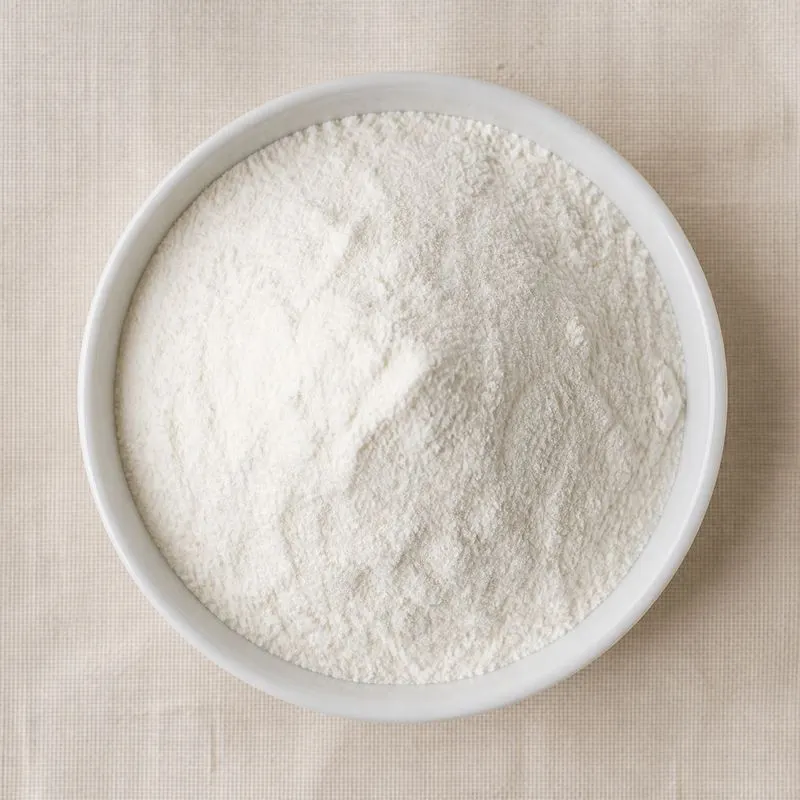
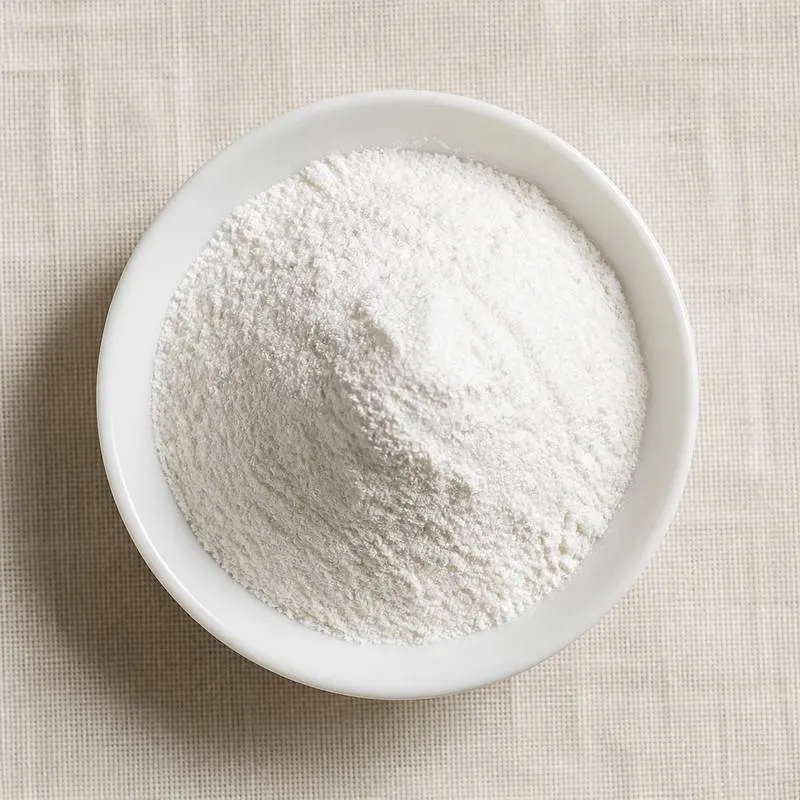
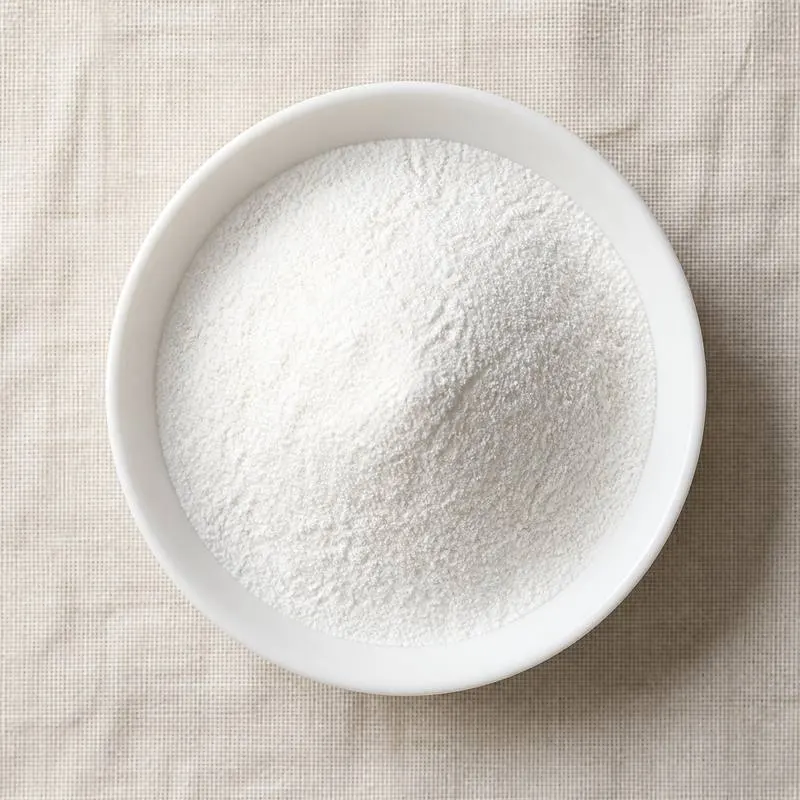
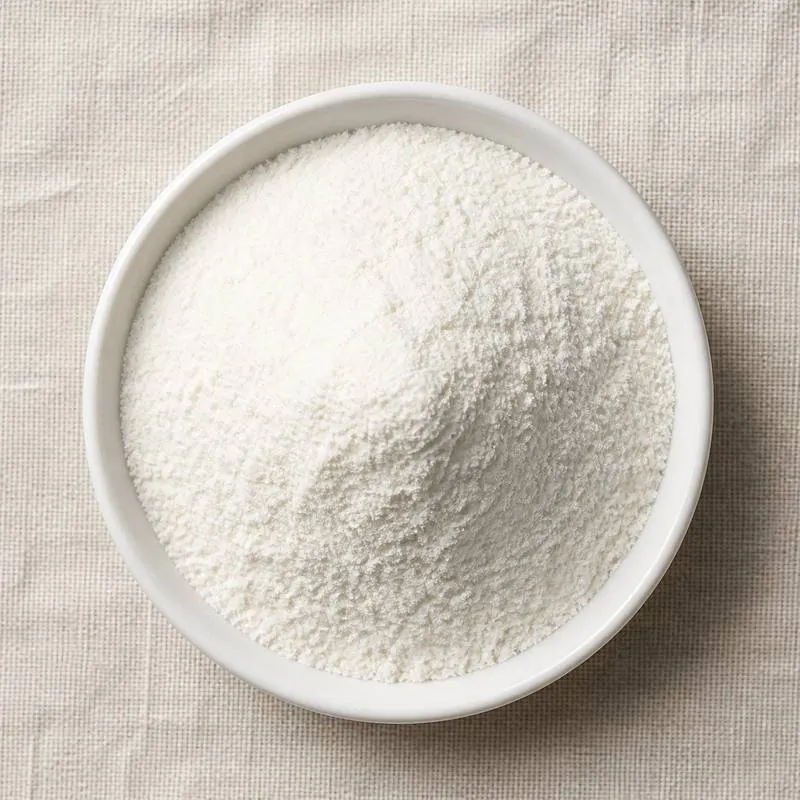
The molecule is a calcium salt of the partial ester of stearoyl-2-lactylate. It is a cream-coloured powder or paste with a melting range of 47 to 52 degrees Celsius. CSL is best known as a bread improver where it strengthens the gluten network and prolongs softness.
We source bulk Calcium Stearoyl Lactylate from top China manufacturers for our partners, working with several of them. The manufacturers are in Guangdong, Henan and Zhejiang. A smaller requirement can ship in a combined container with other ingredients.
Please send the grade you need, the volume and your destination port, and we will come back with a solution and a price.
or call +86-21-6858 0751
- Packaging
- 25 kg kraft paper bag with PE inner liner
- ISO 9001
- HACCP
- Halal
- Kosher
Specifications
| Item | Specification |
|---|---|
| Appearance | White to slightly yellowish powder or brittle solid with characteristic odor |
| Acid Value | 60 to 130 mg KOH/g |
| Ester Value | 90 to 190 mg KOH/g |
| Calcium content | 1.0% to 5.2% |
| Total lactic acid | 15.0% to 40.0% |
| Heavy metals (as Pb) | ≤ 10 mg/kg |
| Lead | ≤ 2 mg/kg |
| Arsenic | ≤ 3 mg/kg |
| Mercury | ≤ 1 mg/kg |
| Cadmium | ≤ 1 mg/kg |
| Particle size | Per customer specification |
Common Markets Grades
CSL is produced primarily by lactic acid content and free fatty acid level.
Standard food grade meets the JECFA specification with total lactic acid 32 to 38 percent, ester value 125 to 164, acid value 50 to 86, and calcium content 1 to 5.2 percent.
Bakery grade is a free-flowing fine powder for direct addition to flour or dough.
Spray-dried agglomerated grade has improved cold-water dispersibility and is preferred for instant bread mixes and sponge cake premixes.
Custom blends with SSL (sodium stearoyl lactylate, E481), distilled monoglycerides, and DATEM reach the market as ready-to-use bread improvers under various trade names.
Plant-source stearic acid (palm, soy, or sunflower) is the standard supply route; Kosher, Halal, and RSPO-certified palm grades exist.
Applications
- Bread, buns, and rolls as a dough conditioner and crumb softener
- Frozen dough and partially baked products for dough stability
- Tortillas, flatbreads, and pita for rollability and softness
- Cake mixes and sponge cake batters as an aeration emulsifier
- Dehydrated potato products (mashed potato flakes) as a rehydration aid
- Pancake and waffle mixes for batter stability
- Pre-cooked rice products to reduce stickiness
- Pasta and noodle production for cooking quality
- Snack foods and crackers as a release and texture aid
- Meat-extender products as an emulsion stabiliser
- Coffee whiteners and powdered creamers as a co-emulsifier
Brands Using Calcium Stearoyl Lactylate
Widely-distributed consumer products that list Calcium Stearoyl Lactylate on the ingredient label.
Brand names, product names and logos are the property of their owners. They appear here as published evidence that the ingredient is used, taken from the brand's own label or website. Their appearance is not an endorsement, and it does not mean the brand buys from us or from any manufacturer listed on this site.
China Manufacturers of Calcium Stearoyl Lactylate
Top Calcium Stearoyl Lactylate manufacturers in China.
 GU (Guangzhou) Additive Co., Ltd.10 ingredients in the directory
- Guangdong Cardlo Biotechnology Co., Ltd.10 ingredients in the directory
- Landfood Biotechnology (Henan) Co., Ltd.9 ingredients in the directory
 Zhejiang Golden Palm Technology Co., Ltd.12 ingredients in the directory
 Zhengzhou Dahe Food S&T Co., Ltd.6 ingredients in the directory
Company names and logos are the property of the manufacturers themselves. They are listed here because our own directory records them as producing this ingredient. A listing is not an endorsement by them, and we do not represent them or speak on their behalf.
How We Help Source Calcium Stearoyl Lactylate
Direct Factory Sourcing
We run the whole process: selecting the manufacturer from the top Chinese food ingredient producers, negotiating the price, verifying quality, and coordinating the logistics. You deal with us instead of with several factories at once.
Original Packaging and Documents from the Manufacturer
The manufacturer sends your Calcium Stearoyl Lactylate out of its own factory in the original packing, through to your destination port. The COA, COO, MSDS, TDS and any certifications reach you from the manufacturer as well.
Free Samples and Lead Time
We send 100 to 500 g free for your own laboratory to test and you cover only the courier, usually within 2 to 3 working days. ETD is usually within 7 to 15 days once the order is confirmed, and we check that date against the factory's own manufacturing schedule before we give it to you.
Combined Shipment
We can load Calcium Stearoyl Lactylate together with other ingredients such as Polyglycerol Esters of Fatty Acids, Non-Dairy Creamer and Mono- and Diglycerides of Fatty Acids into one 20' FCL. If your quantity is small, we can also ship LCL.
Regulatory Status
Calcium stearoyl lactylate is approved as a food additive in essentially every regulated market.
In the European Union it carries the E number E482 and is permitted in bread, cakes, dehydrated potato products, breakfast cereals, and similar applications under Regulation 1333/2008 with category-specific maximum levels typically between 3 and 5 g/kg. The European Food Safety Authority re-evaluated stearoyl lactylates in 2019 and confirmed the existing group acceptable daily intake.
The U.S. Food and Drug Administration permits calcium stearoyl-2-lactylate as a food additive under 21 CFR 172.844 with category-specific use limits in bakery products, dehydrated potato, snack dips, and similar applications.
JECFA assigned the stearoyl lactylates group an ADI in 1973. Pharmacopoeial monographs appear in USP-NF.
Kosher and Halal certifications are widely available when stearic acid sourcing is documented.
Manufacturing Process
CSL is produced by reacting lactic acid with stearic acid in the presence of calcium hydroxide.
The process begins with self-condensation of lactic acid to a poly-lactic acid mixture, typically with an average degree of polymerisation of about 2 (lactoyl-2-lactate). Stearic acid is then added and the mixture heated to 180 to 200 degrees Celsius under nitrogen with continuous water removal. The stearic acid esterifies with the terminal hydroxyl of the lactic acid chain.
Calcium hydroxide is added in measured amount to neutralise the free carboxyl groups, producing the calcium salt of stearoyl-2-lactylate. The amount of calcium hydroxide controls the degree of neutralisation and is the principal handle for tuning functional behaviour.
After neutralisation the molten product is cooled, flaked, and milled to powder. Particle size is controlled by sieving for the target application (fine powder for direct flour addition, coarser granules for dry premixes).
An alternative spray-drying route gives an agglomerated free-flowing powder with improved dispersibility, used in instant bread mixes and ready-to-use bakery improvers.