Non-Dairy Creamer
Non dairy creamer is a spray dried oil in water emulsion built to whiten and add body to a hot or cold drink in place of milk or cream. A typical formula is a refined vegetable fat, most often hydrogenated or fractionated palm kernel or coconut oil, emulsified into a carbohydrate carrier of glucose syrup solids, with a protein or protein free stabiliser, one or more emulsifiers, a buffering salt and an anticaking agent.
Its function rests on the microencapsulation achieved during drying. Fat droplets of a few micrometres are locked inside a glassy carbohydrate wall, which protects them from oxidation, keeps the powder free flowing, and releases them as a fine dispersion when the powder meets hot water. The scattering of light by those droplets is what produces the whitening effect, and the fat itself supplies the mouthfeel.
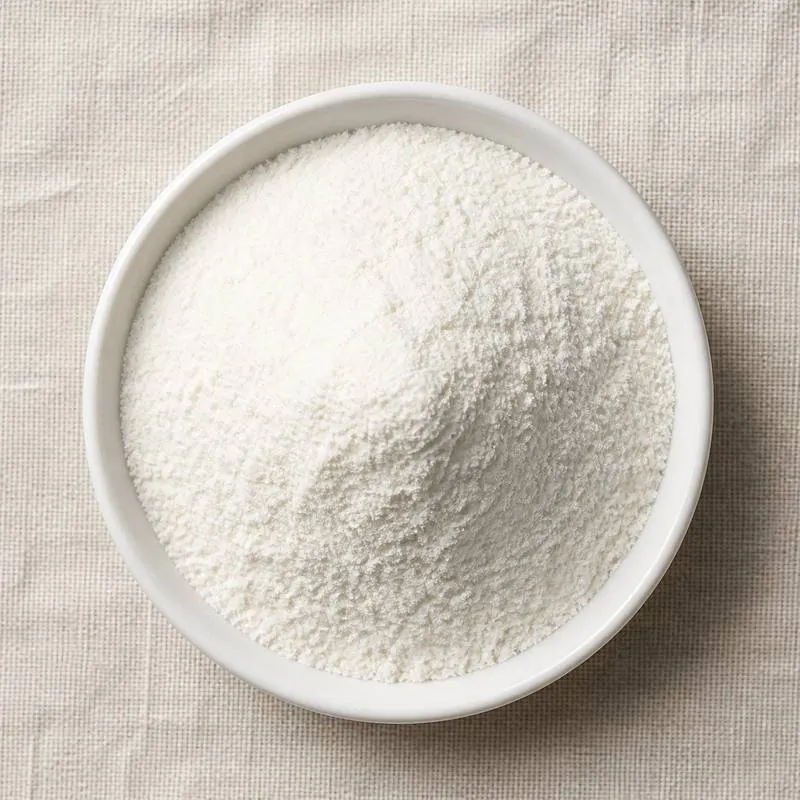
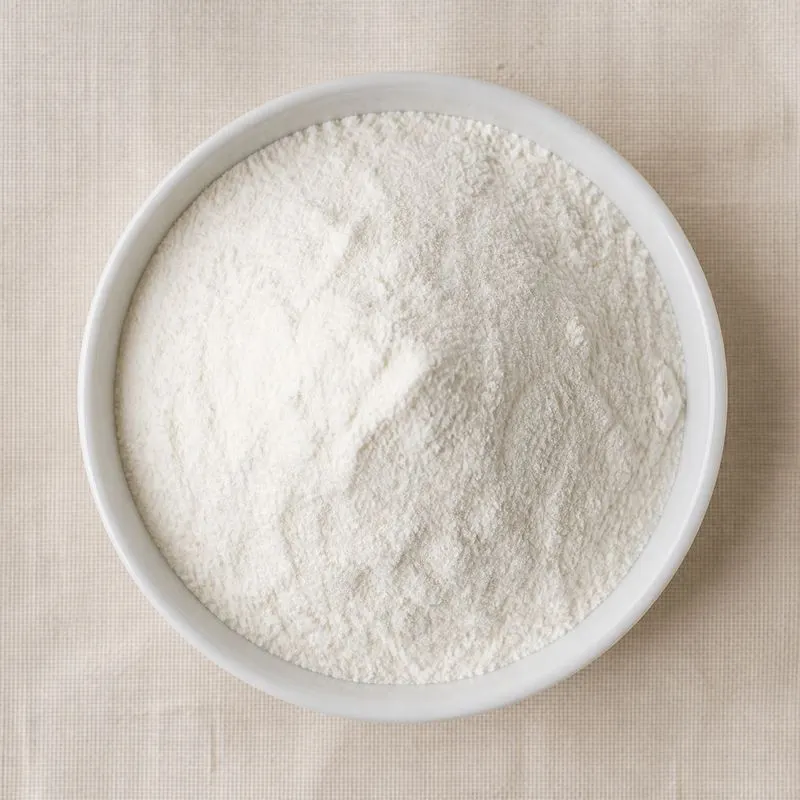
The product is a white to cream free flowing powder or agglomerated granules, with fat content generally between 25 and 40 percent. It dissolves rapidly in hot water and, in the better grades, in cold. The buffering salts and the emulsifier system set resistance to feathering, meaning the curdling that appears when a creamer meets hot acidic coffee, and buyers specify it more often than any other property.
We source bulk Non-Dairy Creamer from top China manufacturers for our partners, working with several of them. The manufacturers are mostly in Jiangxi, Jiangsu and Guangdong. A smaller requirement can ship in a combined container with other ingredients.
Please send the grade you need, the volume and your destination port, and we will come back with a solution and a price.
or call +86-21-6858 0751
- Function
- Emulsifier
Specifications
| Item | Specification |
|---|---|
| Appearance | White to cream free flowing powder or granules |
| Odour and taste | Bland and milky, free from rancid or soapy notes |
| Fat content | 28.0% to 32.0% |
| Protein | 1.5% minimum, casein grade |
| Moisture | 4.0% maximum |
| Ash | 5.0% maximum |
| pH, 10% solution at 50 C | 6.5 to 8.0 |
| Solubility in hot water | 99.0% minimum |
| Free fat | 2.0% maximum |
| Whiteness in coffee | Conforms to approved reference standard |
| Peroxide value | 2.0 meq/kg fat maximum |
| Lead | 0.5 mg/kg maximum |
| Total plate count | 10,000 cfu/g maximum |
| Yeast and mould, E. coli, Salmonella | Yeast and mould 50 cfu/g maximum; E. coli and Salmonella absent in 25 g |
Common Markets Grades
Grades are separated first by fat content and fat type. Standard creamers run 25 to 30 percent fat, high fat grades 33 to 40 percent for richer coffee and milk tea applications, and low fat grades below 20 percent where cost or calorie load is the deciding factor. Fat choice is between hydrogenated and non hydrogenated systems, the latter now dominant for trans fat reasons, and between lauric fats such as palm kernel and coconut, which give a clean melt, and non lauric palm oil fractions used where flavour interaction matters.
The second distinction is the protein system. Casein based creamers using sodium caseinate emulsify well and give the fullest body but are a milk allergen, while casein free grades built on modified starch, plant protein or emulsifier alone are traded for vegan and allergen sensitive markets. Beyond that, buyers specify agglomerated instant grades for cold dissolution, high whitening grades for milk tea, acid and heat stable grades for vending and three in one sachets, and foaming grades containing entrapped gas for cappuccino style powders.
Applications
- Instant coffee mixes and three in one sachets, where the creamer supplies whitening, body and part of the sweetness carrier
- Bubble tea and milk tea powders, where high fat grades give the thick mouthfeel the category depends on
- Vending and hot drink machines, where the powder must dissolve in a short water contact time without feathering
- Instant soups and sauce powders, where it contributes fat, opacity and a creamy note
- Cake and dessert mixes, where the encapsulated fat is released during hydration and baking
- Instant cereals and oat drinks, where it adds richness to a low fat base
- Whipping and topping powders, where a foaming grade builds and holds aerated structure
- Confectionery and biscuit fillings, as a fat and solids carrier with good flow in dry blending
- Ice cream and frozen dessert powder mixes, where the emulsion reforms on reconstitution
- Nutritional and meal replacement powders, as a means of adding fat calories in a dry format
Brands Using Non-Dairy Creamer
Widely-distributed consumer products that list Non-Dairy Creamer on the ingredient label.
Brand names, product names and logos are the property of their owners. They appear here as published evidence that the ingredient is used, taken from the brand's own label or website. Their appearance is not an endorsement, and it does not mean the brand buys from us or from any manufacturer listed on this site.
China Manufacturers of Non-Dairy Creamer
Top Non-Dairy Creamer manufacturers in China.
 Hubei Homeyard Food Co., Ltd.2 ingredients in the directory
 Jiangsu Leiva Biotech Co., Ltd.10 ingredients in the directory
- Jiangsu Zhiwei Dairy Co., Ltd.4 ingredients in the directory
- Jiangxi Changhui Food Co., Ltd.1 ingredient in the directory
 Jiangxi Hengding Food Co., Ltd.4 ingredients in the directory
 JiangXi Weierbao Foods Biological Co., Ltd.1 ingredient in the directory
 Jiangxi Zhongao Food& Organisms Co., Ltd.1 ingredient in the directory
- Jieyang Zhengying Foods Co., Ltd.1 ingredient in the directory
- Shandong Tianjiu Bio-tech Co., Ltd.8 ingredients in the directory
 Shandong Tianmei Biotech Co., Ltd.9 ingredients in the directory
 Zhaoqing Huanfa Biotechnology Co., Ltd.10 ingredients in the directory
Company names and logos are the property of the manufacturers themselves. They are listed here because our own directory records them as producing this ingredient. A listing is not an endorsement by them, and we do not represent them or speak on their behalf.
Regulatory Status
Non dairy creamer is a compound food rather than a single additive, so its regulatory position is determined by its constituents. In the United States it is manufactured under the preventive controls rules for human food, and the individual components carry their own clearances: glucose syrup solids and vegetable oils as conventional food ingredients, sodium caseinate as a milk derived protein, and the emulsifiers, phosphate buffers and silicon dioxide under their respective food additive regulations or GRAS affirmations. Labelling must declare milk where sodium caseinate is used, even though the product is described as non dairy, and partially hydrogenated oils are no longer permitted as a GRAS ingredient.
In the European Union the product is a foodstuff regulated under general food law, with each additive in the formula requiring authorisation under the food additives Regulation for the relevant food category and appearing with its E number in the ingredient list. Milk and derivatives thereof must be emphasised as an allergen where casein is present, and the Regulation on trans fats in food for the final consumer limits trans fat content. Codex Alimentarius does not maintain a product standard for creamers, but the additives used fall under the General Standard for Food Additives, and JECFA specifications apply to those additives individually.
Manufacturing Process
Manufacture is a standard emulsification and spray drying sequence. The carbohydrate carrier, glucose syrup solids or maltodextrin, is dissolved in hot water together with the protein or stabiliser, the buffering salts such as dipotassium phosphate or sodium citrate, and any water soluble minor ingredients. The refined, bleached and deodorised fat is melted separately and the oil soluble emulsifiers, typically mono and diglycerides with sodium stearoyl lactylate or a sucrose ester, are dissolved into it.
The two phases are combined under high shear to form a coarse emulsion, which is then pasteurised and passed through a two stage homogeniser at high pressure to reduce the fat droplets to a few micrometres. Droplet size decides both whitening power and emulsion stability in the finished powder. The homogenised emulsion is held in a balance tank and pumped to a spray dryer, where it is atomised through a high pressure nozzle or a rotary wheel into hot air and dries to a powder in seconds. Powder is collected from the chamber base and cyclones, fluid bed agglomerated and after dried where an instant grade is required, blended with an anticaking agent such as silicon dioxide, sieved and packed in moisture barrier bags.