2-Isopropyl-N,2,3-trimethylbutyramide
2-Isopropyl-N,2,3-trimethylbutyramide is a synthetic cooling agent, known in the trade by its development code from the series of carboxamides investigated as menthol substitutes. It is an aliphatic amide built around a quaternary carbon, and like menthol it acts on the cold sensitive TRPM8 receptor, producing a cooling sensation without any change in temperature.
Its commercial value lies in what it does not do. Menthol delivers cooling and a strong mint odour together, so any application needing cooling in a non mint flavour has to fight the smell. This amide is effectively odourless and close to tasteless at use level, so it can be added to fruit, dairy or citrus profiles without distorting them. The cooling it gives builds more slowly than menthol, is felt mainly on the tongue and inner mouth rather than in the nose, and lasts considerably longer.
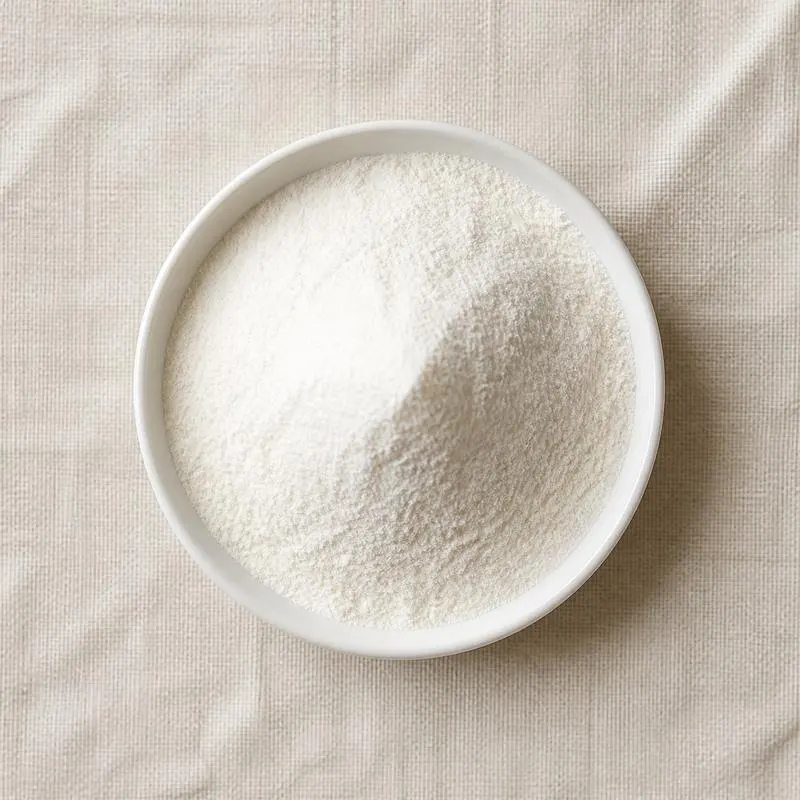
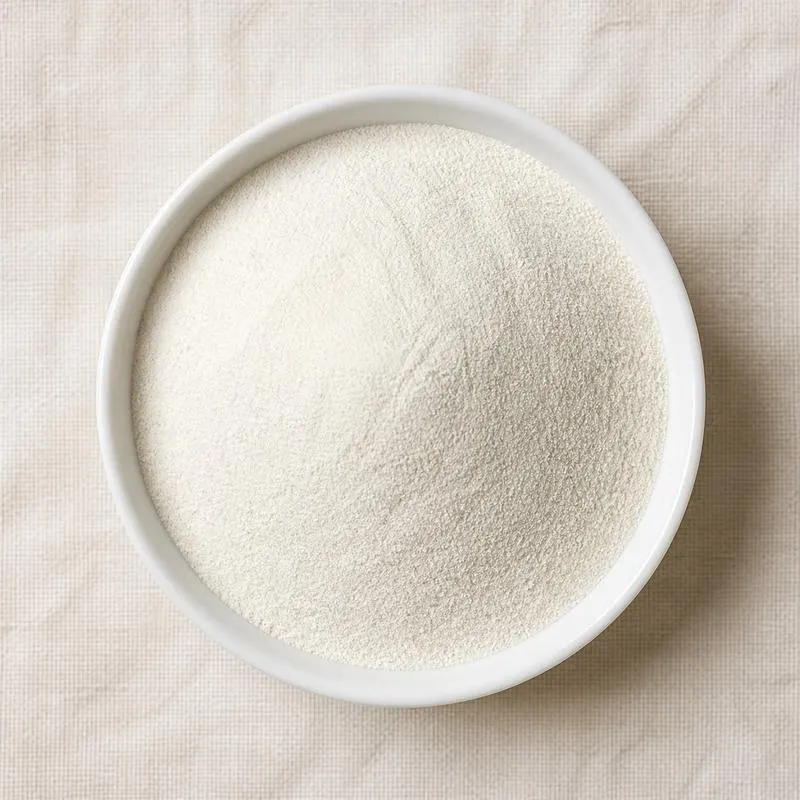
The material is a white crystalline powder melting near sixty degrees. It is practically insoluble in water and freely soluble in ethanol, propylene glycol and triacetin, so it is dosed through a solution or blended into an oil phase, and it is chemically stable across the pH and temperature range of normal food processing.
We source bulk 2-Isopropyl-N,2,3-trimethylbutyramide from top China manufacturers for our partners. A smaller requirement can ship in a combined container with other ingredients.
Please send the grade you need, the volume and your destination port, and we will come back with a solution and a price.
or call +86-21-6858 0751
- Function
- Flavours and Aromas
Specifications
| Item | Specification |
|---|---|
| Appearance | White crystalline powder |
| Odour | Odourless to very faint |
| Assay by Gas Chromatography | Not less than 99.0% |
| Related Substances | Not more than 1.0% total |
| Melting Range | 58 C to 64 C |
| Loss on Drying | Not more than 0.5% |
| Residue on Ignition | Not more than 0.1% |
| Residual Solvent | Not more than 500 mg/kg total |
| Solubility | Practically insoluble in water, freely soluble in ethanol and propylene glycol |
| Particle Size | Not less than 95% through 60 mesh |
| Heavy Metals as Lead | Not more than 10 mg/kg |
| Lead | Not more than 1.0 mg/kg |
| Arsenic | Not more than 0.5 mg/kg |
Common Markets Grades
The compound is traded in essentially one specification, a crystalline powder at ninety nine percent or better by gas chromatography, and the meaningful differences between suppliers lie in particle size, in residual solvent and in documentation rather than in assay. A milled fine powder is offered where rapid dissolution matters and a coarser crystal where dust control in handling is the concern.
Beyond the neat crystal, the volume trade is in dilutions and blends. Solutions at ten to fifty percent in propylene glycol, triacetin or ethanol are sold to flavour houses that dose small quantities accurately, and spray dried powders on a maltodextrin or starch carrier are used for dry applications such as chewing gum coatings and instant powders. Blends with other cooling actives are also traded, since the different agents cool at different rates and are combined to shape the onset and duration of the effect.
Applications
- Chewing gum, where it extends the cooling long after the menthol has been chewed out
- Toothpaste and mouthwash, providing cooling in flavour directions other than mint
- Confectionery and mints, adding intensity without raising the mint odour
- Fruit and citrus flavoured beverages, where a cooling effect is wanted with no minty character
- Oral care films, strips and gels, which need a sensation without a strong aroma load
- Skin care, aftershave and shaving preparations, for a cooling feel on application
- Antiperspirants and deodorants, where menthol odour would clash with the fragrance
- Wet wipes and refreshing tissues, using the low volatility to keep the effect through the pack life
- Sports and cooling gels applied topically, where a long lasting effect matters more than an immediate hit
China Manufacturers of 2-Isopropyl-N,2,3-trimethylbutyramide
Top 2-Isopropyl-N,2,3-trimethylbutyramide manufacturers in China.
Company names and logos are the property of the manufacturers themselves. They are listed here because our own directory records them as producing this ingredient. A listing is not an endorsement by them, and we do not represent them or speak on their behalf.
Regulatory Status
In the United States the substance holds FEMA GRAS status as a flavouring and is used in food and oral care on that basis, with the FEMA expert panel having considered the cooling carboxamides as a group. Use in cosmetic and topical products falls outside food law and is governed by cosmetic ingredient regulations in the market concerned.
In the European Union the position depends on whether the substance appears on the Union list of authorised flavouring substances, which is the clearance needed for use as a flavouring in food. Several of the synthetic cooling agents in this family have been evaluated separately and their listing status has changed over time, so the current entry should be confirmed before a food application is formulated. No E number applies, since flavourings fall outside the food additive framework. JECFA has evaluated cooling carboxamides among its groups of aliphatic amides.
Manufacturing Process
Synthesis proceeds through the corresponding carboxylic acid. The ester enolate of methyl 3-methylbutanoate is generated with a strong base in an aprotic solvent and alkylated with an isopropyl halide, then deprotonated again and methylated, which installs the fully substituted quaternary carbon that gives the molecule its shape. The resulting ester is saponified and acidified to release 2-isopropyl-2,3-dimethylbutanoic acid.
The acid is converted to its acid chloride with thionyl chloride, with the by-product gases scrubbed, and the chloride is then reacted with aqueous or gaseous methylamine at low temperature under an acid acceptor to give the N-methyl amide. The reaction mass is quenched, washed with dilute acid and then with alkali to strip unreacted amine and acid, and the organic layer is concentrated. Final purification is by crystallisation from a hydrocarbon or alcohol solvent rather than by distillation, and the crystals are centrifuged, washed, vacuum dried, milled to the specified particle size and packed into lined drums.