Anise Oil
Anise oil is the essential oil obtained by steam distillation of the dried fruit of either Pimpinella anisum or Illicium verum, the star anise tree. Commerce treats the two as one product because both yield an oil in which trans anethole accounts for 80 to 95 percent of the composition, and it is that single compound that carries the sweet liquorice aroma. The bulk of world supply is star anise oil distilled in southern China and northern Vietnam.
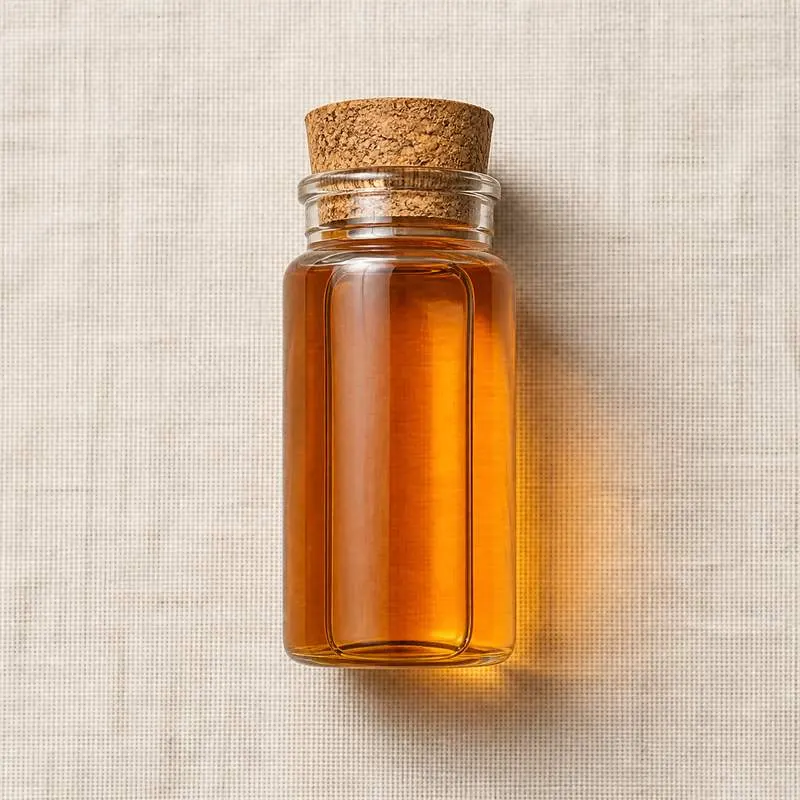
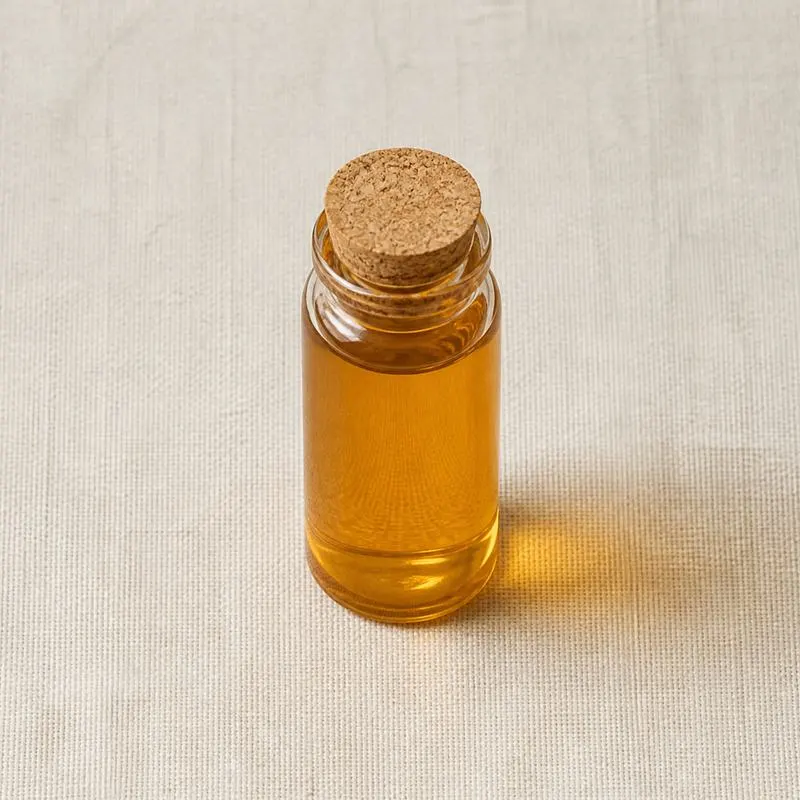
The oil is a colourless to pale yellow liquid that solidifies to a white crystalline mass at ordinary cool room temperature, since anethole itself melts at about 21 degrees Celsius. Drums are therefore warmed and homogenised before sampling or dosing, and a partly congealed drum is not a defect. Minor constituents include estragole, anisaldehyde, limonene and foeniculin, present at fractions of a percent but responsible for the difference between one origin and another.
Anise oil is practically insoluble in water and freely soluble in ethanol and fixed oils. In spirits it dissolves fully at bottling strength and precipitates as a fine stable emulsion when water is added, which is the louche effect used in pastis and ouzo.
We source bulk Anise Oil from top China manufacturers for our partners. The manufacturer is in Jiangxi. A smaller requirement can ship in a combined container with other ingredients.
Please send the grade you need, the volume and your destination port, and we will come back with a solution and a price.
or call +86-21-6858 0751
- Function
- Flavours and Aromas
Specifications
| Item | Specification |
|---|---|
| Appearance | Colourless to pale yellow liquid, crystalline mass when cold |
| Odour and flavour | Characteristic sweet anise, free from smoky or burnt note |
| Identification | Infrared and gas chromatographic profile conform to reference |
| Trans anethole | 87.0 percent minimum |
| Cis anethole | Not more than 0.5 percent |
| Estragole | Not more than 2.0 percent |
| Congealing point | Not below 15.0 degrees Celsius |
| Relative density at 25 degrees Celsius | 0.978 to 0.988 |
| Refractive index at 25 degrees Celsius | 1.5530 to 1.5600 |
| Optical rotation at 25 degrees Celsius | Minus 2 to plus 1 degrees |
| Solubility in ethanol 90 percent | One volume soluble in three volumes, clear solution |
| Acid value | Not more than 1.0 |
| Heavy metals, as lead | Not more than 10 mg per kg |
| Arsenic | Not more than 3 mg per kg |
Common Markets Grades
Two grades dominate. Natural anise oil is the whole steam distillate, specified on congealing point, which is the practical measure of anethole content, with 15 degrees Celsius the usual floor and higher figures indicating a richer oil. Redistilled or rectified oil has been fractionated to lift the anethole content and remove heavy tail fractions and colour, giving a cleaner and more stable product for beverage work.
Beyond the whole oils, the market trades isolated anethole itself, produced by crystallising the oil at low temperature or by fractional distillation, and sold at 99 percent minimum with a congealing point around 20 degrees Celsius. Star anise oil and aniseed oil are usually quoted separately even where the specification is nominally the same, since aniseed oil is scarcer and carries a softer profile. Water soluble presentations are emulsions, or oil dispersed on a maltodextrin or gum acacia carrier by spray drying.
Applications
- Anise spirits including pastis, ouzo, raki, arak and sambuca, where it is the defining flavour and the source of the louche on dilution
- Liquorice confectionery and hard boiled sweets, where it reinforces or replaces liquorice root extract
- Chewing gum and breath fresheners, for a sweet aromatic top note with good carry through the chew
- Bakery products such as anise biscuits, rye breads and spiced cakes
- Savoury and meat seasonings, particularly Chinese braising and five spice profiles sold in liquid form
- Oral care products, where anethole masks the bitterness of active ingredients in toothpaste and mouthwash
- Cough syrups and lozenges, as a flavour and traditional expectorant component
- Feedstock for the synthesis of anisaldehyde and other anethole derivatives
- Fragrance compounding, in fougere and oriental accords needing a sweet herbal facet
Brands Using Anise Oil
Widely-distributed consumer products that list Anise Oil on the ingredient label.
Brand names, product names and logos are the property of their owners. They appear here as published evidence that the ingredient is used, taken from the brand's own label or website. Their appearance is not an endorsement, and it does not mean the brand buys from us or from any manufacturer listed on this site.
China Manufacturers of Anise Oil
Top Anise Oil manufacturers in China.
Company names and logos are the property of the manufacturers themselves. They are listed here because our own directory records them as producing this ingredient. A listing is not an endorsement by them, and we do not represent them or speak on their behalf.
Regulatory Status
In the United States anise oil is generally recognised as safe for use as a flavouring. Both Pimpinella anisum and Illicium verum are named in the FDA list of essential oils, oleoresins and natural extractives at 21 CFR 182.20, and anise oil and anethole both hold FEMA GRAS listings for flavour use. Food grade material is normally made to the Food Chemicals Codex monograph for anise oil, which fixes the congealing point, refractive index and optical rotation.
In the European Union anise oil is used as a flavouring under Regulation (EC) No 1334/2008. That regulation identifies estragole as a biologically active principle and sets maximum levels for it in defined categories of finished food and beverage, which is the main compositional constraint on formulation with this oil. Cis anethole is controlled to a low limit under the pharmacopoeial and industry specifications because it is far more toxic than the trans isomer. The Joint FAO/WHO Expert Committee on Food Additives has evaluated anethole as a flavouring agent, and pharmacopoeial monographs for anise oil and star anise oil exist in both the European and United States pharmacopoeias.
Manufacturing Process
Dried star anise fruit, in practice a mixture of broken fruit, fines and stalk left after the whole spice has been graded out, is crushed to expose the oil bearing tissue and charged to a stainless steel still. Saturated steam is passed through the bed for six to twelve hours at low pressure. The vapour is condensed and run to a Florentine separator, where the oil, which is slightly lighter than water at distillation temperature, is decanted from the aqueous phase; the water is often recycled back to the still to recover dissolved oxygenates. Aniseed oil is produced by the same route from crushed Pimpinella anisum fruit, generally at a lower yield.
Crude oil is dried over anhydrous sodium sulphate or by vacuum stripping and filtered. Where a rectified quality is required, it is redistilled under vacuum in a packed column, and the heart cut is taken to a target congealing point while coloured impurities and heavy residue remain in the still bottoms. Isolated anethole is made from the same oil by chilling it in a crystalliser until the anethole freezes out, then centrifuging and washing the crystals clear of the mother liquor. Finished oil is standardised by blending, filled under nitrogen into lined steel drums and stored cool and dark to limit oxidation and isomerisation.