Bakery Chocolate Block
Bakery Chocolate Block is a couverture-style chocolate format sold as solid 1 to 5 kilogram blocks for melting, chopping, or grating in industrial and craft bakery work.
The blocks are formulated with elevated cocoa butter content (typically 31 to 38 percent) so that the melted chocolate flows freely, holds temper, and sets with the snap and sheen required for enrobing, molding, and decorating.
We source bulk Bakery Chocolate Block from top China manufacturers for our partners. The manufacturer is in Jiangsu. A smaller requirement can ship in a combined container with other ingredients.
Please send the grade you need, the volume and your destination port, and we will come back with a solution and a price.
or call +86-21-6858 0751
- Packaging
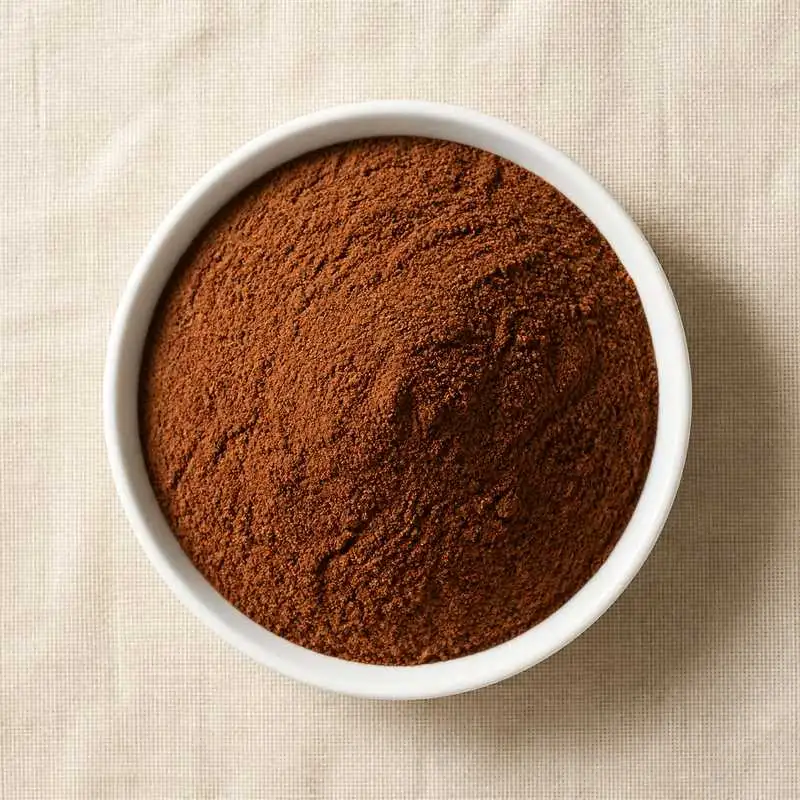
- 25 kg kraft paper bag with PE inner liner
- ISO 9001
- HACCP
- Halal
- Kosher
Specifications
Grades / Types Available: Excellent
| Item | Specification |
|---|---|
| Appearance | Smooth, uniform block |
| Cocoa Solids (Dark) | 50-70% |
| Cocoa Butter | 28-38% |
| Fineness | ≤ 25 μm |
| Moisture | ≤ 1.0% |
| Shelf Life | 12-18 months |
| Storage | 15-20°C, RH ≤ 60% |
| Total Solid content | 35% |
| Non-fat cocoa solids | ≥12% |
| Milk fat | ≥2.5% |
| Total Milk Solid | ≥14% |
| Fineness/um | ≤35% |
Common Markets Grades
Bakery chocolate blocks are graded by chocolate type, cocoa solids percentage, and fluidity.
Dark couverture blocks span 55 to 75 percent cocoa solids, with 60 to 70 percent the standard range for ganache, mousse, and enrobed bakery items.
Milk couverture blocks carry 33 to 42 percent cocoa solids and 14 to 22 percent milk solids, supplying a softer chocolate flavour for filled biscuits, viennoiserie, and milk-chocolate cakes.
White couverture blocks are built on 28 to 35 percent cocoa butter, 20 to 25 percent milk solids, and sugar, with no cocoa mass. They serve white ganache, decoration, and colour-base work.
Manufacturer-specific drop counts (one to five drops) rate fluidity and correspond to viscosity at 40 degrees Celsius. Higher fluidity grades are used for thin enrobing layers, while lower fluidity supports thicker shells and molded pieces.
Applications
- Enrobing of bakery items including eclairs, cream puffs, biscuits, and viennoiserie
- Molding into shells, bars, and decorative pieces for filled chocolate work
- Ganache, truffle centres, and chocolate cream fillings
- Mousse, bavarois, and chilled dessert bases
- Brownie batter, chocolate cake, and chocolate-chip inclusions when chopped
- Pastry glazing, chocolate sauces, and decorative drizzles
- Hot chocolate base for cafes and restaurants when shaved or grated
- Couverture for ice cream coatings and frozen-dessert dips
- Praline and confection workshops producing filled chocolates
- Industrial cookie sandwich filling and chocolate-coated biscuit lines
Brands Using Bakery Chocolate Block
Widely-distributed consumer products that list Bakery Chocolate Block on the ingredient label.
- Baker'sUnsweetened Chocolate Premium Baking Bar with 100% Cacao ↗100% cacao baking bar product page on Kraft Heinz official brand site.Label verified 2026-05-24
- GhirardelliUnsweetened Chocolate 100% Cacao Baking Bar ↗Listed: 'unsweetened chocolate' - single-ingredient baking bar.Label verified 2026-05-24
- GhirardelliSemi-Sweet Chocolate Baking Bar ↗Listed: 'Sugar, unsweetened chocolate, cocoa butter, milk fat, soy lecithin, vanilla extract.'Label verified 2026-05-24
- Theo ChocolatePure 85% Dark Chocolate Bar ↗Listed: 'Cocoa Beans*+, Cane Sugar*+, Cocoa Butter*+, Ground Vanilla Bean*' - bean-to-bar baking-grade dark chocolate block.Label verified 2026-05-24
Brand names, product names and logos are the property of their owners. They appear here as published evidence that the ingredient is used, taken from the brand's own label or website. Their appearance is not an endorsement, and it does not mean the brand buys from us or from any manufacturer listed on this site.
China Manufacturers of Bakery Chocolate Block
Top Bakery Chocolate Block manufacturers in China.

Company names and logos are the property of the manufacturers themselves. They are listed here because our own directory records them as producing this ingredient. A listing is not an endorsement by them, and we do not represent them or speak on their behalf.
How We Help Source Bakery Chocolate Block
Direct Factory Sourcing
We run the whole process: selecting the manufacturer from the top Chinese food ingredient producers, negotiating the price, verifying quality, and coordinating the logistics. You deal with us instead of with several factories at once.
Original Packaging and Documents from the Manufacturer
The manufacturer sends your Bakery Chocolate Block out of its own factory in the original packing, through to your destination port. The COA, COO, MSDS, TDS and any certifications reach you from the manufacturer as well.
Free Samples and Lead Time
We send 100 to 500 g free for your own laboratory to test and you cover only the courier, usually within 2 to 3 working days. ETD is usually within 7 to 15 days once the order is confirmed, and we check that date against the factory's own manufacturing schedule before we give it to you.
Combined Shipment
We can load Bakery Chocolate Block together with other ingredients such as Instant Coffee, Instant Tea and Tea Concentrate into one 20' FCL. If your quantity is small, we can also ship LCL.
Regulatory Status
Bakery chocolate blocks fall under the standard chocolate regulations of the destination market.
In the European Union, Directive 2000/36/EC sets compositional minima: 35 percent total cocoa solids for chocolate, 18 percent cocoa butter, and 14 percent non-fat cocoa solids. Couverture must contain at least 31 percent cocoa butter.
The U.S. Food and Drug Administration uses 21 CFR 163 to define sweet chocolate (at least 15 percent chocolate liquor), semisweet and bittersweet (at least 35 percent), and milk chocolate (at least 10 percent chocolate liquor and 12 percent milk solids).
Codex standard CXS 87-1981 covers chocolate products internationally. Lecithin (E322) and PGPR (E476) are permitted emulsifiers within prescribed limits.
Allergen labelling for milk, soya lecithin, and possible nut cross-contact is required in most markets. Halal, Kosher, organic, and Rainforest Alliance certifications are routinely available.
Manufacturing Process
Production begins with cocoa mass, sugar, and cocoa butter as the core dark-chocolate recipe. Milk powder is added for milk and white variants, and lecithin or PGPR is dosed at 0.3 to 0.5 percent for viscosity control.
Ingredients are pre-mixed in a heated kneader, then refined through a five-roll refiner that reduces particle size below 25 microns. Fineness controls mouthfeel and is verified by micrometer at the line.
Refined flake enters a conche where it is worked at 50 to 80 degrees Celsius for 8 to 72 hours. Conching removes volatile acids, coats sugar particles in fat, and develops the smooth, rounded couverture character.
Conched chocolate is tempered through a precrystallizer to set the stable Form V cocoa butter crystals. It is then cast into block moulds (1, 2.5, or 5 kilogram), cooled in a tunnel at 12 to 14 degrees Celsius, and demolded.
Blocks are wrapped in food-grade film, packed in corrugated cartons, and shipped under controlled temperature (18 to 20 degrees Celsius) to preserve temper and bloom resistance.