Cocoa Mass
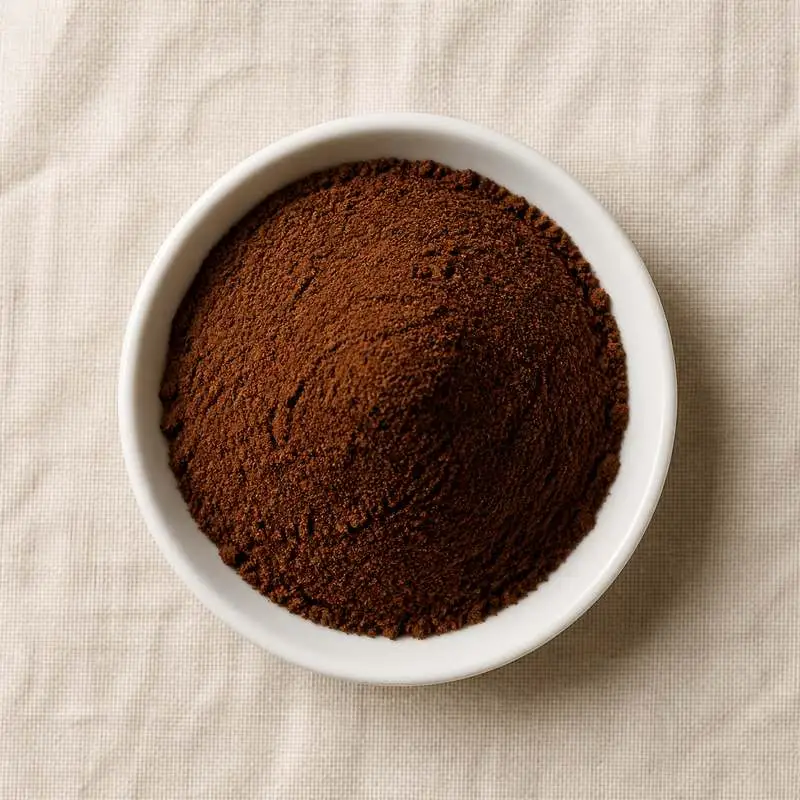
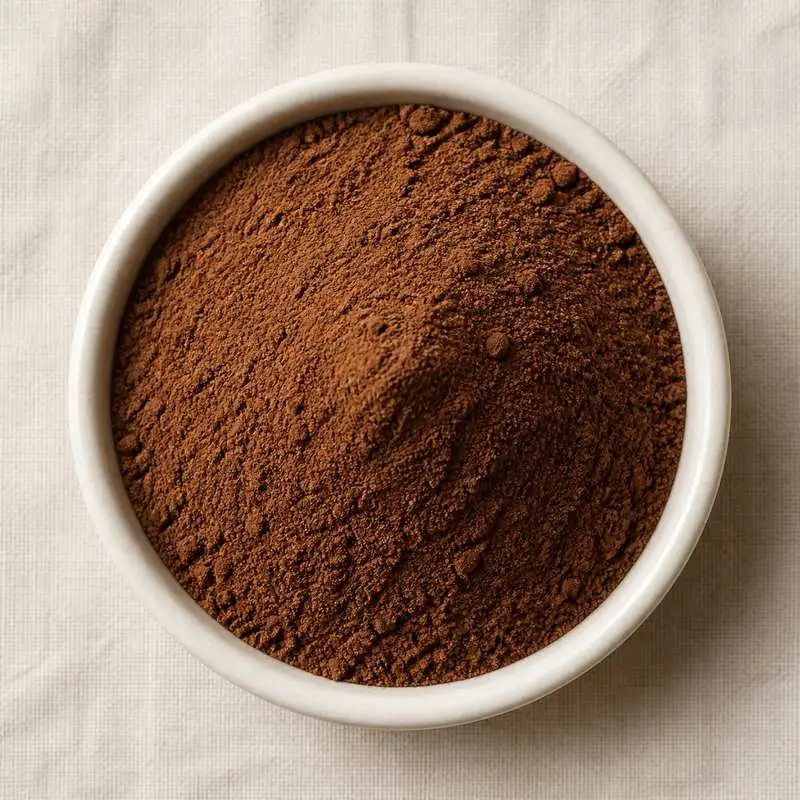
Cocoa Mass, also called cocoa liquor or cocoa paste, is the smooth fluid or solid produced by grinding roasted cocoa nibs to a particle size below 30 microns.
It carries the full natural fat of the bean, typically 52 to 56 percent cocoa butter, and is the only single ingredient that legally counts as 100 percent chocolate. All darker chocolate formulations are built from cocoa mass as the flavour and colour base.
We source bulk Cocoa Mass from top China manufacturers for our partners. The manufacturer is in Jiangsu. A smaller requirement can ship in a combined container with other ingredients.
Please send the grade you need, the volume and your destination port, and we will come back with a solution and a price.
or call +86-21-6858 0751
- Packaging
- 25 kg kraft paper bag with PE inner liner
- ISO 9001
- HACCP
- Halal
- Kosher
Specifications
Grades / Types Available: Excellent
| Item | Specification |
|---|---|
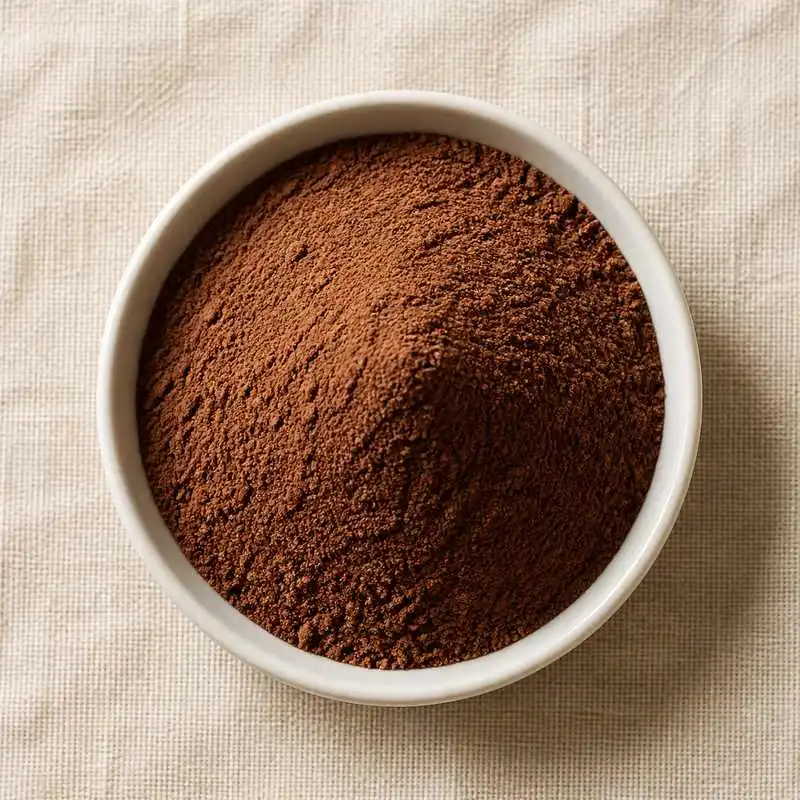
| Appearance | Dark brown solid block or chip |
| Cocoa Butter Content | 50-55% |
| Fineness | ≥ 99% through 75 μm sieve |
| Moisture | ≤ 2.0% |
| Free Fatty Acid | ≤ 1.75% |
| pH | 5.0-5.8 |
| Shell Content | ≤ 1.75% |
| Total Plate Count | ≤ 5,000 cfu/g |
| Fat Content | 4-8% |
| Yeast count (per gram) | 30 Max. |
| Mould count (per gram) | 30 Max. |
| Coliform (per gram) | 30 Max. |
| E-coli (per 0.5grams) | Negative |
| Salmonella (per 25 grams) | Negative |
| Staphylococcus (per gram) | Negative |
| Pathogenic Bacteria | Negative |
| Energy (g/Per 100g) | 2456kj |
| Protein (g/Per 100g) | 14.7g |
| Fat (g/Per 100g) | 53g |
| Saturated fatty acid (g/Per 100g) | 31.9g |
| Trans fatty acid (g/Per 100g) | 0g |
| Carbohydrate (g/Per 100g) | 1.7g |
| Total dietary fiber (g/Per 100g) | 27g |
| Sodium (g/Per 100g) | 1.64mg |
Common Markets Grades
Cocoa mass is graded by origin, alkalization, and fineness.
Natural mass holds the native fermentation acidity, pH 5.2 to 5.6, and is preferred for craft dark chocolate and couverture work where fruit and floral notes are valued.
Alkalized mass is treated with potassium or sodium carbonate during the nib or mass stage, raising the pH to 6.5 to 7.5. The result is a darker colour and a rounder, less acidic profile suited to industrial dark and milk chocolate.
Particle fineness for premium mass is below 20 microns (D90), measured by micrometer or laser diffraction, which delivers smooth mouthfeel in the finished bar.
Single-origin mass is produced from specific countries or estates (Ghana, Ecuador, Madagascar, Vietnam) with origin-specific flavour descriptors. Blend mass uses West African Forastero as the volume base with smaller fine-flavour additions for character.
Applications
- Dark, milk, and white chocolate formulation as the primary cocoa solids source
- Couverture for enrobing, molding, and panning in chocolate manufacture
- Compound coatings when blended with vegetable fats and emulsifiers
- Ice cream stracciatella, chocolate chips, and frozen-dessert inclusions
- Bakery: ganache, brownie batter, chocolate cake, and filled pastries
- Praline centres, truffles, and chocolate spreads
- Industrial flavour base for chocolate drinks, sauces, and confectionery fillings
- Bean-to-bar production at small and mid-scale craft chocolate makers
- Health-positioned dark chocolate with high cocoa percentages (70 to 100 percent)
- Pressing feedstock for cocoa butter and cocoa powder when not used directly in chocolate
Brands Using Cocoa Mass
Widely-distributed consumer products that list Cocoa Mass on the ingredient label.
- Theo ChocolateSalted Toffee 55% Dark Chocolate Bar ↗Listed: 'Dark Chocolate (Cocoa Mass [100% Ground Cocoa Beans]*, Cane Sugar*, Cocoa Butter*, Ground Vanilla Bean*), Toffee...'Label verified 2026-05-24
- Theo ChocolateCoffee Toffee 70% Dark Chocolate Bar ↗Listed: 'Dark Chocolate (Cocoa Mass [100% ground cocoa beans]*, Cane Sugar*, Cocoa Butter*), Toffee...'Label verified 2026-05-24
Brand names, product names and logos are the property of their owners. They appear here as published evidence that the ingredient is used, taken from the brand's own label or website. Their appearance is not an endorsement, and it does not mean the brand buys from us or from any manufacturer listed on this site.
China Manufacturers of Cocoa Mass
Top Cocoa Mass manufacturers in China.

Company names and logos are the property of the manufacturers themselves. They are listed here because our own directory records them as producing this ingredient. A listing is not an endorsement by them, and we do not represent them or speak on their behalf.
How We Help Source Cocoa Mass
Direct Factory Sourcing
We run the whole process: selecting the manufacturer from the top Chinese food ingredient producers, negotiating the price, verifying quality, and coordinating the logistics. You deal with us instead of with several factories at once.
Original Packaging and Documents from the Manufacturer
The manufacturer sends your Cocoa Mass out of its own factory in the original packing, through to your destination port. The COA, COO, MSDS, TDS and any certifications reach you from the manufacturer as well.
Free Samples and Lead Time
We send 100 to 500 g free for your own laboratory to test and you cover only the courier, usually within 2 to 3 working days. ETD is usually within 7 to 15 days once the order is confirmed, and we check that date against the factory's own manufacturing schedule before we give it to you.
Combined Shipment
We can load Cocoa Mass together with other ingredients such as Instant Coffee, Instant Tea and Tea Concentrate into one 20' FCL. If your quantity is small, we can also ship LCL.
Regulatory Status
Cocoa mass is a foundational chocolate ingredient and is recognised in all major food codes.
The European Union covers it under Directive 2000/36/EC, which defines it as the product obtained from cocoa beans that have been cleaned, shelled and roasted, and reduced to a paste by mechanical processes.
The U.S. Food and Drug Administration uses the term chocolate liquor under 21 CFR 163.111 and recognises it as the basis for the standards of identity covering chocolate, sweet chocolate, and milk chocolate.
Codex Alimentarius standard CXS 141-1983 covers cocoa mass and cocoa cake for international trade.
Codex and the European Union permit alkalization with sodium, potassium, ammonium, and magnesium carbonates and hydroxides within defined residue limits. Heavy-metal limits for cadmium under EU Regulation 2021/1323 apply when the mass enters chocolate destined for the EU market.
Manufacturing Process
Production begins with cleaned, debacterized, and winnowed cocoa beans, which yield nibs roughly 12 to 15 percent lighter than the whole bean after shell removal.
Nibs are roasted at 110 to 140 degrees Celsius for 15 to 45 minutes, depending on bean origin and target flavour profile. Roasting drives Maillard reactions between residual amino acids and reducing sugars, generating the characteristic chocolate aroma.
Roasted nibs enter a multi-stage grinding line. The first stage uses a hammer or beater mill to break the nib structure and release the cocoa butter. The mass turns fluid as friction heats it above the cocoa butter melting point of 34 degrees Celsius.
Subsequent stages refine particle size through ball mills or pin mills until the target fineness is reached. The fluid mass leaves the line at 40 to 50 degrees Celsius and is filtered, optionally alkalized, then tempered for tank storage or cast into 25 kilogram blocks for solid trade.
Liquid mass is held in heated, gently stirred tanks at 45 to 50 degrees Celsius for up to several weeks. Solid blocks are packed in food-grade film and corrugated cases for export.