Chicken Powder Essence
Chicken powder essence is the compound seasoning known in Chinese as jijing, a granular product built on monosodium glutamate and salt with the addition of chicken meat or bone powder, chicken fat, disodium ribonucleotides, sugar, starch and spice. It sits between plain monosodium glutamate and a full bouillon powder, and it is used as a general purpose savoury seasoning rather than only as a stock base.
Its savoury effect rests on glutamate and nucleotide synergy. Monosodium glutamate provides the base umami, and the addition of inosinate and guanylate multiplies the perceived intensity well beyond what either delivers alone, which is why the ribonucleotide fraction is present at a small percentage but is functionally decisive. The chicken derived components supply the species character and a fat borne aroma that the pure enhancers cannot give.
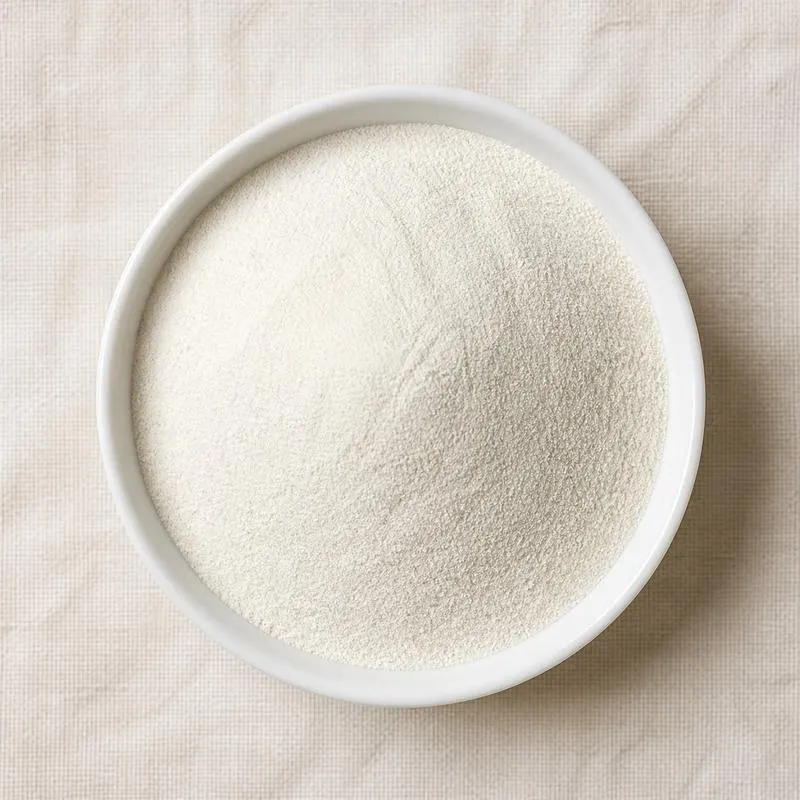
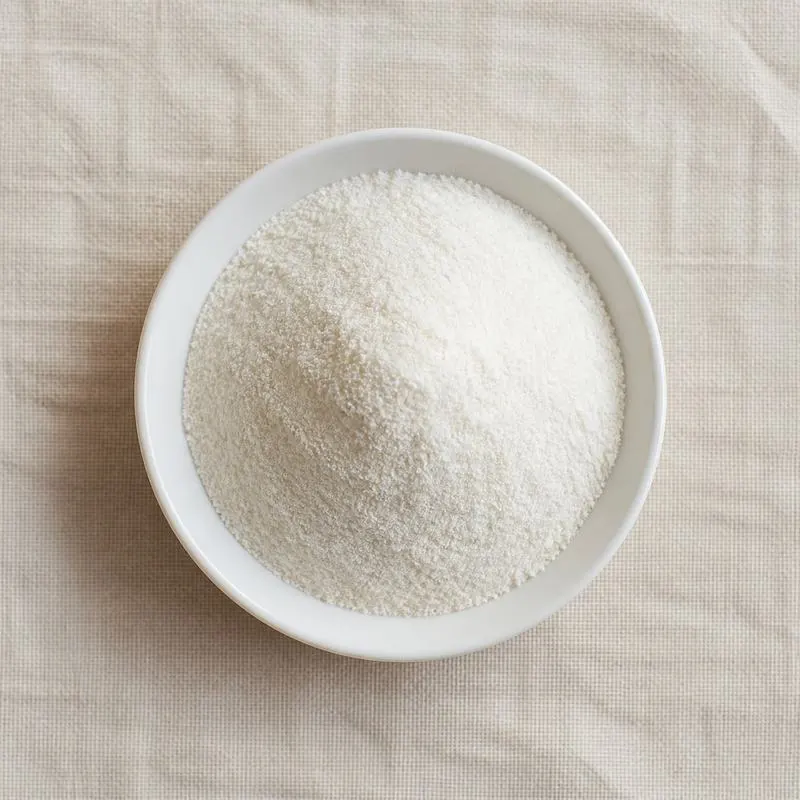
It is a free flowing pale yellow granule or powder, typically at a granulation coarse enough to avoid dusting and fine enough to dissolve quickly. It is hygroscopic and cakes if it takes up moisture, so it is packed in barrier material. It dissolves readily in hot water and disperses in cold, and it is dosed by weight into a dish or a formulation, with the salt and glutamate content taken into account in the overall seasoning balance.
We source bulk Chicken Powder Essence from top China manufacturers for our partners. The manufacturer is in Hunan. A smaller requirement can ship in a combined container with other ingredients.
Please send the grade you need, the volume and your destination port, and we will come back with a solution and a price.
or call +86-21-6858 0751
- Function
- Flavours and Aromas
Specifications
| Item | Specification |
|---|---|
| Appearance | Free flowing pale yellow granule or powder, free from lumps and foreign matter |
| Odour and taste | Characteristic savoury chicken, matching retained standard |
| Monosodium glutamate content | To declared value, typically 35 to 60 percent |
| Salt as sodium chloride | To declared value, typically 20 to 45 percent |
| Total nitrogen | To declared value consistent with glutamate and chicken content |
| Moisture | 4.0 percent maximum |
| Granulation | 90 percent minimum between 20 and 60 mesh for standard granule |
| Total fat | To declared value, typically 1 to 5 percent |
| pH, 10 percent solution | 6.0 to 7.5 |
| Solubility in hot water | Complete within 1 minute with stirring |
| Lead | 1 mg per kg maximum |
| Arsenic | 0.5 mg per kg maximum |
| Total plate count | 10000 cfu per gram maximum |
| Yeast and mould | 100 cfu per gram maximum |
| Salmonella | Absent in 25 grams |
Common Markets Grades
Grades are set mainly by the monosodium glutamate content, which is declared as a percentage and typically runs between thirty five and sixty percent, and by the chicken content, which separates products carrying genuine chicken meat powder, bone extract and chicken fat from those relying on flavouring alone. Salt level is the third declared figure and moves inversely with the glutamate content. Nucleotide content, usually expressed as the level of added disodium ribonucleotides, is specified where the buyer is formulating to a defined umami intensity.
Physical grades cover fine powder, standard granule and coarse granule, chosen according to whether the product is dissolved by a cook or blended into a dry seasoning. Beyond the standard line, reduced sodium versions substitute potassium chloride for part of the salt, clean label versions replace added glutamate and nucleotides with yeast extract and concentrated chicken broth at a much higher inclusion, and halal certified lines are produced on segregated equipment with certified chicken material. Retail packs and industrial bulk grades share a formulation but differ in granulation and packaging.
Applications
- Household and restaurant cooking, dosed directly into stir fries, soups and braises as a general savoury seasoning
- Soup and broth preparation, where it replaces or supplements a stock
- Instant noodle seasoning sachets, blended with salt, dried vegetable and flavour
- Central kitchen and catering production, giving batch to batch consistency without a stock pot
- Marinades and brines for meat and poultry, contributing umami and salt in one addition
- Savoury snack seasonings, where the granule is milled and applied topically
- Ready meals and frozen dishes, dosed into the sauce before filling
- Dumpling and meatball fillings, where it seasons the mince directly
- Sauce and gravy mixes sold as dry powders
China Manufacturers of Chicken Powder Essence
Top Chicken Powder Essence manufacturers in China.
Company names and logos are the property of the manufacturers themselves. They are listed here because our own directory records them as producing this ingredient. A listing is not an endorsement by them, and we do not represent them or speak on their behalf.
Regulatory Status
Chicken powder essence is a formulated seasoning rather than a single additive, so it has no E number of its own, but its principal components are regulated additives. In the United States monosodium glutamate is generally recognised as safe and must be declared by name on the ingredient list rather than hidden within a collective term such as spices or natural flavour, and the same applies to disodium inosinate and disodium guanylate. Products containing chicken above the relevant threshold fall under Food Safety and Inspection Service jurisdiction and labelling, and the species must be identified.
In the European Union monosodium glutamate is the authorised additive E 621 and disodium ribonucleotides are E 635, both flavour enhancers permitted in specified food categories, and both must be declared by function and E number or name. Anticaking agents used in the granule must likewise be permitted and declared. Where chicken meat, bone extract or fat is included, the supplying establishment must be approved for products of animal origin. Codex covers the product through its general standard for food additives, which lists the flavour enhancers and their permitted uses, together with its standards on labelling and contaminants.
Manufacturing Process
Production is a wet granulation of a dry blend. Monosodium glutamate, salt, sugar, starch, disodium ribonucleotides, chicken meat or bone powder, spice and any anticaking agent are weighed to formula and premixed, with the ribonucleotides and other low inclusion materials diluted into a carrier first so that they distribute evenly. Chicken fat and liquid flavours are sprayed into the running blender, and the fat both carries aroma and helps the powder agglomerate.
The blend is transferred to a granulator, most often a mixer granulator or a fluid bed unit, where a fine mist of water or a starch slurry binder is applied while the bed is agitated. The particles agglomerate to the target size, and the wet granules are then dried in a fluid bed drier at a temperature low enough to protect the flavour and to avoid discolouring the glutamate. Dried granules are cooled, sieved into the specified size fraction with the fines returned to the granulator and the oversize milled and rescreened, then passed through a magnet and a metal detector. Finished product is checked for glutamate content, salt, moisture, granulation, colour and sensory match before packing in laminated pouches, lined drums or bulk bags with a moisture barrier.