Cocoa Cake
Cocoa cake, also called cocoa press cake, is the solid slab left in the pot of a hydraulic press after cocoa butter has been expressed from cocoa liquor, and it is the intermediate from which all cocoa powder is made.
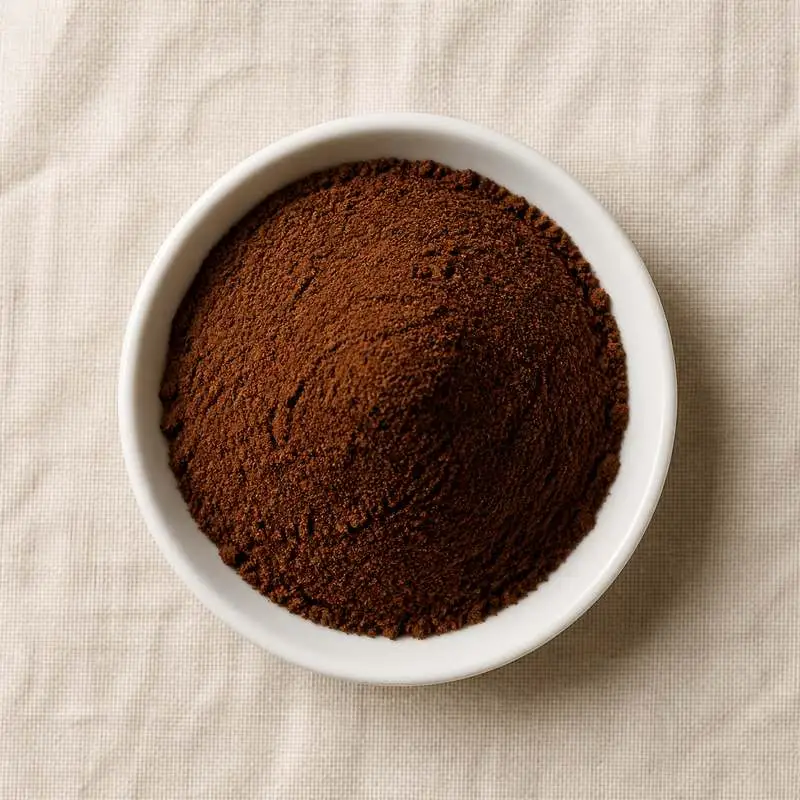
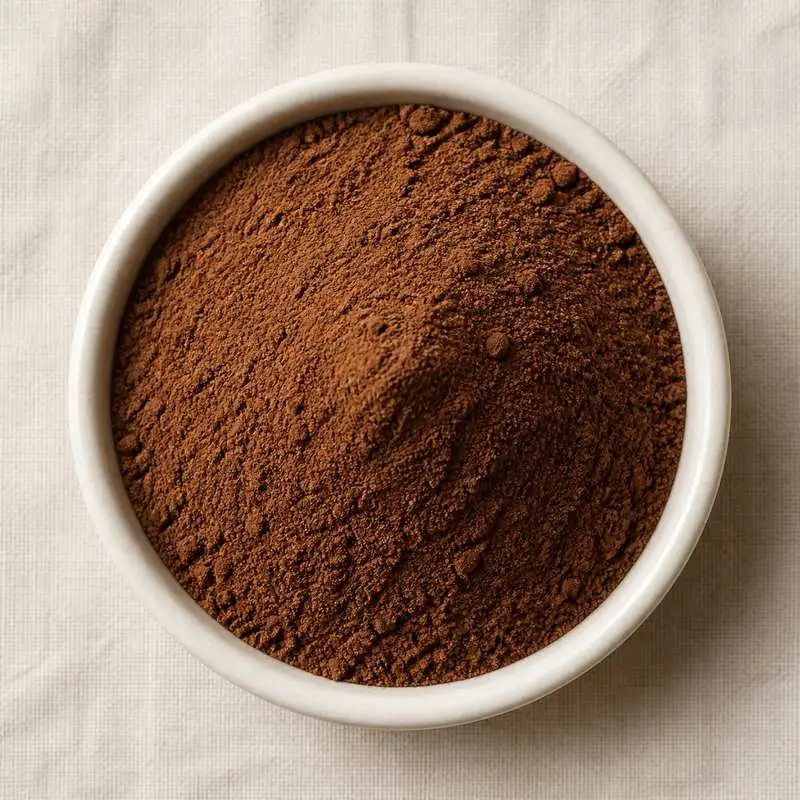
It consists of the defatted cocoa solids, the protein, starch, fibre, minerals and polyphenols of the nib, held together by the cocoa butter that the press could not remove. Residual fat is the defining specification and it is set by press pressure and cycle time rather than by any chemical treatment, giving cake at either 10 to 12 percent fat, the standard for reduced fat powder, or 20 to 24 percent, the standard for full fat powder. The cake leaves the press as a hard, dense disc that must be broken before it can be handled, and it carries whatever roast, origin and alkalisation history the liquor had, so a natural liquor gives a reddish brown acidic cake and an alkalised liquor gives a darker, more neutral one.
The trade moves it as whole slabs or as kibbled pieces in bulk bags, sacks and boxes. Cake is hygroscopic and picks up odour readily, and because its residual fat is still cocoa butter it softens and can compact into a solid mass if stored warm, so it is held cool and dry and is normally milled within a short period of pressing.
We source bulk Cocoa Cake from top China manufacturers for our partners. The manufacturer is in Jiangsu. A smaller requirement can ship in a combined container with other ingredients.
Please send the grade you need, the volume and your destination port, and we will come back with a solution and a price.
or call +86-21-6858 0751
- Function
- Beverage ingredient
Specifications
| Item | Specification |
|---|---|
| Appearance | Hard uniform slabs or kibbled pieces, free from foreign matter |
| Colour | Reddish brown to dark brown according to alkalisation, matched to standard |
| Flavour and odour | Characteristic cocoa, no smoky, mouldy or hammy note |
| Residual cocoa butter | 10 to 12 percent, reduced fat grade |
| Moisture | 3.0 percent maximum |
| pH, 10 percent suspension of milled cake | 5.2 to 6.0 natural, 6.8 to 7.8 alkalized |
| Shell content | 1.75 percent maximum on nib basis |
| Free fatty acid of the residual fat, as oleic | 1.75 percent maximum |
| Lead | 0.5 mg/kg maximum |
| Cadmium | Within the limit of the destination market, tested each lot |
| Total plate count | 5,000 cfu/g maximum |
| Yeast and mould | 50 cfu/g maximum |
| Escherichia coli | Negative in 1 g |
| Salmonella | Negative in 25 g |
Common Markets Grades
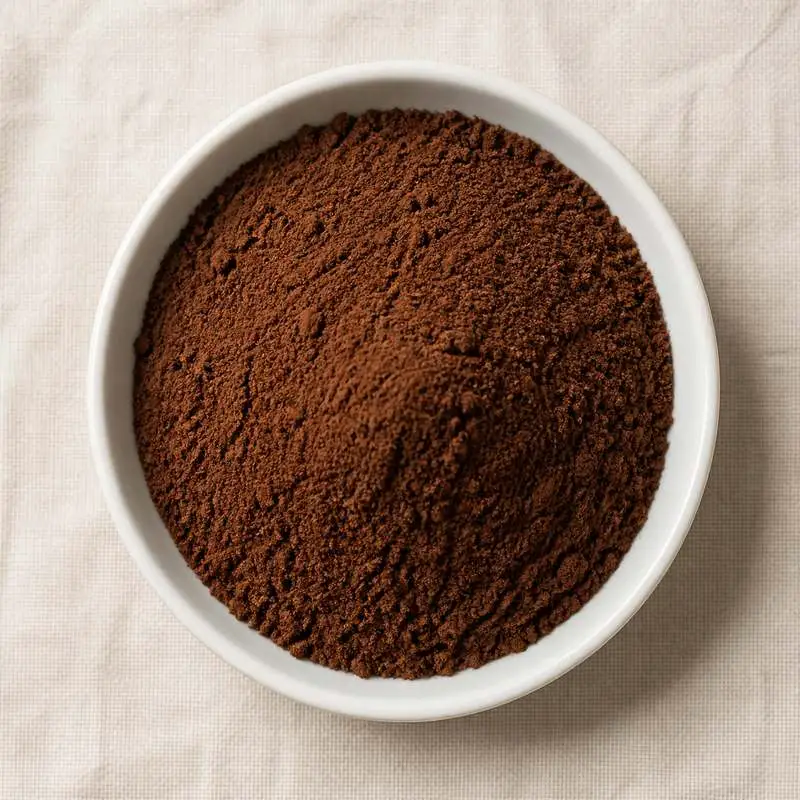
Residual fat content is the primary grade, splitting the trade into low fat cake at 10 to 12 percent, intended for reduced fat powder, and high fat cake at 20 to 24 percent for standard powder, with intermediate levels pressed to order. Alkalisation is the second axis, dividing natural cake from lightly, medium and heavily alkalised cake, which differ in pH and in the colour of the powder they yield, from reddish brown through mahogany to near black.
Beyond that, cake is graded on the colour value it produces on milling, measured instrumentally on a standardised suspension, since colour is what most powder buyers are actually purchasing. Physical form divides whole pressed slabs from kibbled cake broken to a size that a pulveriser can take directly. Origin and bean blend are specified where flavour matters, and organic and certified sustainable cake is segregated through the press house. Cake is traded between processors as well as being used internally, so specifications are written to be milled by a third party rather than only in house.
Applications
- Cocoa powder manufacture, the dominant use, milled and cooled into finished powder
- Chocolate flavoured drink powders and instant beverage bases, after milling
- Bakery products, biscuits and cake mixes requiring cocoa solids without added fat
- Compound coatings and chocolate flavoured fillings, as the cocoa solids carrier
- Ice cream and frozen dessert bases, dispersed into the mix after milling
- Confectionery centres, wafer creams and spreads needing colour and cocoa flavour
- Cereal and snack coatings, applied as a dry dust or in a fat slurry
- Cocoa extract and polyphenol production, where the defatted solids are the feedstock
- Trade between cocoa processors, sold as an intermediate to grinders without pressing capacity
China Manufacturers of Cocoa Cake
Top Cocoa Cake manufacturers in China.
Company names and logos are the property of the manufacturers themselves. They are listed here because our own directory records them as producing this ingredient. A listing is not an endorsement by them, and we do not represent them or speak on their behalf.
Regulatory Status
Cocoa cake is an intermediate rather than a finished consumer product, but it sits inside the same compositional frameworks as the powder made from it. In the United States the cacao products standards of identity at 21 CFR Part 163 define the cocoa powders by their cacao fat content and set out the alkali ingredients permitted, together with the requirement that material treated with alkali be labelled as processed with alkali, and that declaration follows the cake into the powder and into finished foods. Manufacture is subject to the preventive controls rules at 21 CFR Part 117, with roasting validated as the Salmonella control step earlier in the process and the press house and milling area handled as a protected zone downstream of it.
In the European Union, Directive 2000/36/EC on cocoa and chocolate products defines cocoa powder and fixes the minimum cocoa butter content for material sold as cocoa powder and a lower minimum for fat reduced cocoa powder, so the residual fat of the cake determines which name the resulting powder may carry. The alkalising agents used upstream are authorised additives, potassium carbonates as E501 and sodium carbonates as E500 under Regulation 1333/2008 with purity criteria in Regulation 231/2012. Maximum levels for cadmium in cocoa powder are set in Commission Regulation (EU) 2023/915, and because cadmium concentrates in the defatted solids rather than in the butter, cake carries a higher cadmium level than the liquor it came from, which is a point buyers verify by analysis rather than by calculation. Codex maintains a standard for cocoa powders and dry cocoa sugar mixtures.
Manufacturing Process
Cocoa liquor, made by roasting and grinding shelled nib, is heated to keep it fluid and pumped into the pots of a horizontal hydraulic press. The press closes and raises pressure over a cycle of several minutes, forcing cocoa butter through screens and filter cloths lining each pot while the solids are retained. Pressure and cycle time decide how much fat is removed, and pressing to low residual fat takes markedly longer and higher pressure than pressing to high residual fat, which is why the two grades carry different costs. Expressed butter is collected, filtered and either deodorised or sold natural.
At the end of the cycle the press opens and the cakes are ejected as hard discs. They are conveyed to a kibbler or breaker, which reduces them to lumps of a size the next stage can handle, and the kibbled cake is either fed directly to the powder mill or cooled and packed for storage and sale. Where the cake is to be milled on site, it goes to an impact or pin mill with air classification, followed by a cooling and tempering section that crystallises the residual cocoa butter into a stable form so the powder does not bloom or cake in the bag. Where alkalisation was applied, it was carried out earlier, on the nib or the liquor, rather than on the cake, so the cake simply carries that history forward.