Cocoa Liquor
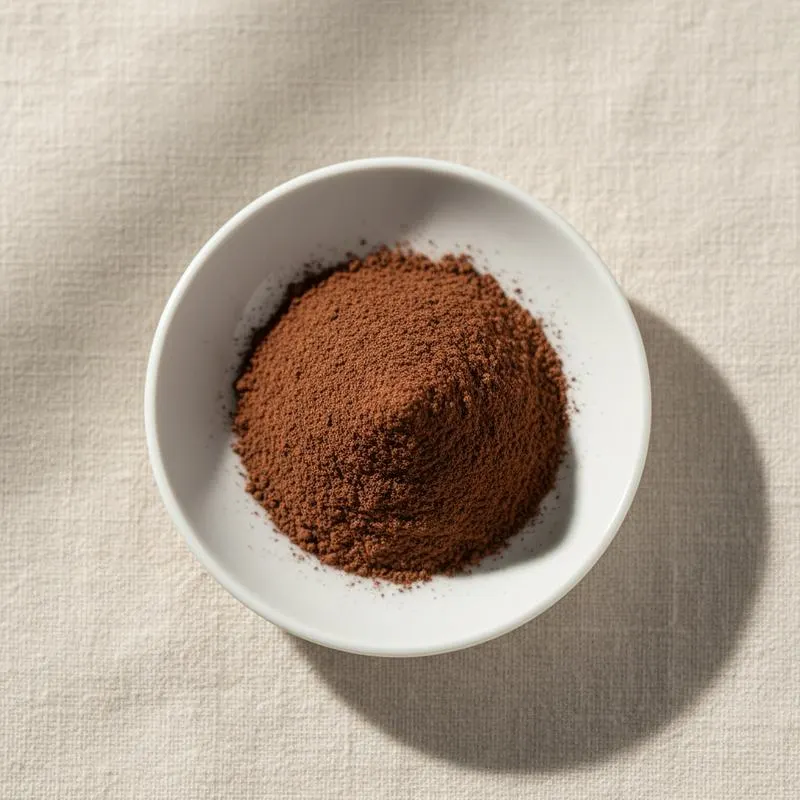
Cocoa liquor, also traded as cocoa mass or chocolate liquor, is the fluid or solidified paste produced by grinding roasted, shelled cocoa nib, containing nothing but the nib itself, at roughly 52 to 56 percent cocoa butter and the balance defatted cocoa solids.
It contains no alcohol, the word liquor referring only to its liquid state above the melting range of cocoa butter. Grinding ruptures the cell walls of the nib and releases the fat, which forms a continuous phase in which the fine solid particles, protein, starch, fibre and polyphenol bodies, are suspended. The suspension is fluid at about 45 to 50 degrees Celsius and sets to a hard brittle block on cooling, because cocoa butter is a sharply melting fat with a narrow crystallisation range close to body temperature. Particle size determines mouthfeel, so liquor destined for eating chocolate is milled far finer than liquor destined for pressing.
Cast blocks in cartons or bags go to plants that remelt, and bulk liquid travels in heated road tankers and heated totes to plants that can take it hot. Cocoa liquor is the single input from which both cocoa butter and cocoa powder are made, and it is also the cocoa solids carrier in dark and milk chocolate, so its flavour, largely set by bean origin, fermentation and roast, sets the flavour of everything downstream.
We source bulk Cocoa Liquor from top China manufacturers for our partners. The manufacturers are in Jiangsu. A smaller requirement can ship in a combined container with other ingredients.
Please send the grade you need, the volume and your destination port, and we will come back with a solution and a price.
or call +86-21-6858 0751
- Function
- Beverage ingredient
Specifications
| Item | Specification |
|---|---|
| Appearance | Homogeneous brown paste when molten, hard brittle block when set |
| Colour | Medium to dark brown, characteristic of origin and roast |
| Flavour and odour | Characteristic roasted cocoa, no smoky, mouldy or hammy note |
| Cocoa butter content | 52 to 56 percent |
| Moisture | 2.0 percent maximum |
| Fineness | 99.0 percent through 75 micron |
| pH, 10 percent suspension | 5.2 to 6.0, natural grade |
| Shell content | 1.75 percent maximum on nib basis |
| Lead | 0.5 mg/kg maximum |
| Cadmium | Within the limit of the destination market, tested each lot |
| Total plate count | 5,000 cfu/g maximum |
| Yeast and mould | 50 cfu/g maximum |
| Escherichia coli | Negative in 1 g |
| Salmonella | Negative in 25 g |
Common Markets Grades
Origin is the first grading line. Bulk liquor is made from West African, Indonesian and Ecuadorian forastero type beans and gives the standard cocoa flavour, while fine flavour liquor from criollo and trinitario beans of Latin American and Caribbean origin is traded separately at a higher price and is bought on flavour description rather than on specification alone. Single origin and blended liquors are both offered.
Process grades cover natural liquor, made from untreated nib, and alkalized liquor, made from nib or liquor treated with carbonate to raise pH and darken colour. Roast level, from light through medium to dark, is specified where flavour is being matched. Fineness is stated as the percentage of particles below a given micron size, with pressing grades left coarser and chocolate grades milled to a fine specification. Deodorised or steam treated liquor, in which volatile off notes and a portion of the microbial load have been removed, is a separate line. Organic and certified sustainable lots are separate lines too, and are kept apart through the whole mill.
Applications
- Dark chocolate, where liquor supplies both the cocoa solids and part of the cocoa butter
- Milk chocolate, dosed at lower inclusion alongside milk powder and added cocoa butter
- Cocoa butter and cocoa powder production, as the feed to the hydraulic press
- Compound coatings, blended with vegetable fat where cocoa butter is replaced
- Chocolate flavoured fillings, ganache and truffle centres, melted into the fat phase
- Ice cream and frozen dessert bases, added hot to the mix for chocolate flavour and colour
- Bakery goods, biscuit doughs and cake batters requiring true cocoa mass rather than powder
- Chocolate beverages and drinking chocolate, where the fat carries flavour that powder cannot
- Confectionery bars and enrobing masses, as the primary cocoa flavour source
Brands Using Cocoa Liquor
Widely-distributed consumer products that list Cocoa Liquor on the ingredient label.
- Endangered Species Chocolate48% Milk Chocolate Bar ↗Chocolate liquor, the same cocoa mass sold as cocoa liquor, is the first ingredient in this bar ahead of milk, cane sugar and cocoa butter.Label verified 2026-08-31
- Endangered Species ChocolateCacao Nibs + 72% Dark Chocolate Bar ↗The bittersweet chocolate base of this bar is built on chocolate liquor with cane sugar, cocoa butter, soy lecithin and vanilla, plus whole cacao nibs.Label verified 2026-08-31
Brand names, product names and logos are the property of their owners. They appear here as published evidence that the ingredient is used, taken from the brand's own label or website. Their appearance is not an endorsement, and it does not mean the brand buys from us or from any manufacturer listed on this site.
China Manufacturers of Cocoa Liquor
Top Cocoa Liquor manufacturers in China.
- Daming Cocoa Products (Jiangsu) Co., Ltd.4 ingredients in the directory
- Wuxi Goldenhoo Food Co., Ltd.2 ingredients in the directory
Company names and logos are the property of the manufacturers themselves. They are listed here because our own directory records them as producing this ingredient. A listing is not an endorsement by them, and we do not represent them or speak on their behalf.
Regulatory Status
In the United States chocolate liquor has a standard of identity within the cacao products standards at 21 CFR Part 163, which defines it as the solid or semiplastic food prepared by finely grinding cacao nibs, sets its cacao fat range and lists the optional ingredients and alkali treatments permitted. Where an alkali treatment has been applied the label must state that the product is processed with alkali. Manufacture is subject to the preventive controls rules at 21 CFR Part 117, with roasting normally validated as the Salmonella control step and the post roast area handled as a protected zone.
In the European Union cocoa mass falls under Directive 2000/36/EC on cocoa and chocolate products, which defines cocoa mass, cocoa butter and the chocolate categories and governs how much vegetable fat other than cocoa butter may be used in chocolate made from it. Alkalising agents used on nib or liquor are authorised additives, potassium carbonates as E501 and sodium carbonates as E500 among them, under Regulation 1333/2008. Contaminant control focuses on cadmium, for which maximum levels in cocoa and chocolate products are set in Commission Regulation (EU) 2023/915 and which is driven largely by growing region, and on polycyclic aromatic hydrocarbons where direct fired roasting or unsuitable drying has been used. Codex maintains standards for cocoa mass, cocoa butter and cocoa powders, and JECFA has evaluated the alkalising agents.
Manufacturing Process
Fermented and dried cocoa beans are cleaned to remove stones, string, metal and dust, then heat treated. Plants differ in whether they roast the whole bean before winnowing or winnow first and roast the nib, and some pre treat with infrared or steam to loosen the shell. Winnowing cracks the bean and separates the light shell from the dense nib in an air stream, and shell removal is critical because shell dilutes the product and carries most of its contamination risk. Roasting, typically between 110 and 140 degrees Celsius, drives off acetic acid and moisture and develops the roasted flavour through Maillard reaction between nib amino acids and sugars.
The roasted nib is ground in stages. A pre grinder, usually a hammer or disc mill, breaks the nib and releases the fat, producing a coarse liquor that flows. Ball mills or agitated bead mills then reduce particle size to the target fineness, with the heat of grinding keeping the mass fluid. Where a deodorised grade is required, the liquor is passed through a thin film column with steam under vacuum to strip volatile acids. The finished liquor is held in agitated heated storage tanks, sampled for fineness, fat content, pH and microbiology, and either pumped hot into tankers or cast into blocks, cooled in a tunnel and packed.