Desiccated Coconut
Desiccated coconut is the white kernel of the mature nut of Cocos nucifera, pared, cut up and dried to a low moisture so that it keeps at ambient temperature. It is one of the oldest processed coconut products and remains the largest by volume after oil, traded from Indonesia, the Philippines, Sri Lanka, Vietnam and India.
In composition it is a dried high fat material rather than a dried fruit. Around two thirds of a standard grade is fat, dominated by lauric and myristic acids, with the remainder dietary fibre, carbohydrate, a small amount of protein and less than three percent water. The fat is highly saturated, which gives good oxidative stability, but the product still develops off flavour in storage through lipase driven hydrolysis of the fat to free fatty acids, which is why blanching before drying and a low free fatty acid specification matter.
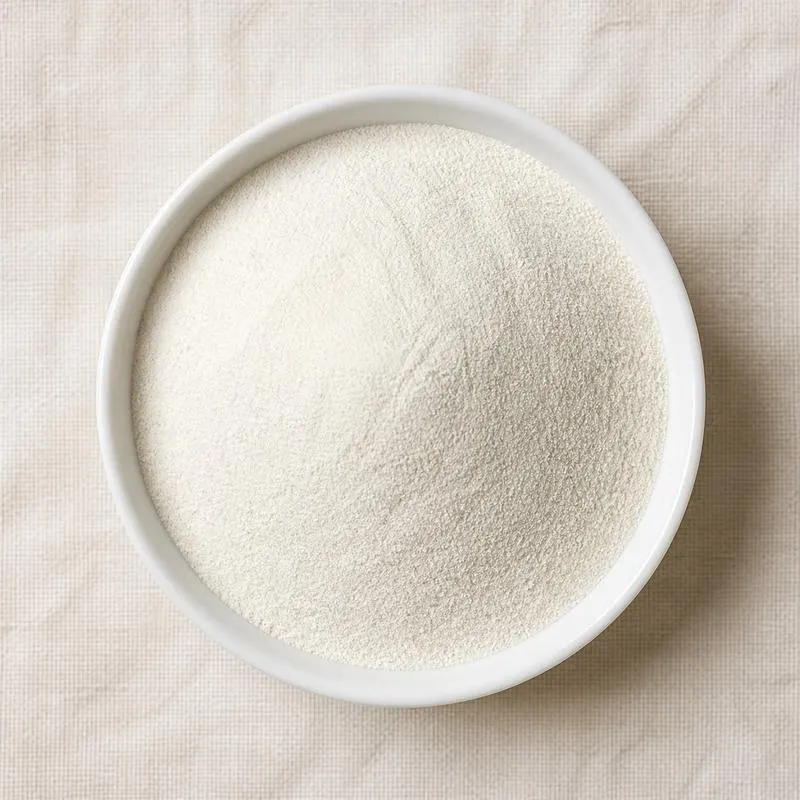
Particle sizes run from fine, through medium and coarse, to chips, flakes and threads, each cut suiting a different application. It is dry, free flowing and hygroscopic, absorbs moisture and syrup readily in a dough or a filling, and browns and develops a toasted aroma when baked, which is a functional attribute in bakery and confectionery rather than an incidental one.
We source bulk Desiccated Coconut from top China manufacturers for our partners. The manufacturer is in Hainan. A smaller requirement can ship in a combined container with other ingredients.
Please send the grade you need, the volume and your destination port, and we will come back with a solution and a price.
or call +86-21-6858 0751
- Function
- Flavours and Aromas
Specifications
| Item | Specification |
|---|---|
| Appearance | White dried coconut particles of uniform cut, free from shell and testa |
| Odour and Flavour | Fresh, sweet and characteristic, free from rancid or musty notes |
| Fat Content | Not less than 60.0 percent for high fat grade |
| Moisture | Not more than 3.0 percent |
| Free Fatty Acid, as lauric | Not more than 0.3 percent of extracted fat |
| Total Ash | Not more than 1.5 percent |
| Particle Size | Conforms to declared cut on screen analysis |
| Testa Specks | Not more than 5 per 100 g |
| Sulphur Dioxide | Not detected, or to declared level where used |
| Lead | Not more than 0.5 mg/kg |
| Total Plate Count | Not more than 5,000 cfu/g |
| Yeast and Mould | Not more than 50 cfu/g |
| E. coli | Absent in 1 g |
| Salmonella | Absent in 25 g |
Common Markets Grades
The first grading axis is particle size, and fine, medium, coarse, extra coarse, chip, flake, thread and shredded cuts are separate articles specified on screen analysis. The second is fat content. High fat or full fat desiccated coconut sits at around sixty five percent fat and is the standard article, while reduced fat grades, made by pressing part of the oil out before or after drying, are used for products where the fat would soften a dough or shorten shelf life.
The third axis is treatment and declaration. Sulphited grades, in which sulphur dioxide is used to hold colour, are distinguished from sulphite free grades, and the difference has to be declared. Sweetened and syrup coated shredded coconut is a separate product from plain desiccated. Toasted grades come ready browned. Steam sterilised or otherwise decontaminated lots are bought where a low microbial count is required, since Salmonella in desiccated coconut has been the subject of repeated international incidents. Organic certification, non-genetically-modified status and origin are the remaining commercial distinctions, and colour, measured on a whiteness scale, separates the top lots from ordinary ones.
Applications
- Biscuits, cookies and traybakes, where it absorbs moisture and adds bite
- Macaroons and coconut confectionery, where it is the principal ingredient
- Chocolate bars and coated centres, bound with syrup or condensed milk
- Cake toppings, decorations and coatings, using flake and thread cuts
- Curry and Southeast Asian dishes, rehydrated to make coconut milk in the kitchen
- Breakfast cereals, granola and snack bars, generally in toasted flake form
- Bakery fillings for tarts, buns and pastries
- Ice cream and frozen dessert inclusions
- Feedstock for milling into coconut flour and for extraction of coconut oil
- Dairy alternative manufacture, as the starting material for coconut milk
Brands Using Desiccated Coconut
Widely-distributed consumer products that list Desiccated Coconut on the ingredient label.
- TRSTRS Fine Desiccated Coconut, 300 g and 1 kg ↗Packaged finely ground dried coconut sold as desiccated coconut, with the ingredient list reading 'Coconut, Preservatives Sulphur Dioxide'.Label verified 2026-08-31
- Bob's Red MillShredded Coconut (unsweetened, unsulfured) ↗Unsweetened dried shredded coconut sold for baking and granola, the same dried coconut material marketed elsewhere as desiccated coconut.Label verified 2026-08-31
Brand names, product names and logos are the property of their owners. They appear here as published evidence that the ingredient is used, taken from the brand's own label or website. Their appearance is not an endorsement, and it does not mean the brand buys from us or from any manufacturer listed on this site.
China Manufacturers of Desiccated Coconut
Top Desiccated Coconut manufacturers in China.

Company names and logos are the property of the manufacturers themselves. They are listed here because our own directory records them as producing this ingredient. A listing is not an endorsement by them, and we do not represent them or speak on their behalf.
Regulatory Status
In the United States desiccated coconut is a food rather than a food additive, and the processor is subject to the preventive controls rules, with Salmonella as the recognised hazard requiring a validated control. Sulphur dioxide, where used, is permitted subject to declaration when present at ten parts per million or more in the finished food. Coconut is classified as a tree nut for the purposes of major food allergen labelling under the Food Allergen Labelling and Consumer Protection Act, so it must be declared on that basis even though it is botanically a drupe. Imported lots are screened against the agency's defect action levels and, historically, against import alerts covering microbiological contamination.
In the European Union desiccated coconut is a food carrying no E number, while sulphur dioxide and sulphites used to preserve colour are additives permitted under Regulation (EC) No 1333/2008 with maximum levels for dried fruit and coconut categories and mandatory declaration above ten parts per million. Coconut is not among the allergens requiring mandatory declaration in the European Union. This is a point of difference from United States practice. Microbiological criteria for ready to eat products under Regulation (EC) No 2073/2005 apply, and desiccated coconut has been subject to increased import controls in the past following salmonellosis outbreaks. Codex maintains a standard for desiccated coconut covering composition, hygiene and grading, alongside its code of hygienic practice for low moisture foods.
Manufacturing Process
Mature nuts are received, dehusked, split and deshelled, and the water is drained and generally collected as a separate product. The kernel is pared to remove the brown testa, which is essential for a white product because testa fragments show as dark specks and carry a much higher microbial load, then washed in chlorinated or otherwise treated water and inspected. Paring waste is diverted to oil recovery.
The pared kernel is blanched in hot water, typically for a short hold at around eighty degrees Celsius, which inactivates lipase and polyphenol oxidase and reduces the surface microbial count, then cut to the ordered size by a disintegrator, shredder or slicer. The wet cut material is conveyed to a hot air drier, usually a belt or fluid bed unit operating in stages so that surface water is removed before the internal moisture is driven out, and dried to below three percent moisture. It is then cooled, screened over a deck sifter to separate the cuts and remove fines and oversize, passed over magnets and through metal detection, and packed in multiwall bags with a liner. Where a decontamination step is specified, saturated steam or another validated treatment is applied and the product is re-dried. Release testing covers moisture, fat, free fatty acid, particle size, colour and a full microbiological panel with particular attention to Salmonella.