Edible Mushroom Essence Seasoning
Edible mushroom essence seasoning is a savoury seasoning built on cultivated edible fungi, most often shiitake, but also button mushroom, oyster mushroom, enoki and porcini, in which the mushroom is dried, extracted or hydrolysed and then blended with salt and other seasoning into a powder, granule or paste.
Its effect rests on a chemistry that mushrooms provide naturally. Shiitake in particular is rich in guanosine monophosphate, released from ribonucleic acid by the mushroom's own enzymes during drying and rehydration, and guanylate is the most potent of the umami nucleotides. Because it acts synergistically with the free glutamate also present, dried mushroom material carries a strong savoury effect without any added enhancer, which is why this class of seasoning is used both as a flavour and as a clean label route to umami. The characteristic shiitake aroma comes from lenthionine and related cyclic sulphur compounds, formed enzymatically from lentinic acid when the dried mushroom is cut or soaked, and the roasted background from Maillard products generated during drying.
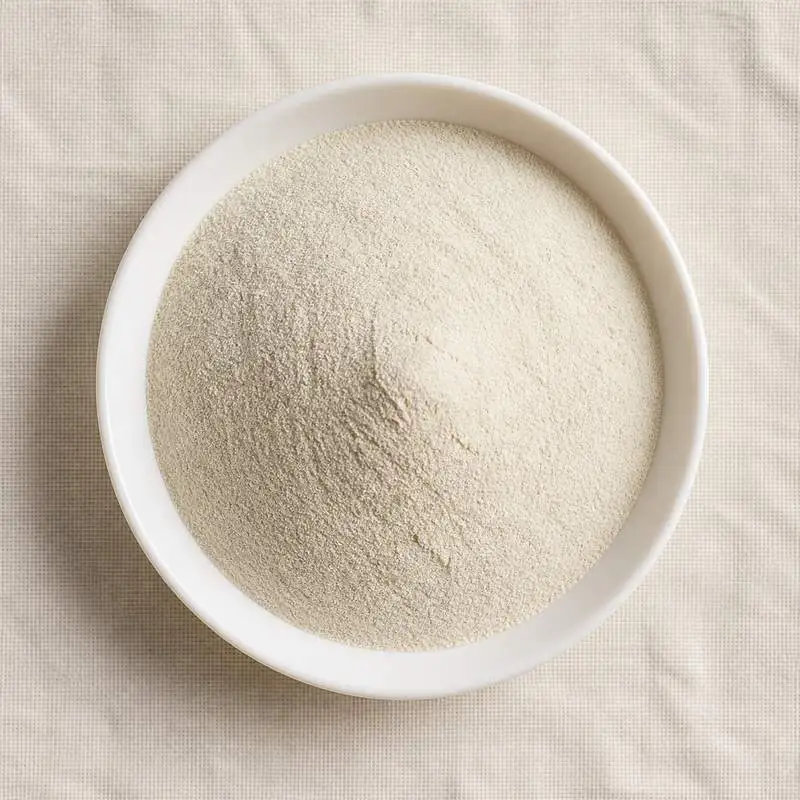
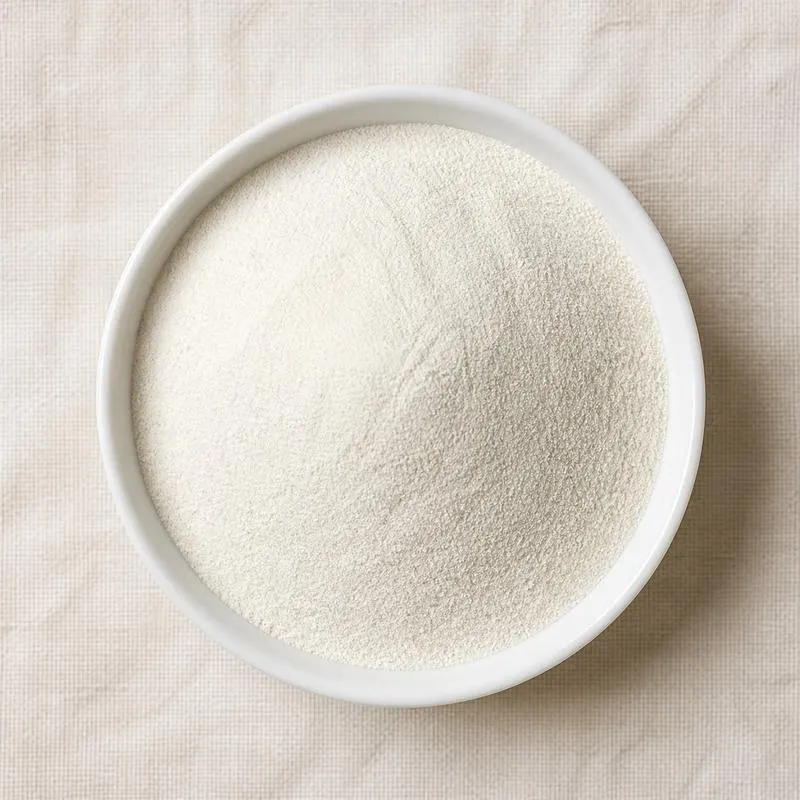
The product reaches the market as a fine tan to brown powder, as a granule, and as a paste or concentrated liquid. Powders are hygroscopic, disperse readily in hot water and lose their lighter sulphur notes on prolonged boiling, so they are added late in cooking.
We source bulk Edible Mushroom Essence Seasoning from top China manufacturers for our partners. The manufacturer is in Shandong. A smaller requirement can ship in a combined container with other ingredients.
Please send the grade you need, the volume and your destination port, and we will come back with a solution and a price.
or call +86-21-6858 0751
- Function
- Flavours and Aromas
Specifications
| Item | Specification |
|---|---|
| Appearance | Free flowing tan to light brown powder or granule |
| Odour and Flavour | Characteristic mushroom, savoury, matching retained reference |
| Moisture | Not more than 6.0 percent |
| Mushroom Solids | To declared level for the grade |
| Total Nitrogen | Not less than 1.5 percent |
| Sodium Chloride | To formula, within 1.0 percent absolute of target |
| Total Ash | To declared range for the grade |
| Particle Size | Minimum 95 percent through 40 mesh |
| pH, 10 percent solution | 5.0 to 7.0 |
| Solubility | Disperses fully in water at 80 °C |
| Cadmium | Within the applicable limit for the destination market |
| Lead | Not more than 1 mg/kg |
| Total Plate Count | Not more than 10,000 cfu/g |
| Yeast and Mould | Not more than 500 cfu/g |
| Salmonella | Absent in 25 g |
Common Markets Grades
The first distinction is species and the proportion of genuine mushroom material. Grades made largely from dried mushroom powder or mushroom extract carry the fullest character and the strongest label claim, while economy grades carry a small mushroom fraction on a salt and maltodextrin base with added glutamate, nucleotides and mushroom flavour. Mushroom content, total nitrogen and, where it is specified, guanylate content are the figures on which grades are compared.
The second is form and processing route. Straight dried and milled mushroom powder, hot water extract concentrated and dried, and enzymatic hydrolysate are distinct intermediates with different intensity and solubility, and a finished seasoning may use any or all of them. Granulated grades are agglomerated for free flow and dust control, and paste and liquid concentrates are used for wet systems. The third axis is the label, since clean label and organic versions omit added glutamate and nucleotides entirely and rely on the mushroom material, while conventional versions include them. Vegetarian and vegan status is inherent to the class and is one of its main commercial attractions, and particle size, colour and dispersion behaviour are the routine physical specifications.
Applications
- Vegetarian and vegan cooking, as the principal savoury seasoning in place of meat stock
- Soups, broths and congee, dosed at the end of cooking
- Stir fries, braises and clay pot dishes in foodservice and central kitchens
- Bouillon powders, stock cubes and all purpose seasoning blends
- Instant noodle and cup soup seasoning sachets
- Plant based meat analogues, supplying savoury depth and covering legume protein notes
- Sauces, gravies and marinades, both retail and industrial
- Snack seasoning, applied dry or through an oil slurry
- Reduced sodium formulations, restoring perceived strength as salt is cut
- Clean label reformulation, replacing declared flavour enhancers with a food ingredient
China Manufacturers of Edible Mushroom Essence Seasoning
Top Edible Mushroom Essence Seasoning manufacturers in China.
Company names and logos are the property of the manufacturers themselves. They are listed here because our own directory records them as producing this ingredient. A listing is not an endorsement by them, and we do not represent them or speak on their behalf.
Regulatory Status
In the United States dried mushrooms and mushroom extracts are foods rather than food additives, and the manufacturer is subject to the preventive controls rules. Where monosodium glutamate or the ribonucleotide salts are added they must be declared by their specific names and cannot be covered by a general term such as natural flavour. The FEMA GRAS programme covers any compounded flavour component, and 21 CFR 101.22 governs its labelling. The naming of the finished product is governed by the general food labelling rules, which prevent a seasoning containing little mushroom from being presented as though the mushroom were its substance.
In the European Union dried mushroom and mushroom extract are foods carrying no E number, while added enhancers are additives authorised under Regulation (EC) No 1333/2008, with monosodium glutamate as E621, disodium guanylate as E627 and disodium inosinate as E631, and anticaking agents likewise carry E numbers and use limits. Flavourings fall under Regulation (EC) No 1334/2008. Cultivated mushrooms are subject to pesticide maximum residue levels and to contaminant limits, and cadmium accumulation is a recognised issue in some cultivated and wild fungi, so raw material origin is controlled. Codex is relevant through its standard for dried edible fungi, the general standard for food additives and the code of hygienic practice for low moisture foods.
Manufacturing Process
Fresh mushrooms are received, trimmed, washed and sorted, then either dried directly or processed into an extract. For the dried route the caps and stems are sliced and dried in a hot air or belt drier in stages, and the temperature profile matters because a slow warm stage allows the mushroom's own enzymes to release nucleotides and to form the sulphur aroma compounds before they are inactivated, while a hot fast drying preserves colour but produces a flatter material. The dried mushroom is milled and screened to the ordered mesh.
For the extract route the dried or fresh material is macerated in hot water, sometimes with added enzymes to break down cell walls and to raise the yield of soluble nucleotides and amino acids, then pressed and the liquor screened and centrifuged. The extract is concentrated under vacuum, with volatile aroma stripped and recovered where the profile depends on it, and is either sold as a paste or spray dried onto a carrier. Blending follows in a ribbon or plough mixer, where mushroom powder, extract, salt, sugar, carriers and any added umami salts and flavours are combined for a validated cycle, with minor ingredients pre-blended into a premix so that they distribute evenly. Free flowing grades are agglomerated in a fluid bed and dried back, then screened, metal checked and packed in moisture barrier bags. Release covers moisture, salt, nitrogen, particle size, colour and microbiology, with a sensory panel against a retained reference.