Fermented Black Bean Flour
Fermented black bean flour is milled douchi, the salted fermented soybean of Chinese cooking, dried and ground to a powder so that it can be dosed into a dry blend or a sauce without the visible whole beans. The starting material is the whole soybean, black skinned or ordinary yellow, fermented with a mould culture and then salted and ripened, and it is not related to the black turtle bean of Latin American cooking despite the shared English name.
Fermentation is what creates the ingredient. Mould proteases and amylases break down the soybean protein and carbohydrate over weeks or months, releasing free amino acids, of which glutamate is the most important sensorially, together with peptides and sugars. Those in turn react during the warm ripening and the subsequent drying to give the dark colour and the roasted, slightly winey aroma of the finished bean. The aroma is carried by pyrazines, esters, phenolic compounds and short chain acids, and the taste is savoury, salty and faintly bitter with a fermented depth that neither soy sauce nor plain soybean can supply on its own.
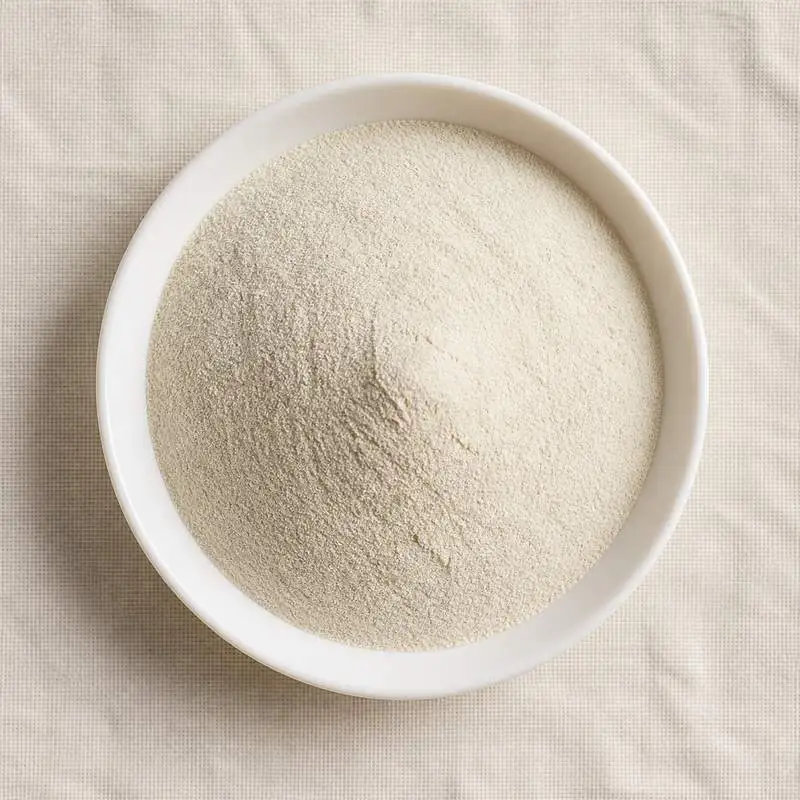
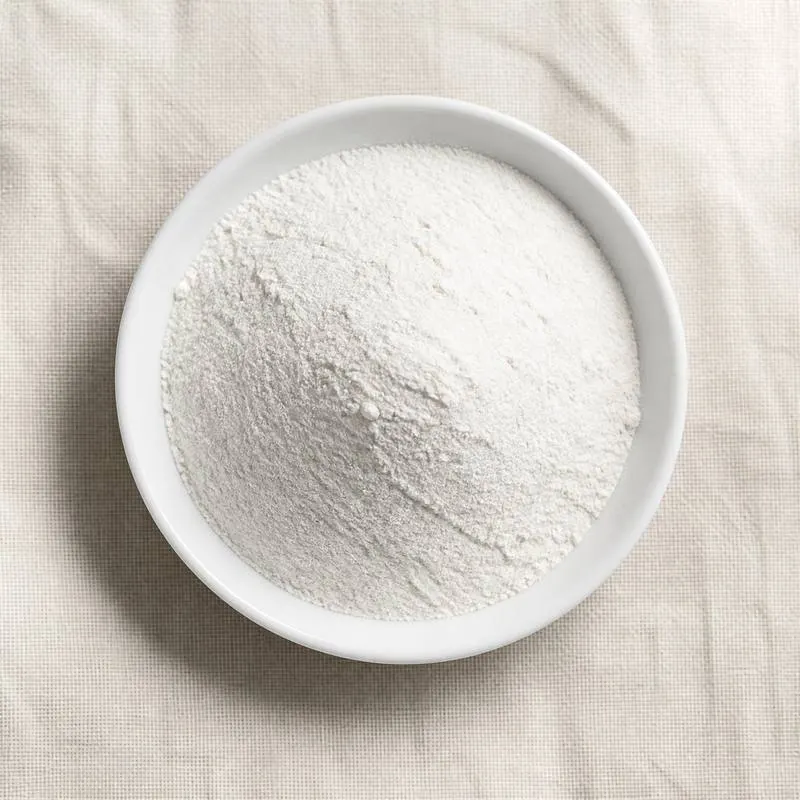
The powder is dark brown to near black, hygroscopic, and carries a high salt content that assists its own preservation. It disperses readily in hot water and in oil, and its aroma is volatile enough that it is added late in cooking rather than boiled at length.
We source bulk Fermented Black Bean Flour from top China manufacturers for our partners. The manufacturer is in Zhejiang. A smaller requirement can ship in a combined container with other ingredients.
Please send the grade you need, the volume and your destination port, and we will come back with a solution and a price.
or call +86-21-6858 0751
- Function
- Flavours and Aromas
Specifications
| Item | Specification |
|---|---|
| Appearance | Dark brown to near black free flowing powder, free from lumps |
| Odour and Flavour | Characteristic fermented soybean, savoury and salty, free from ammoniacal notes |
| Moisture | Not more than 8.0 percent |
| Sodium Chloride | To declared range for the grade |
| Protein | Not less than 25.0 percent on the dried basis |
| Amino Acid Nitrogen | Not less than 0.5 percent |
| Total Ash | To declared range for the grade |
| Particle Size | Minimum 90 percent through 60 mesh for fine grades |
| pH, 10 percent dispersion | 5.0 to 6.5 |
| Aflatoxin B1 | Within the applicable limit for the destination market |
| Lead | Not more than 1 mg/kg |
| Arsenic | Not more than 0.5 mg/kg |
| Total Plate Count | Not more than 50,000 cfu/g |
| Yeast and Mould | Not more than 500 cfu/g |
| E. coli | Absent in 1 g |
| Salmonella | Absent in 25 g |
Common Markets Grades
The first distinction is the fermentation route. Mould fermented douchi, made with an Aspergillus or Mucor culture, is the mainstream product and carries the roasted savoury character described above. Bacterial fermented types, made with Bacillus, are stickier, more strongly ammoniacal and are traded separately. The second is salt level, since dry salted and low salt versions differ substantially in taste and in shelf life, and salt is the figure buyers specify most closely.
The third is particle size and composition, with coarse ground material retaining visible fragments for products where the bean should be seen, and fine milled flour used where it must disappear into a blend. Powders are sold plain or blended with anticaking agent, and some grades carry maltodextrin or salt as a carrier to improve flow, which has to be declared. Beyond these, grades differ by whether the whole bean including the skin is milled or the skins are removed, by whether ginger, chilli or spices were added during ripening, and by organic and non-genetically-modified certification of the soybean, which is a routine requirement in this class.
Applications
- Black bean sauce and stir fry sauce manufacture, as the defining ingredient
- Steamed and braised dishes such as spare ribs and fish in black bean sauce
- Compound seasoning blends and marinades for meat and poultry
- Snack and instant noodle seasoning, applied dry or through an oil slurry
- Dumpling and bun fillings, where a powder disperses better than whole beans
- Chilli oils and fried seasoning pastes, dosed into the fried aromatic base
- Prepared soups, congee and hotpot bases
- Plant based analogues, supplying fermented savoury depth without animal material
- Bakery and savoury pastry fillings in Chinese style products
- Retail seasoning packs for home cooking of specific dishes
China Manufacturers of Fermented Black Bean Flour
Top Fermented Black Bean Flour manufacturers in China.
Company names and logos are the property of the manufacturers themselves. They are listed here because our own directory records them as producing this ingredient. A listing is not an endorsement by them, and we do not represent them or speak on their behalf.
Regulatory Status
In the United States fermented soybean products are foods rather than food additives, and the manufacturer is subject to the preventive controls rules. Soy is a major food allergen and must be declared. Because the process is a mould fermentation, control of the culture and of storage conditions to prevent growth of toxigenic moulds is a recognised hazard requiring preventive control, and imported lots may be screened against the agency's action levels for aflatoxin. Any anticaking agent or carrier added to the powder is a permitted food ingredient with its own conditions of use and must appear in the ingredient list.
In the European Union the product is a food carrying no E number, while anticaking agents such as silicon dioxide carry E numbers, and Regulation (EC) No 1333/2008 authorises them with maximum levels. Soybeans must be declared as an allergen under the food information regulation, and genetically modified soy is subject to the authorisation, traceability and labelling framework, which is why non-genetically-modified certification is routinely requested. Aflatoxin and other mycotoxin limits apply under the contaminants regulation, and biogenic amines, principally histamine and tyramine, are a recognised issue in long fermented protein rich foods and are controlled through fermentation hygiene. Codex is relevant through its regional standard for fermented soybean paste, its general principles of food hygiene and its general standard for contaminants.
Manufacturing Process
Soybeans are cleaned, soaked until fully hydrated and steamed or pressure cooked until soft, then cooled to the inoculation temperature and spread in trays or on a bed. A koji culture, generally Aspergillus oryzae, Aspergillus sojae or a Mucor species according to regional tradition, is applied and the beans are held in a warm humid room for several days while the mould grows through the mass and secretes the enzymes that will carry out the subsequent hydrolysis. Temperature and humidity are controlled closely at this stage, both to favour the intended organism and to exclude contaminating moulds.
The matured koji is washed lightly, mixed with salt and, in some processes, with ginger, spirit or spices, then packed into jars, tanks or vats and left to ripen for anything from several weeks to several months. During this period proteolysis continues under high salt conditions, the beans darken, and the characteristic aroma develops. The ripened beans are drained, dried in a hot air or belt drier to a low moisture, and then milled, most often in a hammer or pin mill run cool so that the residual fat does not smear and blind the screen. The milled material is screened to the ordered mesh, blended with any anticaking agent or carrier, passed through magnets and metal detection and packed in moisture barrier bags. Release covers moisture, salt, total and amino acid nitrogen, particle size, aflatoxin and microbiology.