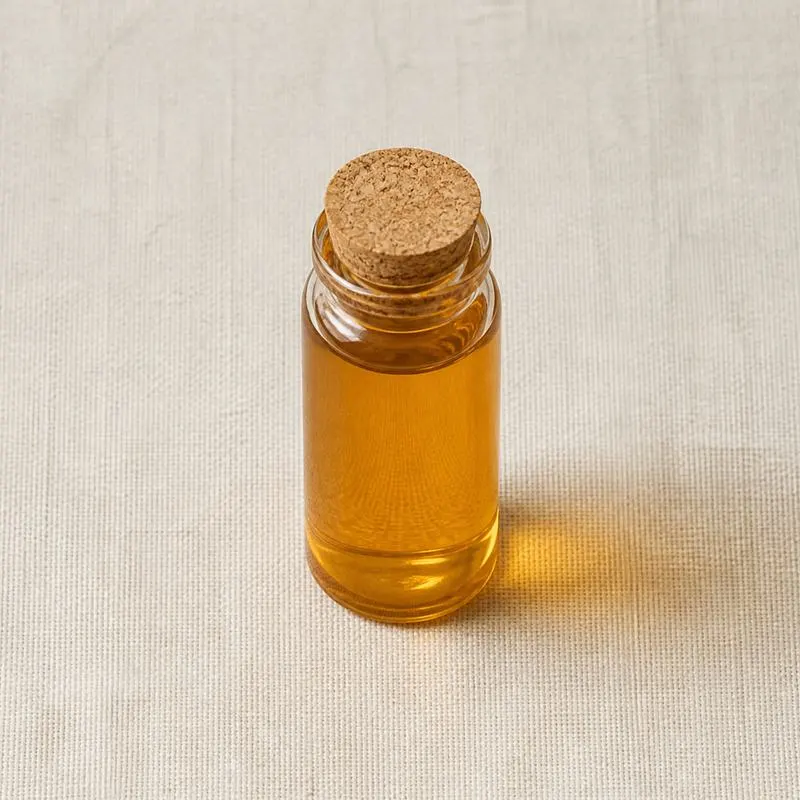
Soy Sauce
Soy sauce is the salty brown liquid seasoning produced by fermenting soybean and wheat with filamentous fungi, yeasts and lactic acid bacteria in brine, then pressing and pasteurising the mash. It is one of the oldest industrially fermented ingredients still in wide use and remains the principal source of savoury seasoning across East and Southeast Asian food manufacture.
Its function rests on three products of the fermentation. Fungal proteases break soy protein down to peptides and free amino acids, glutamate above all, which delivers umami. Amylases convert wheat starch to sugars that yeasts ferment to ethanol and that react with amino acids during ageing and pasteurisation to build colour and aroma. Lactic acid bacteria drop the pH and produce the organic acid backbone, while yeast metabolites such as 4-hydroxy-2-ethyl-5-methyl-3-furanone contribute the characteristic sweet caramel note.
The finished liquid is fully water miscible, holds roughly sixteen to eighteen percent salt, and sits at pH 4.6 to 5.0, which together with the salt makes it microbiologically stable at ambient temperature. The colour darkens on storage and on heating.
We source bulk Soy Sauce from top China manufacturers for our partners, working with several of them. The manufacturers are mostly in Shanghai, Hebei and Henan. A smaller requirement can ship in a combined container with other ingredients.
Please send the grade you need, the volume and your destination port, and we will come back with a solution and a price.
or call +86-21-6858 0751
- Function
- Flavours and Aromas
Specifications
| Item | Specification |
|---|---|
| Appearance | Clear reddish brown to dark brown liquid, free from sediment |
| Odour and Flavour | Characteristic fermented soy aroma, salty umami taste |
| Amino Acid Nitrogen | Not less than 0.70 g per 100 ml for a first grade brewed sauce |
| Total Nitrogen | Not less than 1.30 g per 100 ml |
| Sodium Chloride | 15.0 to 18.0 g per 100 ml |
| Soluble Solids Without Salt | Not less than 10.0 g per 100 ml |
| pH | 4.6 to 5.0 |
| 3-MCPD | Within the applicable regulatory limit for the destination market |
| Lead | Not more than 0.5 mg/kg |
| Arsenic | Not more than 0.5 mg/kg |
| Total Plate Count | Not more than 5,000 cfu/ml |
| Yeast and Mould | Not more than 50 cfu/ml |
| E. coli | Absent in 1 ml |
| Salmonella | Absent in 25 ml |
Common Markets Grades
The primary commercial split is by production route. Brewed soy sauce is fermented throughout and is the reference product. Blended grades cut brewed sauce with acid-hydrolysed vegetable protein liquor to lower cost and raise nitrogen quickly. Chemically hydrolysed sauce, made by acid digestion of defatted soy meal without fermentation, is a distinct and cheaper article that has to be labelled as such in most markets.
Within brewed sauce, grades are set by amino acid nitrogen content, the standard index of fermentation depth, with the higher tiers priced accordingly and the lowest tiers used as industrial seasoning. Light soy sauce, the everyday seasoning type, is thinner, saltier and lighter in colour. Dark soy sauce is aged longer and usually carries added caramel and sugar, giving a viscous, less salty product used for colour. Tamari is made with little or no wheat and is made to gluten-free specifications, while reduced-salt grades are produced by membrane treatment or electrodialysis after fermentation. Powdered soy sauce is spray dried onto maltodextrin for dry blends.
Applications
- Table and cooking condiment in retail bottles, the largest single outlet
- Marinades and injection brines for meat and poultry, where the salt drives yield and the amino acids drive flavour
- Stir-fry, braising and teriyaki sauce manufacture, where dark grades also supply colour
- Instant noodle seasoning sachets and soup bases
- Retorted and frozen ready meals, where the flavour survives thermal processing
- Snack and rice cracker seasoning, applied as liquid before drying or as spray-dried powder
- Dipping sauces and dressings, including ponzu and vinegar based blends
- Plant-based meat analogues, adding savoury depth and browning during cooking
- Bakery and savoury glazes, where residual sugars and amino acids promote surface browning
- Reduced-sodium seasoning systems, where the umami load allows salt to be cut elsewhere
Brands Using Soy Sauce
Widely-distributed consumer products that list Soy Sauce on the ingredient label.
- KikkomanKikkoman Soy Sauce (Non-GMO) ↗Brewed soy sauce whose ingredient line reads water, soybeans, wheat, salt, fermented and aged for months.Label verified 2026-08-31
- San-JTamari Soy Sauce Gluten Free ↗Wheat free tamari soy sauce listing water, soybeans, salt and alcohol as its ingredients.Label verified 2026-08-31
Brand names, product names and logos are the property of their owners. They appear here as published evidence that the ingredient is used, taken from the brand's own label or website. Their appearance is not an endorsement, and it does not mean the brand buys from us or from any manufacturer listed on this site.
China Manufacturers of Soy Sauce
Top Soy Sauce manufacturers in China.
 Aipu Food Industry Co., Ltd.5 ingredients in the directory
 Hebei Zhongkai Food Industry Co., Ltd.4 ingredients in the directory
 Henan Weichuang Bio-tech Co., Ltd.12 ingredients in the directory
 Qingdao Ruikelai Catering Ingredients Co., Ltd.6 ingredients in the directory
Company names and logos are the property of the manufacturers themselves. They are listed here because our own directory records them as producing this ingredient. A listing is not an endorsement by them, and we do not represent them or speak on their behalf.
Regulatory Status
In the United States soy sauce is a food rather than an additive, and its ingredients are ordinary food ingredients. Standard labelling rules apply, including declaration of soy and wheat as major allergens, and a product that is not fermented cannot be labelled simply as soy sauce without qualifying its production route. Caramel colour added to dark grades is a permitted colour additive and is declared as such.
In the European Union soy sauce is likewise a food, so it carries no E number, although added caramel colour, preservatives such as sorbate or benzoate and any sweetener each fall under the additive regulations and must be declared. The dominant compliance issue for this category is chloropropanol contamination, since acid-hydrolysed vegetable protein used in blended and chemical grades generates 3-MCPD, and the EU sets maximum levels for 3-MCPD in hydrolysed vegetable protein and soy sauce that are enforced at import. Soy and wheat allergen declaration is mandatory. Codex addresses soy sauce through its general standard for contaminants and its general principles of food hygiene, and JECFA has evaluated 3-MCPD as a contaminant.
Manufacturing Process
Whole soybeans or defatted soy meal are soaked and steam cooked under pressure to denature the protein, and wheat is roasted and coarsely cracked. The two are mixed, cooled and inoculated with a starter culture of Aspergillus oryzae or Aspergillus sojae, then held for two to three days in a temperature and humidity controlled koji room, where the mould grows through the substrate and secretes the protease and amylase enzymes that will drive the whole process.
The mature koji is transferred to fermentation tanks and mixed with brine at around twenty-two percent salt to form the moromi mash. This ferments for three to six months, and longer for the higher nitrogen grades, with periodic aeration and stirring. The salt suppresses spoilage organisms while salt-tolerant lactic acid bacteria and Zygosaccharomyces rouxii carry out the acid and alcohol fermentations. The ripened mash is wrapped in cloth and pressed hydraulically to separate raw sauce from the solid cake, which is sold as animal feed. Raw sauce is settled to remove oil and sediment, pasteurised at around 75 to 80 degrees Celsius, which deepens the colour, develops aroma and stops enzyme activity, then clarified by filtration or filter aid and bottled.