Freeze-dried Coffee
Freeze dried coffee is instant coffee produced by freezing a concentrated coffee extract and removing the ice by sublimation under vacuum, leaving a dry, glassy granule that dissolves completely in hot water.
The soluble fraction is the same as brewed coffee: chlorogenic acids and their degradation products, caffeine, trigonelline, carbohydrates, organic acids and the melanoidin polymers formed during roasting. What distinguishes freeze dried material from spray dried instant coffee is the drying temperature. Because the extract never passes through a hot air stream, the volatile aroma compounds that carry roasted coffee character survive far better, and the cup is closer in flavour to brewed coffee.
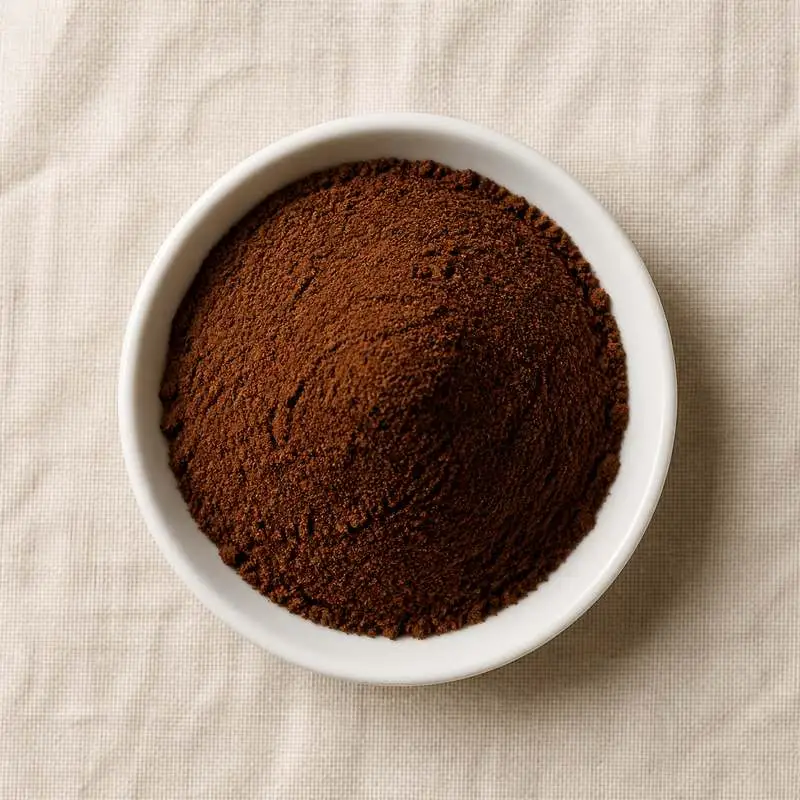
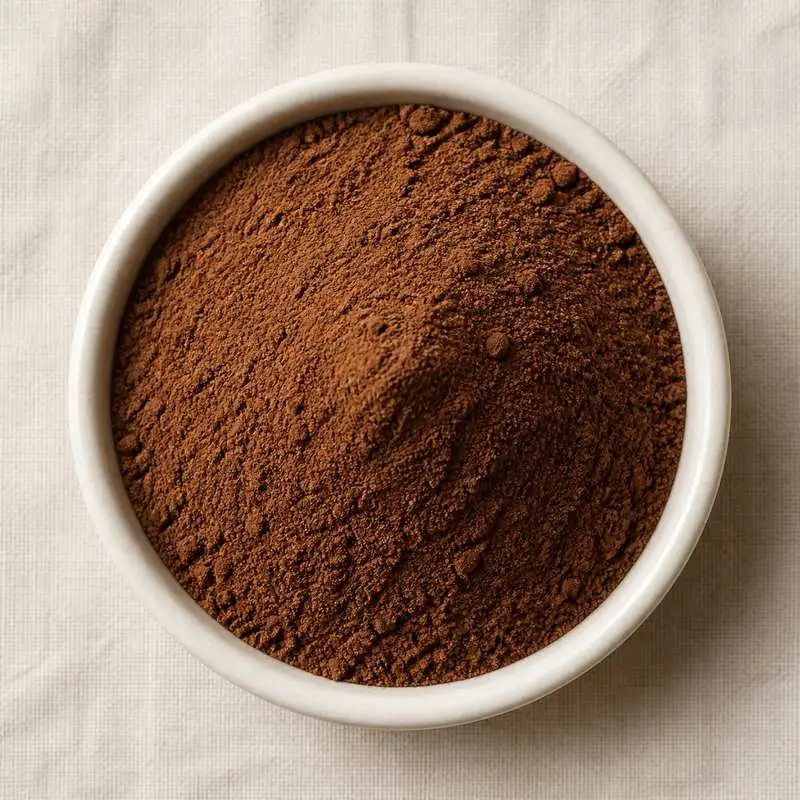
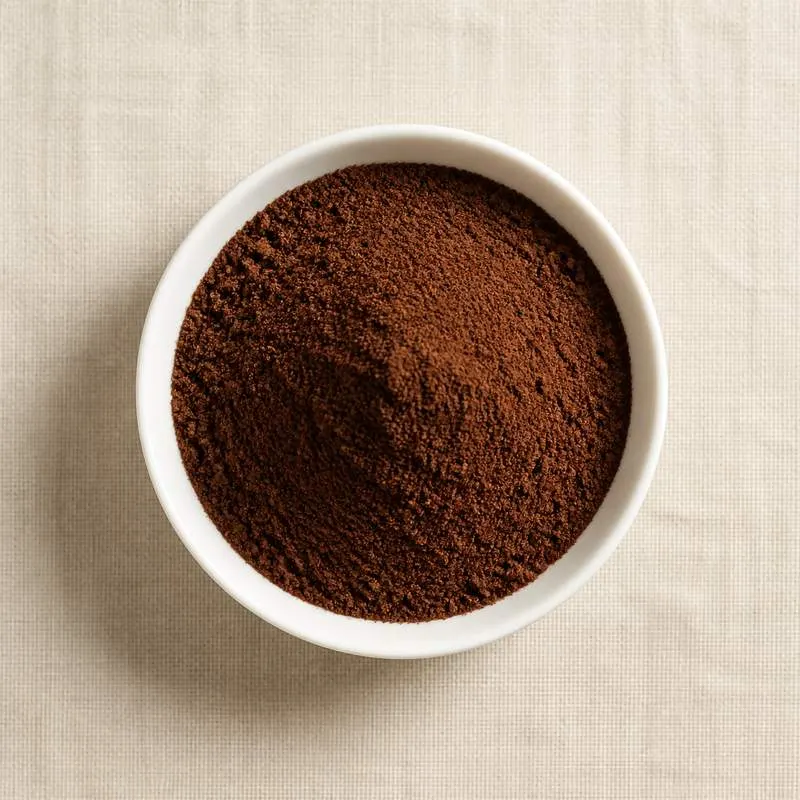
The physical form is a hard, irregular granule with a porous internal structure and a colour ranging from light tan to almost black according to roast and extract solids. Granule density and particle size set the dissolution rate and are specified as carefully as flavour. Moisture is held below about 4 percent, since the amorphous coffee solids are hygroscopic and will collapse, cake and lose flow if they take up water. Storage therefore relies on moisture barrier packaging and, for premium lots, on nitrogen flushing to limit aroma loss and staling.
We source bulk Freeze-dried Coffee from top China manufacturers for our partners. The manufacturers are in Guangdong and Jiangsu. A smaller requirement can ship in a combined container with other ingredients.
Please send the grade you need, the volume and your destination port, and we will come back with a solution and a price.
or call +86-21-6858 0751
- Function
- Beverage ingredient
Specifications
| Item | Specification |
|---|---|
| Appearance | Hard porous granules, free flowing, free from foreign matter |
| Colour | Light to dark brown according to roast grade |
| Flavour and odour | Clean roasted coffee, no burnt, musty or rubbery note |
| Moisture | 4.0 percent maximum |
| Caffeine on dry basis | 2.5 to 4.5 percent, regular grade |
| pH, 2 percent solution | 4.6 to 5.4 |
| Total ash | 7.0 to 12.0 percent |
| Bulk density | 0.20 to 0.30 g/mL |
| Particle size | 90 percent between 0.5 and 2.5 mm, granule grade |
| Solubility in hot water | Complete within 30 seconds, no residue |
| Lead | 0.1 mg/kg maximum |
| Total plate count | 1,000 cfu/g maximum |
| Yeast and mould | 50 cfu/g maximum |
| Salmonella | Negative in 25 g |
Common Markets Grades
Grades are set by botanical composition, roast and granule specification. Pure arabica, pure robusta and blended grades trade at different levels, with robusta giving higher yield and more caffeine and arabica giving the acidity and aroma. Roast degree is specified as light, medium or dark, and dark roasted material is used where the finished product is a milk based mix that has to carry through the dairy.
Granulation is offered as standard granules, fine granules and powder, with the coarser grades favoured for jar packed retail products because they look like a premium instant and the finer grades used in sachets and vending mixes where fast dissolution matters. Agglomerated versions are sold for improved wetting. Decaffeinated freeze dried coffee is a separate grade, as is organic certified material, and single origin lots are traded where the finished pack carries an origin claim.
Applications
- Retail instant coffee sold in jars and sachets, reconstituted directly in hot water
- Two in one and three in one instant coffee mixes with creamer and sugar
- Vending and foodservice beverage systems requiring rapid and complete dissolution
- Instant cappuccino, latte and mocha mixes, where dark roasted grades hold flavour through the dairy
- Bakery and confectionery, dosing coffee flavour and colour without adding water
- Ice cream and frozen desserts, where the dry form avoids diluting the mix
- Coffee flavoured dairy and plant based drinks made from powder
- Nutrition bars, protein powders and meal replacement mixes
- Ready to mix energy products using coffee as the caffeine source
- Tiramisu, mousse and dessert bases where a strong coffee note is required
Brands Using Freeze-dried Coffee
Widely-distributed consumer products that list Freeze-dried Coffee on the ingredient label.
Brand names, product names and logos are the property of their owners. They appear here as published evidence that the ingredient is used, taken from the brand's own label or website. Their appearance is not an endorsement, and it does not mean the brand buys from us or from any manufacturer listed on this site.
China Manufacturers of Freeze-dried Coffee
Top Freeze-dried Coffee manufacturers in China.
 Guangzhou Antai Coffee Food Co., Ltd.4 ingredients in the directory
 Jiangsu Leiva Biotech Co., Ltd.10 ingredients in the directory
Company names and logos are the property of the manufacturers themselves. They are listed here because our own directory records them as producing this ingredient. A listing is not an endorsement by them, and we do not represent them or speak on their behalf.
Regulatory Status
Instant coffee is a food rather than an additive and carries no E number. In the European Union it falls under Directive 1999/4/EC on coffee extracts and chicory extracts, which reserves the names instant coffee, soluble coffee and coffee extract, sets the minimum coffee based dry matter content, and restricts what may be added to the product. Acrylamide formed during roasting is covered by the benchmark levels and mitigation measures of Regulation 2017/2158, which sets a separate and higher benchmark for instant coffee than for roast and ground. Decaffeinated products must meet the caffeine limits attached to that description, with residual solvent limits where dichloromethane or ethyl acetate decaffeination has been used.
In the United States the Federal Food, Drug, and Cosmetic Act regulates instant coffee as a food, and manufacture follows the preventive controls rules at 21 CFR Part 117, with no standard of identity applying. Ochratoxin A limits, applied in the European Union and monitored elsewhere, are controlled at the green bean stage. Codex maintains a standard for instant coffee covering moisture, caffeine and compositional authenticity, and buyers routinely apply the authenticity tests derived from it, which detect added carbohydrate.
Manufacturing Process
Green beans are blended and roasted, then ground and extracted in a battery of percolation columns run countercurrently at temperatures from around 100 to 175 degrees Celsius under pressure, so that fresh water meets the most spent grounds and the strongest liquor is drawn from the freshest charge. The extract is separated from the spent grounds, clarified on a centrifuge and filtered, then concentrated to roughly 35 to 50 percent solids by freeze concentration or vacuum evaporation, with the aroma volatiles stripped and held for addition back later.
The concentrate is chilled and frozen on a belt or drum to a slab, and the frozen slab is broken and sieved to set the granule size distribution of the finished product, which is why granulation is controlled at this stage rather than after drying. The granules are loaded into trays and dried in a vacuum chamber where the pressure is held below the triple point of water, so that ice sublimes directly to vapour and is captured on a cold condenser. Gentle radiant heat supplies the sublimation energy without melting the frozen matrix. Dried granules are sieved, aroma is added back where the process uses it, and the product is packed under nitrogen into moisture barrier containers.