Functional Monascus
Functional Monascus is a dried solid state fermentation product of the mould Monascus purpureus grown on rice, standardised for the secondary metabolites it accumulates rather than for its pigment content alone.
The fermentation produces two distinct families of compounds. The azaphilone pigments, principally monascorubrin, rubropunctatin and their amine adducts, give the red to purple colour of the substrate, while the polyketide monacolins, of which monacolin K is the marker compound, accumulate in strains selected for that trait. Some grades are also standardised on gamma aminobutyric acid, another fermentation metabolite of the genus. The mycotoxin citrinin is a possible co-metabolite of the same pathway, so strain choice and fermentation control are directed as much at suppressing it as at raising the target compound.
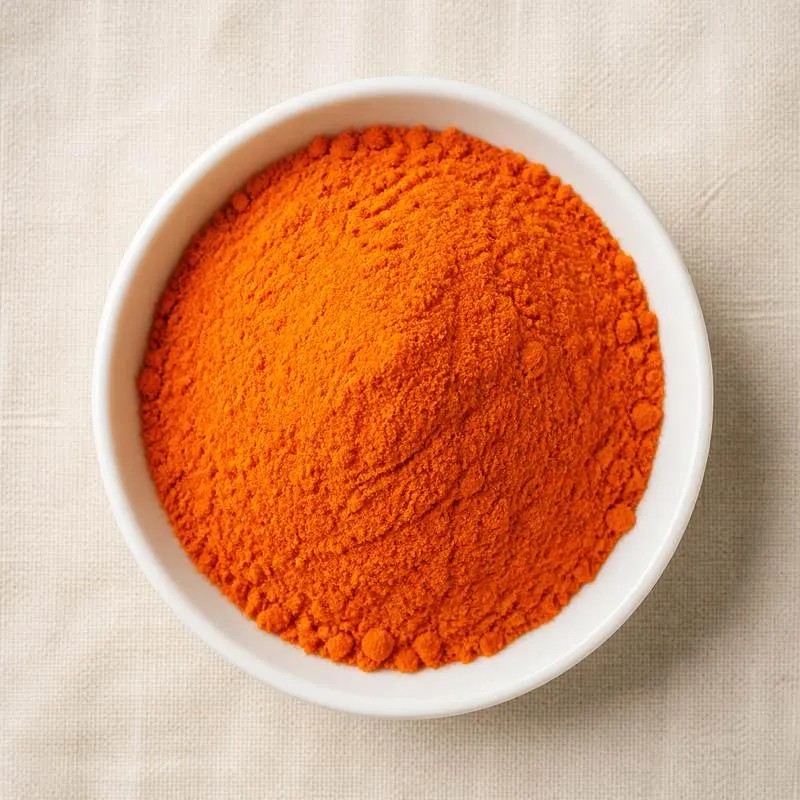
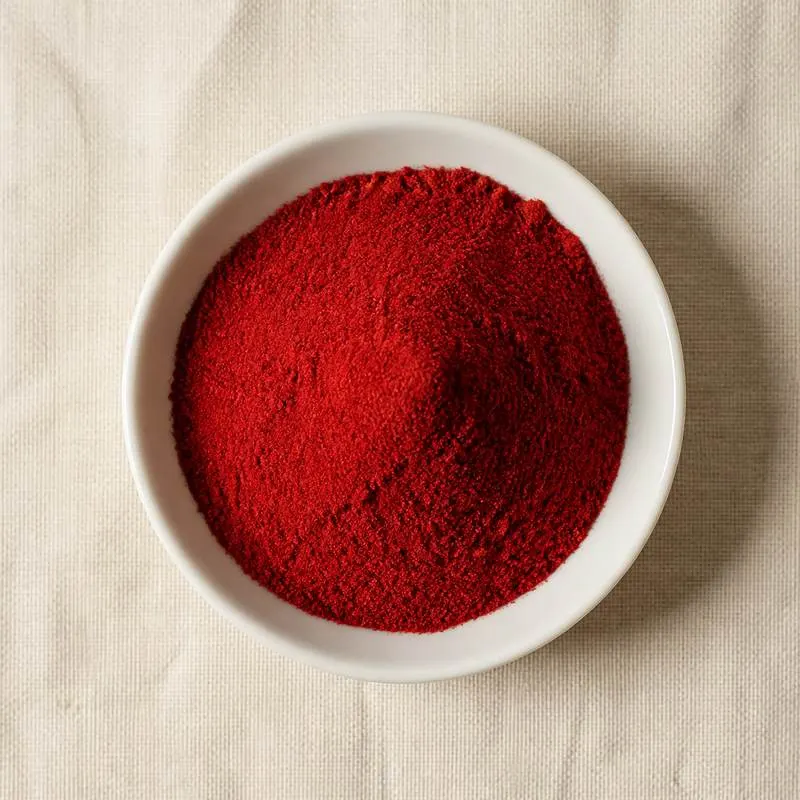
The material comes as a red brown to dark purple powder milled from the dried fermented rice, or as a concentrated ethanol extract adsorbed onto a carrier. The whole rice powder disperses rather than dissolves in water, and the monacolin fraction is unstable to prolonged heat and to strongly alkaline conditions, so it is added late in a process and formulated into dry dose forms rather than into cooked systems.
We source bulk Functional Monascus from top China manufacturers for our partners. The manufacturer is in Guangdong. A smaller requirement can ship in a combined container with other ingredients.
Please send the grade you need, the volume and your destination port, and we will come back with a solution and a price.
or call +86-21-6858 0751
- Function
- Colorant
Specifications
| Item | Specification |
|---|---|
| Appearance | Red brown to dark purple free flowing powder |
| Odour | Characteristic fermented rice odour, free from mustiness |
| Monacolin K | ≥ 1.0% by HPLC, per declared grade |
| Citrinin | ≤ 0.2 mg/kg |
| Identification | HPLC retention and UV spectrum correspond to reference standard |
| Loss on Drying | ≤ 8.0% |
| Total Ash | ≤ 5.0% |
| Particle Size | ≥ 95% through 80 mesh |
| Lead | ≤ 1.0 mg/kg |
| Arsenic | ≤ 1.0 mg/kg |
| Total Plate Count | ≤ 10,000 cfu/g |
| Yeast and Mould | ≤ 100 cfu/g |
| E. coli | Absent in 1 g |
| Salmonella | Absent in 25 g |
Common Markets Grades
Grading is by declared marker content. Supplement grades are standardised on monacolin K at levels running from about 0.2 percent up to 3 percent, with the higher assays produced by ethanol extraction of the fermented rice and readsorption onto a rice or maltodextrin carrier rather than by fermentation alone. A separate colour oriented grade is standardised on colour value in the red or yellow band and carries no monacolin declaration.
Every grade is additionally specified on citrinin, which is the row a buyer checks first, with limits commonly set at or below 0.2 mg per kg and screened batch by batch. Particle size is offered as a coarse milled powder for capsule filling and as an 80 to 120 mesh fine powder for tabletting and for beverage premixes.
Applications
- Capsule and tablet food supplements, where the standardised monacolin fraction is the declared active constituent
- Powder and sachet supplement blends, where the fermented rice powder is combined with plant extracts and carriers
- Traditional East Asian fermented foods, including red rice wine and fermented bean curd, where the same organism supplies both colour and flavour
- Cured and marinated meat products in markets that permit Monascus colour, where it gives a red hue without nitrite
- Fermented soy sauces and vinegars, where the culture contributes colour and a distinct fermented note
- Noodles, pastry and steamed bun doughs coloured with the milled rice powder
- Functional beverage premixes in markets where the material is a permitted food ingredient
- Animal feed premixes, where the pigment fraction is used for pigmentation rather than for the monacolins
Brands Using Functional Monascus
Widely-distributed consumer products that list Functional Monascus on the ingredient label.
- Nature's BountyRed Yeast Rice 600 mg, 250 Capsules ↗The supplement facts panel lists 1,200 mg of red yeast rice powder per serving and identifies it as Monascus purpureus.Label verified 2026-08-31
- 21st CenturyRed Yeast Rice 600 mg ↗A vegetarian capsule whose panel names red yeast rice powder, Monascus purpureus, at 1,200 mg per two capsule serving.Label verified 2026-08-31
Brand names, product names and logos are the property of their owners. They appear here as published evidence that the ingredient is used, taken from the brand's own label or website. Their appearance is not an endorsement, and it does not mean the brand buys from us or from any manufacturer listed on this site.
China Manufacturers of Functional Monascus
Top Functional Monascus manufacturers in China.
Company names and logos are the property of the manufacturers themselves. They are listed here because our own directory records them as producing this ingredient. A listing is not an endorsement by them, and we do not represent them or speak on their behalf.
Regulatory Status
Status differs sharply between markets and between the two uses of the material. In the United States the Food and Drug Administration has taken the position that a red yeast rice product containing more than trace lovastatin, which is chemically the same molecule as monacolin K, is an unapproved drug rather than a dietary supplement, so supplement grades sold there are formulated on that basis. Monascus pigments are not listed colour additives in the United States.
In the European Union Monascus pigments are not authorised food colours, and the use of monacolins from red yeast rice in food supplements is restricted by a specific Commission measure that sets a maximum monacolin content per daily portion and requires warning statements. Citrinin in supplements containing red yeast rice is separately capped under the contaminants framework. Codex has not established a general standard for the material, and use of Monascus as a colour remains confined to national lists in parts of East and Southeast Asia.
Manufacturing Process
Long grain rice is washed, soaked to a controlled moisture, and steamed to gelatinise the starch and sterilise the substrate. The cooled grain is inoculated with a selected Monascus purpureus strain and spread in trays or in a rotating solid state fermenter. Fermentation runs for roughly ten to fourteen days at around 30 degrees Celsius with periodic turning and humidity control, during which the mycelium colonises the grain and the pigment and monacolin pathways run in parallel. Strain selection, substrate moisture and oxygen supply are the levers used to push the metabolism toward monacolins and away from citrinin.
The fermented rice is dried to below 8 percent moisture, milled, and screened. Colour grades stop at this point. Higher assay functional grades continue into ethanol extraction of the milled rice, concentration of the extract under vacuum, and readsorption of the concentrate onto a carrier before final drying and blending. Every lot is screened for citrinin and for monacolin K by liquid chromatography before it is standardised to the declared assay.