Green Coffee
Green Coffee refers to the unroasted, dried seeds of Coffea species, the raw commodity traded on international markets before roasting transforms them into the brown beans used for brewing.
Two species dominate global trade: Coffea arabica, which supplies about 60 percent of volume and is prized for cup quality, and Coffea canephora (robusta), which supplies the remainder and is valued for body, caffeine content, and price.
We source bulk Green Coffee from top China manufacturers for our partners. The manufacturer is in Shandong. A smaller requirement can ship in a combined container with other ingredients.
Please send the grade you need, the volume and your destination port, and we will come back with a solution and a price.
or call +86-21-6858 0751
- Packaging
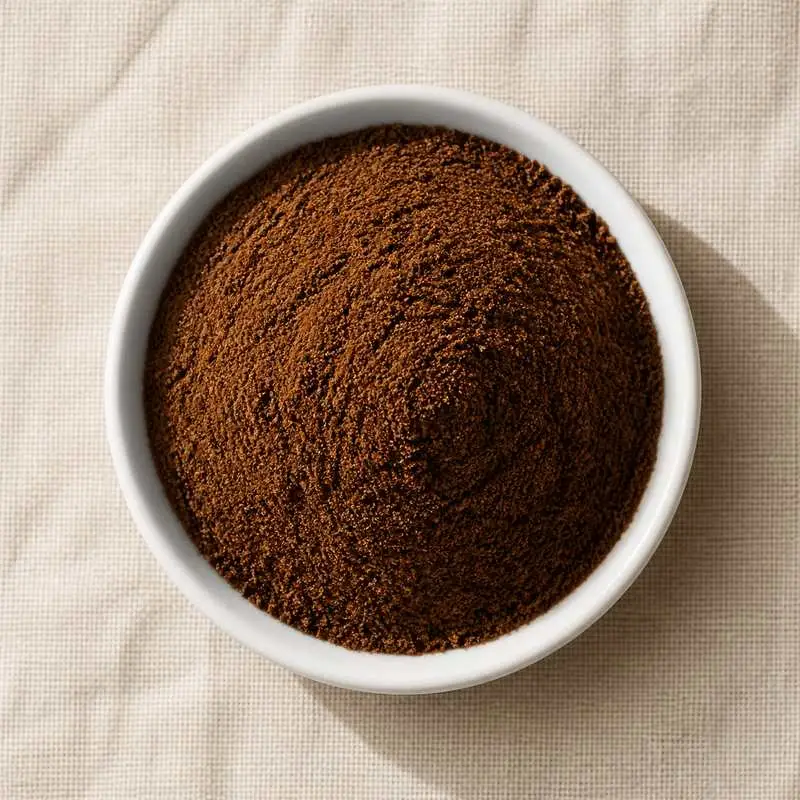
- 25 kg kraft paper bag with PE inner liner
- ISO 9001
- HACCP
- Halal
- Kosher
Specifications
| Item | Specification |
|---|---|
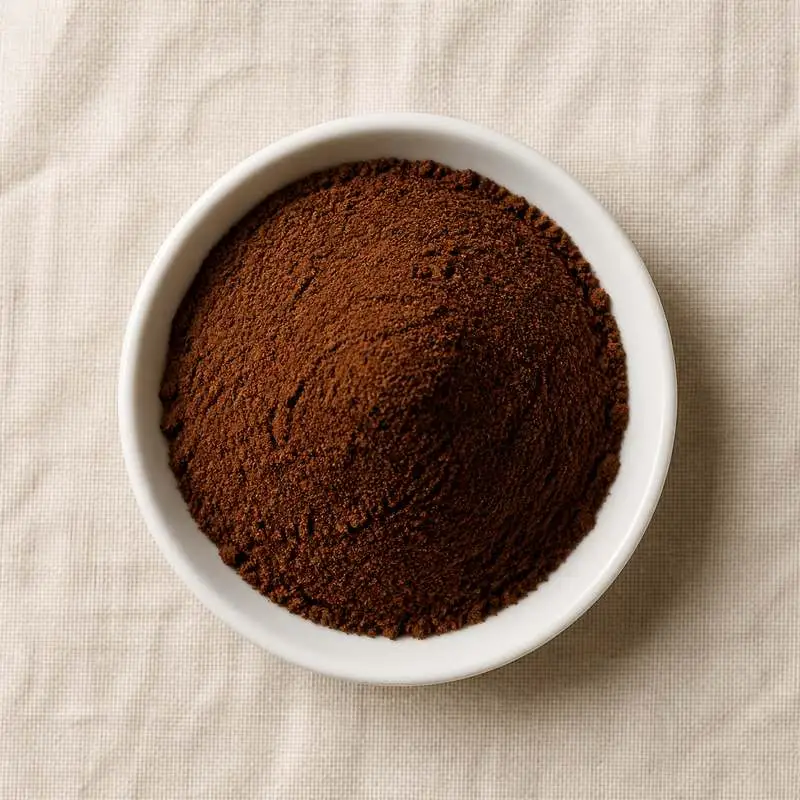
| Appearance | Light green-brown fine powder |
| Chlorogenic Acids (HPLC) | ≥ 45% (extract) / 5-10% (whole) |
| Caffeine | ≤ 10% |
| Moisture | ≤ 5.0% |
| Ash | ≤ 6.0% |
| Particle Size (80 mesh) | ≥ 95% |
| Heavy Metals (as Pb) | ≤ 2 mg/kg |
| Total Plate Count | ≤ 10,000 cfu/g |
Common Markets Grades
Green coffee is graded by origin, processing method, screen size, and defect count.
Arabica grades follow producer-country conventions. Brazilian Santos uses defect counting (Type 2 to Type 4/5). Colombian Supremo and Excelso are screen-size grades. Kenyan AA, AB, and PB sort by bean size. Ethiopian washed and natural lots are graded G1 through G5 by SCA-style cupping and defect count.
Robusta grades use ICO codes from Grade 1 (premium) through Grade 4, with bean size, defect count, and moisture as the primary criteria.
Processing method changes the chemistry of the green bean. Washed (wet-processed) lots show bright acidity and cleaner cup. Natural (dry-processed) lots carry fruit-forward and fermented notes. Honey or pulped-natural lots sit between the two.
Specialty grades scoring 80 points or higher on the Specialty Coffee Association cupping protocol move in a separate market tier with traceability to farm, varietal, and harvest date.
Applications
- Commercial coffee roasting for retail ground and whole-bean coffee
- Specialty third-wave coffee roasting at small to mid-scale roasteries
- Instant coffee manufacture as the upstream input to extraction and drying
- Decaffeinated coffee production using water, supercritical CO2, or ethyl acetate processes
- Coffee extract and coffee concentrate manufacture for beverage and dairy applications
- Ready-to-drink coffee, cold brew, and bottled coffee beverage production
- Coffee flavouring for ice cream, chocolate, bakery, and dairy products
- Cosmetic green coffee oil and chlorogenic acid extraction for skincare
- Dietary supplement raw material for chlorogenic acid weight-management products
- Coffee silverskin and parchment for compost, biomass, or specialty fibre applications
Brands Using Green Coffee
Widely-distributed consumer products that list Green Coffee on the ingredient label.
- Source NaturalsGreen Coffee Extract ↗Product page for Green Coffee Extract supplement; standardised green coffee bean extract.Label verified 2026-05-24
- Source NaturalsEnergizing Green Coffee Extract ↗Product page for Energizing Green Coffee Extract supplement.Label verified 2026-05-24
- SwansonSvetol Green Coffee Bean Extract 200 mg ↗Product page lists 'Green Coffee Bean Extract (Svetol)' as the active ingredient.Label verified 2026-05-24
- BulkSupplementsGreen Coffee Bean Extract Powder ↗The product page lists green coffee bean extract powder as the sole ingredient.Label verified 2026-05-24
Brand names, product names and logos are the property of their owners. They appear here as published evidence that the ingredient is used, taken from the brand's own label or website. Their appearance is not an endorsement, and it does not mean the brand buys from us or from any manufacturer listed on this site.
China Manufacturers of Green Coffee
Top Green Coffee manufacturers in China.
Company names and logos are the property of the manufacturers themselves. They are listed here because our own directory records them as producing this ingredient. A listing is not an endorsement by them, and we do not represent them or speak on their behalf.
How We Help Source Green Coffee
Direct Factory Sourcing
We run the whole process: selecting the manufacturer from the top Chinese food ingredient producers, negotiating the price, verifying quality, and coordinating the logistics. You deal with us instead of with several factories at once.
Original Packaging and Documents from the Manufacturer
The manufacturer sends your Green Coffee out of its own factory in the original packing, through to your destination port. The COA, COO, MSDS, TDS and any certifications reach you from the manufacturer as well.
Free Samples and Lead Time
We send 100 to 500 g free for your own laboratory to test and you cover only the courier, usually within 2 to 3 working days. ETD is usually within 7 to 15 days once the order is confirmed, and we check that date against the factory's own manufacturing schedule before we give it to you.
Combined Shipment
We can load Green Coffee together with other ingredients such as Instant Coffee, Instant Tea and Tea Concentrate into one 20' FCL. If your quantity is small, we can also ship LCL.
Regulatory Status
Green coffee moves as an unprocessed agricultural commodity.
The International Coffee Organisation (ICO) operates the reference price and statistical framework. The Specialty Coffee Association maintains the cupping protocol and green-grading standards used by the premium segment.
EU Regulation 396/2005 sets pesticide MRLs. Mycotoxin limits, especially ochratoxin A under EU Regulation 2023/915, apply to green coffee at 5 micrograms per kilogram for roasted coffee and 10 micrograms per kilogram for soluble coffee, with monitoring beginning at the green stage.
The EU Deforestation Regulation (EUDR) applies to coffee from December 2025 and requires geolocation data for the producing plot.
U.S. import requires customs entry under HTS 0901.11 (not decaffeinated) or 0901.12 (decaffeinated). Phytosanitary certificates are mandatory in most importing markets. Organic, Fairtrade, Rainforest Alliance, UTZ, and Bird Friendly certifications are widely available.
Manufacturing Process
Coffee cultivation runs in the tropical belt between 25 degrees north and 25 degrees south. Arabica grows best at 1,000 to 2,000 meters elevation in cool, well-drained mountain soils. Robusta tolerates lower elevation and higher temperatures.
Cherries ripen 7 to 9 months after flowering and are harvested by selective hand-picking in specialty origins or by strip-picking and mechanical harvesters in volume estates.
The processing step removes the skin, pulp, mucilage, and parchment to expose the green bean. Washed processing pulps the cherry within 24 hours, ferments the mucilage off in tanks for 12 to 36 hours, then washes and patio or mechanical dries to 11 percent moisture.
Natural processing dries the whole cherry on raised beds for 15 to 30 days, then hulls off the dried fruit in one mechanical step. Honey processing pulps but skips fermentation, drying with mucilage still on the bean.
Dried parchment coffee is rested in warehouses for one to three months, then milled to remove parchment and silverskin, sorted by size and density, hand-sorted for defects, and bagged in 60 to 70 kilogram jute sacks for export.