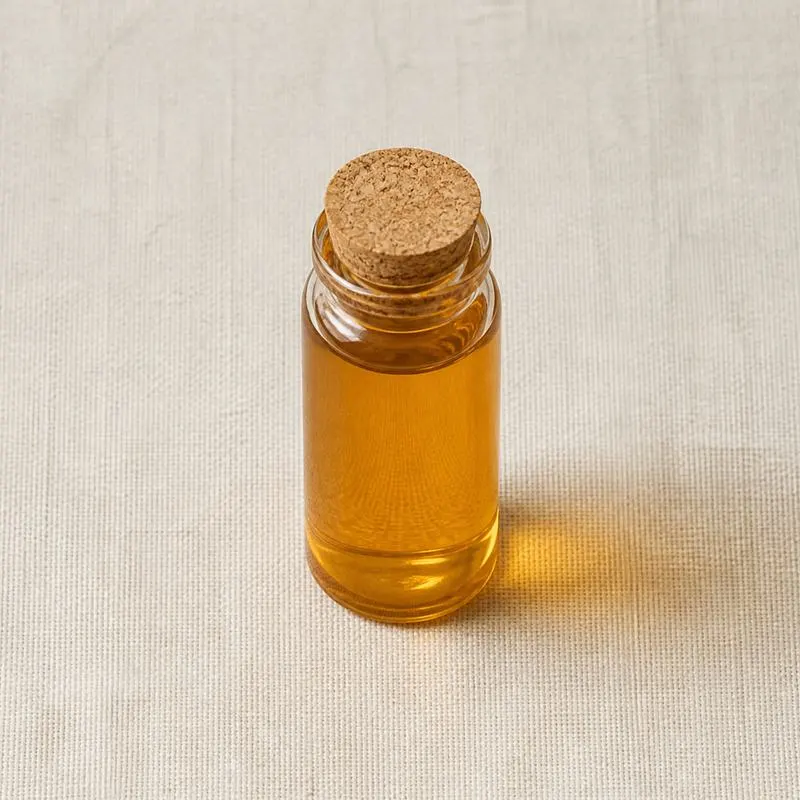
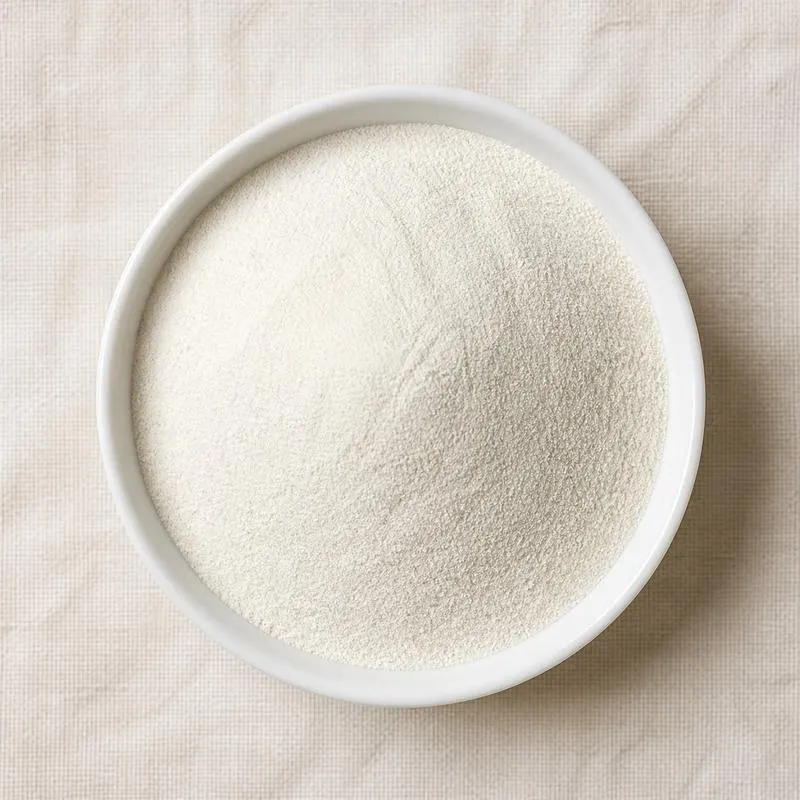
Meat Powder Flavour
Meat Powder Flavour is a cooked meat flavour converted into a dry, free flowing solid by drying the liquid reaction concentrate onto a carbohydrate or salt carrier. The flavour chemistry is the same as in any meat flavour, a Maillard reaction product of protein hydrolysate, reducing sugars and sulphur donors carrying a species specific fat fraction. What defines the article is the drying and carrier system, because that determines how much of the volatile aroma survives, how the powder flows and doses, and when the flavour is released in the finished food.
Three drying technologies are used. Spray drying atomises an emulsion of the flavour in a carrier solution into a hot air stream, giving a fine, economical powder in which the flavour is held in a glassy carbohydrate matrix. Spray chilling atomises the flavour in molten fat into cold air, giving a particle that releases only when the fat melts, which is what allows a flavour to survive a retort or an extruder. Fluid bed agglomeration and coating build particle size for dispersion or apply a barrier layer over an already dried core.
Carrier normally makes up between 50 and 90 percent of the finished powder, with the flavour load stated as a percentage on the technical sheet. All grades are hygroscopic and are packed with a moisture barrier.
We source bulk Meat Powder Flavour from top China manufacturers for our partners. The manufacturer is in Shandong. A smaller requirement can ship in a combined container with other ingredients.
Please send the grade you need, the volume and your destination port, and we will come back with a solution and a price.
or call +86-21-6858 0751
- Function
- Flavours and Aromas
Specifications
| Item | Specification |
|---|---|
| Appearance | Light to dark brown free flowing powder, free of lumps |
| Odour and Taste | Characteristic cooked meat, savoury, no burnt or rancid note |
| Moisture | Not more than 4.0 percent |
| Total Flavour Load | As declared, plus or minus 10 percent relative |
| Free Surface Oil | Not more than 2.0 percent of total oil |
| Bulk Density | 0.35 to 0.55 g per ml |
| Particle Size Distribution | Not less than 90 percent between 50 and 250 micron |
| Solubility in Water at 60 degrees Celsius | Complete for spray dried grades |
| pH at 1 percent solution | 5.0 to 6.5 |
| Peroxide Value | Not more than 5.0 meq per kg of extracted fat |
| Lead | Not more than 1.0 mg per kg |
| Arsenic | Not more than 0.5 mg per kg |
| Total Plate Count | Not more than 10000 cfu per gram |
| Salmonella | Absent in 25 g |
Common Markets Grades
Carrier system is the first grade axis. Maltodextrin gives a neutral, cheap and readily soluble matrix and is the default. Modified starch gives better emulsion stability and higher flavour retention at the cost of price. Gum acacia gives the best retention and the cleanest label position but is subject to supply volatility. Salt carried grades are denser and cheaper and are used where the finished seasoning is high in salt anyway.
Release behaviour is the second axis. Standard spray dried grades release on contact with water and are used in soups and reconstituted products. Spray chilled and fat encapsulated grades release only above the melting point of the fat or on chewing, and are specified for retort, extrusion and dry products with a long shelf life. Coated grades sit between the two.
Beyond that, buyers specify species, flavour load, particle size distribution and bulk density for dry blending and segregation control, oil content on the particle surface, since free surface oil oxidises and shortens shelf life, and halal, kosher, vegetarian and non GMO status.
Applications
- Instant noodle and soup sachets, where a spray dried grade dissolves on reconstitution
- Snack seasoning dusts, blended into topical seasoning and adhering to residual surface oil
- Bouillon cubes and stock granules
- Extruded snacks, where a spray chilled grade survives the barrel and releases on eating
- Retort ready meals, where fat encapsulation protects the flavour through sterilisation
- Dry rubs, marinade powders and coating systems
- Savoury biscuit and cracker doughs, where the flavour must survive the oven
- Processed meat dry blends, scattered during mixing
- Plant based meat analogue dry premixes
- Pet food palatants, applied as a dust to extruded kibble
China Manufacturers of Meat Powder Flavour
Top Meat Powder Flavour manufacturers in China.

Company names and logos are the property of the manufacturers themselves. They are listed here because our own directory records them as producing this ingredient. A listing is not an endorsement by them, and we do not represent them or speak on their behalf.
Regulatory Status
In the United States the preparation is handled as a flavour under 21 CFR 101.22, with process flavours built from hydrolysed protein, sugars and amino acids permitted where each starting material is itself an approved food ingredient. The carriers carry their own status: maltodextrin is an established food ingredient, 21 CFR 184.1330 makes gum acacia generally recognised as safe, and 21 CFR 172.892 permits food starch modified. Hydrolysed protein must be declared by a name identifying the source protein under 21 CFR 102.22.
In the European Union Regulation (EC) No 1334/2008 regulates thermal process flavourings, setting the permitted starting materials, reaction conditions and by product limits. Regulation (EC) No 1333/2008 regulates carriers used in flavourings as food additives, with gum acacia carrying the number E 414 and the modified starches the E 1400 series, each with defined conditions of use. Where an acid hydrolysate forms part of the base, the maximum levels for 3-monochloropropane-1,2-diol in the contaminants regulation apply. Codex has adopted general guidelines for flavourings and general standards covering the carrier additives, and JECFA has published specifications for gum acacia and the modified starches. Soy, wheat, milk and celery derived components trigger allergen declaration in both jurisdictions.
Manufacturing Process
The liquid flavour concentrate is produced first by holding a protein hydrolysate with reducing sugars, cysteine, thiamine and a species appropriate fat in a jacketed pressurised reactor at controlled temperature, pressure and time, then cooling rapidly and standardising against a reference sample.
For spray drying, the carrier is dissolved in water to a high solids feed, the flavour and fat phase are added and the mixture is homogenised at high pressure to a fine and stable emulsion, since droplet size directly controls how much aroma is retained and how much oil ends up exposed on the particle surface. The feed is atomised through a nozzle or rotary wheel into a drying tower, with inlet and outlet temperatures set as low as the moisture target allows, and the powder is separated in a cyclone and bag filter. Some plants add a fluid bed stage at the base of the tower to agglomerate the fines and improve wetting.
For spray chilling, the flavour is dispersed into a molten hardened vegetable fat or a wax, held above its melting point, and atomised into a chilled air chamber where the droplets solidify in flight into spherical particles with the flavour locked inside. Both routes finish with sieving to the specified particle size, metal detection and filling into moisture barrier lined bags, with nitrogen flushing where surface oil makes oxidation the limiting factor.