Mint Oil
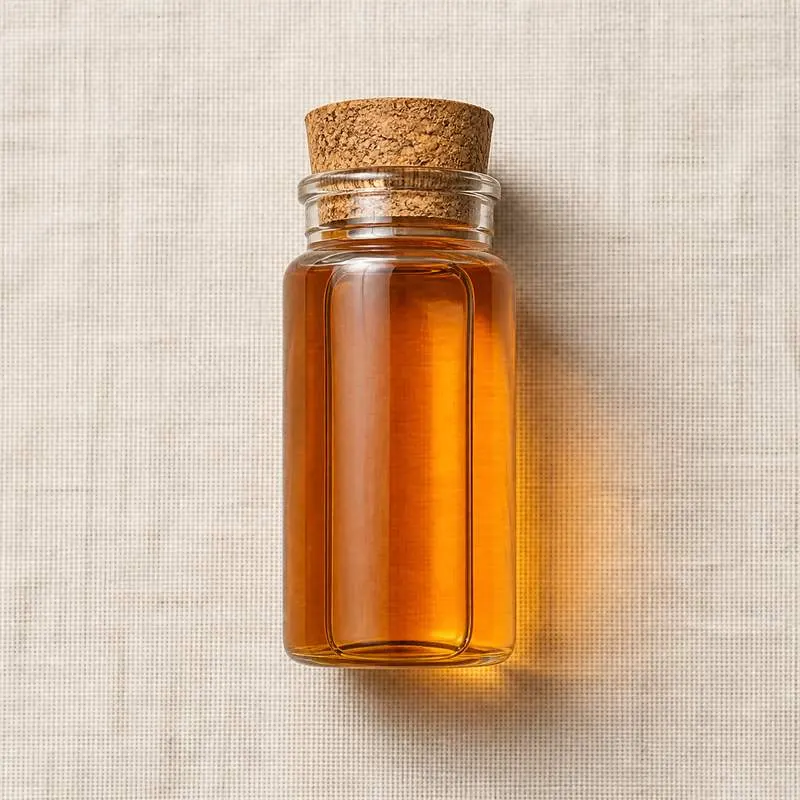
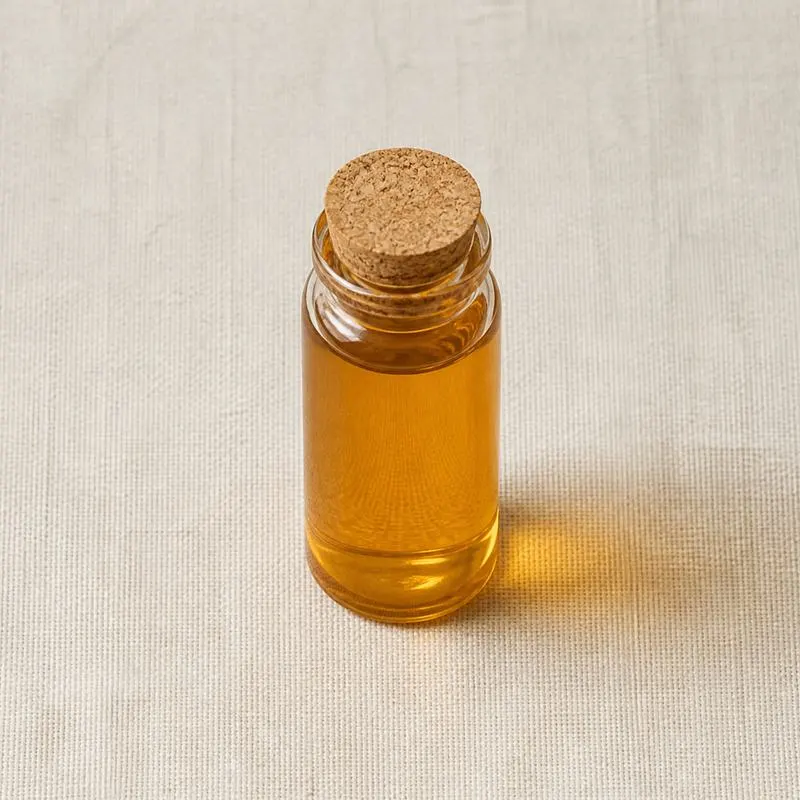
Mint oil is the volatile essential oil distilled from the aerial parts of cultivated mint, most commonly cornmint, Mentha arvensis, which supplies the bulk of the world's traded volume. The oil is a pale yellow to almost colourless mobile liquid with a sharp, sweet, strongly cooling odour dominated by menthol and menthone.
Functionally the oil delivers both aroma and a physiological cooling effect, because menthol binds the cold receptor TRPM8 and produces the sensation of coolness without any temperature change. Crude cornmint oil carries roughly 70 to 80 percent total menthol, and most of that is crystallised out and sold separately, leaving the dementholised oil that trades as mint oil at around 35 to 45 percent menthol.
The oil is soluble in ethanol and in fats and oils and essentially insoluble in water, so aqueous applications use an emulsified or solubilised form. It is volatile, sensitive to oxidation and to light, and is normally held in filled, sealed containers away from heat. Terpene content makes it prone to slow polymerisation once opened, which flattens the fresh top note.
We source bulk Mint Oil from top China manufacturers for our partners. The manufacturer is in Anhui. A smaller requirement can ship in a combined container with other ingredients.
Please send the grade you need, the volume and your destination port, and we will come back with a solution and a price.
or call +86-21-6858 0751
- Function
- Flavours and Aromas
Specifications
| Item | Specification |
|---|---|
| Appearance | Clear mobile liquid, free from suspended matter |
| Colour | Colourless to pale yellow |
| Odour | Characteristic fresh minty and cooling, true to reference sample |
| Total menthol content | 35.0 to 45.0 percent (dementholised grade) |
| Menthone content | 18.0 to 28.0 percent |
| Esters as menthyl acetate | 2.0 to 6.0 percent |
| Relative density at 25 degrees Celsius | 0.888 to 0.905 |
| Refractive index at 20 degrees Celsius | 1.4570 to 1.4700 |
| Optical rotation at 20 degrees Celsius | minus 17 to minus 38 degrees |
| Solubility in 70 percent ethanol | Clear solution in 3.5 volumes |
| Moisture | 0.2 percent maximum |
| Heavy metals as lead | 10 mg/kg maximum |
| Lead | 1.0 mg/kg maximum |
| Arsenic | 1.0 mg/kg maximum |
Common Markets Grades
Two positions dominate trade. Natural cornmint oil, sometimes called crude or first-run oil, is the whole distillate and is bought mainly as feedstock for menthol crystallisation. Dementholised mint oil, the residual oil after menthol removal, is the general purpose flavour and fragrance grade and is specified by its residual menthol and menthone content.
Peppermint oil from Mentha piperita and spearmint oil from Mentha spicata are traded as separate items with their own profiles, the first higher in menthol and menthyl acetate, the second built on carvone. Within dementholised cornmint oil, buyers distinguish standard flavour grade from redistilled or rectified grades that have been vacuum fractionated to lift colour and remove heavy tails, and from terpeneless and folded grades concentrated for beverage work. Food grade, pharmaceutical grade to pharmacopoeial requirements and technical grade for household products are separated by residue and heavy metal limits rather than by odour alone.
Applications
- Chewing gum, where it carries the primary mint character and the cooling effect that defines the category
- Hard boiled and compressed mint confectionery, added late in the cook to limit volatile loss
- Toothpaste and mouthwash, where it masks the soapy note of surfactants and signals cleanliness
- Menthol crystallisation feedstock, the largest single outlet for crude cornmint oil
- Cough drops, lozenges and throat sprays, for the perceived clearing of nasal passages
- Iced tea, mint syrups and flavoured water, usually as a solubilised or emulsified form
- Chocolate mint fillings and after-dinner mint coatings
- Tobacco and nicotine replacement products, for cooling and smoothing
- Topical balms, muscle rubs and analgesic creams, for counterirritant cooling
- Household cleaners and air care, where the fresh terpene top note carries well
Brands Using Mint Oil
Widely-distributed consumer products that list Mint Oil on the ingredient label.
- CliganicOrganic Peppermint Essential Oil ↗A single-ingredient peppermint essential oil steam distilled from fresh peppermint leaves.Label verified 2026-08-31
- Handcraft BlendsPeppermint Essential Oil in Glass Bottle ↗Undiluted peppermint oil bottled for diffusers, dilution into carrier oils and soap making.Label verified 2026-08-31
- Gya LabsOrganic Peppermint Oil ↗Steam distilled peppermint leaf oil whose named constituents are menthol, menthone, menthofuran, 1,8-cineole and limonene.Label verified 2026-08-31
- LorAnn OilsPeppermint Oil, Natural ↗Natural peppermint oil sold as a concentrated flavouring for confectionery and baking.Label verified 2026-08-31
- Kiss My FaceDe-Stress 2-in-1 Body Wash & Bath Soak, Peppermint + Clary Sage ↗A body wash whose ingredient list names Mentha piperita (peppermint) oil alongside clary sage oil.Label verified 2026-08-31
Brand names, product names and logos are the property of their owners. They appear here as published evidence that the ingredient is used, taken from the brand's own label or website. Their appearance is not an endorsement, and it does not mean the brand buys from us or from any manufacturer listed on this site.
China Manufacturers of Mint Oil
Top Mint Oil manufacturers in China.

Company names and logos are the property of the manufacturers themselves. They are listed here because our own directory records them as producing this ingredient. A listing is not an endorsement by them, and we do not represent them or speak on their behalf.
Regulatory Status
In the United States 21 CFR 182.20 lists mint oils, including cornmint, peppermint and spearmint oil, among the essential oils and natural extractives generally recognised as safe for their intended use in food. Individual mint oils also hold FEMA GRAS status as flavouring substances. Peppermint oil additionally appears in the United States Pharmacopeia as a pharmaceutical article with its own monograph.
In the European Union mint oils are flavouring preparations of plant origin handled under Regulation (EC) No 1334/2008 on flavourings, which does not assign E numbers to natural flavouring preparations. Menthol and related constituents are separately listed on the Union flavourings list. The Joint FAO and WHO Expert Committee on Food Additives has evaluated menthol and the mint oil group, and Codex general standards for flavourings apply where national law adopts them. Purity for pharmacopoeial use follows the relevant monograph.
Manufacturing Process
Mint is harvested at flowering, field wilted to lower moisture, and steam distilled in batch stills. Steam passes through the packed herb, the oil and water vapours are condensed together, and the oil is separated in a Florentine flask by density difference. Yield runs at roughly 0.4 to 1 percent on fresh herb depending on species, season and cutting.
Crude cornmint oil is then chilled to around minus 10 degrees Celsius in crystallisers, where menthol nucleates and grows as coarse crystals. The slurry is centrifuged, giving menthol crystals on one side and dementholised oil on the other. That oil is vacuum rectified in a packed column to strip residual water, remove the darkly coloured heavy end fractions and adjust the menthone to menthol balance to specification. The finished oil is polish filtered, blended to a standard profile against a retained reference sample, and filled under nitrogen into lined steel drums.