Natural Cocoa
Natural cocoa is cocoa powder produced from roasted cocoa nib without alkali treatment, so it retains the native acidity of the fermented bean and sits at a pH of about 5.3 to 5.8.
It is made by pressing most of the cocoa butter out of cocoa mass and milling the remaining press cake, so the powder consists of the defatted cocoa solids together with 10 to 24 percent residual fat according to grade. The absence of alkalisation is what defines its behaviour. The polyphenols, principally flavan 3 ols and procyanidins, remain largely unpolymerised, which gives the powder a light reddish brown colour, a sharper and more acidic flavour with fruit and astringent notes, and a higher measured antioxidant content than a Dutched powder. The acidity is also functional in baking, where natural cocoa reacts with sodium bicarbonate to generate carbon dioxide, so recipes built on natural cocoa and bicarbonate do not transfer directly to alkalised powder.
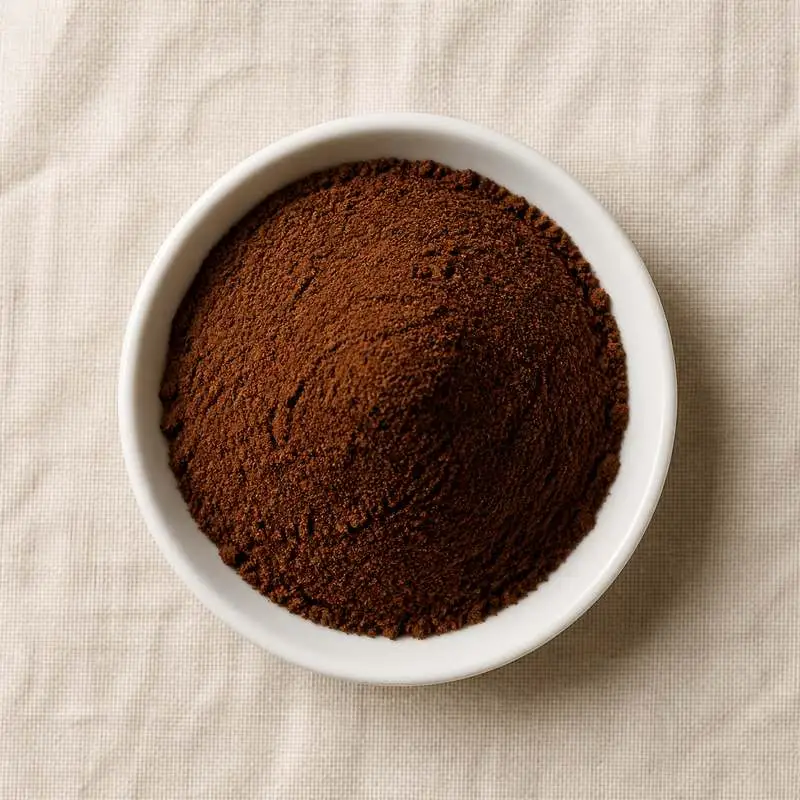
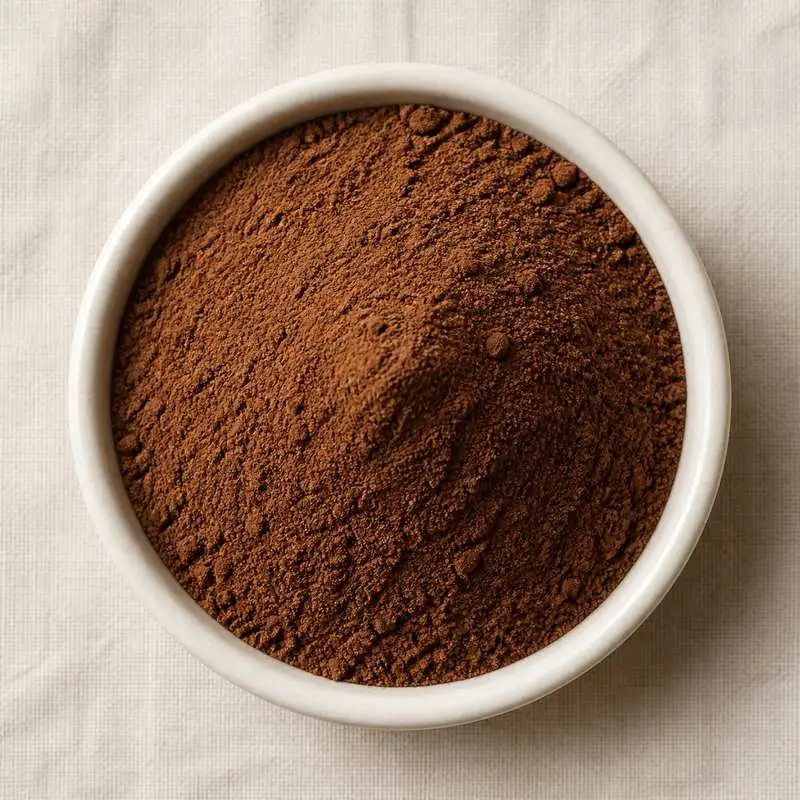
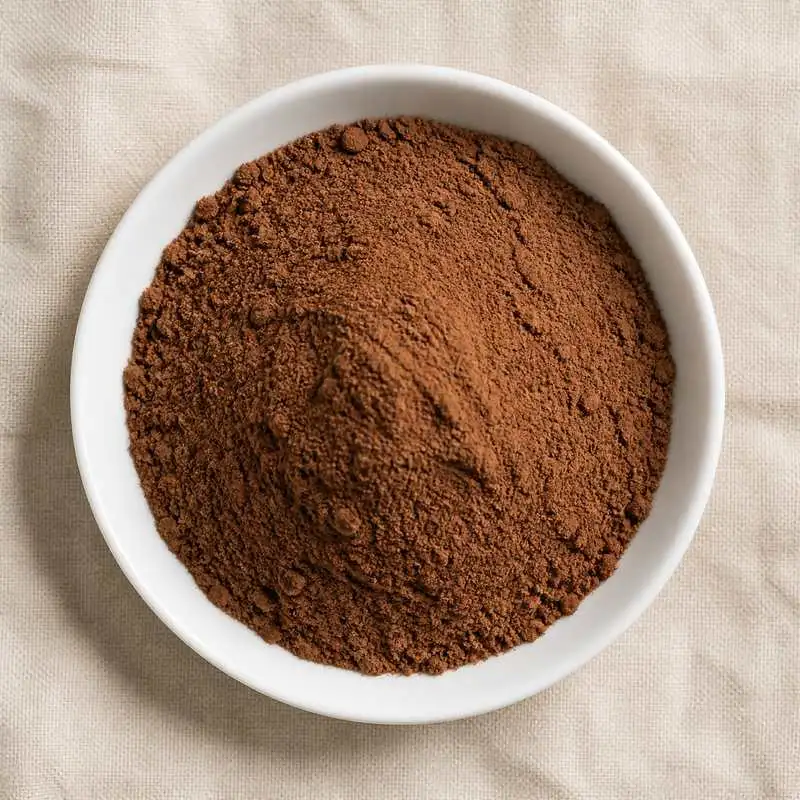
It is a fine free flowing brown powder that has been milled and stabilised so that the cocoa butter crystallises in a stable form and the powder does not cake. It does not dissolve in water; it disperses as a suspension and settles out unless the drink is thickened or the powder is lecithinated for instant use.
We source bulk Natural Cocoa from top China manufacturers for our partners. The manufacturer is in Jiangsu. A smaller requirement can ship in a combined container with other ingredients.
Please send the grade you need, the volume and your destination port, and we will come back with a solution and a price.
or call +86-21-6858 0751
- Function
- Beverage ingredient
Specifications
| Item | Specification |
|---|---|
| Appearance | Fine free flowing powder, free from lumps and foreign matter, light to medium reddish brown, matched to reference |
| Flavour and odour | Characteristic cocoa, slightly acidic, no smoky, mouldy or rancid note |
| Cocoa butter content | 10.0 to 12.0 percent, reduced fat grade |
| pH of 10 percent suspension | 5.3 to 5.8 |
| Moisture | 5.0 percent maximum |
| Total ash | 8.0 percent maximum on dry defatted basis |
| Fineness | 99.5 percent through 200 mesh |
| Shell content | 1.75 percent maximum on dry defatted basis |
| Lead | 0.5 mg/kg maximum |
| Cadmium | 0.60 mg/kg maximum |
| Total plate count | 5000 cfu/g maximum |
| Yeast and mould | 50 cfu/g maximum |
| Escherichia coli | Negative in 1 g |
| Salmonella | Negative in 25 g |
Common Markets Grades
The principal grade distinction is fat content. Low fat or reduced fat natural cocoa carries 10 to 12 percent cocoa butter and is the cheaper, lighter coloured option used where fat is added elsewhere in the recipe. Standard or high fat natural cocoa carries 22 to 24 percent and gives a richer flavour, darker colour and better mouthfeel, and is preferred in beverages and in fine confectionery. Intermediate grades around 15 to 18 percent are also traded.
Beyond fat, powders are specified on fineness of grind, usually a residue figure on a 200 mesh screen, on colour measured instrumentally against a supplier reference, and on flavour profile, which follows bean origin and roast level. Lecithinated grades are surface treated to wet out quickly in cold liquid for instant drinks. Organic certified, fair trade and single origin lots are traded as separate specifications, and cocoa powder for infant products carries tighter microbiological and contaminant limits.
Applications
- Cocoa and chocolate flavoured beverages, both hot mixes and ready to drink products
- Cakes, brownies and biscuits leavened with sodium bicarbonate, where the acidity of natural cocoa drives the reaction
- Chocolate flavoured icings, frostings and glazes
- Ice cream, frozen desserts and dairy mixes, where high fat grades carry colour and flavour
- Confectionery centres, compound coatings and fillings
- Breakfast cereals, granola and cereal bars as a dry blended flavour and colour source
- Dessert powders, mousses, puddings and instant mixes
- Protein powders and meal replacement drinks, where cocoa masks protein off notes
- Chocolate flavoured sauces and dessert toppings
- Dusting and finishing of truffles and patisserie work
Brands Using Natural Cocoa
Widely-distributed consumer products that list Natural Cocoa on the ingredient label.
- Hershey'sHERSHEY'S Cocoa 100% Cacao Natural Unsweetened Cocoa ↗An 8 oz can of natural unsweetened cocoa whose ingredient statement is simply cocoa, sold for baking and hot chocolate.Label verified 2026-08-31
- NutricostPantry Organic Cocoa Powder ↗A single ingredient organic cocoa powder sold as a pantry staple.Label verified 2026-08-31
- ToniiqHigh Flavanol Cocoa Powder ↗A cocoa powder standardised for flavanol content and sold as a stand-alone ingredient.Label verified 2026-08-31
Brand names, product names and logos are the property of their owners. They appear here as published evidence that the ingredient is used, taken from the brand's own label or website. Their appearance is not an endorsement, and it does not mean the brand buys from us or from any manufacturer listed on this site.
China Manufacturers of Natural Cocoa
Top Natural Cocoa manufacturers in China.

Company names and logos are the property of the manufacturers themselves. They are listed here because our own directory records them as producing this ingredient. A listing is not an endorsement by them, and we do not represent them or speak on their behalf.
Regulatory Status
In the United States the standards of identity for cacao products in the Food and Drug Administration regulations cover cocoa powder and define breakfast cocoa, cocoa and low fat cocoa by cocoa butter content, with breakfast cocoa carrying not less than 22 percent, cocoa less than 22 but not less than 10 percent, and low fat cocoa less than 10 percent. Natural cocoa is simply cocoa produced without the optional alkali treatment those standards permit, and it is a conventional food rather than a food additive.
In the European Union cocoa powder is defined in the directive on cocoa and chocolate products, which sets a minimum cocoa butter content for cocoa powder and separate reserved descriptions for fat reduced cocoa powder, and permits but does not require alkalising treatment. Cadmium in cocoa powder is subject to maximum levels under the contaminants regulation, and this is the specification point most often tested for material of South American origin. Codex maintains a standard for cocoa powders and dry cocoa sugar mixtures with equivalent compositional categories. Ochratoxin A and polycyclic aromatic hydrocarbons formed during drying and roasting are the other contaminants specified in trade, and cocoa is subject to due diligence requirements on deforestation free sourcing for the European market.
Manufacturing Process
Fermented and dried cocoa beans are cleaned, then roasted either as whole beans or as nib to develop flavour and reduce the microbial load. The roasted material is cracked and winnowed to separate the nib from the shell, and the nib is ground on a series of mills, where the frictional heat releases the cocoa butter and the nib turns into a fluid cocoa mass. For natural cocoa no alkali is added at any point, which is the single step that separates this route from Dutched powder production.
The cocoa mass is pumped hot into a horizontal hydraulic press, where a large part of the cocoa butter is expressed through filter screens and the remaining solids are compacted into hard cake at the target residual fat. The cake is broken, cooled and milled in a classifier mill to a fine powder, and the powder is then stabilised by controlled cooling so that the residual cocoa butter sets in a stable crystal form, which prevents caking and fat bloom on the powder surface. The finished powder is sieved, passed through a magnet and metal detector, and packed in multiwall bags or bulk containers.