Sodium Bicarbonate
Sodium bicarbonate is the monosodium salt of carbonic acid, NaHCO3, a white crystalline solid that functions in food as a chemical leavening agent, an alkaline pH regulator and a source of carbon dioxide. It is one of the oldest and highest tonnage food chemicals in trade.
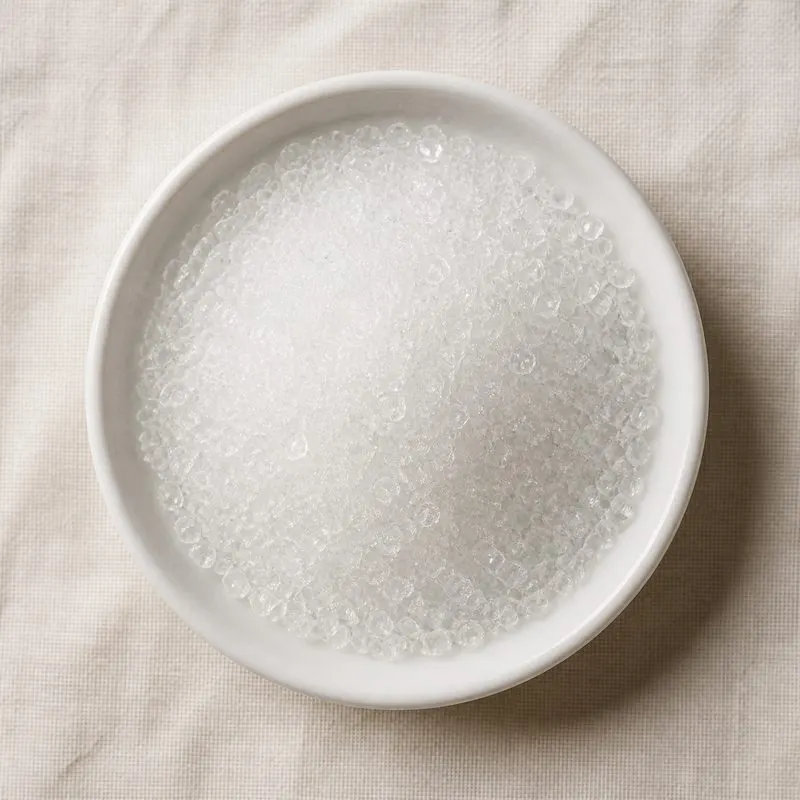
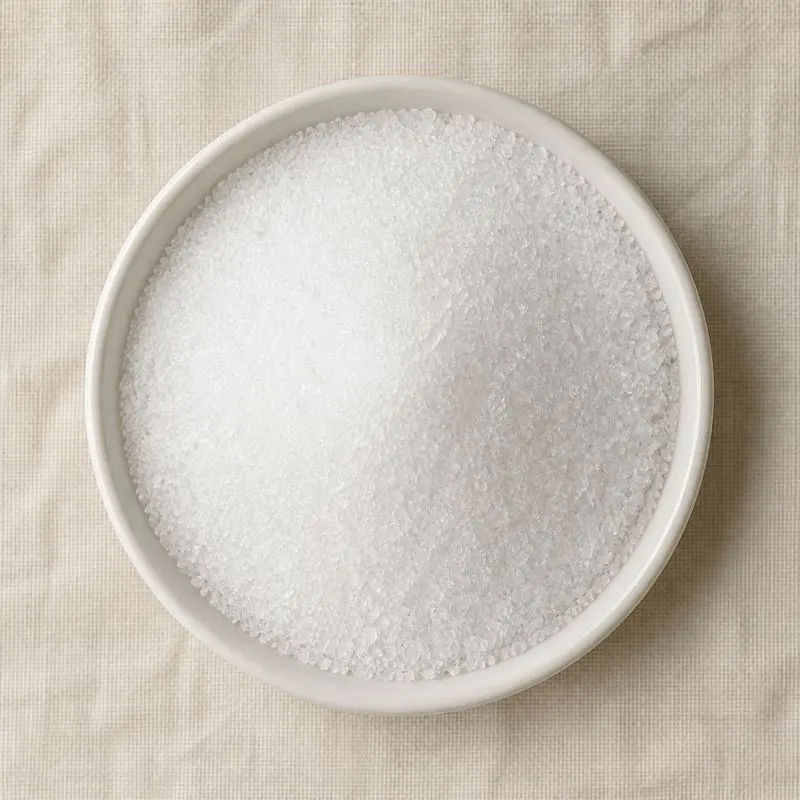
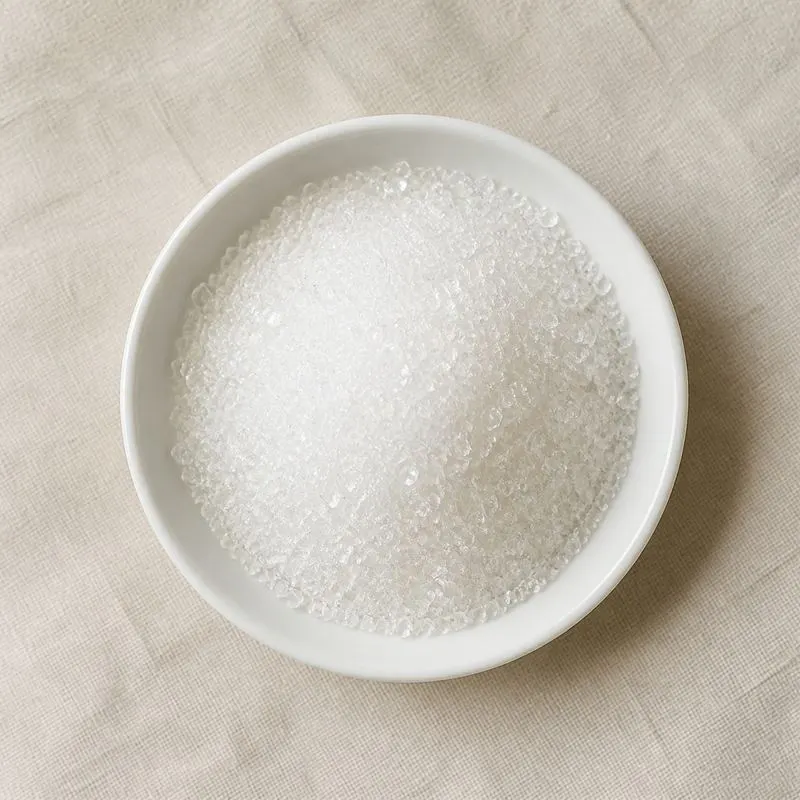
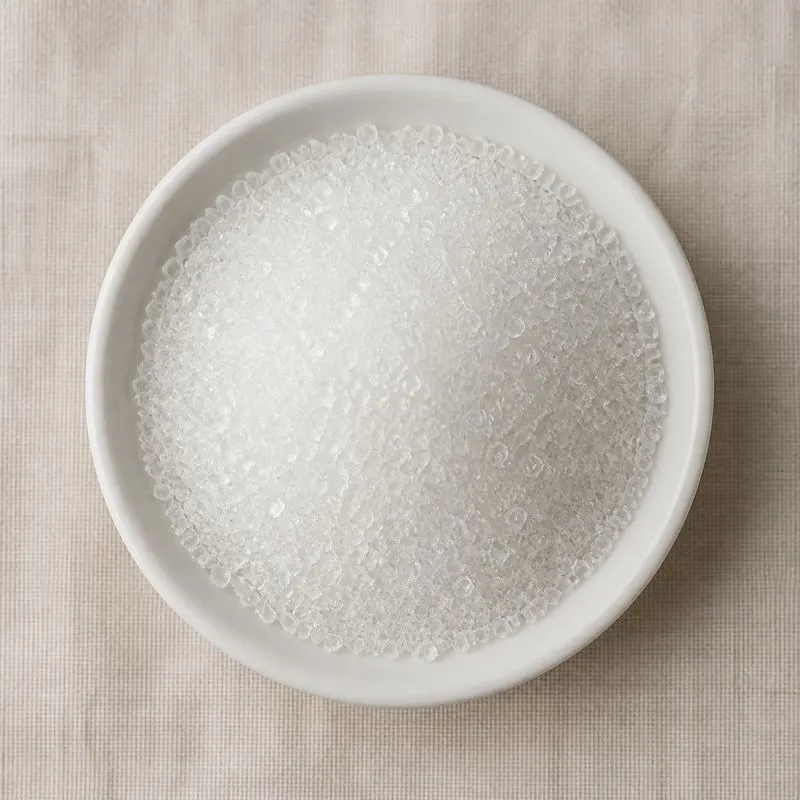
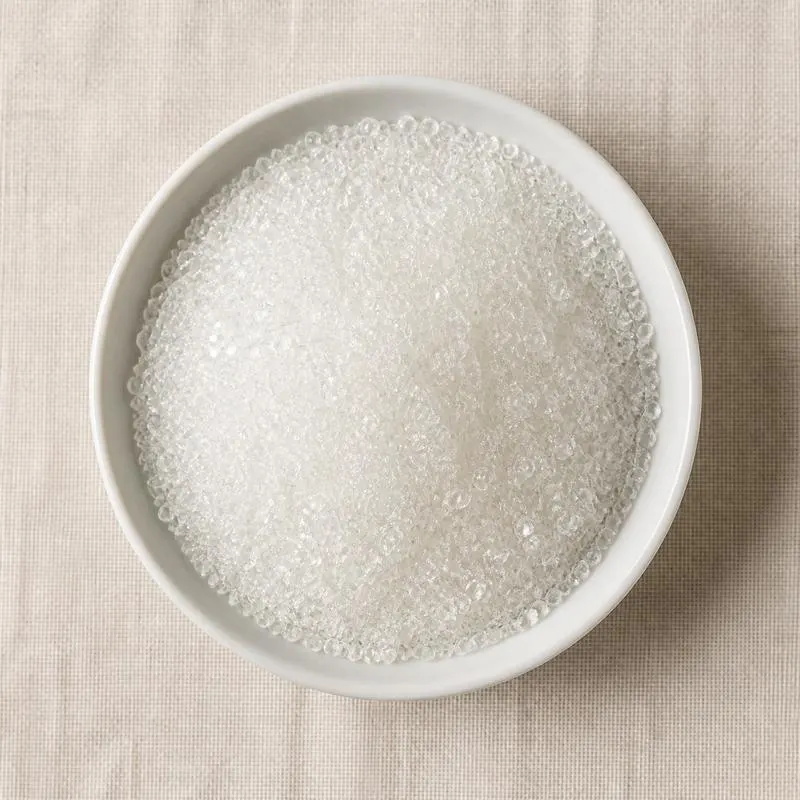
The material is a free flowing white powder or fine crystal with a faintly saline, alkaline taste. It dissolves readily in water, around 96 g/L at 20 degrees Celsius, giving a mildly alkaline solution near pH 8.3. It is practically insoluble in ethanol. Solutions are stable at ambient temperature but release carbon dioxide progressively on warming, and the dry solid begins to decompose to sodium carbonate above about 50 degrees Celsius, which sets both the storage conditions and the leavening behaviour.
In a batter or dough the bicarbonate reacts with an acid such as monocalcium phosphate, sodium acid pyrophosphate or cream of tartar to release carbon dioxide and expand the crumb. In the absence of an added acid it still decomposes thermally, but leaves residual sodium carbonate that raises pH and darkens the crumb, so most formulations pair it with a leavening acid at a defined neutralising value.
We source bulk Sodium Bicarbonate from top China manufacturers for our partners. The manufacturer is in Shandong. A smaller requirement can ship in a combined container with other ingredients.
Please send the grade you need, the volume and your destination port, and we will come back with a solution and a price.
or call +86-21-6858 0751
- Function
- Acidulant
Specifications
| Item | Specification |
|---|---|
| Appearance | White crystalline powder, odourless |
| Assay as NaHCO3 (dried basis) | 99.0 to 100.5 percent |
| Identification | Positive for sodium and for bicarbonate |
| pH, 1 percent solution at 25 degrees Celsius | 8.0 to 8.6 |
| Loss on Drying, 4 hours over silica gel | Not more than 0.25 percent |
| Insoluble matter in water | Not more than 0.02 percent |
| Chloride as Cl | Not more than 0.15 percent |
| Sulphate as SO4 | Not more than 0.015 percent |
| Ammonium salts | Passes test, no ammonia odour |
| Heavy metals as Pb | Not more than 5 mg/kg |
| Lead | Not more than 2 mg/kg |
| Arsenic | Not more than 1 mg/kg |
| Bulk density | 0.85 to 1.10 g/mL, grade dependent |
| Particle size | Per grade, standard 95 percent through 100 mesh |
Common Markets Grades
Food grade sodium bicarbonate is traded at 99.0 to 100.5 percent assay on the dried basis and complies with the Food Chemicals Codex monograph. Pharmaceutical grade material meets the USP and Ph. Eur. monographs, with tighter limits on ammonium, insoluble matter and residual carbonate, and is made under stricter facility controls. Feed grade and technical grade are sold to looser assay and heavy metal limits and are not interchangeable with the food grade.
Within the food grade the main commercial distinction is particle size. A standard grade of roughly 100 to 200 micrometres suits general bakery and beverage use. Fine and extra fine milled grades disperse quickly in dry mixes and effervescent tablets, while coarse or granular grades of 300 micrometres and above are chosen for free flowing dry blends that must resist segregation. Coated grades, in which the crystal is encapsulated in a hydrogenated fat or a maltodextrin shell, delay the reaction with the leavening acid until oven heat melts the coating, which is how frozen and refrigerated doughs retain lift after long hold times.
Applications
- Chemical leavening in cakes, muffins, cookies and quick breads, paired with a leavening acid at a controlled neutralising value
- Self raising flour and packaged cake mixes, where a coated grade prevents premature gas loss during storage
- Refrigerated and frozen dough, using encapsulated bicarbonate so the reaction begins in the oven rather than in the chilled pack
- Effervescent tablets and instant drink powders, where reaction with citric or tartaric acid generates the fizz
- Alkaline noodles and steamed buns, where it raises dough pH to develop the characteristic yellow colour and firm bite
- Cocoa dutching, neutralising the natural acidity of cocoa liquor to darken colour and soften flavour
- Dry bean and pulse soaking, where mild alkalinity shortens cooking time by loosening the cell wall pectin
- Meat and poultry marinades and brines, holding pH above the isoelectric point of the muscle protein to improve water retention
- Neutralising acidity in tomato products, dairy beverages and fermentation broths
- Animal feed premixes as a rumen buffer and a sodium source in dairy rations
Brands Using Sodium Bicarbonate
Widely-distributed consumer products that list Sodium Bicarbonate on the ingredient label.
- NutricostSodium Bicarbonate Capsules ↗Each serving delivers 2,500 mg of sodium bicarbonate in vegan capsules, 60 servings per bottle.Label verified 2026-08-31
- NutricostSodium Bicarbonate Powder ↗A two pound tub of plain sodium bicarbonate powder measured at 600 mg per scoop.Label verified 2026-08-31
Brand names, product names and logos are the property of their owners. They appear here as published evidence that the ingredient is used, taken from the brand's own label or website. Their appearance is not an endorsement, and it does not mean the brand buys from us or from any manufacturer listed on this site.
China Manufacturers of Sodium Bicarbonate
Top Sodium Bicarbonate manufacturers in China.

Company names and logos are the property of the manufacturers themselves. They are listed here because our own directory records them as producing this ingredient. A listing is not an endorsement by them, and we do not represent them or speak on their behalf.
Regulatory Status
In the United States sodium bicarbonate is affirmed as generally recognised as safe for use as a food ingredient under 21 CFR 184.1736, with no limitation other than current good manufacturing practice. It also carries a monograph in the United States Pharmacopeia for pharmaceutical use, and appears in the Food Chemicals Codex.
In the European Union Regulation (EC) No 1333/2008 authorises it as sodium hydrogen carbonate under the E number E500(ii), within the sodium carbonates group, and Regulation (EU) No 231/2012 sets the purity criteria. It is permitted broadly as an acidity regulator and raising agent, in most categories at quantum satis. The Joint FAO/WHO Expert Committee on Food Additives has evaluated the sodium carbonates and the Codex General Standard for Food Additives lists sodium hydrogen carbonate for use as an acidity regulator and raising agent.
Manufacturing Process
Almost all food grade sodium bicarbonate is made by carbonating a solution of soda ash. Refined sodium carbonate, either Solvay soda ash or natural trona derived soda ash, is dissolved in water or in recycled mother liquor to give a near saturated solution. The solution is filtered to remove insolubles and fed to a carbonation tower where it meets a counter current flow of carbon dioxide gas under moderate pressure. Sodium bicarbonate is far less soluble than the carbonate, so it crystallises out of the tower as it forms.
The resulting slurry is drawn off and dewatered on a centrifuge or a rotary vacuum filter, and the crystal cake is washed with clean water to displace the alkaline mother liquor, which is returned to the dissolving stage. The washed cake is dried in a low temperature flash or fluid bed dryer, since holding the product hot promotes decomposition back to carbonate. The dried crystal is screened and, depending on the grade, milled or granulated to the target particle size before packing under low humidity conditions.