Natural Menthol
Natural menthol is levomenthol, the (1R,2S,5R) isomer of the cyclic terpene alcohol menthol, isolated by crystallisation from mint oil rather than made by synthesis. It is the compound responsible for the cooling sensation of mint, which it produces by binding to the cold sensitive TRPM8 receptor in the skin and mucosa, a physiological effect independent of any actual drop in temperature.
Almost all natural material comes from cornmint oil, distilled from Mentha arvensis, which contains seventy to eighty percent menthol and therefore crystallises readily on chilling. Peppermint oil from Mentha piperita is lower in menthol and is sold as an oil rather than worked for crystal. Of the eight possible stereoisomers only levomenthol gives the full cooling effect with a clean mint odour, and the specific optical rotation is the routine check that the correct isomer is present.
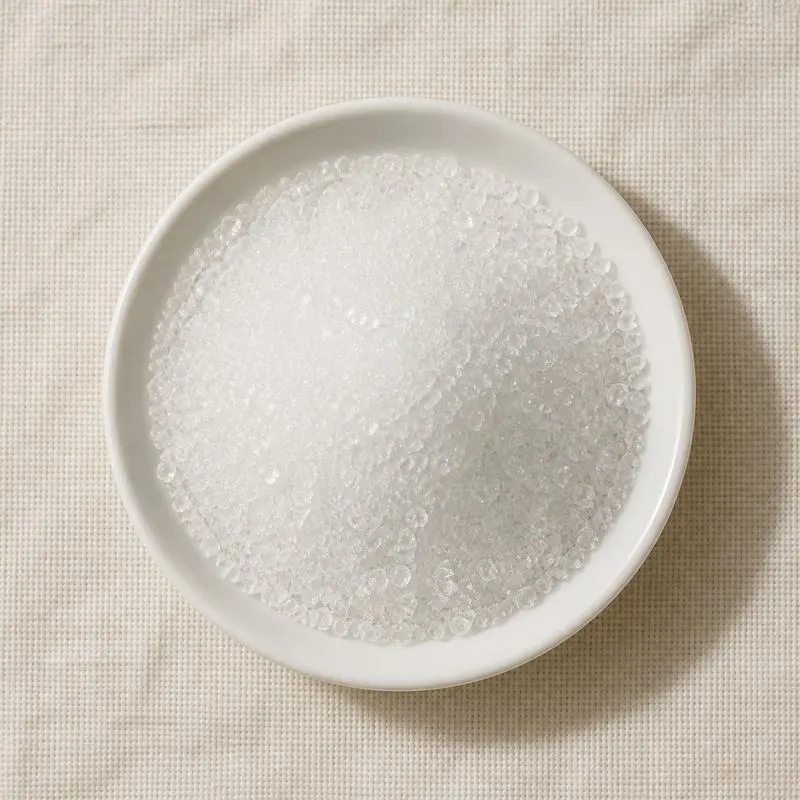
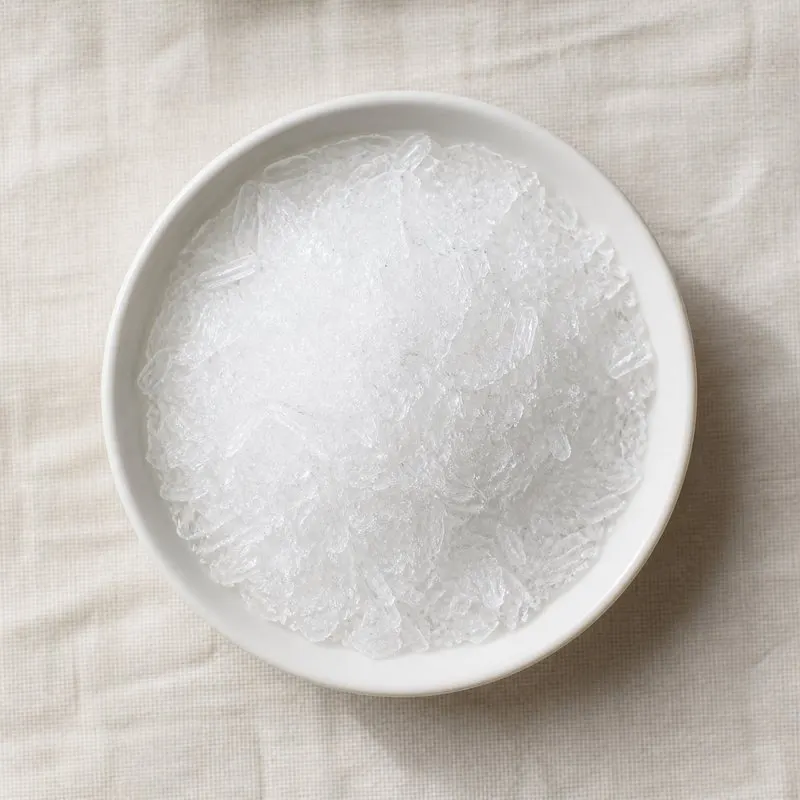
The material comes as colourless prismatic crystals or as a fused block, melting between forty one and forty five degrees. It is practically insoluble in water and freely soluble in ethanol, ether and fixed oils, and it sublimes slowly at room temperature, so containers are kept sealed and cool. Its volatility at ambient conditions also means that stored crystal loses weight and can cake into a solid mass.
We source bulk Natural Menthol from top China manufacturers for our partners. The manufacturers are in Anhui and Guangdong. A smaller requirement can ship in a combined container with other ingredients.
Please send the grade you need, the volume and your destination port, and we will come back with a solution and a price.
or call +86-21-6858 0751
- Function
- Flavours and Aromas
Specifications
| Item | Specification |
|---|---|
| Appearance | Colourless prismatic or needle shaped crystals |
| Odour | Characteristic clean peppermint, free from harsh or camphoraceous note |
| Assay by Gas Chromatography | Not less than 99.0% |
| Melting Range | 41 C to 45 C |
| Specific Optical Rotation | Minus 45 degrees to minus 51 degrees, 10% in ethanol |
| Related Substances | Not more than 1.0% total, isomenthol not more than 0.5% |
| Loss on Drying | Not more than 0.1% |
| Residue on Ignition | Not more than 0.05% |
| Acidity | Neutral to litmus in ethanol solution |
| Solubility | Clear solution in one volume of 70% ethanol |
| Heavy Metals as Lead | Not more than 10 mg/kg |
| Lead | Not more than 1.0 mg/kg |
| Arsenic | Not more than 0.5 mg/kg |
Common Markets Grades
The traded grades are crystal, bold crystal and fused block, all of the same chemical specification and differing in physical form. Crystal is the general purpose article, bold crystal is a larger crystal form favoured where dust and caking cause handling problems, and fused block is melted and cast material bought by users who remelt in any case. A powdered grade is produced for dry blending, though it sublimes and cakes faster than crystal.
The more meaningful distinction is by monograph rather than by form. Pharmacopoeial grade meets the levomenthol monographs of the major pharmacopoeias and is bought for oral care, topical preparations and inhalants. Food grade meets the flavouring substance specifications and is used in confectionery and beverages. The two are generally the same material sold with different documentation and testing. Synthetic menthol, made from thymol or from citronellal derived intermediates, is chemically equivalent but cannot be declared as natural, and is traded as a separate article.
Applications
- Chewing gum and mint confectionery, where it is both the flavour and the cooling active
- Toothpaste and mouthwash, providing the cooling and fresh breath effect that consumers read as cleanliness
- Cough drops, lozenges and throat sprays, where it acts as a mild local anaesthetic and counter irritant
- Topical analgesic balms, gels and patches, used with camphor and methyl salicylate for a counter irritant effect
- Inhalants, vapour rubs and decongestant preparations, which depend on its volatility at body temperature
- Beverage flavours in mint, peppermint and cooling directions, dosed through an ethanol solution
- Shaving preparations, aftershave and skin care, for the immediate cooling sensation on application
- Tobacco and nicotine products, though menthol characterising flavours are restricted or prohibited in several markets
- Starting material for menthyl esters such as menthyl lactate and menthyl acetate, which give a longer cooling effect with less odour
Brands Using Natural Menthol
Widely-distributed consumer products that list Natural Menthol on the ingredient label.
- RicolaOriginal Herb Cough Drops ↗Ricola states the drops carry natural menthol, with the medicinal ingredient drawn from Mentha piperita and Mentha arvensis leaf oil.Label verified 2026-08-31
- RicolaMAX Nasal Care Cool Menthol Herbal Drops ↗These drops are described as containing natural menthol at the brand's highest strength, combined with its herb extract blend.Label verified 2026-08-31
Brand names, product names and logos are the property of their owners. They appear here as published evidence that the ingredient is used, taken from the brand's own label or website. Their appearance is not an endorsement, and it does not mean the brand buys from us or from any manufacturer listed on this site.
China Manufacturers of Natural Menthol
Top Natural Menthol manufacturers in China.
 Anhui Tonghui Perfume Co., Ltd.8 ingredients in the directory
- GuangDong Juhui Flavors And Fragrances Co., Ltd.4 ingredients in the directory
Company names and logos are the property of the manufacturers themselves. They are listed here because our own directory records them as producing this ingredient. A listing is not an endorsement by them, and we do not represent them or speak on their behalf.
Regulatory Status
Menthol has a long established clearance in the major markets and is dealt with under both food and medicine law. In the United States it holds FEMA GRAS status as a flavouring and is among the substances the Food and Drug Administration lists as generally recognised as safe for use in food. It is separately the subject of over the counter drug monographs covering its use as a topical analgesic and as an oral demulcent and cough suppressant, and preparations sold on those claims are regulated as medicines rather than as food.
In the European Union menthol appears on the Union list of authorised flavouring substances, which is the clearance that applies for food use, and levomenthol has a monograph in the European Pharmacopoeia for pharmaceutical material. No E number applies, since flavourings sit outside the food additive framework. JECFA has evaluated menthol as part of its group assessment of alicyclic alcohols and related substances. Separately, the use of menthol as a characterising flavour in tobacco products has been prohibited in the European Union and restricted in a number of other jurisdictions, a restriction that sits under tobacco law rather than food law.
Manufacturing Process
Cornmint is harvested, wilted in the field and steam distilled to give crude cornmint oil. Because the oil is already rich in menthol, the isolation is a physical separation rather than a chemical one. The crude oil is filtered and charged into jacketed crystallisers, where it is cooled slowly to somewhere between minus ten and minus twenty five degrees. Menthol crystallises out over hours to days while the terpene hydrocarbons, menthone and esters stay liquid, and the rate of cooling sets crystal size and the amount of mother liquor trapped between crystals.
The crystal slurry is separated in a basket centrifuge, and the liquid stream, known as dementholised cornmint oil, is a saleable by-product used in its own right as a flavour and fragrance material. The wet crystal is redissolved or remelted and recrystallised, usually more than once, to raise the assay and remove occluded oil, then washed, centrifuged again and dried under vacuum at a temperature well below the melting point. Finished crystal is sieved and packed into lined fibre drums or cartons, or melted and cast into blocks.