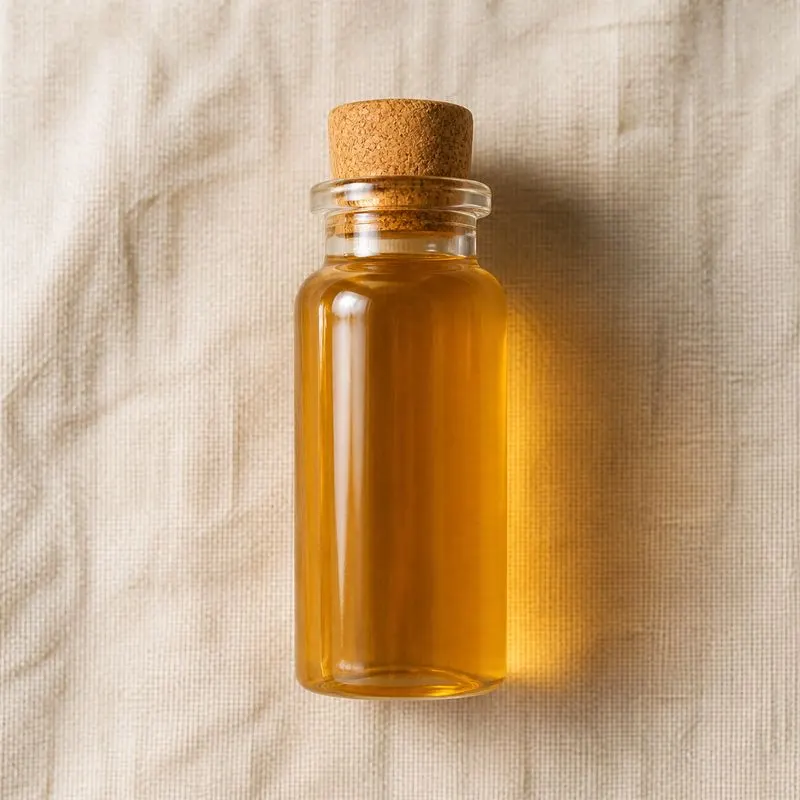
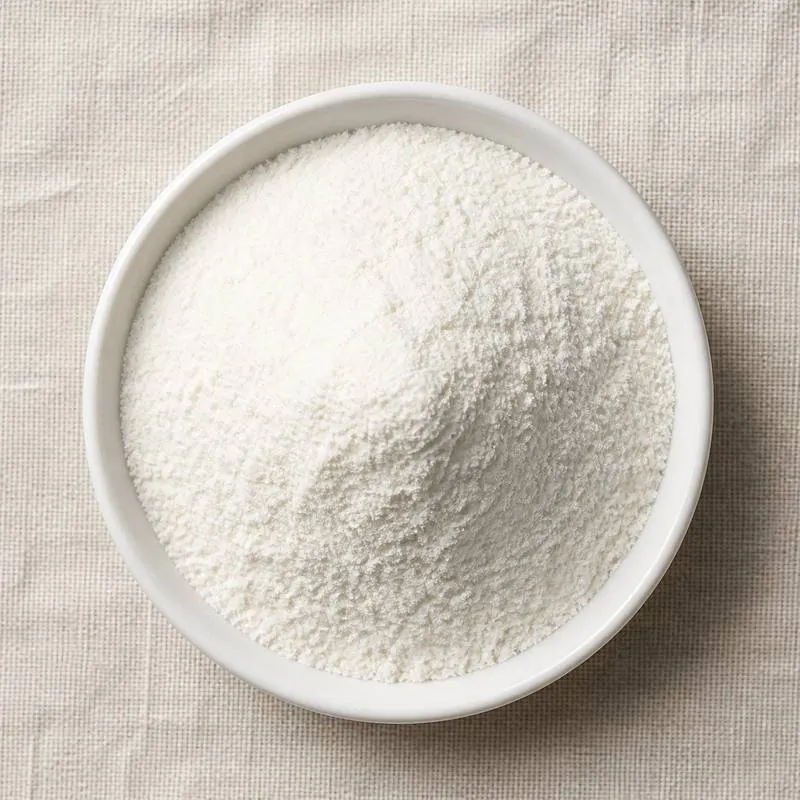
Pgms
PGMS is the trade abbreviation for propylene glycol monostearate, the mono ester formed between propylene glycol and stearic acid. Commercial material is not a single compound but a mixture of mono and diesters of propylene glycol with stearic and palmitic acids, sold on its minimum monoester content.
It is a lipophilic, non-ionic emulsifier with a low hydrophilic to lipophilic balance, and its main role is aeration rather than emulsion stabilisation. In a whipped system it crystallises at the fat and water interface in the alpha form, stiffens the interfacial film and lets a batter or topping trap a large volume of fine air cells. In doughs and cakes it also complexes with amylose, which slows crumb firming.
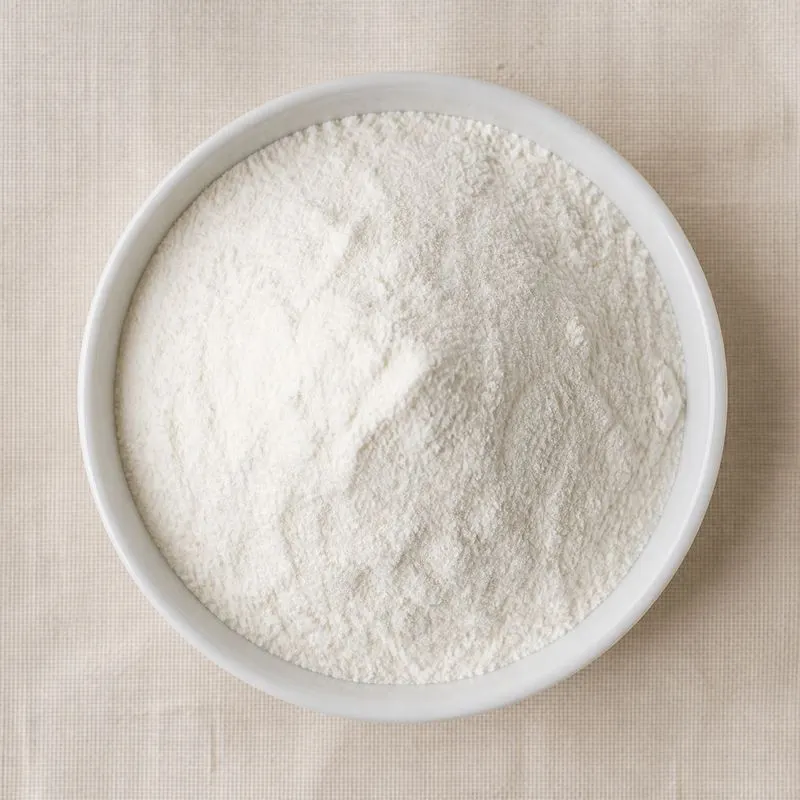
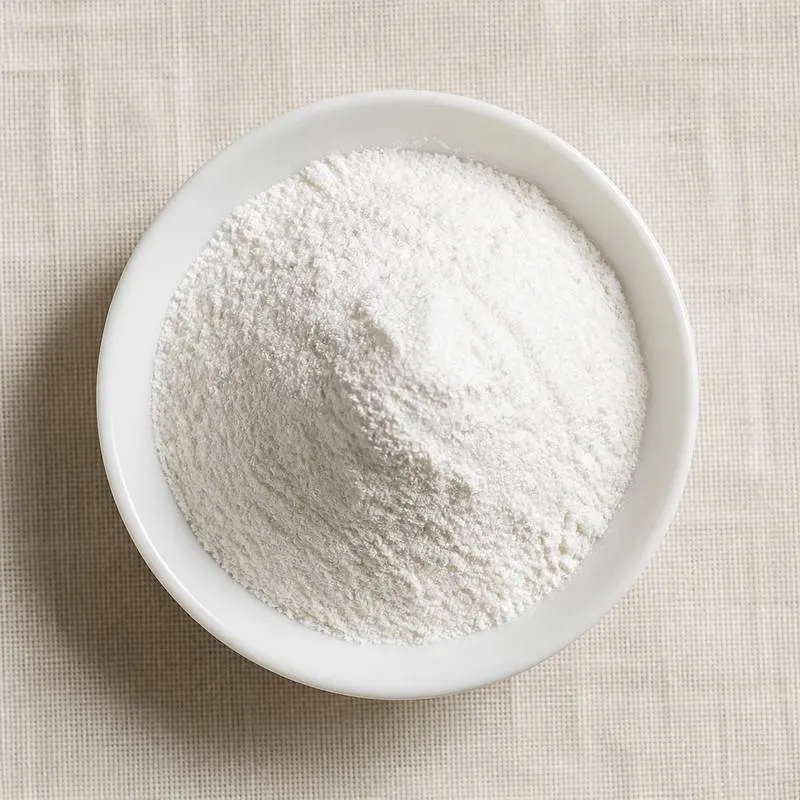
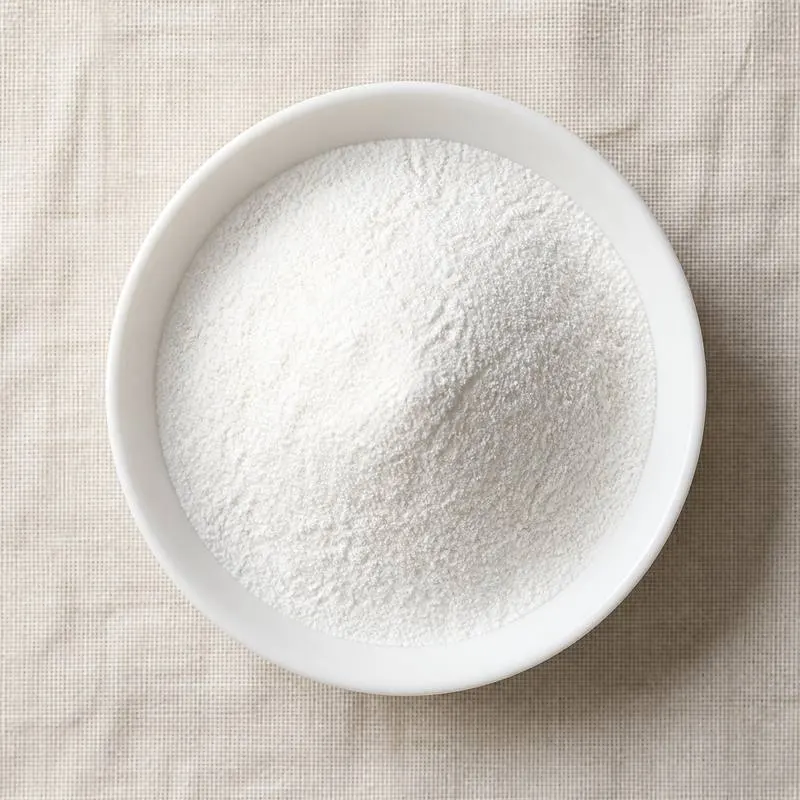
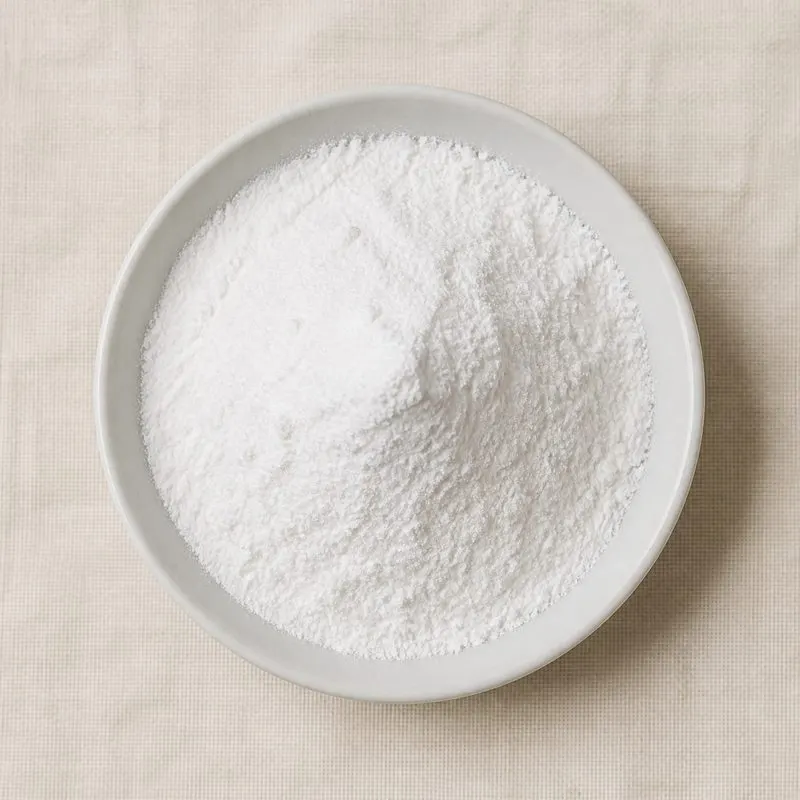
The product comes as white to cream flakes, beads or powder with a melting point around 35 to 45 degrees Celsius. It is insoluble in cold water and soluble in hot oils and fats, so it is added to the fat phase or dispersed in hot water where it forms a gel. Its aerating power depends on holding the alpha crystalline form, so material is cooled under control and stored cool to avoid transition to the inactive beta form.
We source bulk Pgms from top China manufacturers for our partners. The manufacturer is in Henan. A smaller requirement can ship in a combined container with other ingredients.
Please send the grade you need, the volume and your destination port, and we will come back with a solution and a price.
or call +86-21-6858 0751
- Function
- Emulsifier
Specifications
| Item | Specification |
|---|---|
| Appearance | White to cream flakes, beads or powder |
| Odour | Bland, characteristic |
| Monoester content | ≥ 90.0% (distilled grade) |
| Identification | Positive for propylene glycol and fatty acid esters |
| Melting point | 35 - 45 °C |
| Acid value | ≤ 4 mg KOH/g |
| Saponification value | 150 - 190 mg KOH/g |
| Free propylene glycol | ≤ 5.0% |
| Loss on drying | ≤ 1.0% |
| Sulphated ash | ≤ 0.5% |
| Heavy metals (as Pb) | ≤ 5 mg/kg |
| Lead | ≤ 1 mg/kg |
| Arsenic | ≤ 1 mg/kg |
Common Markets Grades
Grades differ mainly in monoester content. Standard material contains around 50 to 60 percent monoester, while high monoester or distilled grades run at 90 percent and above and give stronger aeration at lower dosage. Both are specified by acid value, saponification value, free propylene glycol and free fatty acid rather than by a single assay figure.
Physical form covers flakes, pastilles, powder and, less commonly, a hydrated gel in which the emulsifier is pre-crystallised in water for direct addition to batters. Fatty acid source is normally fully hydrogenated palm or other vegetable stearin, and palm free and non-hydrogenated versions are offered where the label requires them. Blends of PGMS with distilled monoglycerides and polysorbates are also traded as ready made aerating systems, but the material itself is otherwise a single specification product.
Applications
- Whipped toppings and aerosol creams, where it builds the interfacial film that holds overrun
- Cake batters and sponge mixes, where it raises volume and gives a fine, uniform crumb from a single stage mix
- Non-dairy whipping bases, where it stabilises the fat phase through whipping and piping
- Bread and sweet doughs, where it complexes amylose and slows crumb firming during storage
- Ice cream and aerated frozen desserts, where it assists partial fat coalescence and improves shape retention
- Instant desserts and mousse powders, where it aerates on reconstitution with cold milk or water
- Coffee whiteners and powdered creamers, where it helps the fat disperse without feathering
- Cream fillings and buttercreams, where it holds air and keeps the texture light through the shelf life
China Manufacturers of Pgms
Top Pgms manufacturers in China.
Company names and logos are the property of the manufacturers themselves. They are listed here because our own directory records them as producing this ingredient. A listing is not an endorsement by them, and we do not represent them or speak on their behalf.
Regulatory Status
In the European Union Regulation (EC) No 1333/2008 authorises propylene glycol esters of fatty acids as E 477, with conditions of use defined by food category, and the specifications regulation sets identity and purity criteria including limits on free propylene glycol, free fatty acids and residues. Propylene glycol monostearate is covered by that entry rather than by a number of its own.
In the United States 21 CFR 172.856 permits propylene glycol mono and diesters of fats and fatty acids as direct food additives, and describes the permitted source materials and uses as emulsifiers in foods. The fatty acids used must themselves meet the requirements for food use. JECFA has evaluated propylene glycol esters of fatty acids and published specifications for them, and the additive appears in the Codex General Standard for Food Additives.
Manufacturing Process
Manufacture is a direct esterification. Propylene glycol and stearic acid, usually a fully hydrogenated vegetable fatty acid cut rich in stearic and palmitic acids, are charged together with an alkaline catalyst and heated to roughly 180 to 220 degrees Celsius under nitrogen. Water of reaction is removed continuously, which drives the equilibrium towards the ester. An excess of propylene glycol is used to favour the monoester over the diester. An alternative route transesterifies a fully hydrogenated triglyceride with propylene glycol, giving a mixture of propylene glycol esters and monoglycerides.
The crude ester is neutralised and the excess propylene glycol is stripped under vacuum for recovery. High monoester grades then go through short path molecular distillation, which separates the monoester from diester and residual fatty acid. The purified melt is deodorised, then solidified on a chill roll, flaker or pastillator under controlled cooling so the alpha crystal form is retained, and the flakes are milled or sieved to the required particle size before packing.