Power Food Flavoring Essence
Food flavouring essence, listed here under a supplier trade designation, is a concentrated liquid flavouring for dosing into a finished food or beverage. An essence in this sense is a compounded mixture of flavouring substances, extracts and distillates dissolved in a food grade solvent, rather than a single chemical or a single botanical extract.
The composition of a typical essence has three layers. Character impact compounds, present at low percentage, decide what the flavour is recognised as. Supporting aroma chemicals and natural extracts fill out the profile and give it depth and naturalness. The solvent, most often ethanol, propylene glycol, triacetin or water, makes up the bulk and determines where the essence will dissolve and how it behaves in the food.
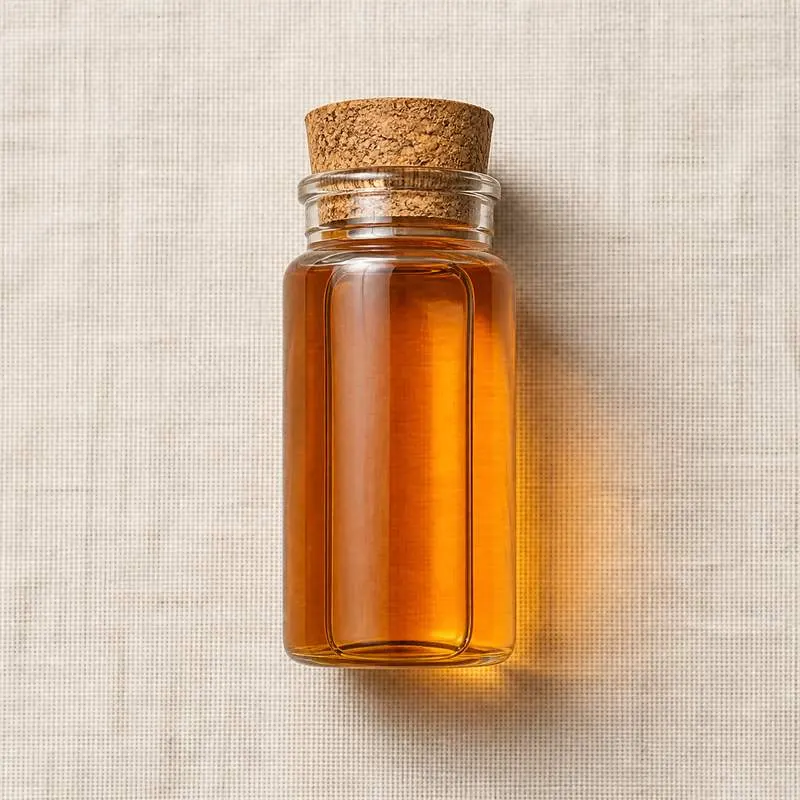
Trade material is a clear liquid, colourless to amber, with an intense aroma at the neat concentration and a typical dose in the finished food measured in tenths of a percent. Water soluble essences are used in beverages and aqueous systems, oil soluble essences in fats and fried foods, and emulsions where a cloudy or a stable dispersion is needed. Volatility and oxidation limit shelf life, so essences are filled under nitrogen into full containers and stored cool and dark.
We source bulk Power Food Flavoring Essence from top China manufacturers for our partners. The manufacturer is in Jiangsu. A smaller requirement can ship in a combined container with other ingredients.
Please send the grade you need, the volume and your destination port, and we will come back with a solution and a price.
or call +86-21-6858 0751
- Function
- Flavours and Aromas
Specifications
| Item | Specification |
|---|---|
| Appearance | Clear liquid, free from suspended matter |
| Colour | Colourless to amber |
| Odour and flavour | Characteristic of the declared profile, true to reference sample |
| Relative density at 25 degrees Celsius | 0.850 to 1.150, grade dependent |
| Refractive index at 20 degrees Celsius | 1.3600 to 1.4800, grade dependent |
| Acid value | 5.0 mg KOH/g maximum |
| Solubility | Clear at the stated dilution in the declared solvent system |
| Ethanol content, where used | Declared per formula, tolerance plus or minus 2 percent |
| Water content | Declared per formula |
| Non volatile residue | Declared per formula |
| Lead | 1.0 mg/kg maximum |
| Arsenic | 0.5 mg/kg maximum |
| Total plate count | 100 cfu/g maximum |
| Yeast and mould | 10 cfu/g maximum |
Common Markets Grades
Essences are classified first by solubility, since a water soluble grade will separate in an oil phase and an oil soluble grade will cloud a clear drink. Water soluble grades use ethanol, propylene glycol or water as the carrier, oil soluble grades use triacetin, vegetable oil or medium chain triglyceride, and emulsion grades carry a weighting agent and a hydrocolloid so that the flavour stays dispersed in a beverage.
The second classification is by labelling status. Natural flavouring essences are built only from extracts, distillates and aroma chemicals obtained from natural sources, nature identical grades use synthesised versions of naturally occurring compounds, and artificial grades include compounds not found in nature. Strength is expressed as a recommended dose rate rather than as an assay, and concentrated grades that the buyer dilutes are sold alongside ready to use grades. Heat stable and encapsulation ready versions are separate positions for baked and retorted applications.
Applications
- Soft drinks, juices and flavoured waters, using a water soluble or emulsion grade
- Confectionery, including hard boiled sweets, gums and jellies
- Bakery products, where a heat stable grade is needed to survive the oven
- Dairy products including ice cream, yoghurt and flavoured milk
- Alcoholic drinks, liqueurs and ready to drink cocktails
- Savoury sauces, soups and seasonings, using savoury profiles
- Snack foods and extruded products, dosed into the dough or the topical seasoning
- Nutritional and sports products, where the essence masks the taste of protein or vitamins
- Oral care and pharmaceutical preparations for taste masking
- Pet food and palatant systems
China Manufacturers of Power Food Flavoring Essence
Top Power Food Flavoring Essence manufacturers in China.

Company names and logos are the property of the manufacturers themselves. They are listed here because our own directory records them as producing this ingredient. A listing is not an endorsement by them, and we do not represent them or speak on their behalf.
Regulatory Status
In the United States a compounded flavouring essence relies on the status of its components. These hold FEMA GRAS status, or appear on the 21 CFR 172.515 list of synthetic flavouring substances and adjuvants, or fall among the spices, essential oils, oleoresins and natural extractives that 21 CFR 182.10 and 182.20 cover. The finished essence is declared on the food label as natural flavour or artificial flavour according to which of those categories its components fall into, and the solvent and any carrier are declared where they perform a function in the finished food.
In the European Union Regulation (EC) No 1334/2008 governs flavourings, defines the categories of flavouring, requires flavouring substances to appear on the Union list of authorised substances, and sets conditions for flavouring preparations, thermal process flavourings and smoke flavourings. Flavourings are not assigned E numbers, but carriers and solvents used with them are regulated as food additives with their own E numbers. That regulation also sets maximum levels for certain substances naturally present in flavouring source materials. The Joint FAO and WHO Expert Committee on Food Additives evaluates flavouring substances by chemical group, and Codex flavouring guidance applies where national law adopts it.
Manufacturing Process
Manufacture is a compounding operation carried out to a formula rather than a chemical synthesis. Individual aroma chemicals, essential oils, oleoresins, extracts and distillates are received against specification and checked by gas chromatography and by odour assessment before use, since a single off specification raw material will carry through into every batch made from it. Components are weighed in a defined order into a jacketed stainless steel vessel, with the solvent charged first so that the concentrated materials dissolve rather than settling on the vessel wall.
Mixing is carried out at controlled temperature, usually below 30 degrees Celsius, because heat drives off the light top notes that give an essence its lift. Most formulas are then held for a maturation period of hours or days, during which esterification and equilibration soften the raw edges of the freshly mixed blend. The matured essence is polish filtered or, where an emulsion grade is being made, homogenised at high pressure with the weighting agent and hydrocolloid. Every batch is cleared by a trained sensory panel against a retained reference standard and by instrumental comparison before filling under nitrogen into lined drums, glass or lacquered containers.