Prickly Oleoresin
Prickly ash oleoresin is the solvent extracted concentrate of the dried fruit husk of Zanthoxylum bungeanum or Zanthoxylum schinifolium, capturing both the volatile aroma oil and the non volatile amide fraction of the spice in a single viscous liquid. It is the concentrated form of the numbing seasoning known in Chinese cooking as huajiao.
Its value lies in the amides. Hydroxy alpha sanshool and its relatives are unsaturated fatty acid amides that stimulate touch and vibration sensitive nerve endings, producing the tingling, buzzing numbness that defines the mala style, and because they are non volatile they are concentrated by extraction in a way that distillation cannot achieve. A steam distilled prickly ash oil carries the citrus aroma but almost none of the numbing effect, which is the practical reason the oleoresin exists.
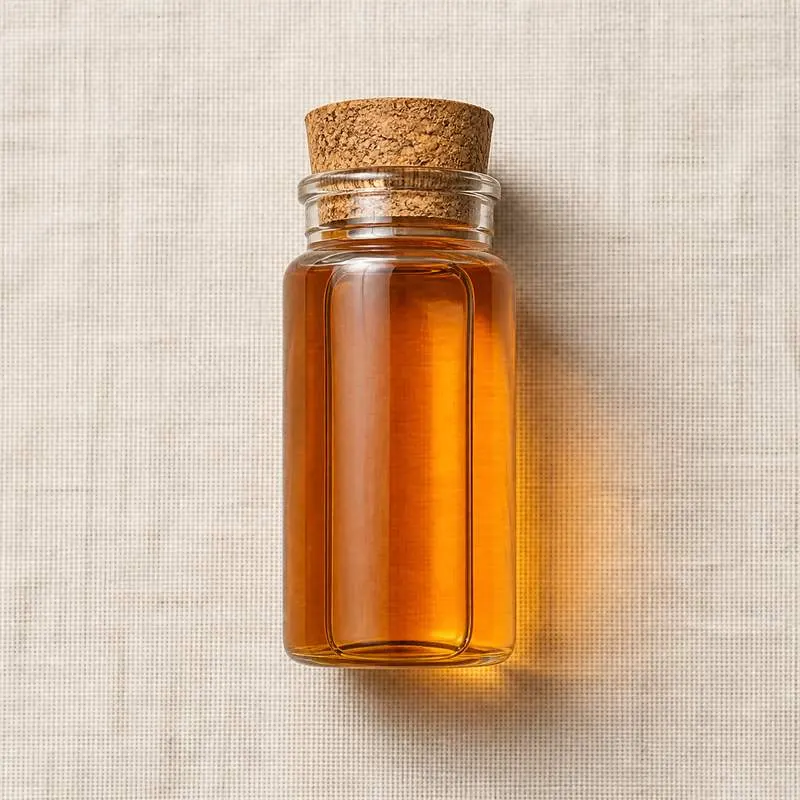
The product is a dark green to brown viscous liquid with an intense citrus and aromatic odour and a strong numbing effect at trace dilution. It is oil soluble and only dispersible in water, so aqueous applications need emulsification, and it is commonly sold already standardised on a vegetable oil or plated onto a dry carrier. Both the amides and the volatile oil degrade under heat, light and prolonged air exposure, so containers are filled under nitrogen and kept cool.
We source bulk Prickly Oleoresin from top China manufacturers for our partners. The manufacturer is in Shaanxi. A smaller requirement can ship in a combined container with other ingredients.
Please send the grade you need, the volume and your destination port, and we will come back with a solution and a price.
or call +86-21-6858 0751
- Function
- Flavours and Aromas
Specifications
| Item | Specification |
|---|---|
| Appearance | Viscous homogeneous liquid, separation on standing permitted |
| Colour | Dark green to brown |
| Odour and flavour | Characteristic citrus aromatic with strong numbing effect |
| Total sanshool amides | Declared per grade, minimum stated on specification |
| Volatile oil | 10.0 ml per 100 g minimum, grade dependent |
| Relative density at 25 degrees Celsius | 0.930 to 1.020 |
| Refractive index at 20 degrees Celsius | 1.4800 to 1.5100 |
| Moisture | 2.0 percent maximum |
| Residual solvent, ethanol | Within permitted limits for the solvent used |
| Residual solvent, hexane | 25 mg/kg maximum where used |
| Lead | 2.0 mg/kg maximum |
| Total plate count | 1,000 cfu/g maximum |
| Yeast and mould | 50 cfu/g maximum |
| Salmonella | Absent in 25 g |
Common Markets Grades
Trade grades are defined by declared amide content, usually expressed as total sanshools or as a numbing intensity against a sensory reference, and by volatile oil content for the aroma side. Standard liquid grades are cut with refined vegetable oil to land on a stated figure, and higher strength grades are made for buyers who dilute the material themselves.
Extraction route is the second axis. Ethanol extracted oleoresin is the mainstream choice and captures the amides efficiently, hexane or acetone extracted material is used where a different balance is wanted, and supercritical carbon dioxide extracts are sold where a solvent free claim is required and typically carry a fresher aroma. Physical forms run from the neat oleoresin through oil dispersed liquids and water dispersible emulsified grades to dry soluble powders plated on salt, dextrose or silica for dry seasoning blends. Red and green prickly ash types are extracted separately, since their aroma profiles differ.
Applications
- Hot pot base manufacture, where it supplies the numbing effect at a controlled and repeatable level
- Chilli oil and seasoning oil production, dosed into the oil phase after frying
- Instant noodle sachets in the mala varieties, as a liquid or a dry soluble powder
- Snack seasonings applied topically to crisps and extruded products
- Sauces, dressings and dipping sauces with a Sichuan character
- Sausage and prepared meat products where a numbing note is part of the style
- Prepared and frozen ready meals in regional Chinese styles
- Retorted products, where ground spice would add a microbiological load the extract does not
- Beverages and confectionery using tingling sensates, at very low dose
China Manufacturers of Prickly Oleoresin
Top Prickly Oleoresin manufacturers in China.
Company names and logos are the property of the manufacturers themselves. They are listed here because our own directory records them as producing this ingredient. A listing is not an endorsement by them, and we do not represent them or speak on their behalf.
Regulatory Status
In the United States spice oleoresins are natural flavouring extractives, and 21 CFR 182.10 and 182.20 list them among the spices, oleoresins and natural extractives generally recognised as safe for their intended use in food. Extraction solvents are controlled as secondary direct additives with residual limits set for hexane and the other permitted solvents, and any carrier or emulsifier in a dispersed grade must itself be a permitted food ingredient. The plant health restrictions that historically applied to imports of the raw prickly ash fruit do not apply in the same way to an extract, but the treated status of the incoming spice is normally documented.
In the European Union the oleoresin is a flavouring preparation of vegetable origin under Regulation (EC) No 1334/2008 and therefore carries no E number, while the extraction solvents legislation controls the solvent and the food additive rules cover any emulsifier or carrier added. Pesticide residue and mycotoxin controls applying to the spice raw material carry through into the extract. Codex hygienic practice guidance for spices and dried aromatic herbs covers the incoming material, and the Joint FAO and WHO Expert Committee on Food Additives has evaluated the terpene flavouring groups that make up the volatile fraction.
Manufacturing Process
Cleaned, deseeded and dried husk is coarsely milled immediately before extraction, since grinding in advance loses volatile oil. The milled material is charged to percolation extractors and washed in counter current flow with food grade ethanol, or with hexane or acetone where the process requires it, and the miscella drawn off carries the amides, the volatile oil, pigments and waxes. Supercritical carbon dioxide extraction is used as an alternative where residual solvent must be avoided.
The miscella is concentrated in a falling film or wiped film evaporator under vacuum, and the remaining solvent is stripped in a thin film unit at low temperature, because the sanshool amides are heat sensitive and isomerise or decompose if the temperature is allowed to rise. Since some of the volatile aroma is inevitably lost in stripping, most producers distil a separate essential oil cut from part of the raw spice and add it back, which is how a declared volatile oil figure is met reproducibly. The stripped resin is then standardised with refined vegetable oil to the target amide level, homogenised and filtered, or, for dry grades, sprayed onto a carrier in a plating mixer. Finished material is filled into lined drums or pails under nitrogen and held cool.