Seasoning Oil
Seasoning oil is an edible vegetable oil that has been infused with the flavour of spices, aromatic vegetables or a compounded flavouring, so that the oil itself becomes the carrier of aroma in a finished dish. Scallion oil, Sichuan pepper oil, chilli oil, garlic oil and sesame based seasoning oils are the main commercial types, and in industrial use the material is dosed as a single ingredient in place of frying aromatics on the line.
The oil phase works as a solvent for the lipophilic aroma fraction that water cannot hold. Terpenes, sulphides, capsaicinoids, sanshools and the pyrazines generated during frying all partition into oil and are retained there far longer than in an aqueous system, which is why a seasoning oil delivers a fuller and more persistent aroma than an equivalent dose of dried spice. The oil also coats the surface of food, so the aroma is released in the mouth rather than lost to the headspace during heating.
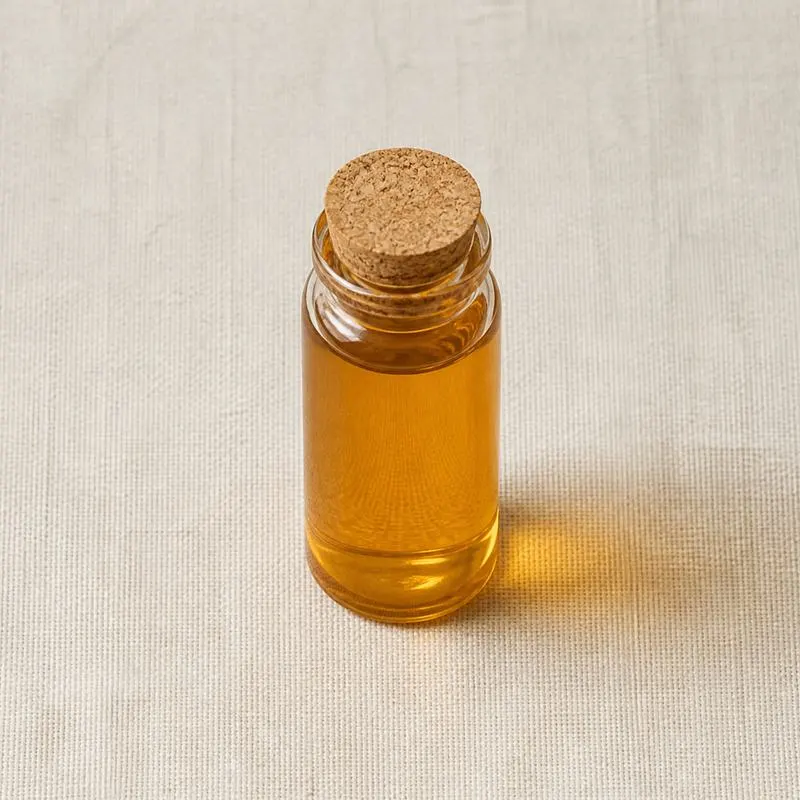
The product is a clear to slightly hazy liquid, ranging from pale yellow to deep red or amber depending on the pigment extracted, sometimes with a settled sediment of fine spice particles. It is fully miscible with fats and immiscible with water. Shelf life is set by oxidation of the oil base rather than by microbial spoilage, so packaging under nitrogen and protection from light and heat are the controlling conditions.
We source bulk Seasoning Oil from top China manufacturers for our partners. The manufacturer is in Shandong. A smaller requirement can ship in a combined container with other ingredients.
Please send the grade you need, the volume and your destination port, and we will come back with a solution and a price.
or call +86-21-6858 0751

- Function
- Flavours and Aromas
Specifications
| Item | Specification |
|---|---|
| Appearance | Clear to slightly hazy oil, pale yellow to deep red, sediment as declared |
| Odour and Taste | Characteristic of the declared aromatic, no rancid or scorched note |
| Identification | Sensory and gas chromatography profile conform to retained reference |
| Moisture and Volatile Matter | Not more than 0.2% |
| Acid Value | Not more than 1.0 mg KOH/g |
| Peroxide Value | Not more than 5.0 meq/kg |
| Insoluble Impurities | Not more than 0.05% for filtered grades |
| Refractive Index at 20 C | Conforms to the declared base oil |
| Colour, Lovibond | Within declared range for grade |
| Lead | Not more than 0.1 mg/kg |
| Arsenic | Not more than 0.1 mg/kg |
| Benzo[a]pyrene | Not more than 2.0 microgram/kg |
| Total Plate Count | Not more than 1,000 cfu/g |
| Salmonella | Absent in 25 g |
Common Markets Grades
Grades are set by the base oil, by the flavour direction and by the method of infusion. Rapeseed, soybean, sunflower and blended vegetable oils are the usual bases, chosen for cost and for a neutral background, while sesame oil and peanut oil are used where the base is meant to contribute its own character. Refined bases give a longer shelf life, while a partly refined or cold pressed base carries more of its own flavour but oxidises faster.
Infusion method separates a fried or hot poured grade, in which the aromatic is cooked in hot oil so that Maillard notes develop alongside the extracted volatiles, from a cold macerated or blended grade in which an essential oil, oleoresin or compounded flavour is dissolved into the oil without heat. Strength is quoted as a recommended dosage rather than an assay, and clarity grades run from a filtered bright oil to an unfiltered oil sold with its spice sediment as part of the product. Antioxidant treated grades containing tocopherol or rosemary extract are offered where a longer ambient shelf life is required.
Applications
- Instant noodle sachets, where the oil packet carries most of the aroma of the finished bowl
- Cold noodle and cold dish dressings, applied at the table temperature at which the oil remains fluid
- Central kitchen stir fry production, dosed in place of frying fresh aromatics on the line
- Hotpot dipping sauces and bases, contributing chilli and Sichuan pepper character
- Dumpling, bun and wonton fillings, distributing aroma through the fat phase of a farce
- Marinades and tumbling systems for grilled and roasted meat
- Savoury bakery and laminated pastry, flavouring the fat layer directly
- Snack seasoning slurries sprayed onto crisps and extruded snacks as a carrier for dry seasoning
- Retorted ready meals, added after sterilisation so the aroma is not destroyed
China Manufacturers of Seasoning Oil
Top Seasoning Oil manufacturers in China.
Company names and logos are the property of the manufacturers themselves. They are listed here because our own directory records them as producing this ingredient. A listing is not an endorsement by them, and we do not represent them or speak on their behalf.
Regulatory Status
Seasoning oil is a compound food rather than a food additive and carries no E number. Its components are ordinary foods and flavourings. The base oil is subject to the edible fats and oils requirements of the destination market, which cover contaminants such as glycidyl esters and chloropropanols arising from refining, and to the erucic acid limit where a rapeseed base is used. Any antioxidant added must be one permitted for fats and oils in that market and declared accordingly, and any flavouring blended in must comply with the flavourings framework, meaning the Union list of authorised flavouring substances in the European Union and FEMA GRAS clearance in the United States.
In the United States manufacture falls under the preventive controls requirements for human food. Where an oil contains particulate aromatic material and is intended to be shelf stable at ambient temperature, the hazard analysis has to address the growth of Clostridium botulinum in the low acid particulate phase, which is normally controlled by the removal of water during frying, by filtration of solids, or by acidification. Sesame, peanut and any nut derived base is a declarable allergen. Codex covers the raw material through its standard for named vegetable oils and its general standard for contaminants.
Manufacturing Process
The fried route begins with refined vegetable oil charged to a jacketed kettle and heated to the working temperature for the aromatic in question, typically well below smoke point for delicate materials and higher where browning is wanted. Cleaned and cut scallion, garlic, ginger, chilli, Sichuan pepper or a spice blend is added and held with agitation while the volatiles transfer into the oil and, at the higher temperatures, while Maillard and caramelisation reactions build the fried character. The residual water in fresh aromatics boils off during this step, which is what limits microbial risk in the finished oil.
The batch is then cooled quickly to stop further reaction and to prevent scorching, and the spent solids are removed by settling, coarse straining and either plate filtration or centrifugation, depending on whether a bright or a sediment bearing product is wanted. Essential oils, oleoresins or a compounded flavour are dosed into the cooled oil to standardise strength against a sensory reference, an antioxidant is added where specified, and the oil is filled under nitrogen into drums, pails or sachets.